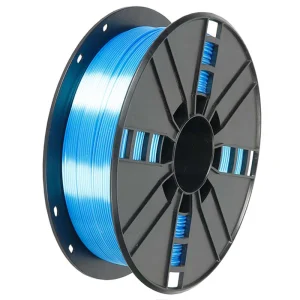
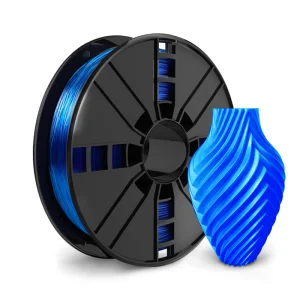
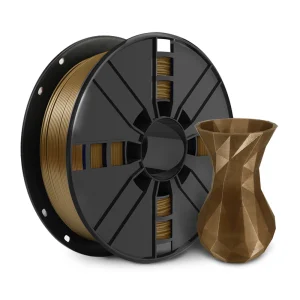
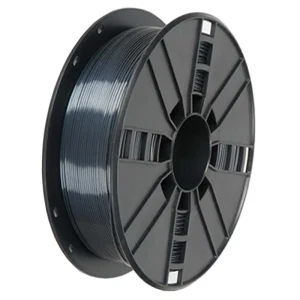
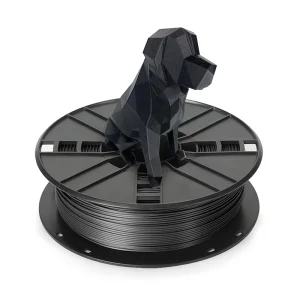
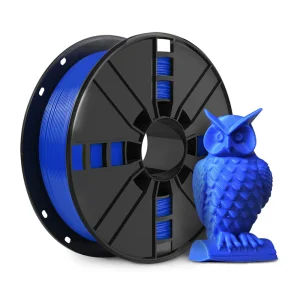
Factory-direct 3D printer materials manufactured under strict ISO9001 quality controls with inline laser micrometer verification.
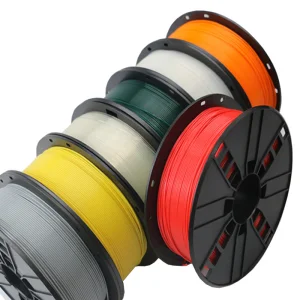
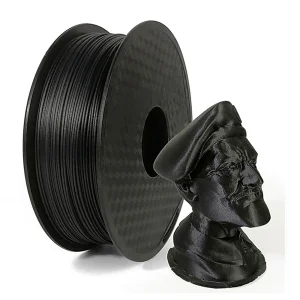
Why industrial end-users and wholesale distributors are rapidly shifting toward carbon-fiber-reinforced thermoplastics for end-use functional parts.
In the rapidly evolving additive manufacturing ecosystem, standard unreinforced polymers such as basic PLA or raw PETG are increasingly reaching their mechanical limits when deployed in demanding industrial environments. The global 3D printing material market has undergone a structural paradigm shift toward composite engineering plastics—with Polyethylene Terephthalate Glycol reinforced with Chopped Carbon Fiber (PETG-CF) emerging as the preferred workhorse material for functional prototyping, rapid tooling, custom jigs, and lightweight structural components.
PETG inherently offers outstanding chemical resistance, zero water absorption compared to polyamides (nylon), high impact resistance, and superb mechanical toughness. However, unreinforced PETG exhibits moderate flexural modulus and can be prone to surface stringing and thermal deformation under continuous mechanical loads. By compounding standard PETG resin with high-aspect-ratio chopped carbon fibers (typically tuned between 10% to 20% by weight ratio), polymer engineers create a synergistic composite matrix that radically alters the material's thermo-mechanical profile.
Information Gain Insight: Unlike Nylon-based Carbon Fiber (PA-CF) composites, which require specialized high-temperature enclosures and rigorous pre-drying protocols due to severe hygroscopic degradation, PETG-CF provides near-equal flexural rigidity with negligible moisture sensitivity and zero thermal warping during high-speed desktop or industrial FDM printing.
Key technological drivers accelerating global demand for wholesale PETG Carbon Fiber filament include:
Addition of carbon micro-fibers boosts flexural modulus beyond 4.5 GPa, delivering extreme stiffness and resisting deformation under heavy static loads.
Inherits PETG’s baseline inertness against aliphatic hydrocarbons, dilute acids, alkalis, and outdoor UV degradation, making it suitable for harsh plant environments.
Micro-fiber reinforcement controls z-axis expansion and eliminates corner lifting, enabling massive footprint prints without heated chamber requirements.
How B2B procurement managers, brand owners, and industrial buyers evaluate factory capabilities, quality metrics, and material compliance.
Sourcing engineering-grade filaments at scale presents unique supply chain challenges. Procurement directors working for global brand distributors, high-volume print farms, or OEM equipment manufacturers cannot afford diameter variances, nozzle clogs caused by clumped fibers, or batch-to-batch color and viscosity fluctuations. When auditing potential Wholesale PETG Carbon Suppliers & Factories, enterprise buyers evaluate several critical technical benchmarks:
| Performance Characteristic | Standard Unreinforced PETG | Torwell Industrial PETG-CF Composite | PA12-CF (Nylon Carbon) | Testing Standard Benchmark |
|---|---|---|---|---|
| Tensile Strength (MPa) | 48 - 52 MPa | 78 - 85 MPa | 95 - 110 MPa | ASTM D638 / ISO 527 |
| Flexural Modulus (GPa) | 1.9 - 2.1 GPa | 4.8 - 5.4 GPa | 6.2 - 7.5 GPa | ASTM D790 / ISO 178 |
| Heat Deflection Temp (HDT @0.45MPa) | 68°C - 72°C | 82°C - 88°C | 145°C - 175°C | ASTM D648 / ISO 75 |
| Moisture Absorption (24h immersion) | < 0.2% (Low) | < 0.15% (Hydrophobic) | > 1.5% (Highly Hygroscopic) | ISO 62 |
| Printing Ease & Bed Adhesion | Excellent | Exceptional (No Enclosure Needed) | Requires Heated Enclosure | In-House Printability Audit |
| Surface Finish & Texture | Glossy (Visible Layers) | Matte Satin Black (Hidden Layers) | Matte Rough Finish | Visual & Roughness Gauge (Ra) |
Enterprise procurement teams must verify that their manufacturing partner implements strict raw material quality control before extrusion compounding occurs. Key requirements include:
Inside Torwell Technologies' automated 2,500m² manufacturing facility: How modern extrusion architecture delivers uncompromised batch consistency.
China's Guangdong province has established itself as the global epicenter for additive manufacturing material innovation and polymer extrusion machinery. Torwell Technologies Co., Ltd. (founded in 2011) leverages this localized industrial infrastructure to provide global buyers with unmatched supply chain stability, fast lead times, and competitive OEM pricing structure.
The manufacturing process of carbon-fiber-reinforced PETG filament differs fundamentally from standard monomer polymer extrusion. Carbon fiber is highly abrasive and demands specialized screw metallurgy, hardened barrel liners, and precise melt-temperature profiling to prevent thermal degradation of the PETG resin base. Torwell’s Industry 4.0 Smart Factory setup integrates:
From European automotive plants to North American aerospace labs—how enterprises leverage PETG-CF for high-value operations.
Scenario: German & US automotive tier-1 suppliers utilize PETG-CF to print lightweight hand-held welding alignment jigs, CMM inspection fixtures, and assembly nest blocks. The material resists shop-floor impact and chemical exposure to lubricants.
Scenario: Industrial automation integrators in Japan and South Korea print custom robotic vacuum grippers and end-of-arm tooling (EOAT). Replacing heavy aluminum arms with PETG-CF reduces motor payload inertia, allowing faster arm velocity.
Scenario: Commercial drone manufacturers in North America rely on PETG Carbon filament for motor mounts, camera gimbal housings, and structural wing ribs due to its high vibration-damping capacity and weather resistance.
As a leading China-based factory partner, Torwell Technologies offers comprehensive white-label and OEM customized solutions tailored for distributors and brand clients seeking to launch their own branded PETG Carbon series:
Complete your sourcing inventory with our best-selling specialty PLA, Silk, TPU, and PLA+ composite series.
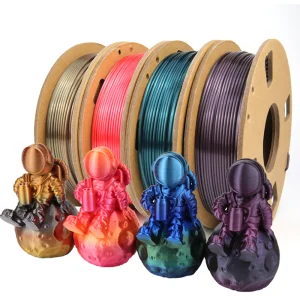
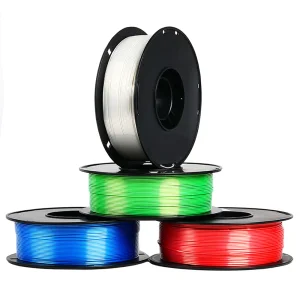
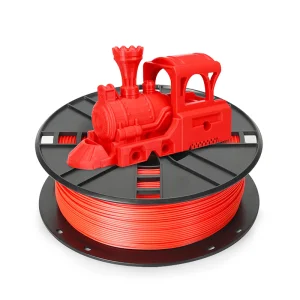
Direct technical guidance from Torwell's senior material compounding engineers and export logistics team.
Because chopped carbon fibers are extremely abrasive, printing PETG-CF requires a hardened steel, ruby-tipped, or tungsten carbide nozzle. Standard brass nozzles will experience rapid orifice erosion within 200–500 grams of printing. Recommended starting parameters include:
While PA-CF offers slightly higher heat deflection (HDT > 150°C) and absolute tensile strength, it is highly hygroscopic, requiring active inline drying ovens during printing and heated enclosure chambers to prevent severe thermal warping. In contrast, PETG-CF provides approximately 80–85% of PA-CF’s stiffness while printing effortlessly on standard open-frame 3D printers without warping or moisture degradation. For 90% of industrial fixture and prototyping applications, PETG-CF offers a far more cost-effective and user-friendly solution for retail customers and print farm operators.
Torwell Technologies guarantees a strict diameter tolerance of ±0.02 mm on standard 1.75 mm and 2.85 mm spools. Our automated extrusion lines utilize dual-axis high-frequency laser micrometers continuously taking 360-degree diameter readings. If any strand segment deviates beyond ±0.02 mm, the inline system automatically tags and rejects the section prior to winding.
Yes. Torwell is a specialized OEM/ODM manufacturer for major international 3D printer material brands. We provide comprehensive private-label services, including custom Pantone box color printing, customized logo stickers on vacuum sealed bags, customized spool designs (cardboard or plastic), and custom technical data sheet (TDS) creation tailored for your target retail market.
Prior to spooling, composite filaments undergo 8 hours of dehumidifying drying. Immediately after precision winding, spools are vacuum-sealed with high-capacity desiccant pouches inside thick multi-layer barrier bags. Individual spools are packed in reinforced corrugated inner cartons and master outer cartons designed to withstand ocean container humidity and rough handling.
For standard stocking SKUs, MOQs start as low as 100 kg. For custom OEM private label orders, the standard MOQ is typically 500 kg per material/color combination. Production lead times average 10–15 business days following sample approval and deposit confirmation, backed by our 60,000 kg monthly factory capacity.