Factory-direct wholesale inventory engineered for high-speed 3D printing farms, global brands, and tier-1 distributors.
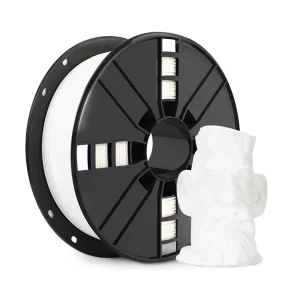
Ultra-tough modified PLA with 5x higher impact resistance than standard PLA. Ideal for commercial production and rapid prototyping.
View Product Specs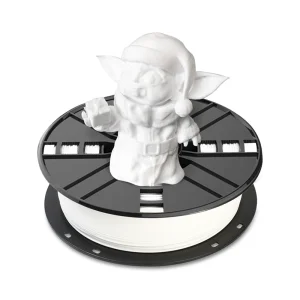
Engineered for high-speed 600mm/s printers. Outstanding layer adhesion, zero warping, and consistent ±0.02mm diameter precision.
View Product Specs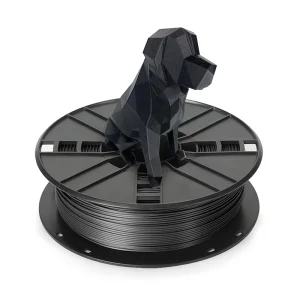
Deep matte/gloss black formulation. Premium carbon black pigmentation preventing UV degradation and structural embrittlement.
View Product Specs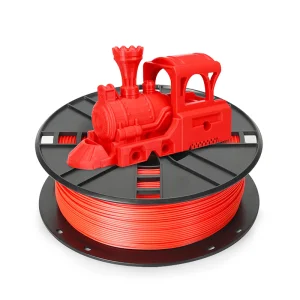
High-chroma vibrant red shade with high thermal stability during extrusion. Perfect for consumer products and artistic models.
View Product Specs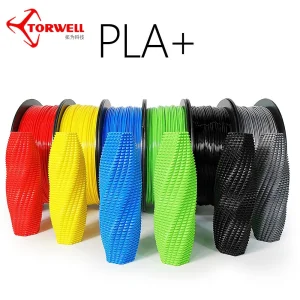
Industrial grade toughness engineered for functional end-use parts. Available in 1.75mm and 2.85mm custom spool options.
View Product Specs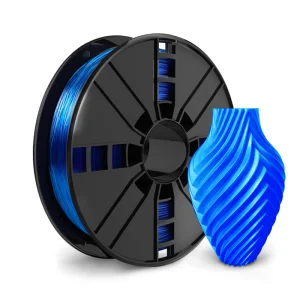
High-elasticity thermoplastic polyurethane. Exceptional tear resistance and flexibility for protective boots, seals, and dampers.
View Product Specs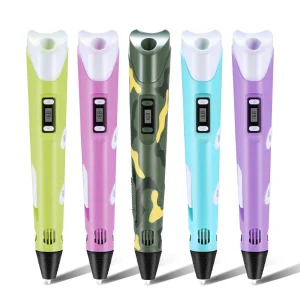
Ergonomic digital temperature control 3D pen for STEM education, prototyping, and fast manual touch-ups of 3D prints.
View Product Specs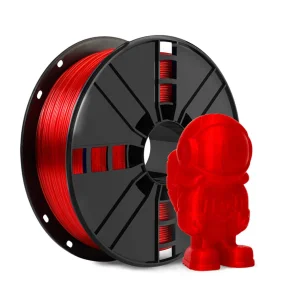
Combines the ease of PLA with the thermal and impact resistance of ABS. Hydrophobic, low-stringing glycol-modified formulation.
View Product SpecsAn authoritative analysis of polymer modification, high-acceleration CoreXY print dynamics, and enterprise procurement shifts across North America, Europe, and Asia-Pacific.
The global 3D printing materials market has experienced a radical structural transition. Historically, standard Polylactic Acid (PLA) served primarily as an entry-level material for rapid prototyping, rapid conceptual design, and educational demonstrations. However, the emergence of high-speed FDM (Fused Deposition Modeling) hardware—characterized by CoreXY kinematics, active vibration compensation, high-flow hotends, and print speeds exceeding 300 mm/s to 600 mm/s—has exposed fundamental mechanical limitations in traditional PLA.
Standard PLA suffers from intrinsic brittleness, low impact resistance (typically under 3.5 kJ/m² Charpy notched impact strength), and a narrow thermal processing window. Under extreme shear rates and rapid volumetric flow demands of modern high-speed printing, unmodified PLA undergoes severe thermal degradation, micro-void formation, and mechanical anisotropy. This technological bottleneck sparked the industrial development of **PLA+ (also commercialized as PLA Pro, Tough PLA, or Enhanced PLA)**.
As a leading PLA+ filament manufacturer & supplier, our R&D infrastructure addresses these industrial demands through molecular-level polymer modification. By blending virgin L-lactide bio-resins with elastomeric core-shell impact modifiers, organic nucleation agents, and advanced chain extenders, modern PLA+ bridges the gap between everyday ease-of-use and industrial-grade mechanical integrity.
Modern print farms demand volumetric melt rates above 24 mm³/s. Engineered PLA+ maintains stable melt viscosity and thermal conductivity, eliminating heat creep and nozzle clogging under extreme print accelerations.
Inter-layer adhesion failure accounts for over 70% of structural print defects. Our PLA+ formulation incorporates chemical chain extenders that optimize inter-molecular diffusion across layer boundaries during deposition.
Formulated from 100% bio-based corn starch and sugarcane starches, PLA+ offers industrial compostability alongside lower carbon footprints compared to petroleum-derived ABS or PC polymers.
Empirical mechanical data derived from ISO 527 tensile testing, ISO 179 Charpy impact analysis, and Differential Scanning Calorimetry (DSC).
To understand the competitive advantage of engineering-grade PLA+, enterprise procurement teams must evaluate the chemical architecture of modified biopolymers. Standard PLA consists of polymerized lactic acid monomers (L-lactide and D-lactide). High ratios of D-lactide disrupt polymer chain regularity, resulting in lower crystallinity, lower heat deflection temperatures (HDT), and extreme brittleness.
Our proprietary PLA+ extrusion formulation utilizes high-purity L-lactide resins reinforced with **core-shell rubber (CSR) nanoparticles**. When subjected to mechanical stress or high impact, these sub-micron elastomeric particles absorb impact energy, initiate micro-craze termination, and prevent catastrophic crack propagation throughout the 3D printed matrix.
| Mechanical / Thermal Property | Standard PLA | Torwell PLA+ (PLA Pro) | PETG | ABS |
|---|---|---|---|---|
| Tensile Strength at Yield (MPa) | 58 - 62 MPa | 65 - 68 MPa | 48 - 52 MPa | 40 - 45 MPa |
| Charpy Impact Strength (kJ/m²) | 2.8 - 3.4 kJ/m² | 16.5 - 18.2 kJ/m² | 7.5 - 9.0 kJ/m² | 12.0 - 15.0 kJ/m² |
| Flexural Modulus (GPa) | 3.1 GPa | 3.6 GPa | 2.1 GPa | 2.3 GPa |
| Elongation at Break (%) | 4.2% | 12.8% | 22.5% | 10.0% |
| Heat Deflection Temp. (HDT @ 0.45 MPa) | 54 °C | 62 °C (85 °C Annealed) | 68 °C | 88 °C |
| Melt Flow Index (MFI @ 210°C / 2.16kg) | 6 - 8 g/10min | 14 - 18 g/10min | 10 - 12 g/10min | 15 - 20 g/10min |
| Warping Sensitivity & Odor Level | Very Low / Low Odor | Negligible / Low Odor | Low / Odorless | High / Strong Styrene Odor |
A primary technological breakthrough in modern PLA+ is its response to post-process heat treatment (annealing). Unmodified PLA remains largely amorphous after extrusion due to rapid cooling on the print bed, leaving its heat deflection temperature capped at approximately 55°C. In contrast, our PLA+ contains crystal nucleation additives that accelerate spherulite formation when exposed to post-print thermal annealing (80°C to 100°C for 30 minutes). This elevates the material's Heat Deflection Temperature to **85°C+**, enabling semi-structural end-use applications previously reserved for high-cost engineering plastics like PC or Nylon.
How our automated 2,500m² manufacturing plant eliminates diameter drift, bubble formation, color variance, and spool tangling.
Diameter fluctuations cause volumetric extrusion errors leading to under-extrusion or nozzle jams. Our 6 automated production lines utilize inline closed-loop laser gauge sensors to maintain strict ±0.02 mm tolerance in real-time.
PLA resins are hygroscopic. Absorbed atmospheric moisture hydrolyzes polymer chains during melt extrusion, causing steam popping, severe stringing, and weak prints. Every spool undergoes dew-point drying to <0.03% moisture prior to vacuum sealing.
Uncontrolled spool winding leads to criss-crossed filament loops that ruin overnight multi-hour commercial prints. Our CNC tension-controlled servo winders ensure perfectly parallel layer-by-layer spooling compatible with automatic material systems (AMS).
For high-volume brands selling on global retail marketplaces like Amazon, or supplying industrial accounts, color drift across production lots is a major source of product returns. We utilize automated spectrophotometric masterbatch dosing systems. By recording exact CIE L*a*b* color coordinates for every formula, we guarantee **Delta E (ΔE) < 1.0** visual accuracy across consecutive production runs, ensuring perfect aesthetic uniformity whether you order 500 kg or 20 metric tons.
Partner with an established China filament manufacturer to build, scale, and protect your brand's market reputation.
Scaling a successful 3D printing consumables brand requires more than purchasing off-the-shelf spools. Global distributors, regional wholesalers, and e-commerce sellers require customizable OEM/ODM solutions tailored to local regulatory frameworks, brand identities, and environmental mandates.
We match any RAL, Pantone, or physical color sample within 7 business days. Produce proprietary brand colors, pastel palettes, metallic silk finishes, or glow-in-the-dark specialty blends.
Choose from 100% recyclable heavy-duty cardboard spools, clear polycarbonate spools, or eco-friendly spool-less refill coils designed to minimize freight volume and plastic waste.
Receive comprehensive technical data sheets (TDS), safety data sheets (SDS), and custom-branded retail boxes, spools, and master export cartons tailored for international compliance.
Ensuring frictionless customs clearance and international market access with full compliance documentation.
Enterprise buyers sourcing from a China PLA filament supplier must satisfy stringent regional environmental and chemical safety regulations. Importing non-compliant filaments can lead to severe customs delays, heavy fines, or forced product recalls.
Torwell Technologies operates under certified ISO 9001:2015 Quality Management Systems. Our raw material sourcing strictly screens out hazardous heavy metals, plasticizers, and aromatic hydrocarbons. We provide complete documentation packages for cross-border logistics:
Exploring the frontiers of functional polymer blends, carbon-fiber reinforcements, and AI-driven smart manufacturing.
As the additive manufacturing industry matures, the boundaries between consumer biopolymers and high-performance engineering plastics continue to blur. Torwell’s R&D roadmap targets four key technical frontiers for PLA-based composites over the next five years:
Integrating 15% high-modulus chopped carbon fibers into modified PLA matrix to boost flexural strength above 110 MPa and provide an elegant, line-free matte surface finish.
Developing hyper-shear-thinning molecular formulations optimized for ultra-high-speed printers running extreme acceleration kinetics without thermal breakdown.
Pushing non-annealed Heat Deflection Temperatures past 90°C using stereocomplex PLA crystal structures, enabling bio-based plastics to replace heat-sensitive PETG and ABS entirely.
Explore our full line of factory-direct specialty filaments including TPU, PC, ASA, PETG, ABS, and Silk PLA.
Toughened PLA Pro formula engineered for commercial additive manufacturing. High layer bonding strength and dimensional accuracy.
View Product Specs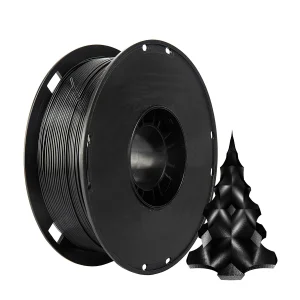
Polycarbonate engineering filament with extreme impact toughness and heat deflection temperature up to 110°C.
View Product Specs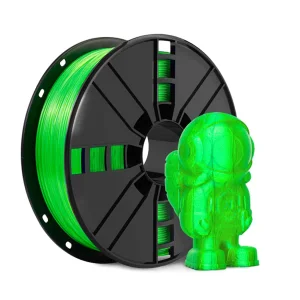
Translucent chemical-resistant PETG material. Excellent clarity, high mechanical toughness, and zero warping.
View Product Specs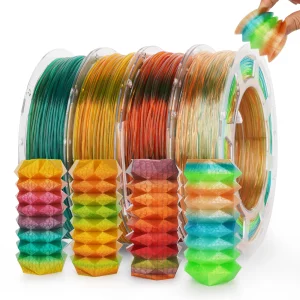
Multicolor gradient flexible TPU 95A. Smooth extrusion with striking chromatic transitions for visual functional components.
View Product Specs
Acrylic Styrene Acrylonitrile filament. Weather-proof, UV-resistant, and high heat tolerance for external automotive and fixture parts.
View Product Specs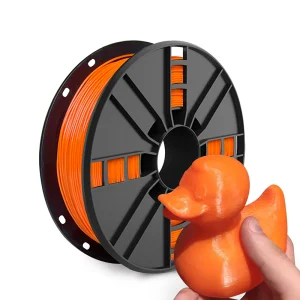
High-durability elastomer with Shore 95A hardness. Outstanding wear resistance and elastic memory recovery.
View Product Specs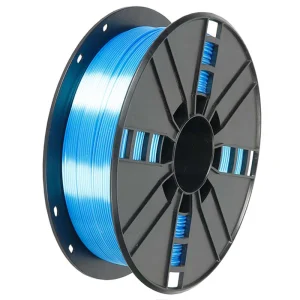
High-lustre silk blue formulation. Delivers a glossy metallic surface finish without needing post-processing or painting.
View Product Specs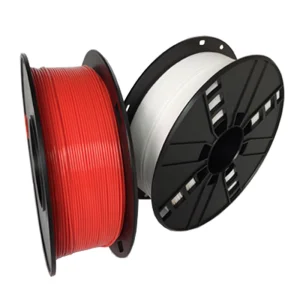
Industrial Acrylonitrile Butadiene Styrene polymer engineered for acetone vapor smoothing, high impact resistance, and thermal durability.
View Product SpecsDetailed answers to fundamental engineering, wholesale procurement, OEM customization, and print optimization queries.
Standard PLA is composed purely of unmodified Polylactic Acid polymer chains, which exhibit high stiffness but low impact energy absorption (brittleness). PLA+ incorporates sub-micron elastomeric core-shell rubber (CSR) modifiers and organic nucleation agents. These additives increase Izod impact strength by up to 500%, enhance inter-layer molecular diffusion, and prevent micro-cracking under mechanical shear.
Yes. Our PLA+ formulation features an optimized Melt Flow Index (MFI of 14–18 g/10min @ 210°C/2.16kg), which provides rapid shear-thinning behavior inside hotend melting zones. This ensures high volumetric flow rates (24–30 mm³/s) without causing hotend pressure spikes, under-extrusion, or loss of layer adhesion on high-speed CoreXY machines like Bambu Lab, Voron, or Creality K1 series.
All Torwell filaments are extruded under real-time dual-axis laser diameter control systems. We guarantee a strict tolerance of ±0.02 mm for 1.75 mm and 2.85 mm filaments. Out-of-spec material triggers an automatic inline truncation cutter, ensuring zero diameter drift reaches the final spooling stations.
Hygroscopic moisture causes ester hydrolysis at high extrusion temperatures, breaking down polymer chains and resulting in brittle prints, stringing, and bubbles. Prior to packaging, our filament is dried to <300 ppm moisture level. Each spool is immediately vacuum-sealed in heavy-duty tri-laminated moisture-barrier foil bags with a fresh desiccant pack.
For standard stock colors, our baseline MOQ starts as low as 100 kg per color. For custom Pantone/RAL color matching or specialized private-label printed packaging (custom spools, branded boxes, custom labels), our standard OEM MOQ is typically 500 kg to 1,000 kg depending on packaging complexity.
Our PLA+ filaments fully comply with EU RoHS Directive 2011/65/EU and (EU) 2015/863, REACH SVHC standards, and ISO 9001:2015 quality control protocols. Virgin unpigmented grades also meet FDA 21 CFR 177.1630 guidelines for non-fatty food contact safety.
For optimal mechanical performance: Nozzle Temperature: 205°C – 225°C; Print Bed Temperature: 50°C – 60°C; Cooling Fan: 80%–100% (lower to 30% for maximum Z-layer bond strength); Print Speed: 60–300 mm/s depending on hotend flow capabilities.
No. Standard PLA+ is non-abrasive and can be printed indefinitely using standard brass nozzles. However, composite variants such as PLA-Carbon Fiber (PLA-CF) or Glow-in-the-Dark PLA contain abrasive micro-particles that require hardened steel or ruby-tipped nozzles to prevent orifice erosion.