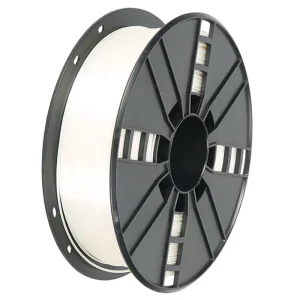
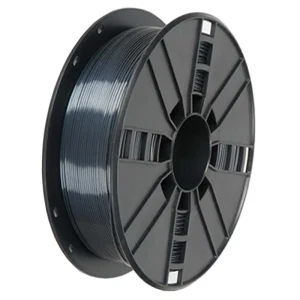
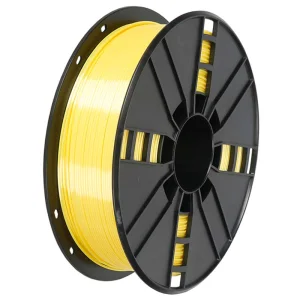
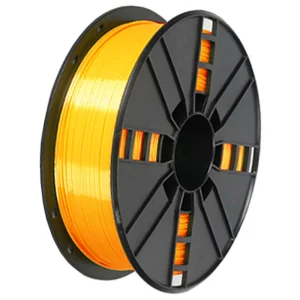
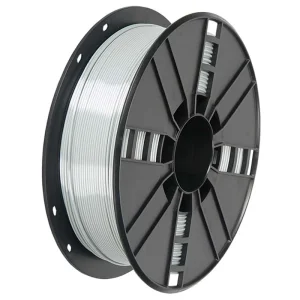
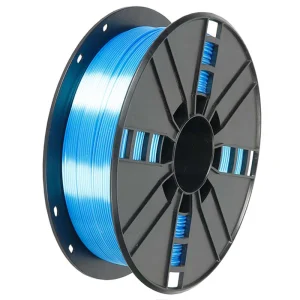
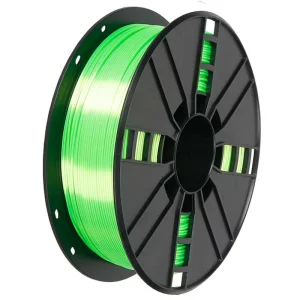
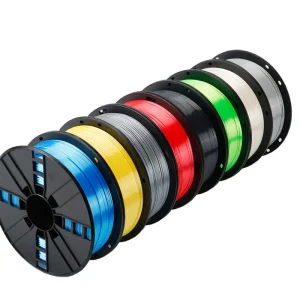
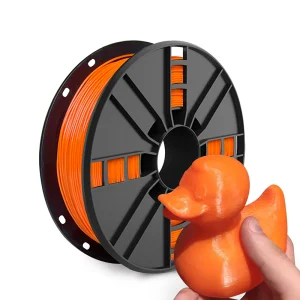
Standard 1.75mm and 2.85mm ultra-shiny filaments manufactured with inline dual-axis laser diameter monitoring for zero-clog, high-speed 3D printing.
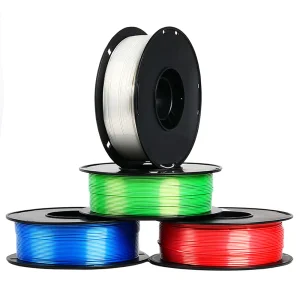
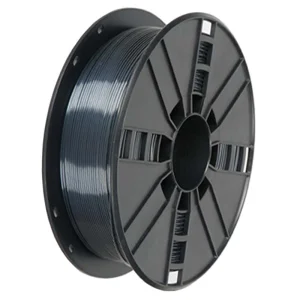
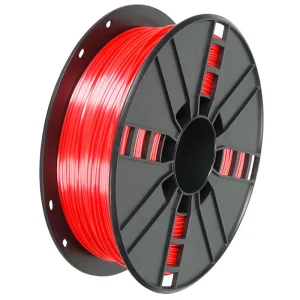
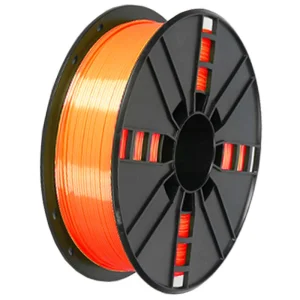
As additive manufacturing transitions from functional prototyping into direct consumer-goods manufacturing, high-visual-impact thermoplastics have emerged as the primary growth driver for global distributors, e-commerce brands, and industrial print farms.
The global 3D printing filament market is expanding at a Compound Annual Growth Rate (CAGR) of over 23.8%, with visual specialty filaments—specifically Silk PLA (Polylactic Acid blended with thermoplastic elastomers)—accounting for more than 35% of retail revenue in consumer and prosumer segments. Buyers no longer evaluate PLA solely on tensile strength; surface finish, layer-line hiding power, and specular sheen are now critical purchasing criteria.
Commercial print farms producing decorative homeware, retail visual displays, cosplay prop armor, and custom gaming accessories rely on high-grade Silk PLA to eliminate post-processing costs. Traditional PLA requires extensive manual sanding, priming, and spray painting to achieve a satin or metallic luster. Industrial-grade Silk PLA achieves a high Gloss Unit (GU > 85) straight off the print bed, reducing unit labor costs by up to 65%.
Achieving a reliable, silky sheen without compromising layer adhesion or causing nozzle clogging requires precise chemical modification of raw Poly-L-Lactic Acid (PLLA) resin.
Standard PLA is a brittle, semi-crystalline polymer. To induce a glossy silk optical effect, primary PLLA resin is melt-compounded with 10% to 20% low-melting-point elastomeric modifiers such as Polycaprolactone (PCL) or modified Thermoplastic Polyurethane (TPU). This phase-separated polymer blend alters microscopic light scattering across extrudates.
The glossy sheen of Silk PLA is governed by Mie scattering dynamics and microscopic anisotropic refraction. Micro-dispersed elastomeric domains align parallel to the extrusion axis during passage through the heated 3D printer nozzle orifice, converting diffuse surface scatter into directional specular reflectance.
Adding soft elastomer phases alters the Melt Flow Index (MFI). Our factory formulates polymer blends with customized melt strength to prevent die swell while retaining layer bonding shear strength under high print speeds (up to 350 mm/s on modern CoreXY motion systems).
A frequent drawback of low-grade silk filaments is reduced Z-axis layer strength caused by phase separation of non-compatible elastomers. Our engineering team incorporates specialized transesterification chain extenders and compatibilizers. This ensures that while elastomeric domains align along the perimeter wall for maximum shine, the core polymer chain maintains strong inter-molecular entanglement across print layers.
Leveraging Guangdong’s advanced chemical industrial clusters, integrated polymer supply chains, and fully automated multi-line extrusion infrastructures.
Our direct procurement partnerships with global raw resin manufacturers (NatureWorks, TotalEnergies Corbion) allow us to secure virgin PLLA resin without intermediary price markups. By managing masterbatch pigment synthesis in-house, we eliminate batch-to-batch color shifts—a major point of friction for B2B brand owners operating high-volume retail channels.
Our 2,500 m² facility houses 6 automated twin-screw extrusion lines running 24/7 continuous output. Each line integrates real-time quad-axis laser measuring feedback loops. If diameter variance exceeds ±0.02mm, closed-loop servo pullers automatically adjust line speed in milliseconds, ensuring perfect spool uniformity across container-load shipments.
Behind every roll of Torwell Silk PLA is a rigorous, automated quality control pipeline designed to eliminate moisture micro-bubbles, ovality deviations, and spool tangling.
Raw polymer pellets undergo 4-hour desiccant rotor drying down to <200 ppm moisture content to prevent hydrolysis during melt processing.
Multi-zone temperature controlled 32:1 L/D twin-screw extruders melt and homogeneously blend the polymer matrix with silky optical modifiers.
Warm water bath (55°C) followed by cold water bath (22°C) prevents micro-void formation and freezes the high-gloss polymer orientation.
Inline 500Hz laser micrometers continually record diameter and ovality. Non-conforming sections are automatically flagged and rejected.
Tension-controlled CNC spooling delivers neat layer-by-layer winding. Filament is immediately vacuum-sealed with active silica desiccant.
Engineered laboratory data comparing Torwell Silk PLA against standard industrial 3D printing polymers under ISO testing standards.
| Physical / Mechanical Property | Silk PLA (Torwell Spec) | Standard PLA | PLA+ (Toughened) | PETG Industrial |
|---|---|---|---|---|
| Density (g/cm³) | 1.24 g/cm³ | 1.24 g/cm³ | 1.23 g/cm³ | 1.27 g/cm³ |
| Melt Flow Index (g/10min @ 210°C/2.16kg) | 7 – 10 g/10min | 5 – 8 g/10min | 8 – 12 g/10min | 15 – 25 g/10min (@ 240°C) |
| Tensile Strength (ISO 527) | 52 MPa | 60 MPa | 65 MPa | 48 MPa |
| Charpy Impact Strength (ISO 179) | 6.5 kJ/m² | 5.0 kJ/m² | 9.8 kJ/m² | 8.2 kJ/m² |
| Specular Sheen Index (Gloss Units GU @ 60°) | 88 – 95 GU | 15 – 25 GU | 20 – 30 GU | 60 – 70 GU |
| Recommended Printing Temperature | 200°C – 230°C | 190°C – 220°C | 205°C – 225°C | 230°C – 250°C |
| Recommended Heated Bed Temperature | 45°C – 60°C | 0°C – 60°C | 50°C – 60°C | 70°C – 80°C |
| Maximum Recommended Print Speed | 300 mm/s | 250 mm/s | 350 mm/s | 200 mm/s |
Silk PLA is optimized for applications where visual surface presentation, vibrant reflective color tone, and reduced post-processing are paramount.
Film studios and prop makers use Silk Gold, Silver, and Copper PLA to print metallic accessories, helmets, and weapons. The inherent metallic sheen reduces finishing labor by bypassing surface sanding and metal lacquering phases.
Designers leverage Silk PLA's light refraction properties to produce intricate lampshades, decorative vases, geometric wall tiles, and structural architectural scale models with rich, silky textures.
Cosmetics, perfume, and jewelry brands create concept prototypes and limited-edition packaging cases using Pearlescent Silk PLA to mimic satin fabric and polished ceramic finishes.
Tailored manufacturing services for international brands, Amazon top sellers, regional distributors, and large-scale 3D printing service bureaus.
Key technical innovations transforming the specialized PLA filament manufacturing landscape.
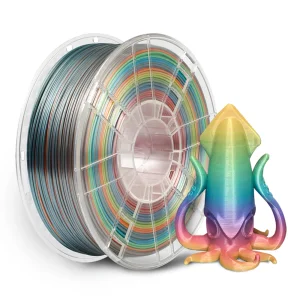
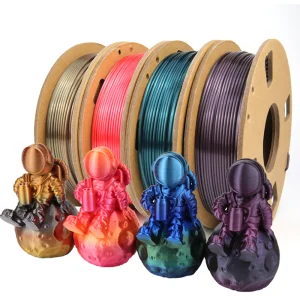
Multi-color dichromatic and trichromatic co-extruded Silk PLA filaments are rapidly gaining market share. By feeding 2 or 3 distinct melt streams into a single extrusion nozzle tip, printed parts exhibit stunning multi-tone dichromatic color-shifting visual effects as the object is rotated.
As 3D printers reach speeds of 500 mm/s with accelerations exceeding 20,000 mm/s², conventional silk formulations lose shine due to abbreviated thermal dwell time in the heater block. Next-gen Silk PLA integrates rapid-melting plasticizers that preserve 90+ GU sheen even at ultra-high flow rates.
Moving away from synthetic elastomeric additives, future Silk PLA formulations incorporate 100% bio-derived modified starch and modified PCL esters, maintaining full industrial compostability while complying with strict European packaging circularity directives.
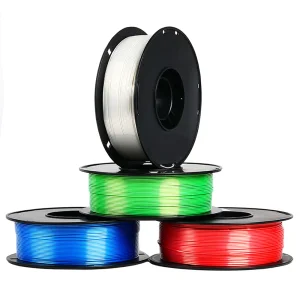
Explore our specialized dichromatic rainbow, multi-color co-extrusion, and high-flexibility silky TPU materials.
Detailed technical and commercial answers designed for B2B buyers, procurement managers, and brand engineers.
Our Silk PLA formulation combines premium Poly-L-Lactic Acid (PLLA) base resin with 12–18% modified low-melting elastomeric polymers (such as specialized Polycaprolactone and elastomeric polyester derivatives) combined with micro-spherical refractive optical modifiers. During hot-melt extrusion through the printer nozzle, these elastomeric micro-domains elongate along the flow boundary, converting diffuse light scattering into high-contrast specular reflection (achieving over 88-95 Gloss Units).
Yes. Because Silk PLA contains elastomeric phases, we recommend setting nozzle temperatures slightly higher—between 205°C and 225°C (compared to 190°C–210°C for standard PLA). The elevated temperature lowers melt viscosity and promotes optimal inter-layer molecular diffusion, ensuring that the visual sheen does not come at the expense of Z-axis mechanical layer strength. Heated bed settings remain standard at 45°C–60°C.
Each of our 6 automated extrusion lines is equipped with inline 4-axis 500Hz laser micrometers positioned immediately after the secondary quench bath. The sensor system provides high-speed feedback to closed-loop servo pullers. If the filament diameter strays beyond ±0.02mm or ovality drops below 98%, the control system dynamically modulates pull speed. Any out-of-spec sections are automatically flagged and purged during automated spooling.
Absolutely. We specialize in turn-key OEM/ODM solutions for private label brands and major e-commerce distributors. Our chemical lab matches physical color samples or Pantone/RAL codes within 5 business days. We provide custom-printed cardboard or plastic spools, branded vacuum foil bags, customized desiccant packs, and full-color retail box packaging engineered to your exact brand graphics and market compliance requirements.
Before winding, all filament is dried in desiccant rotor hoppers down to <200 ppm moisture level. Immediately following precision spooling, spools are heat-sealed inside heavy-duty 100 µm multilayer aluminum-PE vacuum bags alongside active silica gel packs. Sealed spools are packed in reinforced corrugated master cartons, moisture-sealed with stretch film on sea-freight export pallets, ensuring 24-month shelf life stability across ocean transit.
Yes. Our latest generation of Silk PLA is engineered for high melt-flow stability. By tuning the melt flow index (MFI to 8-10 g/10min), the filament flows smoothly through high-flow hotends at speeds up to 300-350 mm/s without causing pressure spikes, extruder clicking, or loss of surface gloss.
Our standard MOQ for stock colors under private label packaging is 100 kg per color SKU. For custom Pantone color formulation, the MOQ is 300 kg. Standard factory lead time for container orders (10,000+ spools) is 15 to 20 business days from art approval and color masterbatch sign-off.