Explore our primary wholesale PETG grades formulated for high optical transparency, extreme impact resistance, and low thermal shrinkage across FDM/FFF 3D printing architectures.
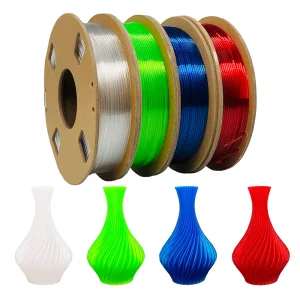
Vibrant multi-color batch formulation engineered for custom aesthetic rapid prototyping and retail distributor distribution.
View Product Details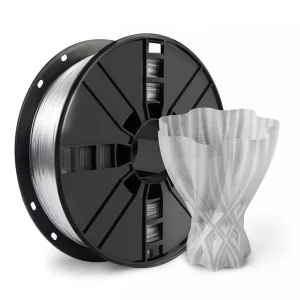
High-clarity optical resin delivering 90%+ light transmission for fluidics, light pipes, and see-through enclosures.
View Product Details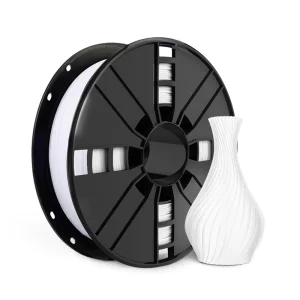
Opaque titanium-white pigment dispersion offering high opacity, UV resilience, and clean surface aesthetics for consumer parts.
View Product Details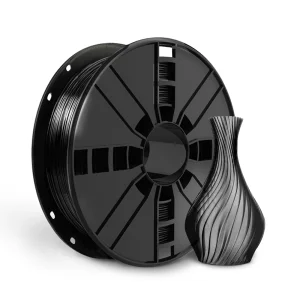
Deep jet black finish engineered for structural industrial fixtures, electronics housings, and high-duty mechanical assemblies.
View Product Details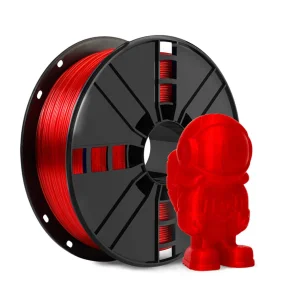
High-contrast red tint optimized for emergency enclosures, safety component markers, and branded retail products.
View Product Details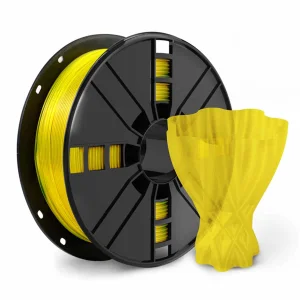
Thermally stable yellow formulation ideal for high-visibility industrial jigs, protective guards, and tool grips.
View Product Details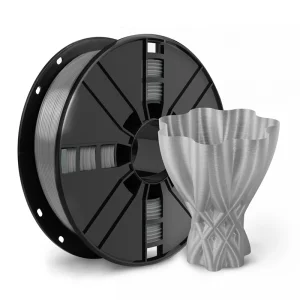
Neutral gray shade favored by mechanical engineers for visual inspectability of layer stacking and dimensional checks.
View Product Details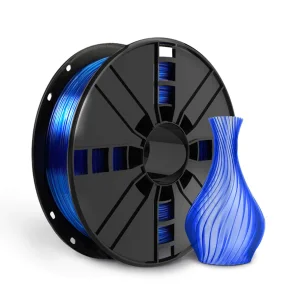
Vibrant semi-gloss cobalt blue polymer compound exhibiting exceptional layer adhesion and zero micro-cracking.
View Product DetailsUnderstanding why Polyethylene Terephthalate Glycol (PETG) has replaced standard ABS and PLA across commercial print farms and enterprise additive manufacturing ecosystems.
Standard PET crystallizes rapidly upon cooling, leading to brittle structures and haze. By substituting ethylene glycol with cyclohexane dimethanol (CHDM) during co-polymerization, PETG prevents polymer chain crystallization. The resulting amorphous matrix eliminates brittleness, delivers crystal optical clarity, and expands the processing temperature window to 230°C–250°C without thermal degradation.
Unlike PLA, which suffers from anisotropic shear weakness between printed layers, PETG displays isotropic mechanical bonding. The low melt viscosity index (MFI) allows molten polymer strands to fuse at the molecular interface before solidifying, achieving Z-axis tensile yield strengths up to 85% of X/Y plane values, making it essential for load-bearing brackets and pressure-tight vessels.
PETG exhibits broad chemical resistance to aqueous solutions of acids, alkalis, alcohols, and aliphatic hydrocarbons. It maintains structural integrity when exposed to industrial cleaning agents, isopropyl alcohol (IPA), and environmental UV radiation, outperforming ABS which degrades under UV, and PLA which hydrolyzes under humidity and chemical washdowns.
| Material Metric Property | PETG Industrial Standard | Standard PLA | Standard ABS | Testing Standard Method |
|---|---|---|---|---|
| Tensile Strength at Yield (MPa) | 50 – 53 MPa | 60 – 65 MPa | 40 – 45 MPa | ISO 527 / ASTM D638 |
| Flexural Modulus (GPa) | 2.1 – 2.3 GPa | 3.1 – 3.5 GPa | 2.1 – 2.4 GPa | ISO 178 / ASTM D790 |
| Izod Impact Strength (kJ/m²) | 7.8 – 8.5 kJ/m² | 2.5 – 3.2 kJ/m² | 12 – 15 kJ/m² | ISO 180 / ASTM D256 |
| Glass Transition Temp (Tg) | 80°C (176°F) | 55°C (131°F) | 105°C (221°F) | DSC (10°C/min) |
| Volumetric Shrinkage Rate (%) | < 0.4% | < 0.3% | 0.8% – 1.2% | Internal Laser Standard |
| Optical Light Transmittance (%) | Up to 91% (Clear) | Opaque / Hazy | 0% (Opaque) | ASTM D1003 |
How global OEMs, Tier-1 automotive suppliers, medical device fabricators, and commercial print farms integrate our PETG filament line into scalable manufacturing operations.
Due to its biological inertness and resistance to chemical disinfectants (such as quaternary ammonium compounds and glutaraldehyde), our transparent and opaque PETG filaments are extensively utilized for custom medical instrument housings, fluid collection manifolds, prosthetics testing models, and sterilization trays. Compliance with ISO 10993 cytotoxicity parameters ensures safety in non-invasive clinical environments.
Automotive prototyping demands materials that withstand under-hood thermal cycles and oil exposure without warpage. Our PETG filament retains continuous service performance up to 75°C, making it the preferred compound for air intake adapters, custom dashboard trim jigs, wire harness conduit channels, and bumper sensor brackets during pre-series vehicle testing runs.
In factory automation, lightweight end-of-arm tooling (EOAT) components must withstand high acceleration forces without fatigue. PETG’s high yield strain prevents catastrophic brittle failure when robot arms operate at high speeds. Enterprise plant managers replace aluminum components with 3D printed PETG vacuum grippers, alignment jigs, and assembly fixtures, reducing tooling mass by up to 65%.
Modern print farms running CoreXY high-speed 3D printers (print speeds exceeding 300mm/s–500mm/s) demand precise melt rheology and rapid thermal response. Our PETG raw material formulation is modified with high-flow additives that reduce shear viscosity inside the hotend zone, eliminating nozzle clogging, stringing, and extruder grinding during extended 24/7 production loops.
Inside Torwell’s 2,500 m² automated manufacturing facility: Combining real-time extrusion analytics, twin-screw compounding, and rigorous batch control to guarantee supply chain stability.
Our 6 automated extrusion lines are fitted with inline dual-axis optical laser micrometers taking 2,000 measurements per second. Any ovality or dimensional deviation exceeding ±0.02 mm triggers instantaneous closed-loop melt pump feedback adjustment, automatically rejecting non-conforming strand segments before spooling.
PETG is hygroscopic and absorbs ambient moisture, leading to hydrolytic degradation during extrusion (manifested as popping, stringing, and micro-voids). Our factory utilizes multi-stage desiccant tower dryers reducing resin moisture to below 0.02% (200 ppm) prior to melt extrusion, followed by direct inline vacuum heat-sealing with industrial desiccants.
Spool tangles are a leading cause of print failure in unattended print farms. We employ servo-driven precision winding systems that adjust traverse speed and spool tension dynamically. Every layer is laid in parallel alignment, guaranteeing smooth unwinding even in multi-material automatic material systems (AMS) at elevated feed rates.
Our polymer formulation lab continually advances functional composite modifications to address extreme structural, thermal, and environmental application requirements.
By compounding high-purity micro-carbon fibers (15% by weight) into our modified PETG base resin, PETG-CF offers exceptional flexural modulus (exceeding 4.5 GPa) and virtually zero thermal expansion. The resulting parts feature a rich matte charcoal finish that hides layer lines completely, designed for drone frames, racing components, and structural brackets.
Engineered specifically for aerospace, rail transport, and commercial electronics enclosures. Formulated with non-halogenated phosphorus flame retardants, this grade achieves self-extinguishing behavior within 10 seconds of flame removal (UL94 V-0 standard at 1.5mm thickness) without leaking toxic halogen smoke during thermal breakdown.
Designed to unlock the full potential of modern 500mm/s+ high-speed printing platforms. Through controlled molecular weight distribution and rheology modifiers, Fast-PETG rapidly liquefies inside the hotend chamber with low pressure requirements, while solidifying rapidly upon exiting the nozzle to preserve overhang sharpness and bridge integrity.
Aligning with global ESG and carbon-reduction mandates, our rPETG line incorporates up to 100% post-consumer recycled PET bottles and thermoforms. Through advanced mechanical purification and solid-state polymerization (SSP) intrinsic viscosity restoration, rPETG matches virgin PETG mechanical strength while reducing plastic carbon footprint by 70%.
We partner with international brand owners, regional distributors, and industrial buyers to deliver turn-key OEM/ODM filament manufacturing certified to worldwide market standards.
All raw resin, masterbatch pigments, and functional additives utilized in Torwell PETG products are rigorously audited. We maintain updated test documentation for EU REACH SVHC, RoHS 3 (Directive 2015/863), and FDA 21 CFR 177.1630 food-contact compliance, enabling seamless entry into European, North American, and Asia-Pacific markets.
From custom Pantone/RAL color compounding to private-label spool branding, custom carton artwork, barcode serialization, and customized moisture-proof aluminum foil bag packaging. We support multiple spool formats including 250g, 500g, 1kg, 3kg, 5kg industrial spools, and eco-friendly recyclable cardboard spools.
Our manufacturing workflow operates under certified ISO 9001 quality management and ISO 14001 environmental management frameworks. Every production lot is accompanied by a Certificate of Analysis (CoA), Technical Data Sheet (TDS), and Safety Data Sheet (SDS), supported by in-house melt flow index (MFI) and tensile testing lab validation.
Discover our broader catalog of high-performance technical polymers, flexible TPUs, modified PLA+, and specialty PETG compounds formulated for enterprise orders.
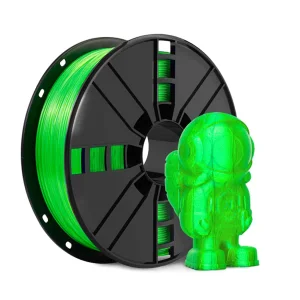
Industrial vibrant green PETG formulation optimized for high-speed layer deposition and excellent impact strength.
View Product Details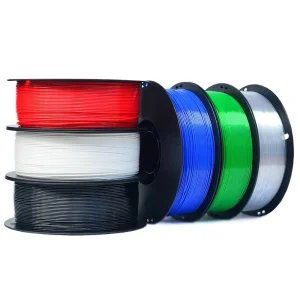
Dual-diameter universal bulk options available in 1.75mm and 2.85mm for industrial bowden and direct-drive systems.
View Product Details
Consistent high-opacity white formulation engineered for medical prototyping, dental models, and cleanroom parts.
View Product Details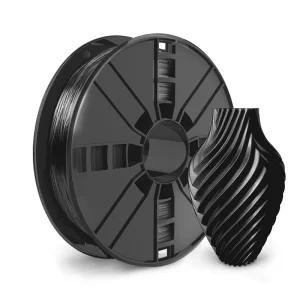
Shore 95A flexible thermoplastic polyurethane for vibration dampers, seals, gaskets, and flexible protective boots.
View Product Details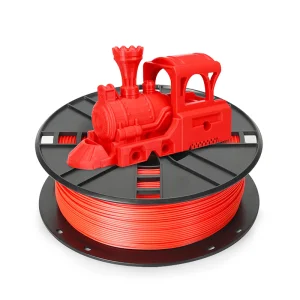
Impact-modified PLA+ compound boasting 5x higher toughness than standard PLA, ideal for functional consumer goods.
View Product Details
Ultra-low haze crystal transparent formulation engineered for light diffusion covers, lenses, and fluidic inspection containers.
View Product Details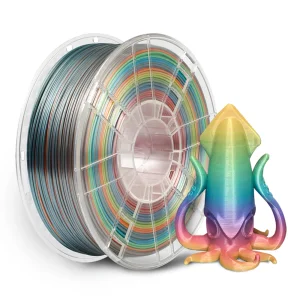
Multi-color transition silk PLA featuring high-gloss pearlescent sheen for decorative display art and retail merchandise.
View Product Details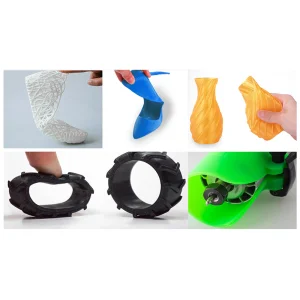
High-fatigue resistance soft elastomer material tailored for flexible couplings, footwear prototypes, and shock absorbers.
View Product DetailsDirect authoritative answers from our senior polymer engineers and global export sales directors regarding PETG manufacturing, processing parameters, and OEM partnerships.
For optimal mechanical performance and layer adhesion, we recommend setting nozzle temperatures between 235°C and 245°C (240°C optimal for standard print speeds of 60–100 mm/s). The heated bed should be maintained between 70°C and 80°C. When printing on high-speed printers (Bambu Lab, Creality K1, Voron), print temperature can be elevated to 250°C–255°C with part cooling fan speeds set to 30%–50% to balance overhang bridging with layer shear strength.
PETG stringing and bubbling are primarily caused by moisture absorption (hygroscopic behavior) and incorrect retraction settings. Torwell prevents this at the factory level by drying virgin resin to <0.02% moisture content prior to extrusion, followed by immediate inline vacuum heat-sealing with desiccant packs. On the printer side, set retraction distance to 1.0–2.0mm for direct-drive extruders (or 4.0–6.0mm for Bowden systems) with travel speed at 150mm/s+ and extra prime length set to 0.
PETG forms extremely strong chemical bonds with smooth PEI sheets, which can cause surface gouging or sheet destruction during part removal. We strongly recommend using textured PEI powder-coated sheets or applying a thin releasing agent barrier (such as PVA glue stick or specialized bed adhesive) on smooth PEI or glass beds. Always allow the print bed to cool fully below 35°C before removing printed parts.
Our standard wholesale MOQ for stock PETG colors (Clear, Black, White, Red, Blue, Grey, Yellow, Green) is 100 kg per SKU. For custom Pantone or RAL color compounding, our R&D lab requires physical color sample matching or spectrophotometer codes with an OEM manufacturing MOQ of 500 kg per custom color. Private label spool sticker, vacuum packaging design, and custom box artwork are fully supported for orders exceeding 1,000 total spools.
We utilize dual-axis high-speed laser micrometers installed on every automated line. These optical gauges continuously scan the strand diameter across X and Y axes simultaneously at 2,000 Hz. The measurement real-time feed connects directly to our PLC control server, adjusting puller capstan speed dynamically to guarantee continuous dimensional consistency strictly within ±0.02 mm tolerance and <1% ovality deviation.
Yes. Our raw PETG base resins comply with FDA 21 CFR 177.1630 and EU Regulation No. 10/2011 for direct food contact safety. However, for end-use 3D printed parts intended for food contact, buyers must ensure that the 3D printer hotend utilizes a food-safe stainless steel nozzle (avoiding leaded brass nozzles) and that post-processing seals microscopic layer lines to prevent bacterial accumulation.
Every individual spool is wrapped in a heavy-duty moisture-proof vacuum bag with active silica desiccant, packed in a thick individual corrugated retail carton. For bulk container freight, 12 or 24 individual boxes are packed into double-wall master export cartons, fully palletized, shrink-wrapped, and corner-board protected to withstand sea transit humidity and mechanical shock across long-distance export routes.
Evaluation sample spools for standard stocked PETG colors ship within 24 to 48 hours upon request. Standard wholesale container orders (20ft / 40ft FCL or LCL shipments ranging from 2,000 kg to 15,000 kg) feature an average factory production turnaround lead time of 12 to 18 business days from initial order confirmation and artwork approval.