Explore our premium factory-direct filament portfolio optimized for high performance, mechanical toughness, and outdoor weatherability.
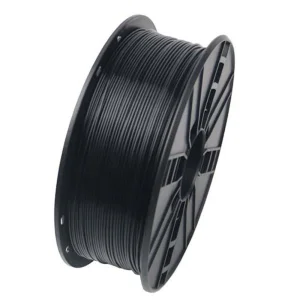
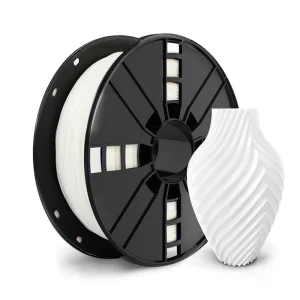
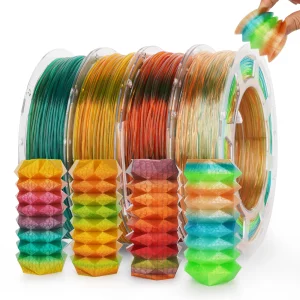
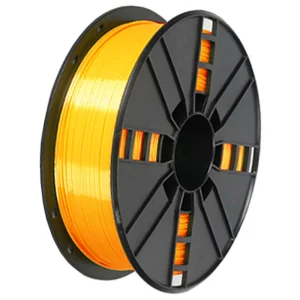
An in-depth analysis of Acrylonitrile Styrene Acrylate terpolymers and why modern additive manufacturing relies on ASA for outdoor durability.
In the realm of industrial thermoplastic extrusion, Acrylonitrile Styrene Acrylate (ASA) represents a critical evolutionary leap over standard Acrylonitrile Butadiene Styrene (ABS). While ABS has historically served as a core workhorse material for Fused Deposition Modeling (FDM) and Fused Filament Fabrication (FFF), its chemical vulnerability to ultraviolet radiation and atmospheric oxygen limits its long-term viability in outdoor environments. Leading global ASA filament manufacturers and factories have re-engineered the polymer matrix to replace the butadiene rubber phase with an acrylic ester elastomer, creating a high-performance material tailored for severe environmental exposure.
The core structural distinction of ASA lies within its terpolymer composition. Standard ABS utilizes polybutadiene rubber to achieve impact resistance. However, polybutadiene contains unsaturated double bonds ($C=C$) along its backbone. When exposed to ultraviolet radiation (UV-A and UV-B spectra present in natural sunlight), these double bonds undergo photo-oxidative degradation, causing polymer chain scission, yellowing, embrittlement, and rapid micro-cracking.
ASA synthetically replaces polybutadiene with a saturated acrylic ester elastomer (typically polybutyl acrylate). Because the acrylic rubber phase lacks double bonds, it exhibits extraordinary inherent resistance to photo-oxidation. The styrene-acrylonitrile (SAN) matrix provides structural rigidity, tensile strength, and high chemical resistance, while the grafted acrylic rubber particles deliver high impact energy absorption without UV sensitivity.
Maintains mechanical toughness, gloss retention, and color fastness even after 2,000+ hours of continuous QUV accelerated weathering tests under ASTM G154 standards.
Exhibits a Glass Transition Temperature ($T_g$) of approximately $100^\circ\text{C}$ to $105^\circ\text{C}$, allowing 3D printed parts to endure ambient thermal stress without structural warping or softening.
Delivers high Izod notched impact resistance ($> 20 \text{ kJ/m}^2$), absorbing dynamic mechanical shocks in rugged industrial, automotive, and outdoor mounting applications.
How OEMs, tier-1 suppliers, and print farms leverage ASA filament across automotive, telecommunications, marine, and smart infrastructure markets.
As additive manufacturing shifts from rapid prototyping to end-use production, global demand for ASA filament wholesale manufacturers has grown dramatically. The unique balance of mechanical strength, aesthetic surface finishing, and long-term chemical resilience makes ASA the definitive choice for functional hardware installed in uncontrolled outdoor environments.
Extensively deployed for custom side mirror housings, bumper trim panels, roof rack mounting brackets, and EV charging plug adapters that require long-term color matching and impact resistance.
Protective enclosures for outdoor 5G small cells, IoT environmental sensors, antenna radomes, and satellite receiver mounts require radio-frequency transparency combined with weatherproof durability.
Resistant to salt spray, humidity, and continuous solar exposure. Ideal for boat dashboard instrument panels, navigational light housings, hatch latches, and marine sensor brackets.
Housing units for municipal traffic monitoring cameras, solar micro-inverter covers, outdoor lighting fixtures, and electrical junction boxes that must withstand severe weather transitions.
Why partnering with specialized Chinese 3D printing filament factories guarantees bulk scale, precision tolerances, and cost efficiencies.
China has solidified its position as the global hub for advanced 3D printing consumable production. As top-tier China ASA filament manufacturers and factories, modern facilities combine deep chemical formulation expertise with ultra-precise automated extrusion lines. Partnering directly with high-capacity suppliers offers enterprise buyers distinct operational advantages:
Every roll is immediately vacuum-sealed with high-capacity desiccant pouches inside heavy-duty multi-layer foil bags to eliminate humidity absorption during ocean transport.
Full lot tracing from incoming resin analysis, melt flow index (MFI) testing, color spectrophotometry logs, down to the finished sealed box.
Mass manufacturing throughput allows B2B buyers, private labels, and distributors to achieve highly competitive wholesale pricing structures.
Pioneering composite chemistries, high-speed flow additives, and functional engineering modifications driving the next generation of ASA materials.
The additive manufacturing industry is rapidly shifting toward higher printing speeds and specialized functional performance. To support next-generation core platforms, R&D teams at leading ASA filament factories are pioneering critical material enhancements:
By compounding 15% to 20% high-modulus chopped carbon fibers into the ASA terpolymer matrix, engineers achieve significantly elevated flexural strength ($> 5,500\text{ MPa}$) and vastly reduced thermal expansion coefficients. The inclusion of carbon fiber virtually eliminates bed warping, produces an attractive matte surface finish that hides layer lines, and retains the material's underlying UV resistance.
Modern high-speed CoreXY 3D printers require higher melt flow indexes (MFI). Next-generation ASA formulations incorporate specialized internal lubricants and rheology modifiers that decrease melt viscosity at high shear rates without sacrificing inter-layer adhesion strength or thermal deflection capability.
For sensitive electronics manufacturing and public transit applications, modified ASA compounds feature integrated conductive carbon nanotube networks to safely dissipate static charges ($10^6 - 10^9 \text{ ohms/sq}$) or non-halogenated flame retardant additives designed to meet strict UL94-V0 flammability ratings.
End-to-end B2B services tailored for international brand owners, Amazon sellers, and regional industrial distributors.
In-house spectrophotometer color lab matching exact brand specifications (Pantone, RAL, or physical plastic samples) with high color fastness and zero batch deviation.
Available in 250g, 1kg, 3kg, 5kg, and 10kg spools. Choose from eco-friendly recycled cardboard spools, high-temp polycarbonate spools, custom die-cut master cartons, and custom branding labels.
Full compliance support including RoHS, REACH (SVHC-free), VOC emissions testing, ISO 9001:2015 quality control management, and multi-language Technical Data Sheets (TDS) and Safety Data Sheets (SDS).
Benchmark data comparing ASA against ABS, PETG, PC, and Carbon Fiber composites for engineering selection.
| Material Property | ASA Filament | ABS Filament | PETG Filament | PC (Polycarbonate) | ASA-CF Composite |
|---|---|---|---|---|---|
| UV & Weather Resistance | Outstanding (5/5) | Poor (Yellows/Brittle) | Moderate (3/5) | Moderate (Requires Coating) | Outstanding (5/5) |
| Heat Deflection Temp (HDT) | 100°C – 105°C | 95°C – 100°C | 70°C – 75°C | 135°C – 145°C | 110°C – 115°C |
| Tensile Strength (MPa) | 45 – 50 MPa | 40 – 45 MPa | 48 – 53 MPa | 65 – 75 MPa | 60 – 70 MPa |
| Flexural Modulus (MPa) | 2,100 – 2,400 | 2,000 – 2,200 | 2,000 – 2,100 | 2,300 – 2,500 | 5,500 – 6,500 |
| Printing Enclosure Requirement | Recommended | Required | Not Required | Required (High Temp) | Recommended |
| Recommended Nozzle Temp | 240°C – 270°C | 230°C – 260°C | 230°C – 250°C | 270°C – 300°C | 250°C – 280°C |
Addressing common technical printing challenges, procurement MOQs, and OEM production workflows.
A: While ASA offers comparable thermal deflection and mechanical strength to ABS, its saturated acrylic rubber structure renders it virtually immune to UV degradation and severe atmospheric weathering. ABS degrades, turns brittle, and discolors rapidly under sunlight, whereas ASA retains its color, gloss, and structural integrity for years in outdoor environments.
A: To minimize thermal stress warping, print ASA at a nozzle temperature of 240°C–270°C and a bed temperature of 90°C–110°C inside an enclosed chamber (40°C–60°C ambient). Utilize print bed adhesives (such as PEI sheets, ABS/ASA juice, or specialty adhesive bed sprays) and turn off cooling fans for initial layers to maximize inter-layer fusion.
A: Standard stock colors typically have lower MOQs (e.g., 50–100 kg), while custom Pantone color matching and fully branded OEM packaging (custom box, spool sticker, vacuum bag printing) generally start at 500 kg to 1,000 kg depending on total material specifications and spool weight configurations.
A: Yes. ASA is a hygroscopic polymer that absorbs ambient atmospheric moisture over time. Moist filament leads to steam bubbling, popping noises at the nozzle, increased stringing, and weak layer adhesion. We recommend drying ASA at 70°C–80°C for 4 to 6 hours before printing or using a continuous filament dry box during printing.
A: Precision manufacturing lines utilize automated closed-loop extrusion controls. Dual-axis laser gauges scan the filament thousands of times per minute at 90-degree angles. If variance is detected, the line speed or puller speed automatically recalibrates instantly, ensuring reliable flow without nozzle clogging or under-extrusion.
Explore our extended series of engineering polymers, flexible resins, and specialty silk filaments available for global wholesale order.