Pioneering high-modulus carbon-fiber micro-composite extrusion, engineering polymers, and high-precision ±0.02 mm filaments for tier-1 global distributors and industrial print farms.
Manufactured across automated precision production lines with complete inline rheology and dimension tracking.
The convergence of advanced polymer chemical supply chains, high-torque twin-screw compounding lines, and precision metrology has established China as the global epicenter for industrial-grade carbon fiber 1.75 mm filaments.
Unlike standard filaments that suffer from brittle clustering and clogged nozzles, our clean-room compounding incorporates precision-milled carbon fibers (typically 7–10 μm diameter, length optimized below 150 μm). This matrix guarantees uniform anisotropic tensile distribution, exceptional shear modulus, and friction resistance without abrasive agglomeration.
Thermal stability and non-ovality dictate the reliability of automated filament feeding in modern closed-loop extrusion heads. Torwell's proprietary dual-axis laser scanning measures continuous cross-sections at 1,000 Hz, instantly modulating haul-off tension to eliminate swell and maintain dimensional accuracy within ±0.02 mm.
From base chemical resin selection (PLA, PETG, ABS, PA/Nylon, PC) to masterbatch color synthesis and high-torque composite compounding, our direct factory infrastructure eliminates tertiary trading margins. This grants procurement executives direct OEM customization, batch-level traceability, and stable volume price curves.
The additive sector has permanently pivoted from rapid aesthetic prototyping to structural, load-bearing industrial manufacturing. Carbon fiber composite filaments provide the mechanical baseline for this transformation.
Modern CoreXY printers require modified melt-flow indices. Our CF formulations enhance thermal conductivity, accelerating uniform melting inside high-flow volcano heat blocks without thermal degradation.
Micro-carbon fibers constrain volumetric shrinkage during the transition from glass transition temperature (Tg) to ambient air, yielding dimensional stability, flat print beds, and an immaculate layer-hiding matte exterior.
Providing functional alternatives to aluminum alloys (e.g., Al 6061) in non-critical structural brackets, robotic arm effectors, and automotive ducting, yielding 40–60% component weight reductions.
Tension-controlled, precision layer winding mitigates spool crossing and knotting failures during 100+ hour industrial production runs, ensuring predictable output across industrial print farms.
A reference architecture for global procurement directors, material engineers, and distributor brand owners selecting polymers for balanced performance.
| Polymer / Grade | Nozzle Temp. | Bed Temp. | Key Mechanical Trait | Industrial Applications | Recommended Bed Prep |
|---|---|---|---|---|---|
| Carbon Fiber (PETG-CF / PLA-CF) | 220–250 °C | 50–80 °C | High Rigidity & Zero Warp | Drones, camera rigs, robotic end-effectors, automotive jigs | PEI Sheet / Textured Glass |
| Engineering PC (Polycarbonate) | 260–300 °C | 100–120 °C | High HDT & Tensile Strength | Electrical housings, structural machinery brackets, lighting lenses | Enclosed Chamber + Magigoo |
| PETG (Polyethylene Terephthalate) | 230–250 °C | 70–80 °C | Chemical & Moisture Resistance | Fluid reservoirs, waterproof ducting, snap-fit assemblies | Textured PEI Plate |
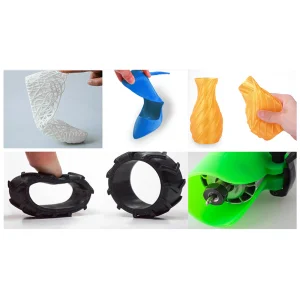
| TPU / TPE (Shore 95A / 85A) | 210–235 °C | 30–60 °C | Elastomeric & Impact Damping | Gaskets, vibration dampeners, custom orthotics, wheels | Direct Drive Extruder |
| ABS / ASA High Heat | 230–265 °C | 90–110 °C | UV & Thermal Resistance | Automotive exterior trims, marine telemetry, outdoor sensor cases | Enclosure / Polyimide Tape |
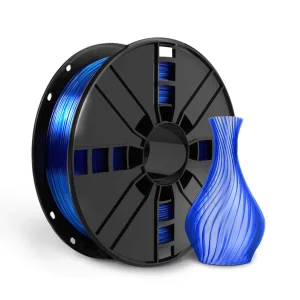
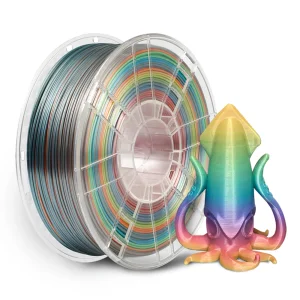
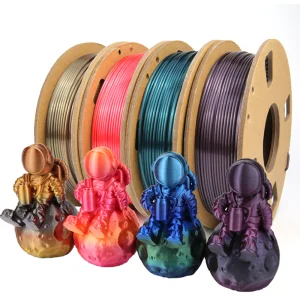
| PLA+ / Silk Coextrusion | 195–225 °C | 45–60 °C | Cosmetic Sheen & Low Brittleness | Retail consumer goods, architectural displays, concept models | Smooth / Textured Glass |
Addressing structural bottlenecks across regional supply chains with localized formulation optimization and flexible packing architectures.
Automotive assembly lines in Germany, Mexico, and the USA demand non-conductive, lightweight inspection fixtures and custom CMM nests. Torwell's Carbon Fiber 1.75 mm allows rapid on-site 3D printing of assembly jigs, eliminating long machining lead times while reducing the weight of assembly tooling handled by floor operators.
Unmanned aerial vehicles require ultra-high stiffness-to-weight ratios to preserve battery endurance and payload capacity. Carbon Fiber PETG and Nylon 1.75 mm fulfill structural motor mounts, fuselage ribs, and battery enclosures, delivering the high flexural modulus necessary to resist aerodynamic vibrational flutter.
For cross-border brands, success hinges on minimizing RMA returns due to broken filament, vacuum loss, or tangled spools. Torwell provides complete turn-key OEM solutions: customized Pantone color-matching, moisture-barrier dual-foil packaging, customized branded carton artwork, and QR code technical sheets.
Filament print quality is dictated by upstream precision. Our ISO-monitored manufacturing process eliminates voids, inconsistent additives, and moisture entrapment before distribution.
Engineering resins (TPU, PETG, PC, CF composites) undergo 4 to 6 hours of high-temperature honeycomb desiccant hopper drying, dropping base material moisture content under 0.02% prior to melt plastification.
Custom multi-zone barrel heating profiles maintain optimal melt viscosity. The shear screw design guarantees that carbon fiber bundles are uniformly wet-out and dispersed throughout the thermoplastic carrier without mechanical breakage.
Dual-stage temperature-controlled water baths prevent rapid thermal crystallization shock, optimizing internal crystalline morphology, roundness, and eliminating micro-void formation within the core matrix.
Continuous closed-loop laser calipers detect both X and Y axis dimensions at ultra-high frequency. Any out-of-spec filament (> ±0.02 mm) triggers automatic puller servo adjustments or spool rejection.
Computerized servo traversing lays clean, non-crossing filament lines on standard or cardboard spools. Spools immediately transition to clean packaging rooms for vacuum sealing with active desiccant and barrier foil.
Comprehensive answers compiled by our chief polymer engineer and export department to streamline technical due diligence.
Yes. Due to the abrasive nature of chopped carbon fibers, standard brass nozzles will degrade rapidly, leading to orifice enlargement and severe extrusion inconsistencies. We strongly recommend hardened steel, tungsten carbide, or ruby-tipped nozzles (minimum 0.4 mm orifice, though 0.6 mm is preferred to minimize clogging risk). A direct-drive extruder and wear-resistant feeder gears (e.g., hardened steel dual-drive) are also advisable.
Composite filaments are inherently more challenging to extrude due to variable melt fracture and die swell caused by fiber orientation. Torwell employs custom-geometry extrusion dies, stable melt gear pumps, and a dual-axis continuous laser micrometry system. The laser scanner continuously feeds haul-off pulling velocity corrections to the servo drives, maintaining an industry-leading ±0.02 mm diameter tolerance and high roundness across 1,000-meter continuous sections.
We provide full white-label and ODM solutions: custom compounding to achieve specific tensile or flame-retardant (UL94-V0) ratings, Pantone color matching, private-label spool molding (including eco-friendly recyclable pressed cardboard spools), customized moisture-barrier packaging bags, branded boxes, and customized master carton palletization. Technical documentation (TDS, SDS, RoHS, REACH) is completely customized for your regional compliance.
Polymer composites—especially CF-PETG, CF-Nylon, and TPU—are hygroscopic. All spools leaving Torwell’s factory are immediately vacuum-sealed inside high-barrier composite foil bags with high-absorption clay desiccant sachets. Cartons are sealed with reinforced tape and shrink-wrapped with corner protectors on standard fumigated pallets, guaranteeing pristine dry status upon warehouse arrival across Europe, the Americas, and the Middle East.
Operating a 2,500 m² standardized manufacturing facility equipped with 6 automated continuous extrusion lines, Torwell maintains a monthly output of 50,000 to 60,000 kilograms. Standard catalog SKUs can be dispatched within 7–10 days. Customized OEM full container load (FCL) orders typically ship within 20–25 days from digital artwork approval and deposit confirmation.
Engineered for high layer-to-layer adhesion, predictable thermal properties, and AMS multi-color system compatibility.