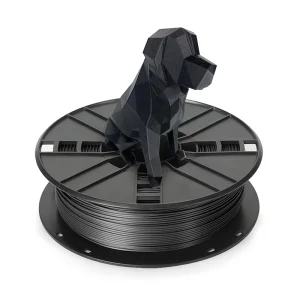
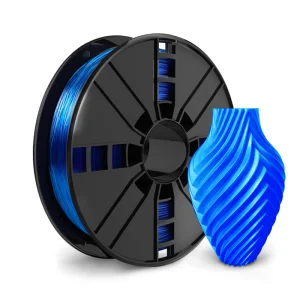
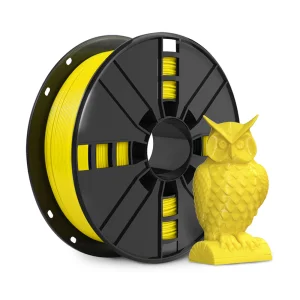
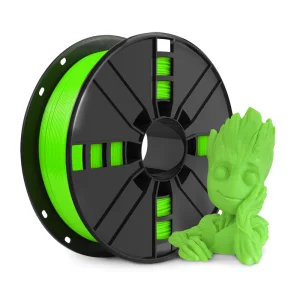
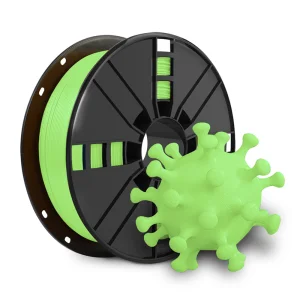
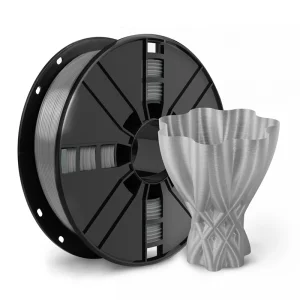
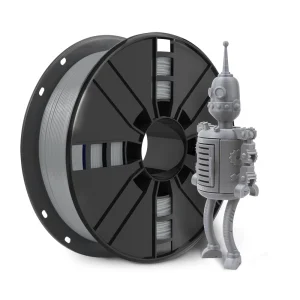
Precision-extruded polymer spools designed for high-speed desktop & industrial FDM 3D printing systems with tight diameter tolerances (±0.02mm).
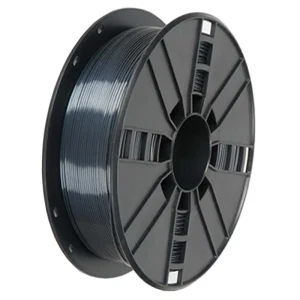
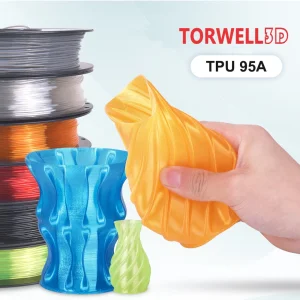
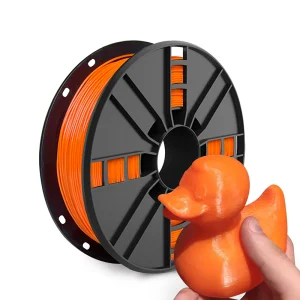
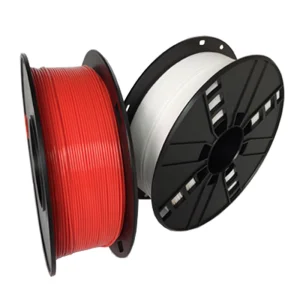
Acrylonitrile Butadiene Styrene (ABS) remains a foundational thermoplastic in industrial Additive Manufacturing (AM) due to its exceptional mechanical toughness, thermal endurance, and post-processing versatility. As a leading China ABS Filament 1.75mm Manufacturer operating since 2011, Torwell Technologies Co., Ltd. has systematically addressed the core challenges of desktop and industrial FDM 3D printing: volumetric instability, interlaminar shear stress failure, and melt flow fluctuation.
The chemical matrix of high-grade 1.75mm ABS filament is a precise terpolymer synthesis consisting of three distinct monomers, each contributing specific mechanical properties:
Provides thermal resistance, chemical inertia against oils and solvents, and elevated surface hardness. This monomer elevates the Glass Transition Temperature ($T_g$) of the compound to approximately 105°C.
Acts as an elastomer network within the rigid matrix, delivering exceptional impact resistance and ductile energy absorption even under low-temperature operations (-20°C).
Imparts a sleek, glossy surface finish, mechanical rigidity, and optimized melt processing properties, ensuring stable viscosity dynamics during high-speed hotend extrusion.
Achieving a standardized 1.75 mm nominal diameter with an inline tolerance of ±0.02 mm requires advanced dual-axis laser micrometer feedback loops. Diameter deviation in low-grade ABS causes volumetric feeding errors: an upper tolerance breach (+0.05 mm) induces hotend clogging and extruder gear stripping, whereas a lower breach (-0.05 mm) results in severe under-extrusion, void formation, and layer delamination.
Engineering solutions to control thermal contraction vectors and residual stresses in closed-chamber 3D printing environments.
Unmodified ABS exhibits a high linear thermal expansion coefficient ($\alpha \approx 8.8 \times 10^{-5}\text{ K}^{-1}$). During the rapid phase transition from molten polymer (~240°C) to ambient room temperature (~25°C), volumetric shrinkage forces generate severe shear strain between adjacent printed layers. Without controlled chamber temperature, this internal stress leads to corner lifting (warping) and inter-layer cracking.
To guarantee zero-warp prints on large-scale parts (over 200mm footprint), Torwell's technical application guidelines specify a heated bed temperature of 90°C–110°C paired with a passive or active heated build chamber of 50°C–70°C. Maintaining the ambient air near the polymer's $T_g$ allows residual thermal stress to relax continuously during the print cycle.
A defining advantage of 1.75mm ABS filament manufactured by Torwell is its chemical solubility in polar solvents, specifically acetone ($C_3H_6O$). When exposed to controlled vapor phase acetone, the outer polymer chains undergo localized dissolution, permitting surface tension to eliminate layer lines and yield an optically smooth, injection-molded surface finish with enhanced water-tight sealed properties.
Torwell Technologies Co., Ltd. — Operational scale, automated quality management, and enterprise OEM/ODM capabilities.
Operating a 2,500 m² modern manufacturing plant fitted with twin-screw compounding extruders, closed-loop water cooling troughs, and tension-regulated servo winders.
100% pure raw resin polymerization sourcing without unverified post-consumer scrap mixture, ensuring predictable Melt Flow Index (MFI) and zero internal void bubbles.
Custom Pantone color formulation matching ($\Delta E < 1.0$), private-label spool graphics, eco-friendly cardboard spools, and customized anti-moisture barrier bags.
Deployment scenarios across North American, European, and Asia-Pacific manufacturing clusters.
ABS filament 1.75mm is widely deployed for interior vehicle trim prototyping, custom ventilation ducts, engine compartment bracket checks, and assembly line jigs. Its high Heat Deflection Temperature (HDT of ~95°C at 0.45 MPa) prevents thermal sag inside closed vehicle cabins during summer heat spikes.
Due to its high impact resistance and dielectric strength, engineering-grade ABS is the gold standard for handheld power tool housings, UAV drone frames, robotic chassis, and custom enclosure boxes housing active printed circuit boards (PCBs).
Commercial 3D printing service bureaus running high-speed FDM platforms (e.g., Bambu Lab X1/P1 series, Voron 2.4, Creality K1 Max, Raise3D) utilize Torwell's high-flow ABS formulations to operate at linear print speeds exceeding 300 mm/s without experiencing hotend starvation or poor layer fusion.
Machined metal tooling often incurs long lead times and high capital costs. ABS printed molds undergo post-processing smoothing to serve as vacuum thermoforming dies, short-run silicone casting patterns, and low-pressure injection molding inserts.
Pioneering composite additions, ultra-high-speed extrusion chemistry, and environmental safety standards.
Modified polymer chain length distribution to achieve an elevated Melt Volume-Flow Rate (MVR > 25 cm³/10min at 220°C/10kg). Designed specifically for 300mm/s – 500mm/s motion systems while preserving 90% of structural tensile strength.
Compounding 15% chopped high-modulus carbon fibers into the ABS polymer matrix. Increases flexural modulus by 140%, virtually eliminates thermal expansion coefficient ($\alpha \to 0$), and provides an attractive matte black technical surface finish.
Integrating halogen-free organophosphorus flame retardant additives. Enables self-extinguishing behavior within 10 seconds of direct ignition, meeting stringent electrical equipment housing standards.
Formulating ultra-low volatile organic compound (VOC) resins to minimize styrene emissions during extrusion, coupled with 100% recyclable cardboard spool systems to reduce carbon footprints.
Engineering property comparison between standard ABS 1.75mm and alternative industrial 3D printing filaments.
| Material Spec | Density (g/cm³) | Tensile Strength (MPa) | Flexural Modulus (MPa) | HDT @ 0.45 MPa (°C) | Nozzle Temp (°C) | Bed Temp (°C) | Chemical Resistance |
|---|---|---|---|---|---|---|---|
| Torwell ABS 1.75mm | 1.04 | 43 | 2,100 | 94 | 230 – 260 | 90 – 110 | Moderate (Acetone Soluble) |
| Standard PLA | 1.24 | 55 | 3,500 | 55 | 190 – 220 | 40 – 60 | Low |
| Tough PLA+ | 1.22 | 48 | 2,800 | 60 | 200 – 230 | 50 – 60 | Low |
| PETG Grade | 1.27 | 45 | 1,950 | 70 | 230 – 250 | 70 – 85 | High (Alkaline/Acid) |
| ASA (Outdoor ABS) | 1.07 | 45 | 2,200 | 98 | 240 – 270 | 90 – 110 | High (UV Stable) |
| Carbon Fiber ABS | 1.10 | 62 | 4,800 | 108 | 250 – 280 | 90 – 110 | High |
ABS is a moderately hygroscopic polymer, absorbing moisture from ambient humidity at a rate of 0.2% – 0.4% over 24 hours. Water molecules trapped inside the 1.75mm filament vaporize instantly when passing through a 240°C extrusion nozzle, creating micro-explosions that manifest as audible popping sounds, internal stringing, voids, and severe reduction in tensile layer bond strength.
To eliminate moisture contamination and ensure absolute zero-defect delivery across international freight channels, Torwell Technologies implements a 4-Tier Sealed Quality Assurance Protocol:
Raw polymer pellets undergo continuous desiccant dehumidification drying at 80°C for 4 hours to reduce moisture content below 0.02% prior to extrusion.
Dual-axis laser micrometers measure strand diameter and roundness 500 times per second, automatically cutting off any segment exceeding ±0.02mm variance.
Immediately after neat-spool winding, each spool is heat-sealed inside a thick multi-layer barrier bag accompanied by a high-absorption desiccant packet.
All production batches comply with ISO 9001:2015 quality management standards, RoHS (2011/65/EU), REACH (EC 1907/2006), and CE safety regulations.
In-depth technical answers for procurement directors, product engineers, and distribution partners.
1.75mm diameter filament has become the global industry standard for desktop and professional 3D printers due to its lower cross-sectional area, which allows faster heat transfer and lower melt resistance in the hotend. This enables precise volumetric control, lower extrusion drive force, and seamless compatibility with direct-drive extruders and modern multi-material systems (such as Bambu Lab AMS or Prusa MMU3).
Our production facility uses high-precision extrusion screws combined with closed-loop dual-axis laser measurement systems. If the sensor detects a drift beyond ±0.02mm, the automated haul-off speed adjusts instantly to compensate. Substandard material is automatically flagged and rejected before spooling.
Optimal nozzle temperature ranges between 230°C and 260°C, with a heated bed temperature set between 90°C and 110°C. We strongly advise printing inside a closed enclosure with the print cooling fan turned off (or at a minimal 10-20% for extreme overhangs) to maximize interlayer thermal diffusion and prevent warping.
Torwell offers complete OEM/ODM solutions for global distributors and retail brands. Services include custom color compounding based on Pantone or physical color samples, custom spool branding (cardboard or plastic), specialized master carton artwork design, vacuum seal label customization, and custom spool weight configurations (e.g., 250g, 500g, 1kg, 2.5kg, 5kg spools).
If exposed to ambient humidity, dry the ABS spool in a dedicated filament dryer or convection oven at 65°C – 70°C for 4 to 6 hours. Store unused spools inside sealed vacuum bags with active silica gel desiccant packs to maintain dry status.
Heating ABS above 220°C releases volatile organic compounds (VOCs) including trace styrene fumes and ultrafine particles (UFPs). It is best practice to operate ABS 3D printers in well-ventilated areas or install enclosed filtration systems equipped with activated carbon and HEPA filters.
ASA (Acrylonitrile Styrene Acrylate) replaces polybutadiene rubber with an acrylate elastomer. While ABS excels in indoor impact toughness and cost efficiency, ASA provides superior UV resistance and weatherability, making ASA the preferred choice for long-term outdoor applications exposed to direct sunlight.
For standard stock products, MOQ starts at 50 to 100 kg. Custom OEM colors and customized packaging orders typically require an MOQ of 500 kg per SKU. Factory production lead time ranges from 10 to 15 business days following order confirmation and artwork approval.
Explore our extended portfolio of enterprise polymer spools, specialty series, and high-performance material solutions.