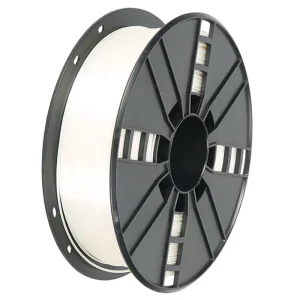
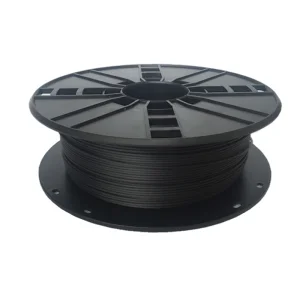
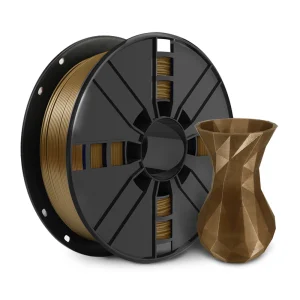
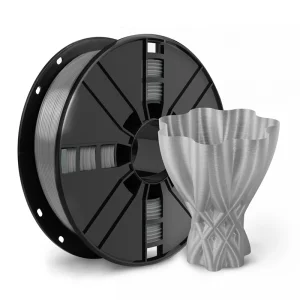
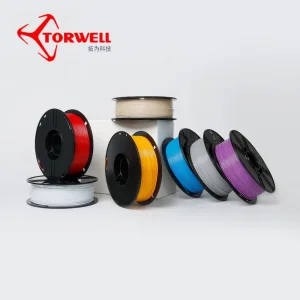
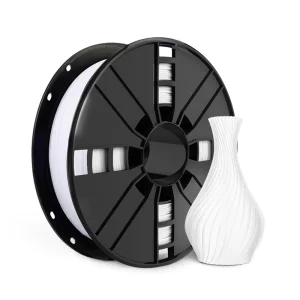
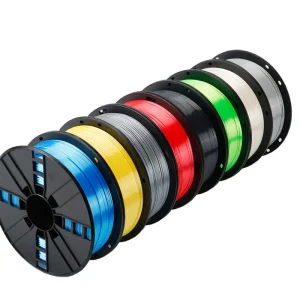
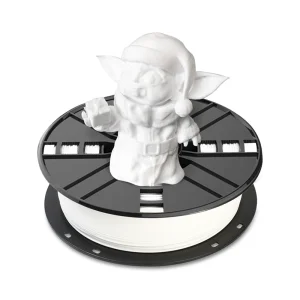
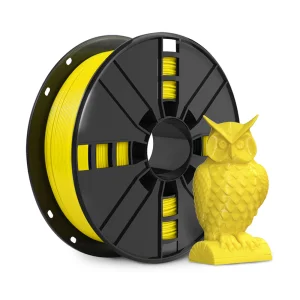
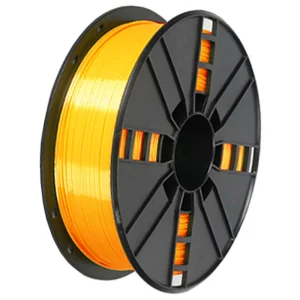
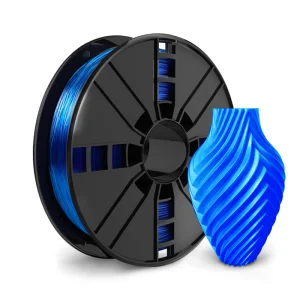
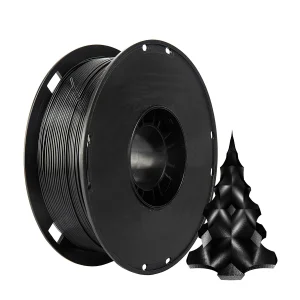
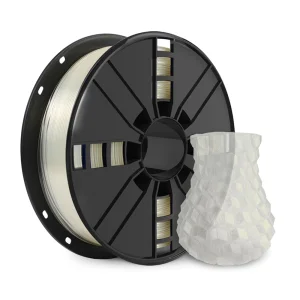
Engineered for seamless compatibility across high-speed Bambu Lab, Voron, Creality, and Prusa ecosystems. Select an item to review direct factory pricing and technical specifications.
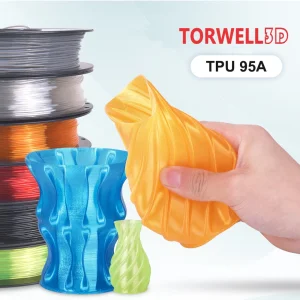
An authoritative analysis of polymer consumable demand, structural shifts toward high-speed printing, and industrial print farm scaling.
The global Fused Deposition Modeling (FDM) / Fused Filament Fabrication (FFF) market is undergoing a paradigm shift. Historically confined to low-volume visual prototyping, 3D printing has emerged as a mainstream, decentralized manufacturing engine. Print farms operating hundreds of machines simultaneously require uncompromised batch-to-batch consistency, zero wire-tangle guarantees, and elevated thermal fluidity to maintain continuous 24/7 uptime.
As international distributors adapt to growing end-user demands, procurement strategies have shifted from opportunistic sourcing to establishing long-term relationships with dedicated China 3D printer filament bulk manufacturers and suppliers capable of maintaining rigid quality control protocols across metric tons of polymer output.
The widespread market penetration of high-speed Core-XY 3D printers—exemplified by Bambu Lab X1/P1 series, Voron 2.4 architectures, and Creality K1 platforms—has fundamentally altered raw material requirements. Traditional filaments designed for slow 40–60 mm/s printing fail at speeds exceeding 300–500 mm/s due to insufficient volumetric melt rates and poor inter-layer thermal bonding.
Modern bulk suppliers must re-engineer polymer rheology. By introducing specialized plasticizers, nucleating agents, and optimized melt flow indices (MFI), next-generation filaments preserve structural shear strength and surface finish even under extreme linear acceleration.
Why direct partnership with leading Chinese extrusion facilities provides scalable cost structures, structural raw material advantages, and strict quality assurance.
Direct integration with chemical giants (such as NatureWorks, Wanhua Chemical, and Sinopec) ensures priority access to premium virgin PLA, PETG, ABS, and TPU resins. By bypassing third-party compounding agents, Chinese manufacturers secure steady raw material supply at optimal cost points.
Equipped with standardized automated production lines, state-of-the-art facilities run continuous extrusion. Real-time laser micrometer feedback loops auto-adjust melt pump speeds to maintain strict ±0.02 mm diameter tolerance and roundness compliance.
Strategic positioning near primary maritime hubs (Shenzhen, Guangzhou, Ningbo, Shanghai) reduces domestic transit delays. Consolidated container shipments (FCL/LCL) feature moisture-sealed vacuum packaging with desiccant protection to prevent hydrolysis during ocean transit.
Exploring next-generation materials: high-temperature composites, recycled sustainable polymers, and decorative dual-color multi-extrusion formulations.
To overcome volumetric flow limitations at high print speeds, R&D teams have introduced low-viscosity polymer backbone modifications. These engineered resins melt rapidly upon entering the hotend melt zone and solidify cleanly upon exiting the cooling fan shroud.
Industrial applications demand enhanced tensile modulus, heat deflection temperature (HDT), and dimensional stability. By compounding micro-carbon fibers and glass fibers into engineering matrix resins, advanced composite filaments deliver exceptional stiffness for functional end-use parts.
Consumer markets demand unique visual effects without post-processing. Multi-color co-extrusion technology embeds distinct color strands side-by-side inside a single 1.75mm filament strand, yielding dynamic color-shifting prints.
Environmental compliance and ESG directives drive the adoption of sustainable 3D printing consumables across Western export markets.
How specialized material grades drive productivity, cost savings, and technical innovation across global sectors.
Primary Filaments: ABS, ASA, Carbon Fiber PLA/PC.
Manufacturing plants utilize high-impact ABS and UV-resistant ASA for custom assembly jigs, sensor brackets, and low-volume air intake prototypes. Carbon fiber additives prevent thermal deformation under engine bay conditions.
Primary Filaments: Biocompatible PETG, Soft TPU (Shore 85A/95A), Tough PLA+.
Surgical planning models require anatomical accuracy. Flexible TPU allows custom prosthetic socket liners, orthopedic insoles, and wearable medical device housings with soft-touch ergonomics.
Primary Filaments: Bulk PLA (1kg/3kg/5kg spools), Rapid PETG.
Commercial print farms producing thousands of finished consumer products require consistent spool winding. Zero-tangle automated spooling eliminates costly nozzle clogs and mid-print failures.
Comprehensive physical and thermal parameter index tested via standardized ISO methods (Karl Fischer Titration, Tensile Testing ISO 527, Impact Testing ISO 179).
| Polymer Grade | Density (g/cm³) | Melt Flow Index (MFI) | Tensile Strength (MPa) | Heat Deflection (HDT @ 0.45MPa) | Target Diameter Tolerance | Recommended Nozzle Temp |
|---|---|---|---|---|---|---|
| Standard PLA | 1.24 | 7 - 11 (190°C/2.16kg) | 62 MPa | 55 °C | ±0.02 mm | 190 - 220 °C |
| High-Speed PLA+ | 1.23 | 14 - 20 (210°C/2.16kg) | 68 MPa | 58 °C | ±0.02 mm | 200 - 230 °C |
| Industrial PETG | 1.27 | 10 - 15 (230°C/2.16kg) | 50 MPa | 70 °C | ±0.02 mm | 230 - 250 °C |
| Impact ABS | 1.05 | 15 - 22 (220°C/10kg) | 43 MPa | 85 °C | ±0.03 mm | 230 - 260 °C |
| Flexible TPU 95A | 1.21 | 12 - 18 (210°C/1.2kg) | 35 MPa | 60 °C | ±0.03 mm | 210 - 230 °C |
| Carbon Fiber PLA | 1.29 | 8 - 12 (210°C/2.16kg) | 75 MPa | 64 °C | ±0.02 mm | 210 - 235 °C |
| Engineering PC | 1.20 | 18 - 25 (300°C/1.2kg) | 70 MPa | 120 °C | ±0.03 mm | 260 - 290 °C |
Comprehensive private-label packaging solutions, international chemical safety compliance, and bespoke Pantone color matching for regional distributors.
Fully tested to comply with EU Regulation EC 1907/2006 (REACH) and Directive 2011/65/EU (RoHS). Free of heavy metals, lead, cadmium, and hazardous phthalates.
Spectrophotometer-guided Pantone/RAL shade matching. Deliver physical masterbatch samples or digital codes to receive custom-dyed production runs within 7–10 days.
Custom printed die-cut boxes, customized spool stickers, branded moisture barrier bags, and outer export cartons styled to your exact brand identity system.
Standard 1kg spools alongside specialized 250g sample spools, 500g mini spools, or heavy industrial 3kg, 5kg, and 10kg bulk spools tailored for large-format 3D printers.
Explore high-impact ABS, high-temp PC, flexible Shore 95A TPU, and decorative Silk PLA variants directly from our factory inventory.
Direct answers to crucial operational queries regarding MOQs, OEM customizations, diameter tolerances, and moisture packaging.
Partner directly with China's leading polymer extrusion manufacturer. Request a factory-direct wholesale quote, technical datasheets, or custom OEM samples today.
Contact Sales Team