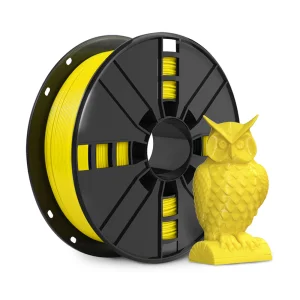
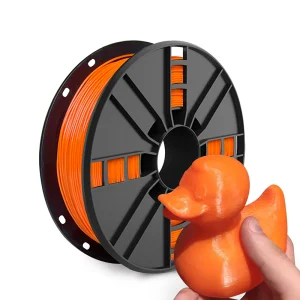
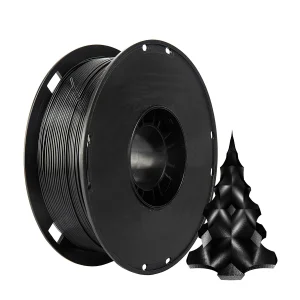
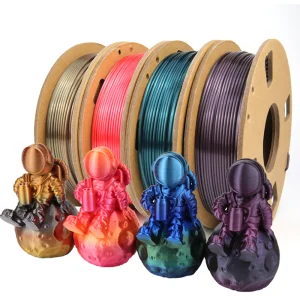
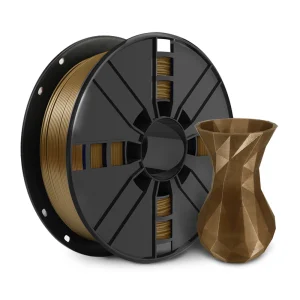
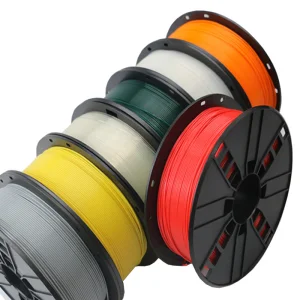
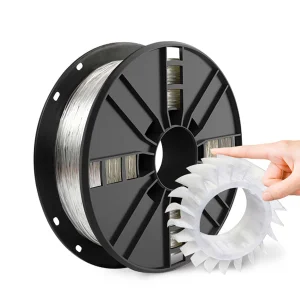
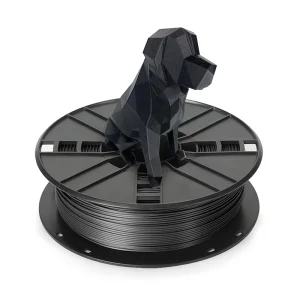
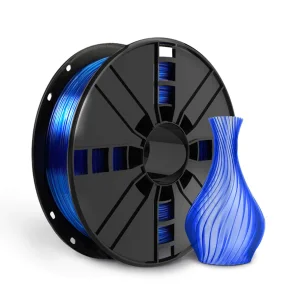
Direct factory wholesale supply with guaranteed diameter tolerance of ±0.02mm and tangle-free spooling technology.
An in-depth technical analysis of Thermoplastic Polyurethanes (TPU) and Thermoplastic Elastomers (TPE) in fused deposition modeling (FDM).
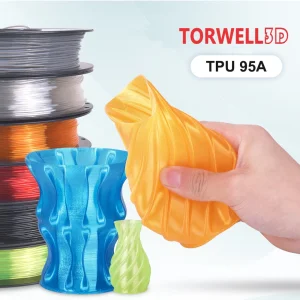
Flexible filaments rely on block copolymer chemistry consisting of alternating hard and soft segments. Hard segments (typically aromatic or aliphatic diisocyanates) impart tensile strength and thermal stability, while soft segments (polyether or polyester polyols) dictate elasticity, energy dissipation, and elongation at break. Standard commercial offerings range from Shore 80A to 98A, balancing feedability with flexibility.
Achieving stable FDM deposition with elastomeric polymers requires precise melt flow index (MFI) control. At a standard printing temperature of 210°C to 235°C, flexible 1.75mm filaments experience non-Newtonian shear-thinning behavior. Strict diameter tolerance (±0.02mm) eliminates backpressure fluctuation inside the hotend melt zone, avoiding nozzle swelling and column buckling under axial compression.
Polyether-based and polyester-based TPUs are extremely hygroscopic. Ambient moisture absorption leads to hydrolytic degradation during extrusion, manifesting as steam micro-bubbles, severe stringing, reduced inter-layer adhesion, and micro-void embrittlement. Factory-level vacuum sealing with molecular sieve desiccants guarantees moisture levels below 0.05% weight threshold.
Comprehensive material comparison for industrial enterprise procurement, print farm deployment, and OEM product line development.
| Material Parameter | TPU 95A (Standard Flex) | TPU 85A (Ultra Flex) | TPE 83A (Rubber-Like) | TPC / TPEE (Engineering Flex) |
|---|---|---|---|---|
| Shore Hardness | 95A (Rigid Flex) | 85A (Soft Rubber) | 83A (Soft Gel) | 55D (Semi-Rigid) |
| Tensile Strength (MPa) | 45 - 55 MPa | 35 - 40 MPa | 25 - 30 MPa | 50 - 65 MPa |
| Elongation at Break (%) | 480% - 580% | 600% - 700% | 650% - 800% | 400% - 500% |
| Recommended Extruder | Direct Drive / Optimized Bowden | Direct Drive (Short Path) | Direct Drive (Dual-Gear) | Direct Drive / Standard Bowden |
| Chemical & Oil Resistance | Excellent (Grease, Oils, Fuel) | High (Oils, Mild Acids) | Moderate | Outstanding (Industrial Solvents) |
| Layer Adhesion Rating | Exceptional (Near Isotropic) | Exceptional | Very High | High |
While 2.85mm filament was historically favored for flexible materials due to higher column stiffness during feeding, modern direct-drive extruders with dual drive gears and constrained filament paths have made 1.75mm Flexible Filament the global standard. 1.75mm offers significantly faster melt-zone thermal transfer, lower required extrusion forces, and full cross-compatibility with 95% of commercial FDM 3D printer fleets globally.
Why Tier-1 global 3D printing brands, regional distributors, and volume print farms choose our centralized manufacturing Hub in China.
Our 2,500 m² standardized manufacturing facility operates 6 automated extrusion lines equipped with inline four-axis laser diameter monitoring closed-loop feedback systems. If the extruded filament strays beyond the strict ±0.02mm limit, automatic puller speed adjustments correct the profile instantaneously, ensuring zero manual error and optimal geometric consistency across 10,000+ spool runs.
Located in the heart of Southern China's advanced polymer manufacturing hub, we source premium virgin TPU granules direct from world-class chemical suppliers (e.g., BASF, Covestro, Wanhua). Direct raw material synthesis access lowers unit cost by 25-35% compared to Western re-packagers while maintaining strict compliance with REACH, RoHS, and California Proposition 65 regulations.
We provide full-spectrum OEM manufacturing for global 3D filament brands. Services include custom color compounding (matching Pantone/RAL color codes), customized spool sizing (250g, 500g, 1kg, 3kg, 5kg industrial reels), eco-friendly cardboard spools, specialized UV-resistant vacuum foil packaging, and custom artwork box printing delivered directly to Amazon FBA or international regional warehouses.
How global enterprises utilize our flexible 1.75mm TPU filaments to replace traditional rubber vulcanization and costly injection molding tooling.
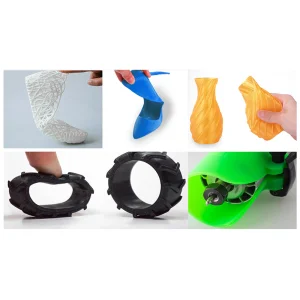
Used extensively for rapid iteration of automotive weather seals, vibration isolation dampers, intake duct hose adapters, and protective cable grommets. High chemical resistance ensures structural stability when exposed to motor oil, grease, and ambient engine bay temperatures.
Custom 3D-printed orthopedic insoles with variable infill density mapping. Biocompatible TPU grades allow podiatrists to print soft heel cushions combined with rigid arch support within a single continuous print job, drastically speeding up patient care timelines.
Soft robotic end-effectors, compliant pneumatic suction cups, custom conveyor belt cleats, and shock-absorbing bumpers for Automated Guided Vehicles (AGVs). High tear resistance prevents mechanical failure during heavy continuous duty cycles.
Overmolded protective phone cases, outdoor ruggedized instrument housings, drone landing gear mounts, and athletic footwear soles featuring tailored energy-return lattice structures enabled exclusively by additive manufacturing.
Specialized electrostatic discharge (ESD-safe) and UL94 V-0 flame-retardant flexible formulations designed for sensitive semiconductor manufacturing environments, cleanrooms, and volatile explosion-proof electronic housings.
Immediate on-demand 3D printing of custom chemical fluid gaskets, O-rings, seals, and flexible pipe connectors for maintenance, repair, and operations (MRO) engineering departments, cutting spare part lead times from weeks to hours.
Key technological shifts shaping the next generation of elastomeric 3D printing materials.
Traditional TPU printing was historically restricted to slow speeds (15-30 mm/s). Next-gen high-flow TPU formulations engineered with tailored melt viscosity allow reliable deposition at speeds up to 150-250 mm/s on modern CoreXY high-speed 3D printers, dramatically expanding industrial mass-production viability.
Driven by strict global ESG compliance standards and European carbon neutral directives, bio-based TPUs derived from renewable castor oil monomer building blocks are replacing petroleum resins, delivering identical tensile strength while cutting carbon footprints by over 40%.
Development of carbon-nanotube (CNT) doped conductive flexible filaments and multi-material dual-extrusion systems combining rigid matrix skeletons (PLA/PETG) with localized soft TPU hinges, revolutionizing smart wear-sensing devices and integrated robotics.
Clear expert responses to common technical, sourcing, and manufacturing questions from wholesale buyers.
Explore additional high-performance 3D printing filaments in our global wholesale export line.