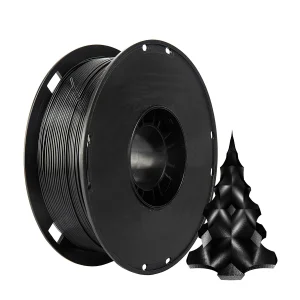
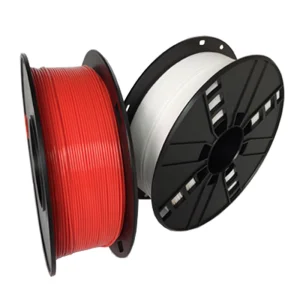
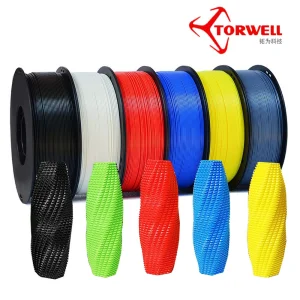
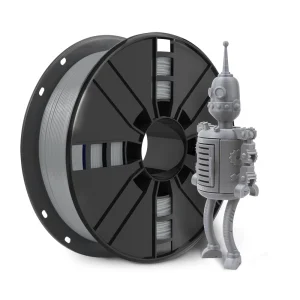
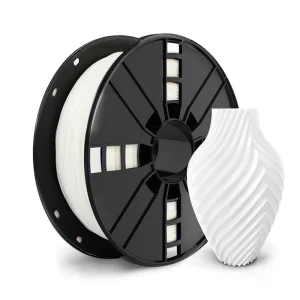
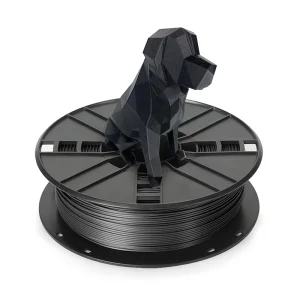
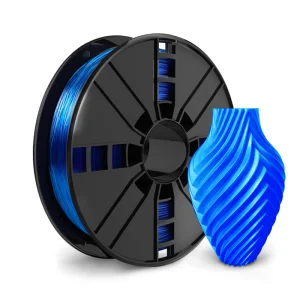
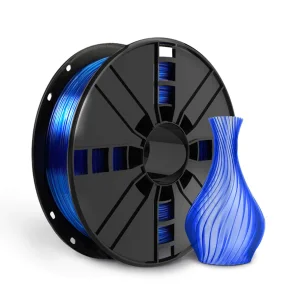
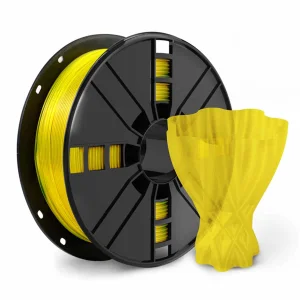
Direct factory wholesale inventory produced with strict ISO 9001 dimensional tolerances (±0.02mm), optimized for continuous extrusion, high layer adhesion, and extreme rigidity.
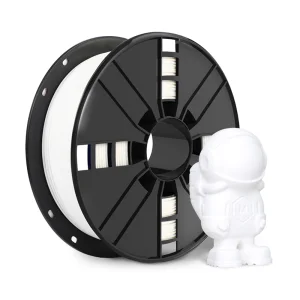
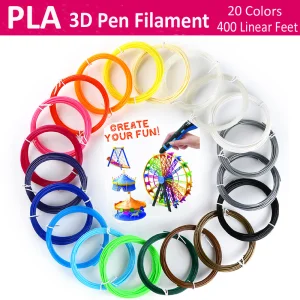
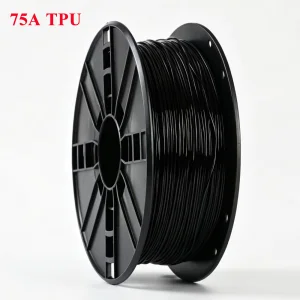
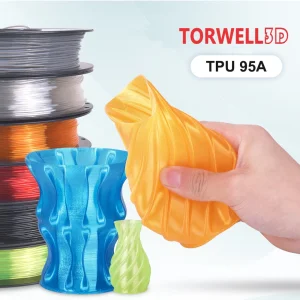
The additive manufacturing landscape is undergoing a systemic transition from rapid visual prototyping to direct digital manufacturing of end-use, structural components. At the forefront of this industrial transformation is Carbon Fiber Reinforced Polymer (CFRP) 3D printing filament. By combining high-modulus micro-carbon fibers with engineering thermoplastic matrices (such as Polyamide, PETG, Polycarbonate, and PEEK), material engineers have created composites that rival die-cast aluminum in tensile strength while reducing overall component weight by up to 60%.
The global carbon fiber 3D printing materials market is projected to expand at a CAGR exceeding 24.5% through 2030. Key growth vectors include aerospace light-weighting, automotive assembly line tooling, defense UAV manufacturing, and custom medical orthotics.
Commercial buyers, enterprise print farms, and tier-1 OEM distributors demand strict supplier metrics: zero-ovality extrusion tolerances, continuous batch-to-batch color and mechanical consistency, and optimized spool winding to prevent print failures during 72-hour continuous builds.
Replacing traditional CNC aluminum milling with additive manufacturing using Carbon Fiber PETG or PA-CF cuts lead times from weeks to hours, slashes material waste by up to 85%, and dramatically lowers the operational barrier for complex geometric parts.
The mechanical superiority of carbon fiber filaments relies on two fundamental parameters: Fiber Aspect Ratio (Length-to-Diameter Ratio) and Interfacial Shear Strength (IFSS) between the micro carbon fibers and the host resin matrix. At our factory, twin-screw compounding lines introduce high-purity chopped carbon fibers (100–300 µm length) with proprietary silane surface treatment to prevent micro-void formulation.
| Material Grade | Base Polymer Matrix | Tensile Strength (MPa) | Flexural Modulus (GPa) | HDT @ 0.45 MPa (°C) | Nozzle Temp (°C) | Key Industrial Benchmark |
|---|---|---|---|---|---|---|
| Torwell PA12-CF | Polyamide 12 (Nylon) | 85 – 105 | 7.5 – 8.8 | 165°C | 260 – 290°C | Ultra-low moisture absorption, structural drone chassis & automotive jigs |
| Torwell PETG-CF | Polyethylene Terephthalate | 62 – 75 | 4.8 – 5.5 | 85°C | 240 – 260°C | Easy printing, chemical resistance, zero-warpage structural housings |
| Torwell PC-CF | Polycarbonate | 78 – 92 | 6.2 – 7.1 | 135°C | 270 – 300°C | High impact strength, flame retardancy (UL94-V0 option), electronic covers |
| Torwell PLA-CF | Polylactic Acid | 55 – 68 | 5.2 – 6.0 | 65°C | 200 – 220°C | High dimensional stability, matte cosmetic finish, stiffness without warping |
| Standard Neat PA12 | Unreinforced Nylon 12 | 45 – 52 | 1.4 – 1.8 | 85°C | 250 – 270°C | Flexible but prone to moisture swelling and dimensional warping |
Advancing nozzle orifice geometry to force micro-fibers into parallel alignment along the extrusion path, increasing axial tensile modulus by an additional 18-25%.
Co-doping carbon fiber matrix formulations with Carbon Nanotubes (CNT) to yield Electrostatic Discharge (ESD) safe surface resistivity (10^6 to 10^9 ohms/sq) for semiconductor manufacturing.
Integrating 100% recycled aerospace carbon fiber tow with bio-derived Polyhydroxyalkanoates (PHA) and bio-PA matrices to achieve zero-carbon industrial additive manufacturing.
Carbon fiber filaments are engineered to solve specific engineering bottlenecks across demanding manufacturing sectors. Below are localized implementation case frameworks:
Challenge: Unmanned Aerial Vehicles (UAVs) require high-rigidity structural arms and camera gimbals capable of enduring high vibration and aerodynamic strain without added payload weight.
Solution: Utilizing Torwell PA12-CF filament allows drone manufacturers to print structural frames with a flexural modulus exceeding 8.0 GPa. The matte black surface finish eliminates glare while maintaining structural stability under direct UV exposure.
Challenge: Metallic End-of-Arm Tooling (EOAT) on high-speed robotic assembly arms creates excessive rotational inertia, slowing down cycle times and accelerating motor wear.
Solution: Replacing aluminum robot grippers with PETG-CF or PA-CF printed tooling reduces end-effector mass by up to 55%. This enables assembly robots to operate at higher acceleration curves without sacrificing positioning accuracy.
Challenge: Traditional tooling produced via CNC machining incurs high lead times (3–5 weeks) and prohibitive costs for low-volume custom production runs.
Solution: On-demand 3D printing of assembly jigs using Carbon Fiber Polycarbonate (PC-CF) provides extreme dimensional stability, chemical resistance to cutting fluids, and Heat Deflection Temperatures above 130°C.
Challenge: Medical prosthetics must match precise human anatomy, require high fatigue resistance, and must be lightweight for patient comfort.
Solution: Carbon fiber reinforced filaments allow orthotic technicians to produce custom-molded lower-limb braces that offer tailored flexural recoil and exceptional strength-to-weight ratios.
With over a decade of continuous R&D and automated extrusion operations, our 2,500 m² standardized production center guarantees high structural integrity and commercial reliability for global wholesale distributors.
Every extrusion line is integrated with inline dual-axis optical laser micrometers. Filaments exceeding a ±0.02mm diameter variation or ovality threshold are automatically purged in real time.
Compounded composite pellets undergo multi-stage desiccant dehumidification drying (< 0.02% moisture moisture threshold) prior to extrusion, followed by immediate nitrogen-purged vacuum packaging.
We provide full OEM/ODM manufacturing support including custom Pantone color matching, private-label spool sticker design, customized cardboard spool configurations, and specialized master cartoning.
Printing carbon fiber composite filaments requires specific hardware upgrades due to the abrasive nature of embedded micro-fibers. Follow our factory-tested optimization protocol:
Standard brass nozzles experience rapid orifice erosion within 100g of printing carbon fiber. Always equip Hardened Steel, Tungsten Carbide, or Ruby-Tipped nozzles (minimum 0.4mm diameter; 0.6mm recommended to prevent micro-clogging).
Dual-gear hardened steel direct-drive extruders provide the necessary feeding torque without stripping the composite strand. Avoid long Bowden PTFE tubes to minimize feeding friction.
For high-performance PA-CF and PEEK-CF parts, post-annealing printed components in a convection oven at 80°C–100°C for 2–4 hours relieves internal stresses and boosts flexural strength by up to 20%.
Explore our full OEM portfolio of commercial PLA, PETG, TPU, and specialty gradient filaments for global wholesale and distributor supply chains.
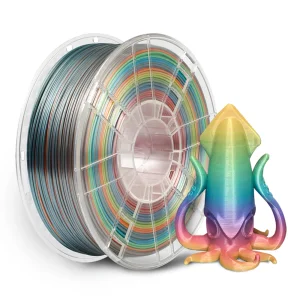
Answers to common procurement, custom OEM packaging, and material compliance questions for global 3D printing filament buyers.
For standard carbon fiber inventory spools (such as Torwell PETG-CF or PA-CF), our minimum wholesale order starts at 100 kg per SKU. For custom OEM private label orders—including branded cardboard spools, custom Pantone box printing, and specific fiber loading ratios—our standard MOQ is 500 kg per batch.
Adding micro-carbon fibers (typically 15% to 30% by weight) significantly enhances tensile strength, flexural modulus, and heat deflection temperature (HDT) while reducing thermal expansion and volumetric shrinkage. This produces prints with virtually zero warping and exceptional Z-axis layer bonding, alongside a premium matte surface finish.
We manufacture filaments in standard 1.75 mm and 2.85 mm outer diameters. Production lines utilize real-time dual-axis laser optical micrometers to guarantee continuous roundness and a strict diameter tolerance of ±0.02 mm across all master spools.
Engineering polymers—especially Polyamide (PA) and PETG—are highly hygroscopic. Absorbed atmospheric moisture vaporizes inside the hotend during printing, creating micro-voids, severe stringing, and reduced mechanical strength. Every Torwell spool is oven-dried, immediately vacuum-sealed in heavy-duty aluminum/poly foil bags with high-capacity silica desiccant, and packaged in reinforced protective cartons.
Yes. Full technical documentation—including Tensile Modulus (ISO 527), Impact Strength (ISO 179), Thermal Deflection Temperatures (ISO 75), RoHS compliance, and REACH certification—is provided with every OEM partnership to ensure seamless regulatory clearance in North America, Europe, and Asia-Pacific markets.