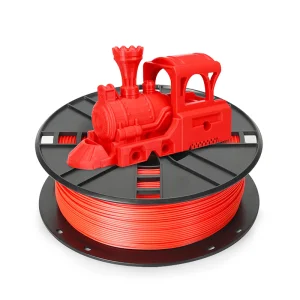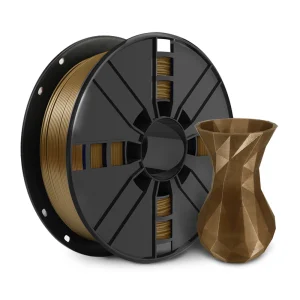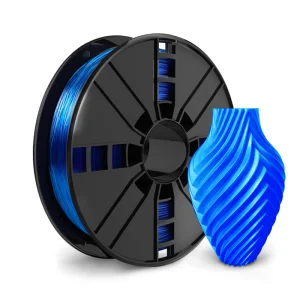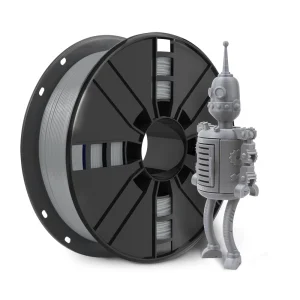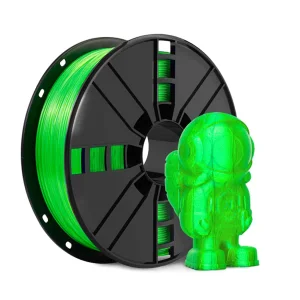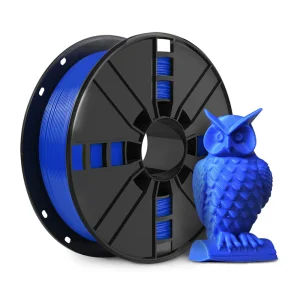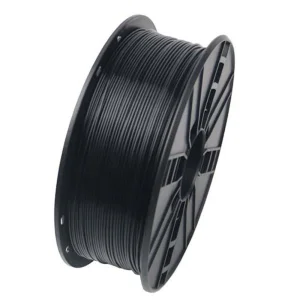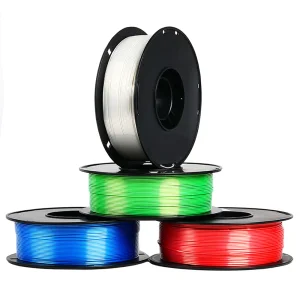
Acrylonitrile Butadiene Styrene (ABS) remains an indispensable workhorse material in the global additive manufacturing ecosystem, connecting functional rapid prototyping with end-use production.
Industrial ABS is a terpolymer composed of three distinct monomers: Acrylonitrile (providing chemical resistance and thermal stability), Butadiene (contributing micro-phase rubbery toughness and impact resistance), and Styrene (imparting structural rigidity and a glossy surface finish). In Fused Deposition Modeling (FDM), precise polymer melt-flow index (MFI) control and low-VOC stabilization are essential to ensure structural isotropy across printed z-axis layers without internal micro-voids or thermal shrinkage deformation.
As high-speed CoreXY 3D printers and industrial additive manufacturing farms proliferate globally, traditional ABS formulations are evolving into high-performance, specialized polymer compounds.
Modern print farms demand materials capable of high volumetric flow rates. High-Speed ABS formulations incorporate specialized plasticizers and narrow molecular weight distribution (MWD) resins, allowing rapid thermal melting at the hotend and instantaneous melt-solidification without inter-layer separation during accelerated printing vectors.
Differential thermal contraction during deposition often leads to corner lifting and warping in large ABS prints. By integrating inorganic micro-nucleating agents and stress-relaxing co-monomers, modified low-warp ABS minimizes coefficient of thermal expansion (CTE) variance, enabling reliable prints even in ambient chambers.
Compounding short-chopped carbon fibers (15-20% weight ratio) into the ABS resin matrix drastically elevates flexural modulus and dimensional stability. CF-ABS eliminates visible layer lines while producing lightweight, ultra-rigid components suited for aerospace jigs, automotive tooling, and structural drone arms.
To meet stringent safety regulations in consumer electronics, automotive interiors, and rail transportation, factories now supply halogen-free flame retardant (FR-ABS) formulations. These self-extinguishing materials stop combustion within 10 seconds, preventing fire propagation in electrical enclosures.
Volatile Organic Compound (VOC) emissions during thermal processing have historically presented challenges in unventilated office or educational environments. Advanced vacuum-degassed ABS resins reduce residual styrene monomer content below 100 ppm, significantly lowering smell and particle emissions during printing.
Enterprise buyers increasingly demand sustainable supply chains. Premier China manufacturers are deploying post-industrial recycled ABS (rABS) blends that match virgin resin mechanical properties, paired with 100% recyclable cardboard spools and vacuum bags to meet ESG compliance targets.
Enterprise buyers and OEM distributors require rigid technical benchmarks, batch-to-batch consistency, and international certification compliance before committing to high-volume contracts.
| Property / Benchmark Metric | Standard ABS Grade | High-Speed ABS Grade | CF-ABS Composite | Flame Retardant (UL94) | Test Method Standard |
|---|---|---|---|---|---|
| Density (g/cm³) | 1.04 - 1.06 | 1.05 | 1.12 - 1.15 | 1.18 - 1.20 | ISO 1183 / ASTM D792 |
| Melt Flow Index (g/10min) | 12 - 18 (220°C/10kg) | 35 - 50 (220°C/10kg) | 8 - 14 (230°C/5kg) | 15 - 22 (220°C/10kg) | ISO 1133 / ASTM D1238 |
| Tensile Strength (MPa) | 40 - 45 | 42 - 48 | 65 - 75 | 38 - 43 | ISO 527 / ASTM D638 |
| Flexural Modulus (MPa) | 2,100 - 2,400 | 2,200 - 2,500 | 4,800 - 5,600 | 2,300 - 2,600 | ISO 178 / ASTM D790 |
| Izod Impact Strength (kJ/m²) | 18 - 25 | 16 - 22 | 10 - 15 | 12 - 16 | ISO 180 / ASTM D256 |
| Heat Deflection Temp (HDT @ 0.45 MPa) | 88°C - 94°C | 90°C - 95°C | 102°C - 108°C | 85°C - 90°C | ISO 75 / ASTM D648 |
| Diameter Tolerance Precision | ±0.02 mm | ±0.02 mm | ±0.02 mm | ±0.02 mm | Dual-Axis Laser Gauge (1000Hz) |
Qualified B2B factories must provide full regulatory documentation for cross-border clearance. Standard certification portfolios include RoHS Directive 2011/65/EU (restriction of hazardous substances), REACH EC 1907/2006 (Substances of Very High Concern), ISO 9001:2015 Quality Management Systems, and ISO 14001 Environmental Standards.
Leading China suppliers offer end-to-end white-label solutions: precision Pantone color matching, customized spool weights (250g, 500g, 1kg, 3kg, 5kg, up to 10kg industrial reels), branded outer carton box design, customized vacuum-sealed foil pouches, and OEM laser-etched spools ready for international retail shelves.
Discover how advanced polymer extrusion technology, automated quality inspection, and integrated manufacturing hubs deliver unprecedented lead-time reliability and cost efficiency.
Extrusion lines feature real-time closed-loop laser monitoring. Diameter gauges record filament thickness at 1,000 measurements per second. If dimensions deviate beyond ±0.015 mm, line speed and screw RPM automatically adjust in milliseconds, guaranteeing zero out-of-spec filament ends up on your customer's spool.
ABS polymer pellets are highly hygroscopic. Raw resins undergo 4 to 6 hours of continuous continuous-flow dehumidification drying at 85°C (dew point <-40°C) before entering the extrusion barrel. This process eliminates moisture-induced hydrolysis, micro-bubbling, stringing, and popping noises during printing.
Manual or chaotic winding leads to catastrophic print failures caused by tangled filament overlaps. Industrial multi-axis CNC spoolers manage winding pitch, edge spacing, and tension dynamically, producing criss-cross layer alignment for uninterrupted 100-hour continuous prints in commercial farms.
By establishing manufacturing facilities within Southern China's primary polymer industry clusters (Guangdong Province), factories gain direct access to raw petrochemical resin refineries, specialized color masterbatch formulators, precision tooling machine shops, and major international container ports (Shenzhen/Yantian/Hong Kong). This geographical density reduces raw material transit costs, enables 10-day production turnarounds for 20ft container orders, and provides unmatched cost competitiveness for global distributors.
From heavy industrial machinery to everyday consumer electronics, high-grade ABS filament serves critical structural roles across diverse global sectors.
Automotive R&D departments utilize ABS for rapid functional verification of interior dash trims, HVAC air ducting, custom switch housing, and bumper bracket prototypes. ABS parts can easily withstand post-processing operations like acetone vapor smoothing, mechanical sanding, painting, ultrasonic welding, and direct brass heat-set insertion.
For smart home controllers, wireless router casings, handheld terminal housings, and drone chassis, ABS offers essential electrical insulation, impact protection against drops, and long-term mechanical durability under varying temperature conditions.
On modern factory floors, plant engineers deploy ABS to produce customized assembly jigs, CMM inspection nests, robot end-of-arm tooling (EOAT), and drill guides. Its high flexural modulus ensures tools retain dimensional geometry under mechanical loads without permanent plastic deformation.
Commercial 3D print farms manufacturing functional end-use goods (e.g., custom camera mounts, acoustic speaker baffles, industrial machinery covers) rely on bulk wholesale ABS spools for predictable melt behavior, low unit cost, and excellent impact strength compared to brittle PLA materials.
Technical and logistics insights tailored for procurement managers, brand owners, and industrial buyers evaluating ABS filament suppliers.
Standard factory MOQ for stock colors (such as Black, White, Grey, Red, Blue) is typically 100 kg to 300 kg. For custom Pantone color matching or private-label branded box packaging, the MOQ is generally 500 kg per color batch to optimize extrusion line purging and calibration efficiency.
Extrusion lines utilize high-speed dual-axis laser micrometers positioned immediately after the water cooling bath. These laser sensors continuously sweep the filament across two perpendicular planes at 1,000 Hz, feeding real-time dimensional data back to the tractor motor. If the strand expands or contracts, the puller speed adjusts instantly, preventing ovality and dimensional variance.
Every single spool undergoes automated inline drying prior to spooling. Immediately after winding, spools are sealed inside high-density vacuum barrier bags containing silica gel desiccant packs. Outer master cartons are lined with moisture-proof plastic film and palletized with shrink-wrap, ensuring multi-month sea voyage protection across humid tropical shipping routes.
For optimal results, technical data sheets recommend: Extruder Nozzle Temperature: 230°C – 260°C; Heated Bed Temperature: 90°C – 110°C; Enclosure Temperature: 40°C – 60°C (recommended to prevent warping); Print Speed: 40 – 100 mm/s (standard grade) or up to 300 mm/s (High-Speed ABS grade); Build Surface: PEI sheet, kapton tape, or ABS slurry adhesives.
Yes. Factories offer both heavy-duty industrial PC/ABS plastic spools and 100% recyclable heavy-flute cardboard spools. Cardboard spools feature smooth rolled edges to prevent dust shedding and are fully compatible with modern automatic material systems (AMS) and spool rollers.
Once raw material masterbatch formulations are finalized and artwork for custom packaging is approved, production for a 20ft container (approx. 10,000 kg – 12,000 kg) takes 15 to 20 business days. Standard LCL orders ship within 7 to 10 business days.
Yes. Raw materials and finished filament strands undergo annual third-party testing (SGS/TÜV Rheinland) to verify compliance with RoHS Directive 2011/65/EU and REACH SVHC candidate lists. Compliance certificates, Material Safety Data Sheets (MSDS), and Technical Data Sheets (TDS) are provided with every wholesale shipment.
While ABS provides superior impact resistance, ease of post-processing (acetone smoothing), and high heat resistance (HDT ~95°C), ASA adds UV stability for long-term outdoor sunlight exposure. PETG offers higher chemical resistance and lower thermal warping without requiring a heated enclosure, but is harder to sand or paint than ABS.