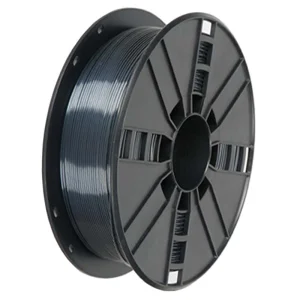
Engineered with ±0.02 mm strict laser tolerance control, high melt-flow consistency, and anti-stringing formulations.
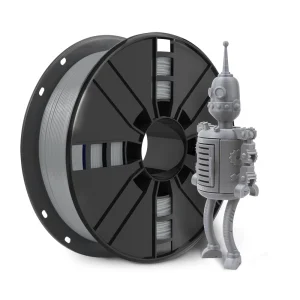
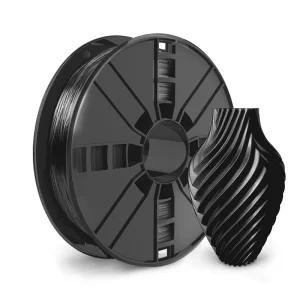
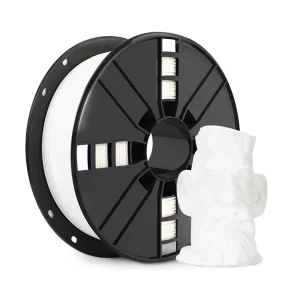
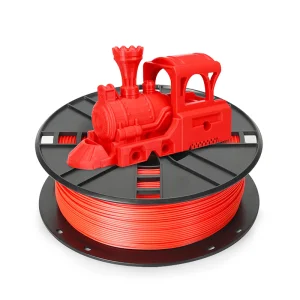
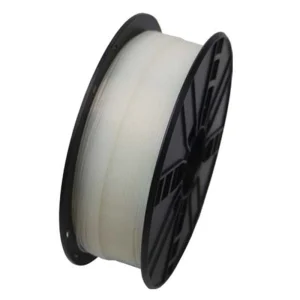
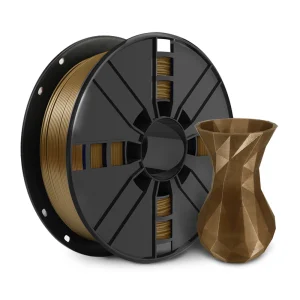
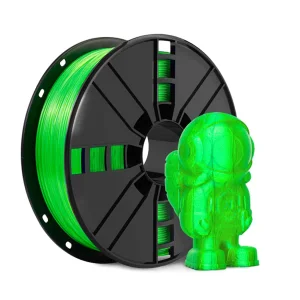
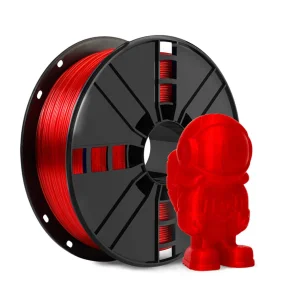
The global market for fused deposition modeling (FDM) 3D printing filaments has undergone a structural transformation. Buyers no longer evaluate suppliers solely on price per kilogram; commercial success depends on material consistency, optical luster, rapid-gradient color transitions, and anti-clogging melt rheology.
With the global adoption of high-speed FDM platforms operating between 300 mm/s and 600 mm/s (such as Bambu Lab, Voron, and Creality K1 series), traditional silk PLA formulations often fail due to thermal throttling, layer delamination, and nozzle back-pressure. Next-gen China PLA Rainbow Silk factories have re-engineered polymer melt flow indexes (MFI) to sustain rapid volumetric extrusion without loss of surface luster.
The consumer 3D printing market has pivoted aggressively from monochrome plastics toward dual-color, tri-color, and fast-gradient rainbow filaments. State-of-the-art Chinese manufacturing facilities employ multi-manifold feedblocks that combine distinct pigment streams into a single 1.75 mm filament strand without physical pigment bleeding or interface cracking.
Tier-1 China PLA factories integrate raw bio-resin synthesis (sourced directly from high-purity L-polylactic acid refiners), in-house masterbatch compounding, multi-axis laser diameter monitoring, and automated robot-assisted spool winding. This vertical integration reduces batch-to-batch variance to near-zero levels.
Creating a premium Silk Rainbow PLA filament requires a delicate synthesis of polymer blending, elastomeric modification, and microscopic light-diffraction control.
Standard PLA exhibits a crisp, matte surface finish with high stiffness but poor impact resistance. To achieve the signature "silk" satin sheen, specialized factories compound high-purity PLA resin with 10% to 20% flexible thermoplastic elastomers (TPU/TPE) and acrylic impact modifiers. This polymer alloy alters the surface reflection coefficient, turning sharp light reflections into a silky luster while increasing Z-axis layer toughness.
The brilliant sheen of China PLA Rainbow Silk is generated by micro-scale mica particles encapsulated in titanium dioxide ($TiO_2$) or iron oxide ($Fe_2O_3$). These microscopic platelets align parallel to the extrusion wall during the melt phase, reflecting light at multiple optical depths. Precise extrusion temperature control prevents thermal degradation of these delicate optical coatings.
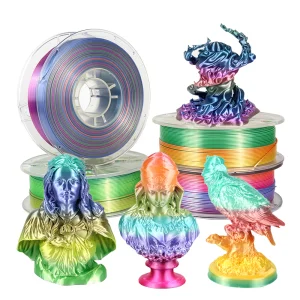
Fast-gradient rainbow filaments transition between distinct colors (e.g., Red $\rightarrow$ Gold $\rightarrow$ Green $\rightarrow$ Blue $\rightarrow$ Purple) every 10 to 15 meters of filament strand. Factory volumetric dosing systems dynamically adjust color masterbatch injection rates inside the extruder barrel without interrupting continuous strand pull, ensuring seamless color transitions on small 3D printed parts.
Comprehensive engineering breakdown comparing mechanical strength, thermal performance, and recommended printing profiles across Torwell industrial filament grades.
| Material Specification | Standard PLA | PLA+ (Toughened) | Silk PLA (Monochrome) | Fast Rainbow Silk PLA | TPU 95A Flexible |
|---|---|---|---|---|---|
| Density ($g/cm^3$) | 1.24 g/cm³ | 1.25 g/cm³ | 1.22 g/cm³ | 1.23 g/cm³ | 1.21 g/cm³ |
| Melt Flow Index (MFI) | 7-9 g/10min (190°C/2.16kg) | 10-12 g/10min | 14-16 g/10min | 15-18 g/10min | 25-30 g/10min |
| Tensile Strength (MPa) | 60 MPa | 65 MPa | 48 MPa | 50 MPa | 35 MPa |
| Impact Strength ($kJ/m^2$) | 5.2 kJ/m² | 9.8 kJ/m² | 7.5 kJ/m² | 7.2 kJ/m² | Not Fractured |
| Elongation at Break (%) | 6% | 12% | 22% | 20% | 450% |
| Optimal Nozzle Temp (°C) | 190 - 210 °C | 200 - 220 °C | 205 - 225 °C | 210 - 230 °C | 215 - 235 °C |
| Heat Deflection Temp ($HDT$) | 56 °C | 58 °C | 52 °C | 53 °C | 60 °C |
| Gradient Shift Cycle | N/A | N/A | N/A | 10 - 15 Meters / Color | N/A |
A look inside the 5-stage automated quality control workflow implemented across leading China PLA Rainbow Silk production lines to guarantee zero print failures.
Polylactic acid is inherently hygroscopic. Raw resin pellets undergo 4 hours of continuous desiccant dehumidification drying at 80°C prior to entering the extruder hopper, dropping moisture content below 0.02% (200 ppm) to eliminate micro-foaming and stringing.
Real-time high-frequency laser gauges measure filament diameter across X and Y axes 500 times per second. Closed-loop feedback automatically adjusts tractor haul-off speeds, locking diameter tolerances tightly at ±0.02 mm.
To prevent internal void formation and thermal warping of Silk PLA, extruded strands pass through three temperature-zoned water baths (60°C $\rightarrow$ 40°C $\rightarrow$ 20°C). This controlled crystallization process ensures smooth material feeding through bowden tubes.
Automated spooling machines utilize dancer arms to maintain constant winding tension. Perfect layer-by-layer traversing eliminates overlapping cross-loops and tangles—critical for unattended 50-hour print farm operations.
From commercial prop creation in North America to luxury packaging prototypes in Western Europe, see how brands leverage China factory filament formulations.
Cosplay creators and entertainment studios require lightweight, large-format props with high aesthetic appeal. Silk Rainbow PLA eliminates hours of surface sanding, priming, and airbrushing. The multi-tone gradient dynamic creates metallic, dragon-scale, or magical artifacts straight off the build plate.
E-commerce retailers on platforms like Etsy and Amazon rely on fast-gradient rainbow PLA for 3D printed articulated dragons, fidget toys, and decorative vases. The high visual impact commands premium retail pricing while maintaining low raw material costs.
Architects and product designers use monochrome Silk Gold, Silver, and Pearl White filaments to print concept topography, luxury real estate models, and packaging mockups. Layer lines visually disappear due to the refractive nature of the pearlescent mica additive.
Enabling international distributors and brand owners to deploy custom-branded 3D printing products into strict regulatory markets seamlessly.
Torwell filaments comply fully with international environmental and chemical safety standards, including EU REACH (EC 1907/2006), RoHS directive 2011/65/EU, SVHC heavy metal screening, and FDA raw resin compliance for indirect contact safety.
Complete customization support: custom Pantone/RAL masterbatch matching, branded spool stickers, custom-printed die-cut retail boxes, user instruction manuals, and customized technical data sheets (TDS/SDS) tailored to your brand identity.
Every spool is vacuum-sealed with high-absorption silica gel desiccants immediately after winding into 5-layer aluminum/poly vacuum bags. Master cartons are reinforced with edge corner boards to ensure 100% dry delivery during long maritime freight.
How China's leading filament R&D centers are pushing the limits of bio-polymer additives and digital co-extrusion technology.
Current research focuses on blending ultra-low viscosity PLA polymers with thermal-stabilized nano-lubricants. This allows rapid melt delivery inside high-flow hotends (e.g., Volcano, Revo, Bambu High-Flow) without suffering surface sheen loss or thermal breakdown at elevated hotend temperatures.
Next-generation factory extrusion lines integrate machine-vision camera loops with digital masterbatch dosing pumps. This enables custom micro-gradient spools where color transition distances can be programmatically changed along a single spool (e.g., 2-meter fast shifts transitioning to 20-meter gradual shifts).
Moving away from synthetic TPU/TPE modifiers, next-gen formulations utilize fully bio-based PHA (polyhydroxyalkanoates) and modified starch bio-elastomers. This achieves 3x higher impact strength while preserving 100% industrial compostability compliance under EN 13432.
Detailed technical and commercial answers for importers, brand owners, and print farm buyers.
China PLA Rainbow Silk filament combines virgin PLA polymer resin with thermoplastic elastomers (TPU/TPE) and micro-encapsulated mica pearlescent pigments. Additionally, the fast-rainbow variant utilizes continuous color masterbatch transition technology during extrusion, resulting in a filament strand that dynamically shifts colors every 10 to 15 meters while displaying a silky luster that masks 3D print layer lines.
For high-speed 3D printers operating above 200 mm/s, set nozzle temperatures between 215°C and 230°C. Maintain bed temperatures between 50°C and 60°C. Increasing nozzle temperature by 5°C to 10°C relative to standard PLA provides adequate volumetric flow and preserves the optical satin shine at high flow rates.
All standard 1.75 mm and 2.85 mm filament lines are monitored with dual-axis inline laser micrometers. Extrusion speeds are dynamically controlled to maintain a strict diameter tolerance of ±0.02 mm and roundness/ovality variance below 1%, preventing hotend jams and under-extrusion.
Yes. Factory production lines can calibrate the masterbatch feed timing to create fast rainbow gradients (color changes every 5–10 meters / ~30 grams of filament) or slow rainbow gradients (color changes every 30–50 meters / ~150 grams of filament), depending on your target customer market.
Prior to packaging, filament spools undergo automated hot-air drying. Spools are immediately heat-sealed inside thick vacuum bags containing active silica gel desiccant packs. Moisture indicator cards are included on request. Packed spools are boxed in heavy-duty corrugated cartons designed for maritime container shipping.
Standard factory OEM orders with custom branded box printing and custom spool stickers typically start at an MOQ of 500 to 1,000 spools. Stock unbranded white-box or standard factory box orders are available at lower MOQs for sample evaluations.
Explore high-luster pearlescent, gradient change, ABS, TPU, and functional engineering grade spools direct from our factory lines.