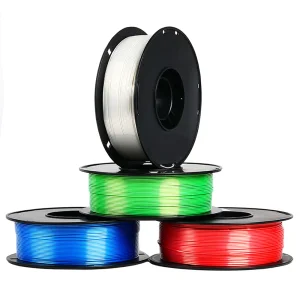
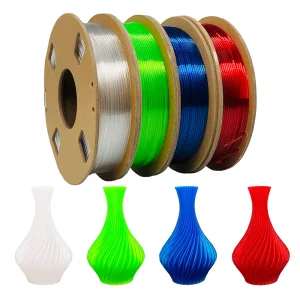
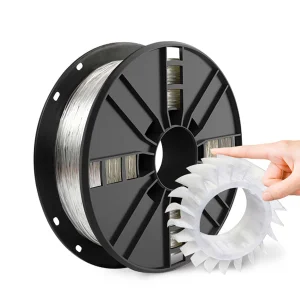
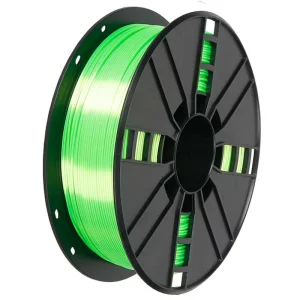
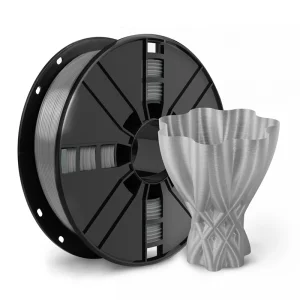
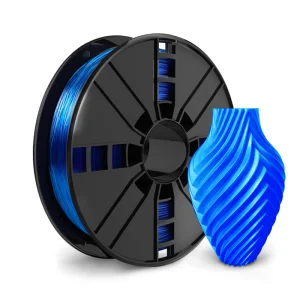
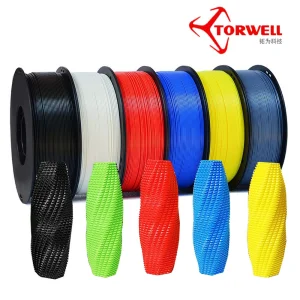
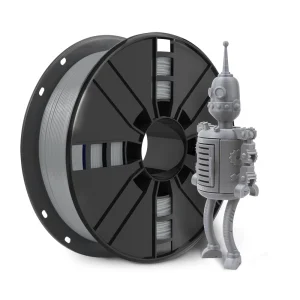
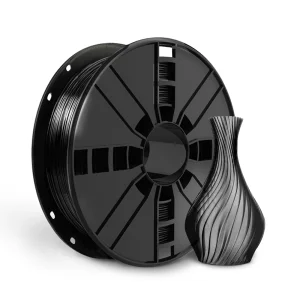
Precision-extruded bio-plastics, high-temp composites, and flexible polymers verified under inline dual-axis laser diameter feedback controls.
The global additive manufacturing ecosystem is experiencing a structural transition from rapid visual prototyping toward high-throughput, end-use component production. At the dynamic core of this revolution is Polylactic Acid (PLA) plastic 3D printing filament—a thermoplastic aliphatic polyester derived from renewable, fermented plant starch (typically corn or sugarcane). As industrial print farms, automotive design studios, and consumer product OEMs demand unprecedented physical uniformity, top-tier China PLA plastic 3D printing manufacturers and factories have transformed raw resin processing through advanced polymer rheology, dual-axis laser metering, and high-speed extrusion lines.
PLA's inherent physical characteristics—specifically its glass transition temperature ($T_g$) ranging between $55^\circ\text{C}$ and $65^\circ\text{C}$ and a crystalline melting point ($T_m$) of $150^\circ\text{C}$ to $180^\circ\text{C}$—render it exceptionally suited for Fused Deposition Modeling (FDM) and Fused Filament Fabrication (FFF) architectures. However, historical challenges such as hydrolytic degradation, volumetric shrinkage, brittle cross-layer shear failure, and thermal nozzle clogging have forced modern manufacturing facilities to pioneer modified chemical formulations. Through precise ring-opening polymerization control of L-lactide and D-lactide monomers, premier OEM factories in China deliver engineered PLA variants that maintain structural integrity even under intense thermal and mechanical stress.
Refining high-purity L-lactide precursors ensures minimal residual monomer content, directly mitigating thermal degassing, foul odor emission, and melt viscosity fluctuations during elevated-temperature printing.
Raw resin polymer pellets are pre-processed through twin-tower desiccant hopper dryers operating at $-40^\circ\text{C}$ dew point, reducing internal moisture thresholds to below 200 ppm prior to melt extrusion.
Optimized shear-thinning behavior enables smooth volumetric flow rates exceeding $30\text{ mm}^3/\text{s}$, seamlessly empowering modern high-speed 3D printers operating at $600\text{ mm/s}$ travel speeds.
B2B buyers, institutional distributors, and high-volume print farm managers no longer evaluate 3D printing consumables solely on unit price. Global procurement strategies are now anchored in risk mitigation, batch-to-batch repeatability, regulatory compliance, and total cost of operation (TCO). When sourcing from a China PLA plastic 3D printing factory, global enterprises enforce stringent technical benchmarks:
Extrusion diameter drift directly alters feed rate volume. Enterprise buyers mandate inline closed-loop laser gauge tracking keeping diameter variations within strictly enforced $\pm 0.02\text{ mm}$ limits over continuous 1000-meter production lengths.
Unattended continuous printing across automated multi-material systems (AMS) requires robotic precision spool winding. Zero crossing lines and uniform pitch control eliminate mechanical feeding binding during multi-day print cycles.
Full compliance documentation including REACH, RoHS, SVHC heavy metal screening, and FDA food-contact certifications are mandatory for distribution into North American, EU, and Asia-Pacific retail channels.
China’s dominant position in the global 3D printing material ecosystem stems from deep industrial cluster integration in Guangdong and surrounding manufacturing zones. By housing upstream raw chemical synthesis, masterbatch pigment dispersion, precision metal die casting, and automated packaging equipment within tight geographic proximity, leading China PLA plastic 3D printing manufacturers offer unmatched supply chain resilience and cost efficiency.
Production lines incorporate real-time optical micrometers connected to automated capstan speed adjusters. Any thermal expansion or micro-variations in die swell instantly trigger micro-step haul-off corrections in under 50 milliseconds.
Direct access to specialized color compounders enables rapid Pantone color matching in 3 to 5 business days. Scalable multi-line extrusion capacity accommodates full 20ft/40ft container shipments with predictable 15-day manufacturing lead times.
Immediately post-spooling, filaments are sealed in heavy-gauge metalized aluminum moisture-barrier bags with concentrated active desiccant packs, guaranteeing a 24-month shelf life under tropical transport conditions.
Standardized physical, mechanical, and thermal benchmarking across primary additive manufacturing thermoplastics manufactured by Torwell Technologies.
| Polymer Grade | Tensile Strength (MPa) | Flexural Modulus (GPa) | Notched Izod Impact (kJ/m²) | Heat Deflection Temp (°C @ 0.45MPa) | Recommended Nozzle (°C) | Print Speed Range (mm/s) |
|---|---|---|---|---|---|---|
| Standard Virgin PLA | 58 – 65 | 3.1 – 3.5 | 2.8 – 3.2 | 55 – 58 | 190 – 215 | 50 – 300 |
| Toughened PLA+ | 62 – 68 | 3.3 – 3.8 | 5.5 – 7.2 | 60 – 63 | 205 – 225 | 60 – 500 |
| Silk Pearlescent PLA | 45 – 52 | 2.6 – 2.9 | 3.0 – 3.5 | 52 – 55 | 200 – 225 | 40 – 200 |
| Carbon Fiber PLA (CF-PLA) | 75 – 85 | 5.2 – 6.4 | 4.2 – 5.0 | 68 – 72 | 215 – 235 | 40 – 150 |
| PETG Engineering Grade | 48 – 54 | 2.1 – 2.4 | 7.0 – 9.5 | 70 – 74 | 235 – 250 | 40 – 250 |
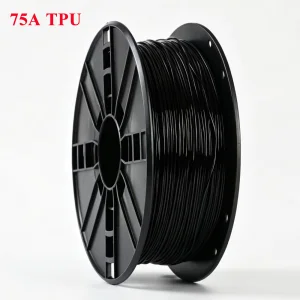
| Flexible TPU (95A) | 32 – 40 | N/A (Shore 95A) | No Break | 60 – 65 | 210 – 230 | 20 – 100 |
| High-Impact ABS | 40 – 46 | 2.2 – 2.5 | 18.0 – 22.0 | 85 – 92 | 240 – 260 | 40 – 200 |
Tier-1 automotive design centers utilize modified PLA+ for visual check gauges, assembly line alignment jigs, and rapid ergonomics testing prior to committing capital to steel injection tooling.
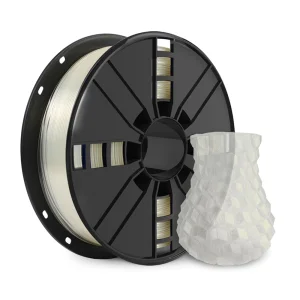
Medical visualization labs leverage translucent and bi-color PLA spools to print high-resolution 1:1 patient CT scan anatomical models, dramatically improving pre-operative surgical precision.
Massive 500+ printer digital farms require consistent bed adhesion and low warp rates to achieve 98%+ print success rates over continuous 24/7 production runs of consumer merchandise.
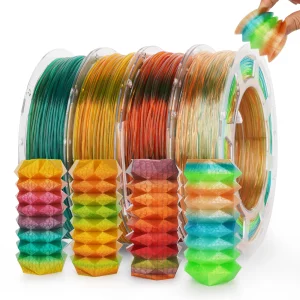
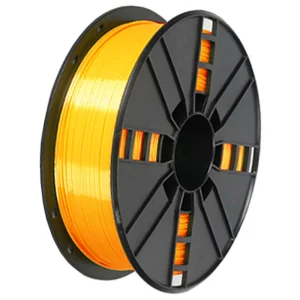
Architectural firms implement Silk and Matte PLA variants for complex urban planning scale models, delivering crisp aesthetic surface detail without requiring post-process sanding.
Universities and secondary school STEM centers favor bio-based PLA for zero toxic fume emissions, low processing temperatures, and safe classroom usability.
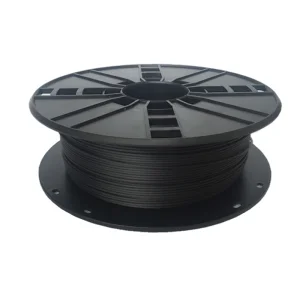
Carbon fiber reinforced PLA (CF-PLA) provides high dimensional stability and flexural modulus required for lightweight robotics end-effectors and assembly line nests.
Full-spectrum turnkey manufacturing solutions designed to build global brand equity for international 3D printing brands.
Our chemical laboratory utilizes spectrophotometric color matching to translate target Pantone codes or physical color chips into ultra-stable pigment masterbatches, ensuring zero color shift between production runs.
Choose between high-impact transparent polycarbonate spools, lightweight ABS spools, or 100% recycled biodegradable cardboard spools formatted with custom hub dimensions for high-speed AMS compatibility.
From retail-ready color boxes with customized barcoding and regional language translation to master carton shipping protection, Torwell provides complete turnkey export-ready documentation packages.
Our extrusion lines utilize dual-axis laser micrometers positioned immediately downstream from the cooling baths. These sensors capture 360-degree cross-sectional readings at a frequency of 500 Hz. The measurement signal feeds directly into a closed-loop PLC controller that adjusts the haul-off puller capstan speed in real time, automatically compensating for micro-variations in melt temperature or die swell.
Yes. All standard 1 kg spools feature optimized outer flange diameters (200 mm), central arbor bore diameters (54 mm), and smooth rim geometry specifically calibrated for smooth rotation inside modern enclosed automatic material systems. Spool winding is managed via automated servo tensioners to prevent cross-winding or mechanical binding.
Torwell PLA+ is formulated with advanced melt-rheology modifiers that decrease high-shear viscosity while preserving strong interlayer chain entanglement. When paired with high-flow ceramic heater hotends (such as those on Bambu Lab, Creality K1, or Voron Klipper printers), volumetric flow rates reach $28 - 32\text{ mm}^3/\text{s}$, supporting linear print speeds of up to $500 - 600\text{ mm/s}$ without layer delamination.
Filaments undergo dehumidifying drying prior to spooling. Immediately after automatic winding, each spool is sealed in a heavy-duty, multi-layer aluminum-poly vacuum pouch containing a high-absorption silica desiccant pack. Vacuum pressure is electronically verified prior to boxing to ensure long-distance ocean freight protection against ambient humidity.
Yes. Our in-house color laboratory provides custom pigment formulation matching Pantone C/U codes or customer-supplied physical plastic samples. The minimum order quantity (MOQ) for custom color matching is typically 300 kg per color, with sample spools prepared for client evaluation within 5 business days.
PLA is an eco-friendly bio-plastic derived from plant starches. Under managed industrial composting conditions (temperature $> 58^\circ\text{C}$, high humidity, and controlled microbial presence), PLA degrades into water, carbon dioxide, and organic biomass within 90 to 180 days according to EN 13432 and ASTM D6400 standards.
Standard production turnaround for a full 20-foot container (approximately 10,000 to 12,000 spools) is 15 to 20 calendar days from artwork confirmation. We maintain safety stock buffers of virgin resin and standard packaging components to accommodate urgent replenishment orders.
Yes. All filament series manufactured by Torwell come backed by comprehensive third-party testing documentation from accredited laboratories (SGS/TÜV), including full REACH SVHC screening reports, RoHS 2.0 heavy metal compliance, and SDS safety data sheets ready for customs clearance.
Comprehensive engineering materials, silk co-extrusions, and flexible TPU lines for global wholesale and OEM distribution.