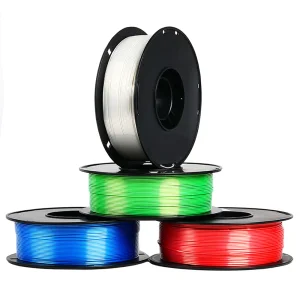
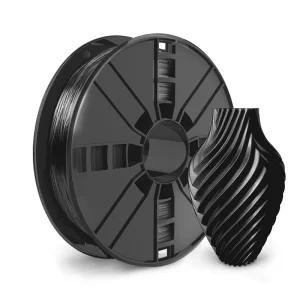
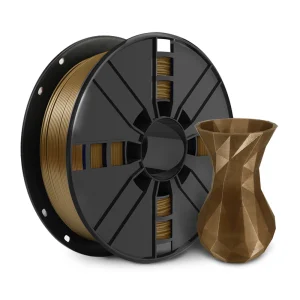
Direct factory production lines featuring laser-measured ±0.02mm diameter tolerances, high impact toughness, and multi-material AMS printing system compatibility.
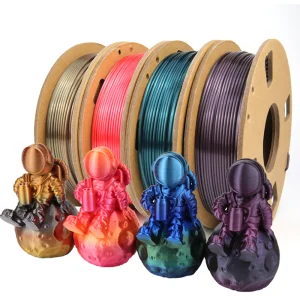
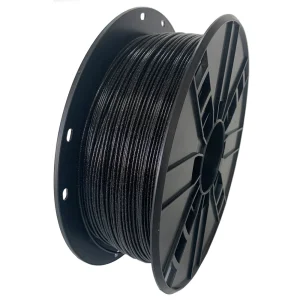
Understanding why Polyethylene Terephthalate Glycol-modified copolyethers represent the ideal equilibrium between mechanical ductility, chemical inertness, and thermal stability in industrial additive manufacturing.
Standard Polyethylene Terephthalate (PET) exhibits high semicrystallinity when cooled slowly, leading to opaque, brittle printed parts. China’s leading 3D PETG manufacturers substitute ethylene glycol with 1,4-cyclohexanedimethanol (CHDM) during polymerization. This bulky glycol ring disrupts polymer chain regularity, suppressing crystallization kinetics to yield an amorphous material with high optical transparency, low shrinkage rate (<0.4%), and excellent mechanical impact ductility.
PETG copolyethers are inherently hygroscopic, absorbing ambient humidity up to 0.8% by weight. During extrusion at thermal ranges between 230°C and 250°C, trapped water molecules cause ester bond cleavage (hydrolysis), breaking long polymer chains into shorter segments. Advanced Chinese filament factories employ closed-loop twin-tower desiccant drying arrays, lowering raw resin moisture levels below 200 ppm prior to melt extrusion to preserve intrinsic viscosity (IV ~0.74 dL/g) and guarantee maximum interlayer tensile bonding.
| Polymer Grade | Tensile Strength (MPa) | Heat Deflection (0.45 MPa) | Chemical Resistance | Print Speed Capability | Primary Industrial Use Case |
|---|---|---|---|---|---|
| Standard PETG | 50 - 53 MPa | 75°C - 80°C | High (Acids, Bases, Alcohols) | 300 - 500 mm/s | Functional enclosures, fluid tanks, print farms |
| PLA / PLA+ | 60 - 65 MPa | 52°C - 55°C | Low (Solvent vulnerable) | 250 - 600 mm/s | Rapid visual prototyping, educational models |
| ABS / ASA | 40 - 45 MPa | 95°C - 102°C | Medium (Soluble in Acetone) | 150 - 300 mm/s | Automotive exterior trims, high-temp housings |
| Carbon Fiber PETG (PETG-CF) | 75 - 88 MPa | 85°C - 90°C | Exceptional | 200 - 400 mm/s | Lightweight structural brackets, drone frames |
| Polycarbonate (PC) | 70 - 75 MPa | 135°C - 140°C | Medium (Alkaline vulnerable) | 100 - 200 mm/s | High-impact optical shields, engine covers |
How Chinese production hubs are shifting from commodity extrusion to high-speed rheological formulations, circular post-consumer resins, and high-performance composites.
With the rapid adoption of high-speed CoreXY 3D printers operating at speeds exceeding 500 mm/s and accelerations above 20,000 mm/s², conventional PETG formulations suffer from thermal underexposure and volumetric flow bottlenecking. Top Chinese factories utilize tailored Melt Flow Index (MFI) modifiers and shear-thinning additive chemistry, raising volumetric melt rates from 12 mm³/s to over 30 mm³/s without raising printing temperatures or sacrificing layer adhesion strength.
Driven by EU Carbon Border Adjustment Mechanisms (CBAM) and corporate ESG mandates, leading Chinese manufacturing hubs are integrating upcycled post-consumer PET bottles and industrial food-grade container scrap into commercial filament production. Utilizing reactive chain extenders to repair molecular weight degradation during melt re-extrusion, certified rPETG delivers mechanical performance within 95% of virgin grade polymer while reducing carbon footprint by 65%.
Modern B2B enterprise procurement demands more than unreinforced polymers. Chinese factories lead the industrialization of functional PETG compounds: micro carbon fiber reinforcement (PETG-CF) for high flexural modulus; glass fiber (PETG-GF) for structural dimensional rigidity; electrostatic dissipative (ESD PETG) for semiconductor tray handling; and halogen-free flame retardant grades conforming to UL94-V0 flammability ratings.
How tier-1 Chinese 3D printing filament manufacturers guarantee batch-to-batch consistency, zero spool tangles, and strict dimensional tolerances.
To eliminate diameter ovality and dimensional drift—the primary root causes of nozzle clogging and under-extrusion—modern extrusion lines employ dual-axis laser measurement gauges sampling at 1,000 Hz. Closed-loop PID feedforward logic continuously adjusts capstan pulling speeds in real time, locking filament diameters strictly within 1.75mm ±0.02mm across 100% of the spool length.
Spool tangling remains a major pain point for industrial print farms running continuous multi-day jobs. Tier-1 factories implement servo-driven, tension-controlled neat winding systems. Combined with precision edge-guided traverse arms, every layer is wound in parallel tracks without crossover overlaps, ensuring smooth friction-free feeding in multi-material systems like Bambu Lab AMS and Prusa MMU3.
Contaminants larger than 50 microns can instantly restrict standard 0.4mm printer nozzles. Chinese OEM extrusion lines integrate continuous hydraulic screen changers fitted with ultra-fine Dutch-weave mesh filters. Vacuum-assisted barrel degassing ports remove volatile organic compounds (VOCs) and micro-air pockets from the polymer melt prior to die orifice passage.
Extruded filament undergoes immediate inline hot-air drying before spooling. Every spool is packaged inside a heavy-duty, multi-layer aluminum-plastic vacuum bag accompanied by high-absorption active silica gel packets (minimum 10g per 1kg spool). This guarantees water vapor transmission rates (WVTR) below 0.1 g/m²/24h during long-distance ocean freight containers.
Navigating volume pricing, private label customization, color spectrum precision, and supply chain risk mitigation for international distributors.
Brand identity demands flawless visual consistency across product lines. Professional OEM factories in China utilize spectrophotometric color matching systems to formulate custom PETG masterbatches aligned with target Pantone, RAL, or physical color samples. Strict quality control thresholds guarantee a total color variance rating of ΔE < 1.0 between manufacturing lots.
Enterprise buyers can leverage full turn-key ODM/OEM packaging services. Options include custom-printed high-rigidity corrugated retail boxes, recycled cardboard spools with custom flange graphics, high-impact transparent ABS spools, vacuum bag branding, customized batch sticker barcodes, and multi-language instruction inserts tailored to regional retail compliance.
Sourcing direct from Chinese manufacturers reduces per-spool landed costs by 40% to 60% compared to local regional white-label re-sellers. Standard export packing configurations optimize container space: 12 spools per master carton, 60 cartons per euro-pallet, yielding up to 10,080 kg of filament per 40ft High Cube container under DDP/FOB terms.
How modified PETG co-polyesters solve real-world engineering challenges across healthcare, automotive, electronics, and commercial additive print farms.
PETG’s resistance to automotive fluids (petrol, diesel, glycol, motor oil) and superior impact strength make it the primary choice for functional under-the-hood fluid reservoir prototypes, custom interior trim tooling, assembly line alignment fixtures, and wire harness routing channels. Unlike ABS, PETG prints without warp on open-frame printers while resisting mechanical shock during shop-floor operation.
Formulated using FDA-compliant virgin resin inputs, medical-grade PETG filaments withstand common hospital chemical sterilization cycles (Isopropyl Alcohol, Benzalkonium Chloride, Sodium Hypochlorite). Typical applications include non-critical surgical instrument handles, custom orthotic trial casings, diagnostic device housings, and protective face-shield components requiring ISO 10993 biocompatibility standards.
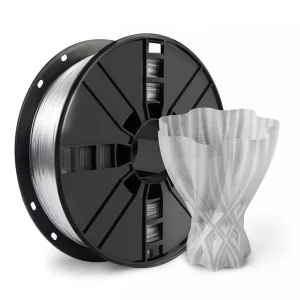
With an amorphous molecular structure that retains up to 90% optical light transmission in natural transparent grades, PETG serves as a cost-effective material for LED light pipes, illuminated signage diffusers, outdoor electrical junction boxes, and snap-fit consumer electronics enclosures requiring IP65 weather resistance.
For print farms operating hundreds of machines 24/7, material reliability directly impacts profit margins. PETG's extremely wide printing window (230°C - 250°C), forgiving bed adhesion chemistry (PEI sheet compatible at 70°C - 80°C), and negligible thermal warpage maximize farm yield rates to over 98.5%, reducing labor downtime associated with bed detachment failures.
Anticipating the next decade of additive polymer advancements: high-speed resins, smart spools, bio-glycol monomers, and nanotech additives.
Next-generation PETG matrix polymers currently in trial phases incorporate hyper-branched polymer chain architectures. These advanced resins drop high-shear melt viscosity by up to 45% while preserving zero-shear solid structural strength, enabling print speeds above 800 mm/s on next-generation industrial additive manufacturing platforms.
To support Industry 4.0 automated workflows, Chinese manufacturers are embedding near-field RFID chips directly into spool cores. These smart chips automatically transmit exact material profiles, remaining weight metrics, recommended temperature curves, and batch-specific factory QA test certificates to automated printer arrays upon spool insertion.
Emerging environmental regulations are driving R&D into bio-derived monomer feedstocks. By substituting fossil-derived ethylene glycol with bio-based ethylene glycol synthesized from agricultural biomass waste, future Bio-PETG filaments will achieve a carbon-negative cradle-to-gate lifecycle without compromising mechanical properties.
Ensuring full market authorization, legal safety, and international environmental compliance for brand owners and wholesale importers.
All premium Chinese PETG manufacturing facilities operate under certified ISO 9001:2015 Quality Management and ISO 14001:2015 Environmental Management systems. Products undergo third-party laboratory verification for international regulatory access:
To eliminate supply chain friction, top-tier Chinese vendors provide localized consignment stock arrangements in North American and European hub warehouses. Dedicated technical support SLAs guarantee 24-hour response times for OEM formulation inquiries, custom profile configuration files (.3mf / .json for OrcaSlicer, Bambu Studio), and dynamic material test reports.
Detailed technical answers to common queries raised by procurement officers, OEM brand managers, and additive manufacturing engineers.
PETG bridges the gap between easy-to-print PLA and high-strength ABS. Unlike PLA, PETG offers superior heat deflection (80°C vs 55°C), high chemical resistance to solvents and sanitizers, and non-brittle impact strength. Unlike ABS, PETG prints with virtually zero thermal warpage, requires no heated enclosure, releases minimal odor/VOCs, and provides superior layer-to-layer bond integrity.
For custom Pantone or RAL color matching, standard factory Minimum Order Quantities (MOQ) typically start at 500 kg per color batch. The color matching process takes 3 to 5 business days for lab sample approval, followed by mass extrusion and packaging within 15 to 20 days upon sample sign-off.
High-volume manufacturers use automated inline dual-axis laser micrometers that measure filament diameter continuously in X and Y planes at 1,000 Hz. The laser feedback system automatically communicates with the extrusion puller capstan, adjusting motor speed instantly to counteract melt swell or drawdown variations before the filament enters water cooling troughs.
Yes. All standard 1kg spools are engineered with precise flange outer diameters (200mm), hub inner widths (65mm), and smooth edge rims specifically calibrated for automatic multi-material systems (AMS, MMU3). Both cardboard spools (with smooth wrapped edges) and virgin ABS plastic spools feed cleanly without slipping or shedding debris.
Although spools are dried to <200 ppm and vacuum sealed at the factory, PETG absorbs ambient room humidity over time once opened. Print farms should operate in humidity-controlled environments (<30% RH) or feed spools directly from active dry-boxes maintained at 60°C. If exposed to air for extended periods, re-drying at 65°C for 6 hours restores pristine extrusion characteristics.
Every master production batch is supplied with a comprehensive Technical Data Sheet (TDS), Safety Data Sheet (SDS/MSDS according to GHS standards), and certified lab test reports verifying RoHS 3, REACH SVHC, and FDA food-contact compliance where applicable.
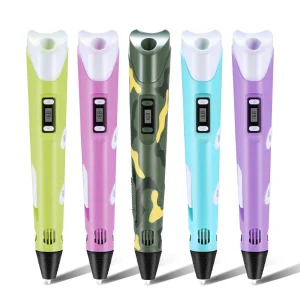
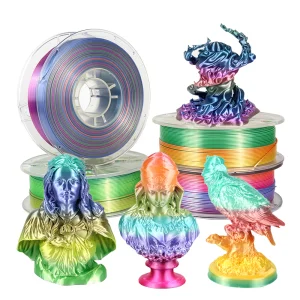
Explore our full line of specialty engineering materials, high-gloss silk formulations, fluorescent filaments, and creative 3D drawing tools.