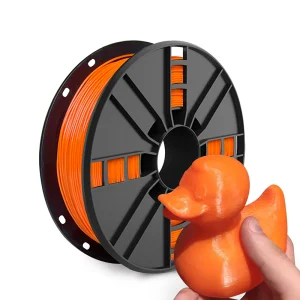
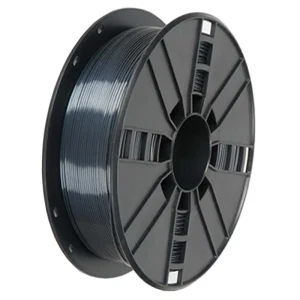
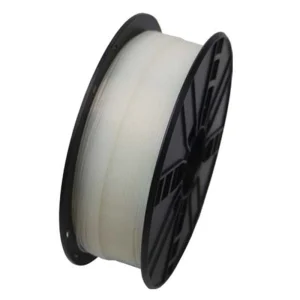
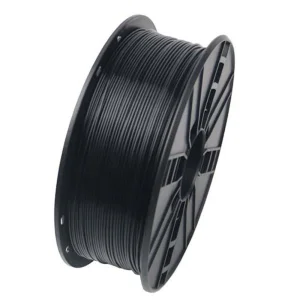
Precision-engineered filaments designed specifically for consistent feeding, clog-free extrusion, and thermal stability in desktop 3D printing pens and printers.
Analyzing the structural evolution, technological convergence, and global export infrastructure of China's additive manufacturing supply chain.
China's manufacturing corridor, particularly centered in Guangdong industrial hubs, accounts for over 85% of global 3D pen devices and consumable filaments. Torwell Technologies operates a state-of-the-art 2,500 m² standardized production facility hosting 6 fully automated extrusion lines, bridging high-precision polymer chemistry with industrial-scale assembly.
Desktop 3D pens require rigid material tolerances to prevent internal gear jams and thermal slip. Utilizing dual-axis inline laser gauging, Torwell maintains a strict ±0.02 mm diameter tolerance across all 1.75mm and 2.85mm filament strands, ensuring seamless motor torque transition and zero micro-void clogging.
With export footprints spanning more than 75 countries and regions across North America, Europe, and Asia-Pacific, China-based OEM manufacturers deliver end-to-end private labeling, customized masterbatch color matching, and full regulatory compliance for international retail chains and STEAM education distributors.
Data-driven performance indicators demonstrating scale, precision control, and global trade velocity.
Examining market penetration, educational adoption, and hardware innovation in hand-held additive manufacturing devices.
The global shift toward hands-on STEAM (Science, Technology, Engineering, Art, and Mathematics) learning has turned 3D pens from simple novelty gadgets into standardized classroom tools. Schools across Europe and North America utilize non-toxic, low-temperature PCL and eco-friendly PLA refill packs to teach spatial geometry, architectural drafting, and basic structural engineering principles.
Beyond educational institutions, industrial design studios, rapid prototyping labs, and FDM print farms utilize high-temperature 3D pens (ABS, PETG, PC formulations) for instant post-processing repair. Micro-cracks, layer delamination, and structural voids in large-scale 3D prints are seamlessly welded using matching polymer pen refills, drastically reducing part scrap rates.
E-commerce sellers on Amazon, Shopify, and regional retail networks require turnkey OEM/ODM solutions. Factory partners in China provide custom-branded retail boxes, ergonomic pen enclosures, OLED temperature-display micro-controllers, multi-color continuous filament coils, and specialized multi-lingual user instruction kits, minimizing time-to-market for global brands.
Technical comparison of extrusion consumables, melt flow index (MFI), and thermal operational window for 3D pens and desktop FDM printers.
| Material Type | Extrusion Temp Range | Melt Flow Index (MFI) | Tensile Strength | Primary Application Scenario | Safety / Certification |
|---|---|---|---|---|---|
| PCL (Low-Temp) | 60°C – 90°C | 15 – 25 g/10min | 22 MPa | Children's 3D Pens, Skin-Safe Crafting | EN71-1/2/3, CE, Non-Toxic Bio-Polymer |
| PLA / Silk PLA | 190°C – 220°C | 8 – 14 g/10min | 60 MPa | STEAM Education, Architectural Models, Aesthetics | RoHS, REACH, Food-Contact Compliant Resin |
| ABS / ABS+ | 220°C – 240°C | 12 – 18 g/10min | 43 MPa | Rigid Structural Assemblies, Weld Repair | CE, FCC, High Impact Resistance Grade |
| PETG / Clear PETG | 230°C – 250°C | 6 – 10 g/10min | 50 MPa | Outdoor Functional Models, Chemical Containers | REACH, Halogen-Free, UV Resistant |
| TPU (95A Flexible) | 210°C – 230°C | 25 – 35 g/10min | 35 MPa (Elongation 450%) | Flexible Joints, Footwear Prototyping, Dampeners | Skin-Safe Elastic Polymer, CE Certified |
| PC & Carbon Fiber | 250°C – 280°C | 4 – 8 g/10min | 75 MPa | Industrial Tooling, Aerospace Prototypes | UL94-V0 Flame Retardant Compatible Base |
3D pens utilize small-scale planetary gear stepper motors with constrained torque profiles compared to industrial FDM extruders. Torwell custom-formulates its filament resin masterbatches to achieve an optimized Melt Flow Index (MFI). This prevents pressure back-flow inside the ceramic heat break and eliminates nozzle drooling when the feed button is released.
Extrusion consistency is critical. Any ovality or diameter surge exceeding 0.05mm causes the feeding gear to slip or strip the plastic filament strand. By routing every manufacturing batch through closed-loop dual-axis laser micrometer arrays, real-time adjustments ensure that 100% of delivered spools and cut-length packs adhere to ±0.02 mm standards.
Removing international trade friction through comprehensive certification, customs documentation, and localized distributor support.
All Torwell 3D pen devices and filament lines undergo rigorous third-party lab testing. Consumables fulfill CE, RoHS, REACH, and EN71-1/2/3 safety standards, guaranteeing zero heavy metal contamination, zero phthalate additives, and non-toxic fumes during heating—an essential requirement for importation into the EU and US school systems.
Hygroscopic materials such as PETG, TPU, and PC degrade quickly when exposed to ambient humidity during ocean freight. Torwell implements a multi-stage packaging protocol: online pre-extrusion resin desiccation, immediate post-spool vacuum sealing with active silica desiccant bags, and reinforced double-wall corrugated outer master cartons built for maritime transshipment.
We assist overseas distributors in creating tailored product presentations. From customized Pantone-matched color strands, custom spool weights (50g sample rolls to 1kg bulk spools), to localized user manuals translated into over 15 languages, our turn-key OEM service enables seamless brand integration in your local target markets.
Discover how desktop 3D pens and specialty polymer consumables solve real-world design, repair, and pedagogical challenges.
In elementary and secondary school makerspaces, students utilize low-temperature PCL 3D pens operating at 70°C. Because the nozzle remains safe to touch, children can draw 3D wireframe geometric shapes, structural truss bridges, and biological cell models directly on stencils without burn risks.
Industrial print farms running hundreds of 3D printers face occasional print flaws such as surface seam pits or minor corner lifting. Technicians equipped with high-temperature ABS/PETG 3D pens load matching filament strands to perform instant localized plastic welding, saving 20-hour print jobs from being discarded.
Architects and industrial designers employ high-stiffness Silk PLA and Matte PLA 3D pens to quickly sketch physical structural wireframes during client brainstorming sessions. This bridge between CAD software and tactile physical models accelerates early-stage spatial verification.
Pioneering sustainable bio-polymers, smart micro-extrusion devices, and closed-loop circular recycling.
Torwell is actively expanding its eco-friendly product lineup with 100% recycled PLA (rPLA) and marine-degradable polymer blends. Our target for 2026 is to transition 40% of standard wholesale 3D pen filament production to certified post-industrial recycled resins without sacrificing tensile strength or diameter uniformity.
Next-generation 3D pens under development feature embedded micro-sensors that automatically adjust heating chamber temperature based on real-time extrudate speed and ambient air humidity. This smart control loop prevents heat creep and guarantees smooth, uniform strand extrusion regardless of user drawing pace.
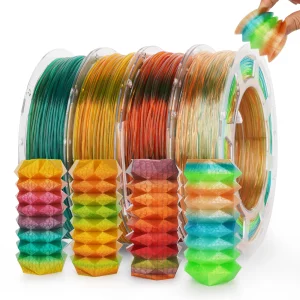
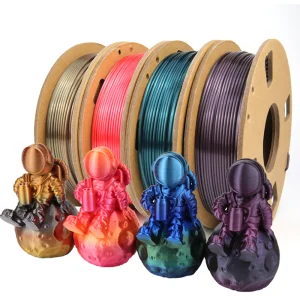
Expanding additive functionality, our R&D lab is testing specialized conductive PLA filament for 3D pens, allowing users to draw low-voltage electrical circuits in mid-air. Additionally, co-extrusion multi-color strands (dual and tri-color silk PLA) bring dynamic shimmering aesthetics to desktop artistic sketching.
Essential insights regarding minimum order quantities, private labeling, quality control protocols, and global export procedures.
Torwell operates a 2,500 m² factory equipped with 6 fully automated continuous extrusion lines. Our monthly filament output ranges between 50,000 kg and 60,000 kg, supporting high-volume container orders as well as agile custom OEM production runs for global brands.
Yes. We provide comprehensive OEM/ODM services including custom Pantone color matching for filaments, private-label spool printing, customized retail box graphics, multi-lingual instruction sheets, and custom cut-length filament packs (e.g., 5m or 10m multi-color coils for 3D pen kits).
We employ real-time dual-axis laser measurement gauges during extrusion, maintaining a strict ±0.02 mm diameter tolerance. Every batch undergoes strict melt flow testing and continuous 24-hour test-printing to ensure zero bubbles, zero ovality, and zero motor stalling inside 3D pens or FDM printers.
Our materials comply with international safety regulations including CE, RoHS, REACH, and EN71-1/2/3 child safety toy testing standards. Detailed Material Safety Data Sheets (MSDS) and Technical Data Sheets (TDS) are supplied with all wholesale orders for seamless customs entry.
PCL (Polycaprolactone) is a ultra-low-temperature polymer that extrudes at 60°C–90°C, making it completely skin-safe and ideal for young children. PLA extrudes at 190°C–220°C, providing higher rigidity, faster cooling speed, and a wider range of glossy color finishes suited for older students and adult creators.
All materials are dried to target moisture levels before spooling. Each spool or refill pack is immediately vacuum-sealed with high-absorption desiccant, packed in individual retail boxes, and palletized with moisture-barrier film to guarantee prime condition upon arrival.
Factory-direct supply for global distributors, e-commerce sellers, and education supply channels.