
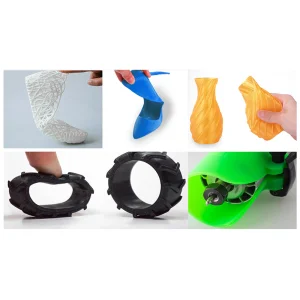
Industrial-tested flexible filaments optimized for high-speed direct-drive and industrial 3D printing systems across Canadian manufacturing centers.
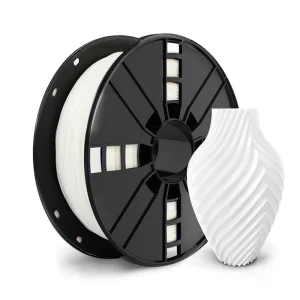
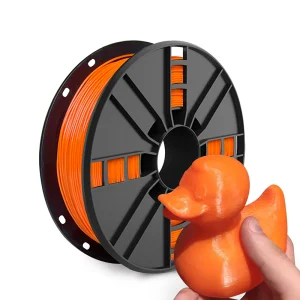
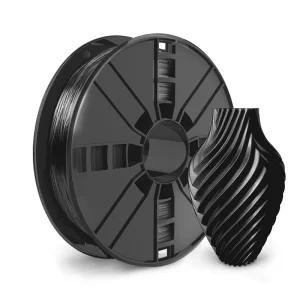
As industrial additive manufacturing shifts from visual concept prototyping to high-load functional production, Thermoplastic Polyurethane (TPU) and Thermoplastic Elastomer (TPE) filaments have emerged as indispensable materials. Combining the elasticity of vulcanized rubber with the processability of thermoplastics, these polymers bridge a critical operational gap in modern engineering.
At the molecular level, TPU is a block copolymer consisting of alternating soft polymer segments (which provide elasticity) and hard polyurethane segments (which provide mechanical strength and thermal resistance). For industrial supply chains, distinguishing between polyether and polyester backbones is paramount:
Thermoplastic Elastomers (TPE) encompass a broader class of flexible polymers, including Styrenic Block Copolymers (TPE-S) and Thermoplastic Vulcanizates (TPV). Unlike standard rigid filaments, TPEs possess exceptional shock absorption, low compression set under persistent strain, and tactile surface finishes.
Torwell Technologies’ chemical engineering team controls phase separation during the extrusion melt phase, ensuring predictable energy dissipation and high fatigue life under continuous cyclic loading.
Canada’s diverse industrial economy presents rigorous operational challenges for polymer materials. From severe sub-zero Arctic temperatures to chemical exposure in resource extraction, Canadian buyers require flexible filaments that strictly comply with local environmental and mechanical strains.
Ontario’s dense automotive assembly plants, EV battery facilities, and robotics integration hubs require oil-resistant, vibration-damping elastomers. Torwell TPU 95A and 90A are heavily deployed for rapid tooling, custom robotic end-effector grippers, wire harness grommets, and protective assembly jigs that prevent scratching painted vehicle chassis during production line movements.
In Quebec’s aerospace, rail, and flight simulation sectors, materials must meet stringent mechanical repeatability standards. Custom TPE formulations developed by Torwell provide ideal acoustic isolation seals, low-outgassing cabin sub-assembly buffers, and strain-relief boots capable of enduring ambient pressure changes and flight-vibration spectra.
Heavy equipment operating in the Athabasca Oil Sands and Northern Alberta mining rigs demands winter-proof elastomers. Traditional rubbers shatter under extreme low ambient temperatures (-40°C). Torwell’s polyether TPU maintains high flexibility and impact strength at sub-zero temperatures, preventing cold-brittleness failures in hydraulic line protectors and dust seals.
Pacific Northwest tech ecosystems demand biocompatible, weather-proof, and salt-spray-resistant polymers for autonomous agricultural drone bumpers, oceanographic sensor enclosures, and wearable tech prototypes. Our UV-stabilized TPU filaments resist degradation caused by sun and saltwater exposure.
Select the optimal elastomer grade based on quantified mechanical properties tested under standardized ASTM and ISO laboratory conditions.
| Material Grade | Shore Hardness | Tensile Strength (MPa) | Elongation at Break (%) | Tear Strength (kN/m) | Glass Transition (Tg) | Recommended Primary Application |
|---|---|---|---|---|---|---|
| Torwell Ultra-Soft TPU | Shore 75A | 28 MPa | > 650% | 65 kN/m | -45 °C | Soft gaskets, prosthetic cushions, anatomical models |
| Torwell Medium Flexible TPU | Shore 85A | 35 MPa | > 580% | 85 kN/m | -40 °C | Vibration mounts, shoe soles, protective phone cases |
| Torwell Industrial TPU (Standard) | Shore 95A | 48 MPa | > 480% | 110 kN/m | -35 °C | Automotive bushings, conveyor belts, robotic grippers |
| Torwell Semi-Rigid TPE / TPC | Shore 55D / 98A | 55 MPa | > 350% | 140 kN/m | -30 °C | High-pressure hydraulic seals, heavy-duty drive belts |
| Standard Soft PLA (Reference) | Shore 90A - 95A | 18 MPa | < 200% | 35 kN/m | -10 °C | Non-functional prototypes, basic visual models |
* Tested at 23°C, 50% RH according to ASTM D412 and ASTM D624 standards.
Overcoming TPU printing challenges—such as buckling inside the extruder, stringing, and moisture voids—requires strict physical control over both material extrusion parameters and printer hardware setup.
Elastomeric filaments act like thin flexible cords when pushed under pressure. Torwell’s strict ±0.02mm diameter standard prevents localized jamming. When configuring direct-drive extruders, ensure the distance between the drive gear dual-pulley and the hotend melt zone is fully constrained to less than 1.5mm to eliminate filament buckling.
TPU polymers contain polar urethane groups that naturally absorb atmospheric moisture. Water molecules vaporize at the hotend tip, causing pop marks, stringing, and up to a 60% loss in interlayer tensile strength. Torwell filaments undergo continuous inline thermal desiccant drying before being vacuum-sealed into aluminum foil barrier packaging with active desiccant pouches.
Our automated 6-line factory utilizes specialized screw geometries during extrusion to achieve uniform thermal homogenization. This delivers a consistent Melt Flow Index (MFI of 12–18 g/10min at 210°C/1.2kg), enabling Canadian print farms to operate high-speed printing (100–150 mm/s) on modern CoreXY machines without under-extrusion.
Scaling product lines across North America requires more than standard off-the-shelf reels. Torwell offers end-to-end OEM manufacturing tailored to your brand identity and localized regulatory mandates.
Match exact corporate colors or specialized technical specs. We support custom Pantone / RAL color matching with tight delta tolerances ($\Delta E < 1.0$). Hardness formulations range from ultra-soft 70A to semi-rigid 65D.
Custom die-cut retail boxes, high-durability barcode labels, branded spool stickers, and eco-friendly recyclable cardboard spools engineered for seamless automated feeder (AMS) integration.
All Torwell TPU raw resins are certified free of SVHCs (Substances of Very High Concern), phthalates, and heavy metals. We supply complete Technical Data Sheets (TDS) and Safety Data Sheets (SDS) compliant with Canadian WHMIS standards.
Shipping raw polymers across borders requires clear documentation to prevent port holds at major Canadian entry hubs (Vancouver, Prince Rupert, Toronto Pearson, Montreal).
Discover how Torwell TPU and TPE filaments solve real-world mechanical challenges across key Canadian industries.
Problem: Standard PVC spiral hose wraps failed under -35°C Northern Alberta temperatures, snapping when heavy excavator booms flexed.
Solution: Custom-printed spiral wraps produced with Torwell Polyether TPU 95A. The high cold-flex endurance maintained 100% impact resistance down to -40°C, extending hydraulic line operational life by 300%.
Problem: Metal robotic arms handling aluminum battery enclosure trays caused micro-scratches, leading to cosmetic rejections.
Solution: On-demand 3D printed protective pads using Torwell Shore 85A TPU. The high tear strength and non-marring surface eliminated part damage while providing non-slip mechanical grip.
Problem: Off-the-shelf rubber gaskets degraded prematurely under constant Pacific ocean saltwater submersion and UV exposure.
Solution: Direct printing of custom IP68 waterproof seals with Torwell Polyether TPU 90A. Zero hydrolytic degradation reported after 18 months of continuous marine deployment.
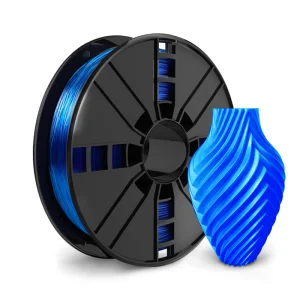
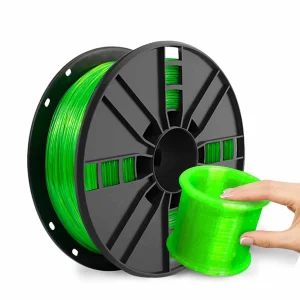
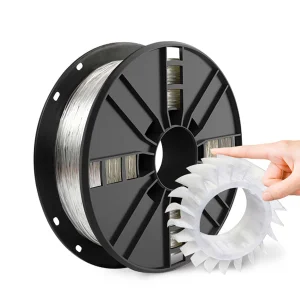
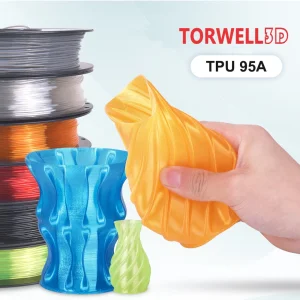
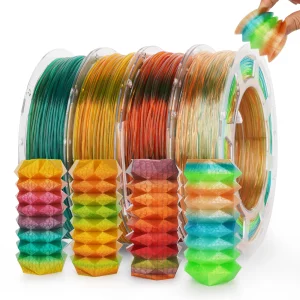
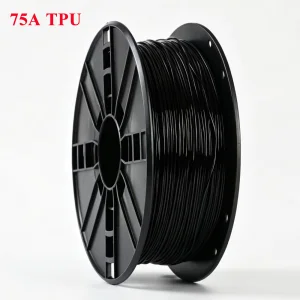
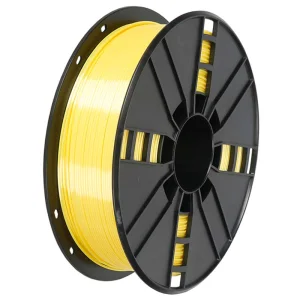
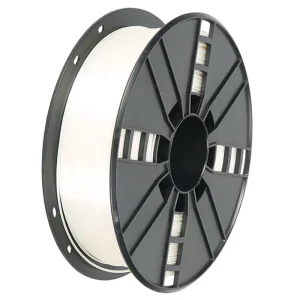
Explore our full range of flexible elastomer and high-finish engineering filaments available for wholesale, container orders, and private-label distribution across Canada.
Direct answers for Canadian procurement managers, materials engineers, and 3D printing brand owners.
For standard stocked colors (Black, White, Blue, Clear, Orange, Red) in 95A TPU, our MOQ starts as low as 50 spools. For custom Pantone color matching or custom Shore hardness formulations (e.g., 75A or 85A), the standard MOQ is 300 kg per color. Private label packaging (custom boxes, branded spools, and custom labels) can be bundled into standard container shipments or LCL orders.
Our extrusion lines use closed-loop dual-axis laser micro-gauges operating at 500 Hz sampling rates. If filament diameter drifts beyond ±0.02mm or ovality exceeds 0.01mm, the automated line adjusts puller speed in real-time or rejects the segment. This ensures smooth, snag-free feeding across modern high-speed extruders like Bambu Lab, Prusa Direct Drive, and industrial systems.
Yes. Torwell Polyether-based TPU formulations feature a glass transition temperature ($T_g$) of -40°C to -45°C. Unlike lower-cost polyester elastomers that undergo ductile-to-brittle transitions near freezing, our polyether materials retain over 80% of their impact resilience and elongation at break in cold ambient conditions.
We offer flexible freight options:
Torwell TPU is extruded from 100% virgin resin with zero recycled fillers or hazardous additives. When printed within the recommended temperature window (210°C – 235°C), it exhibits ultra-low VOC emissions and minimal odor. Material Safety Data Sheets (SDS) in compliance with WHMIS and OSHA are provided with all commercial shipments.
Yes. We offer optimized cardboard spools featuring rolled, smooth edges that prevent paper-dust buildup inside automatic material feeder systems. Heavy-duty plastic spools remain available upon request for high-humidity industrial print environments.
Request a custom wholesale quote, engineering sample kit, or full product catalog today. Our material engineers and export specialists reply within 24 business hours.