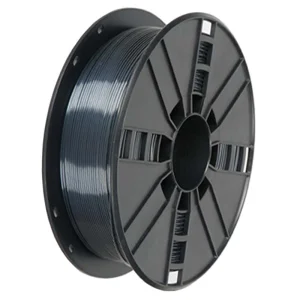
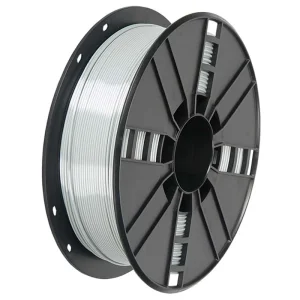
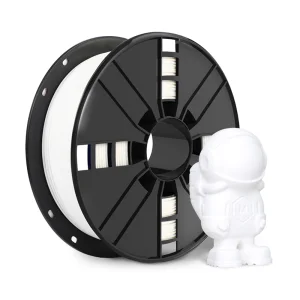
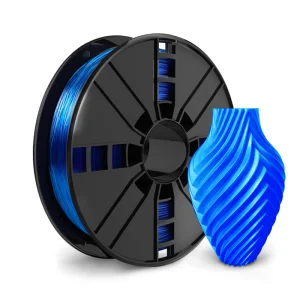
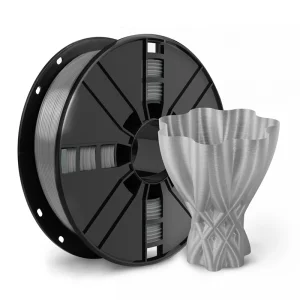
Industrial Whitepaper & Global OEM Sourcing Guide for Ultra-Soft Shore 75A Thermoplastic Elastomers, Precision Polymer Extrusion, and Additive Manufacturing Supply Chains
Explore our factory-direct wholesale materials engineered for high layer adhesion, dimensional tolerance, and batch-to-batch repeatability.
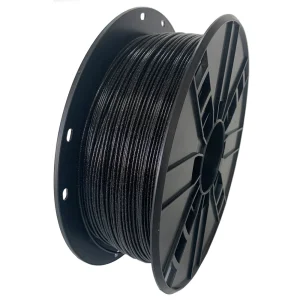
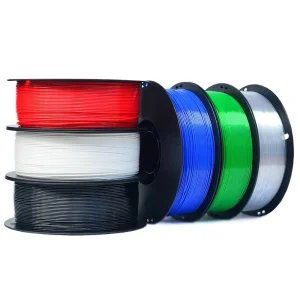
Understanding the polymer physics, chemical formulations, and mechanical trade-offs of Shore 75A vs. conventional 95A flexible filaments in Fused Deposition Modeling (FDM).
In the rapidly evolving landscape of additive manufacturing, flexible polymer filaments represent one of the fastest-growing categories for functional prototyping and end-use production. While standard Thermoplastic Polyurethane (TPU) filaments on the market typically hover around a Shore 95A hardness rating—offering moderate flexibility comparable to a hard plastic shoe sole—industrial applications increasingly demand true rubber-like elasticity. This is where TPE Filament 75A (Thermoplastic Elastomer with Shore 75A durometer) becomes an essential engineering material.
TPE 75A is a formulated block copolymer architecture combining hard thermoplastic segments (providing melt-processability) with soft elastomeric polymer chains (delivering extreme mechanical damping, tactile softness, and high strain recovery). Operating at a 75A durometer requires meticulous formulation engineering during raw polymer compounding. Unlike rigid filaments like PLA or PETG, ultra-soft elastomeric strands exhibit pronounced viscoelastic creep, high surface friction, and elevated hygroscopic tendencies during extrusion processing.
Engineers and procurement directors must evaluate mechanical performance metrics when choosing between flexible filament grades. The matrix below outlines standardized ASTM test values across industrial flexible filaments:
| Mechanical Property | TPE 75A (Ultra-Soft) | TPU 85A (Flexible) | TPU 95A (Semi-Rigid) | Testing Standard |
|---|---|---|---|---|
| Shore Hardness | 75 Shore A | 85 Shore A | 95 Shore A | ASTM D2240 / ISO 868 |
| Tensile Strength at Break | 18.5 MPa | 28.0 MPa | 42.0 MPa | ASTM D412 / ISO 37 |
| Elongation at Break | 650% – 720% | 550% – 600% | 450% – 500% | ASTM D412 / ISO 37 |
| Tear Propagation Strength | 48 N/mm | 65 N/mm | 95 N/mm | ASTM D624 (Die C) |
| Flexural Modulus | 12 MPa | 28 MPa | 75 MPa | ASTM D790 |
| Melt Flow Index (210°C / 2.16kg) | 4.5 g/10 min | 8.2 g/10 min | 14.0 g/10 min | ASTM D1238 / ISO 1133 |
| Recommended Printing Temp | 205°C – 225°C | 215°C – 235°C | 225°C – 245°C | Torwell In-House Protocol |
How state-of-the-art Chinese extrusion infrastructure overcomes the inherent production challenges of low-durometer elastomeric filaments.
Extruding 75A durometer elastomer requires custom compression-ratio screws with low shear heat build-up. Standard PLA screws cause material degradation and melt instability. Our 2,500 m² Shenzhen facility utilizes optimized L/D ratio extruders designed specifically for soft polymers.
Because soft TPE deforms easily under light tension during spooled cooling, maintaining dimensional accuracy is exceptionally difficult. We deploy dual-axis, high-speed inline laser calipers that continuously adjust capstan pull speeds to hold a tight ±0.03 mm tolerance on 1.75 mm and 2.85 mm strands.
TPE polymers are inherently hygroscopic, rapidly absorbing atmospheric ambient humidity. Torwell operates automated multi-stage desiccant drying towers that lower raw resin moisture below 0.02% prior to extrusion, followed by immediate inline nitrogen-purged vacuum sealing with high-capacity desiccant pouches.
Leveraging direct access to world-class chemical supply chains in South China allows us to source raw virgin SEBS and TPU base resins at competitive price tiers. We support global distributors with OEM private label packaging, custom spools (250g, 500g, 1kg, 3kg), and tailored Pantone color matching.
Key technological inflections driving the shift from legacy rigid materials to specialized functional elastomers.
The global 3D printing material market is experiencing a profound paradigm shift. Historically, 3D printing was restricted to aesthetic rapid prototyping using brittle materials like standard PLA or basic ABS. Today, enterprise adoption of additive manufacturing is anchored in functional production components—where flexible, dampening, chemical-resistant, and high-fatigue materials are paramount.
Real-world industrial use cases where TPE 75A out-performs rigid plastics and high-durometer elastomers.
Custom dynamic weather stripping, vibration dampening engine mounts, dust covers, flexible air intake ducting, and anti-rattle interior trim gaskets requiring long-term elastic recovery under thermal stress.
Biocompatible patient-matched orthotic cushion liners, soft prosthetic socket inserts, anatomical surgical simulation models mimicking human skin/tissue response, and comfortable wearable sensor straps.
IP68-rated dust and waterproof sealing rings for rugged handheld devices, impact-absorbing bumper cases, soft-touch ergonomic grips for industrial power tools, and acoustic isolation dampers.
Compliant soft-robotic end-effectors, pneumatic suction cups, delicate item grippers for agricultural sorting machines, flex-hinges, and customized protective bellows for multi-axis robotic arms.
A structured framework for international distributors, brand owners, and 3D printing farms purchasing bulk TPE 75A filament direct from China.
For international procurement directors and 3D printing brand managers, establishing a reliable OEM supplier in China requires strict adherence to quality assurance (QA), supply chain compliance, and customizable manufacturing capabilities. Torwell Technologies Co., Ltd. provides comprehensive end-to-end B2B services optimized for high-volume enterprise orders:
Expert answers to critical procurement, manufacturing, and engineering queries regarding TPE 75A filament.
The primary difference lies in Shore A durometer hardness and viscoelastic behavior. TPU 95A is a semi-rigid elastomer offering moderate flexibility, suitable for protective covers and functional clips. TPE 75A is significantly softer, delivering true rubber-like elasticity, extreme tactile cushioning, and elongation at break exceeding 650%. TPE 75A requires direct-drive extruders for reliable printing, whereas TPU 95A can sometimes be fed through Bowden tubes.
Because soft polymers deform under tension, standard extrusion methods cause diameter ovality. Torwell employs specialized low-shear screw extruders coupled with dual-axis laser diameter monitoring gauges. The closed-loop control system dynamically adjusts cooling bath temperature and capstan puller speed 100 times per second, maintaining strict ±0.03 mm tolerances.
We recommend using a direct-drive extruder with a fully constrained, tight filament path to prevent soft strand buckling. Printing temperatures range from 205°C to 225°C, with a heated bed at 30°C to 50°C (or unheated with painter's tape/PEI sheet). Printing speed should be set to 15–30 mm/s, retraction disabled or kept minimal (0.5 mm at slow speed), and cooling fan set to 50–100%.
Yes. Formulated TPE block copolymers demonstrate excellent chemical resistance to diluted acids, alkalis, greases, and automotive oils. Furthermore, Torwell adds specialized UV-stabilizer packages to TPE 75A grades intended for outdoor automotive and industrial applications to prevent yellowing and mechanical embrittlement over time.
Absolutely. As a dedicated manufacturer since 2011, Torwell provides complete OEM/ODM solutions. We can synthesize custom colors based on Pantone/RAL codes or physical plastic samples, design custom branded cardboard or plastic spools, produce custom retail cartons, and provide white-label Technical Data Sheets for your local distribution channel.
TPE polymers absorb moisture rapidly from the air, which can cause steam micro-bubbles, stringing, and weak layer adhesion during printing. If exposed to ambient air, dry the filament in a dedicated filament dryer or convection oven at 60°C – 65°C for 4 to 6 hours before use. Always store unused spools inside sealed vacuum bags with active silica desiccant.
For standard stock colors (Black, White, Clear), our MOQ starts at 50 kg. For custom Pantone color synthesis or private label packaging, the standard MOQ is 200–300 kg per color batch. Our 6 automated production lines yield a monthly capacity of ~60,000 kg, allowing us to ship standard order volumes within 10 to 15 business days.
All Torwell filaments comply fully with international environmental and chemical safety standards. Shipments include official REACH SVHC, RoHS 3.0, and ISO 9001 quality system certifications. Specialized food-grade or medical-grade compliance reports can also be provided upon enterprise project request.
Complement your TPE 75A inventory with our market-proven engineering, decorative, and high-speed FDM material range.