Direct factory supply of high-grade 3D printing filaments featuring tight ±0.02mm tolerances, bubble-free vacuum sealing, and high-speed AMS compatibility.
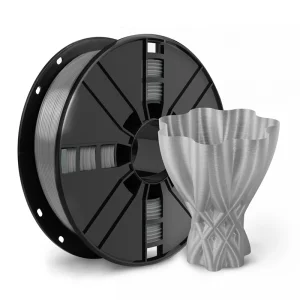
Analyzing the shift from consumer desktop prototyping to enterprise-grade high-speed additive manufacturing facilities.
The global 3D printing ecosystem has transitioned into the era of high-speed printing (500mm/s to 600mm/s). Standard PLA formulas often experience shear thinning breakdown, nozzle jamming, or layer separation at elevated speeds. Modern wholesale PLA factories must engineer polymers with high Melt Flow Index (MFI > 18g/10min at 210°C) and rapid thermal crystallization matrixes to preserve tensile strength while accelerating cooling speed.
PolyLactic Acid (PLA) derived from fermented plant starch (cornstarch or sugarcane) offers a substantially reduced carbon footprint compared to petroleum-based polymers. Enterprise buyers in North America and Western Europe increasingly demand full Life Cycle Assessments (LCA), closed-loop recycling pathways, and zero post-industrial waste during filament spooling operations.
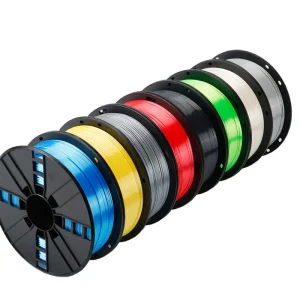
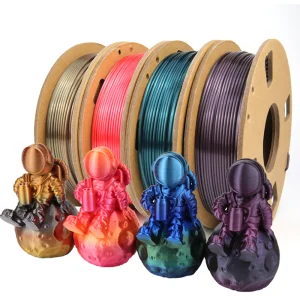
The consumer retail sector is driven by high-margin specialty aesthetics. Silk PLA, dual-color and tri-color co-extrusion, pearlescent gradients, and matte architectural finishes represent the fastest-growing categories in retail channels. Factories capable of maintaining precise volumetric color splitting during co-extrusion gain a critical competitive edge.
Understanding the strict technical and financial parameters evaluated by B2B purchasers, Amazon brand owners, and industrial print farm operators.
For large print farms operating 100+ FDM machines simultaneously, a single spool with diameter deviation beyond ±0.03mm can cause nozzle clog-induced downtime, costing hundreds of machine hours. Enterprise procurement teams prioritize suppliers with continuous closed-loop 3-axis laser measurement telemetry, inline automatic scrap rejection, and consistent raw material batch lot control.
Wholesale buyers looking to build proprietary e-commerce or retail brands require deep ODM/OEM customization capabilities. Factory partner evaluation goes beyond material cost per kilogram to cover customizable spool architecture (cardboard vs transparent PC spools), high-resolution retail packaging design, custom Pantone color synthesis, and complete technical data sheet (TDS) documentation.
Comprehensive engineering specifications for B2B material selection and print farm optimization.
| Filament Category | Base Resin Grade | Melt Temp Range | Bed Temp Range | Tensile Strength | Key Performance Attribute |
|---|---|---|---|---|---|
| Standard PLA | Virgin NatureWorks Ingeo | 190°C – 210°C | 0°C – 60°C | 60 MPa | Low Warping High dimensional stability |
| PLA+ / PLA Pro | Impact-Modified PLA | 200°C – 230°C | 50°C – 60°C | 68 MPa | High Impact 4x toughness vs standard PLA |
| Silk PLA (Co-extruded) | PLA / Elastomer Blend | 205°C – 225°C | 50°C – 60°C | 52 MPa | High Gloss Metallic shine, dual-color split |
| PETG Engineering | Glycol-Modified PET | 230°C – 250°C | 70°C – 80°C | 50 MPa | Chemical Res. Moisture resistant, clear options |
| ABS Structural | High-Impact Styrene | 230°C – 260°C | 90°C – 110°C | 43 MPa | Thermal Res. HDT 98°C, post-machinable |
| ASA Outdoor | Acrylic Styrene Acrylonitrile | 240°C – 260°C | 90°C – 110°C | 45 MPa | UV Stable Weatherproof outdoor components |
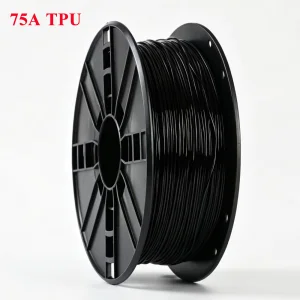
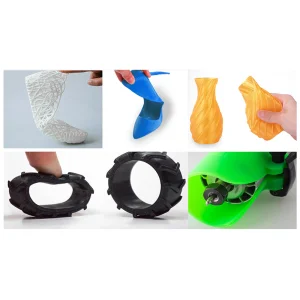
| TPU Flexible (95A/75A) | Polyether Polyurethane | 210°C – 230°C | 20°C – 50°C | 35 MPa | Elastomeric High abrasion resistance & flex |
| Carbon Fiber Composite | PETG/PA + 15% Chopped CF | 240°C – 270°C | 70°C – 90°C | 85 MPa | Ultra Rigid High modulus, matte structural finish |
Tailored material engineering for industrial manufacturing, educational ecosystems, and commercial print farms.
Designed for automated continuous 24/7 printing environments. Our filament features tangle-free precision spooling to prevent automatic material system (AMS) retractions jams, low odor emission for enclosed print rooms, and uniform thermal shrinkage coefficients to ensure multi-part assembly fit accuracy.
Education institutions require safe, reliable, and non-toxic materials. Torwell’s pure PLA formulation utilizes 100% heavy-metal-free organic colorants, meeting stringent EU REACH and US CPSIA compliance standards, making it the ideal choice for classrooms and university prototyping labs.
For cosplay, interior design models, and consumer goods prototyping, our Silk PLA and Dual-Color Rainbow series eliminate post-processing requirements. The extruded layers scatter light uniformly, hiding layer lines completely and providing a polished metallic finish right off the build plate.
Rigorous inline quality control meeting European and American regulatory standards for frictionless global import.
Our 2,500 m² automated facility operates under ISO 9001:2015 quality management standards. Each spool passes through five rigorous quality control checkpoints prior to container loading:
Torwell Technologies ensures full chemical and environmental compliance for global markets, simplifying customs clearance for regional importers and retail chains:
Next-generation polymer innovation driving the next decade of additive manufacturing.
Traditional PLA warps at temperatures above 55°C. Torwell's R&D team is pioneering nucleating agent formulations that enable post-print thermal crystallization. Annealed parts achieve Heat Deflection Temperatures exceeding 100°C, directly competing with ABS and PETG in automotive engine bay tooling and outdoor enclosures.
Future extrusion lines will incorporate AI machine vision to inspect surface optical quality in real time. Micro-voids, surface gloss variances, and pigment inconsistencies will be detected dynamically, allowing automatic screw RPM adjustments to maintain absolute structural homogeneity across 1,000kg production batches.
With industrial scrap management becoming mandatory across global enterprise supply chains, our next-generation rPLA initiative reclaims post-industrial 3D print waste. Through chemical repolymerization, rPLA retains over 95% of virgin PLA’s tensile strength while delivering a true zero-landfill additive manufacturing lifecycle.
Detailed engineering and commercial answers to simplify your vendor evaluation process.
Torwell Technologies has specialized exclusively in 3D printer filament extrusion since 2011. Operating a standardized 2,500 m² factory equipped with 6 fully automated extrusion lines, Torwell delivers a monthly production capacity of 50,000kg to 60,000kg. Our factory guarantees a strict ±0.02mm diameter tolerance through dual-axis laser telemetry, ensuring absolute batch-to-batch reliability for distributors and print farms across 75+ countries.
We provide end-to-end turn-key OEM/ODM manufacturing. This includes matching custom Pantone colors or physical plastic samples within 7-10 days, private label sticker printing, customized retail box packaging, eco-friendly cardboard or transparent polycarbonate spools, and custom spool net weights (ranging from 250g mini spools up to 5kg industrial master spools).
In modern high-speed 3D printers operating at speeds of 300mm/s to 600mm/s, volumetric flow rate must remain perfectly constant. A diameter deviation of +0.05mm increases volumetric output by nearly 6%, leading to over-extrusion, nozzle buildup, drag friction, and eventual hotend clogging. Torwell’s strict ±0.02mm tolerance ensures uniform extrusion pressure, smooth layer bonding, and uninterrupted print cycles.
Prior to packaging, all extruded filaments undergo inline thermal dehumidification to reduce internal moisture content below critical thresholds (<200 ppm). Spools are immediately vacuum-sealed in thick, puncture-resistant moisture-barrier foil or clear vacuum bags containing active calcium/silica gel desiccant packs. Individual spools are housed in reinforced corrugated cardboard boxes, ensuring full protection during multi-week ocean transit.
For standard stock colors and formulations, our standard MOQ starts as low as 10-20 spools per color. For custom Pantone color matching and customized private label packaging, our typical OEM MOQ is 100 to 300 spools per SKU, allowing emerging brands to launch custom product lines with minimal capital risk.
Yes. Torwell utilizes advanced co-extrusion tooling capable of splitting two or three distinct color melts uniformly along the filament core. As the spool feeds into the 3D printer, the extruded line produces a striking visual color-shift effect based on viewing angle, making it highly desirable for consumer decor, art, and retail markets.
Every commercial delivery includes detailed Material Safety Data Sheets (MSDS/SDS), Technical Data Sheets (TDS) containing optimized temperature settings and mechanical test values (ISO/ASTM standard test bars), and Quality Assurance Batch Inspection Certificates detailing melt flow index and tolerance metrics.
Explore our engineering-grade portfolio including modified PLA+, ABS, carbon fiber composites, and UV-resistant materials.