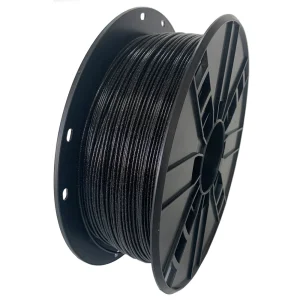
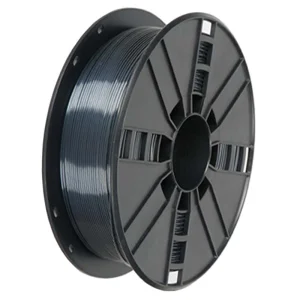
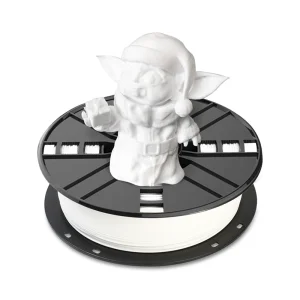
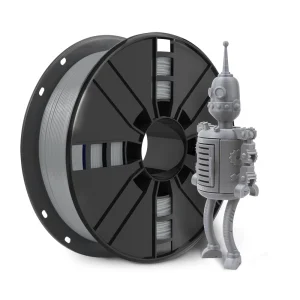
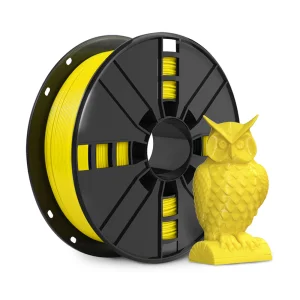
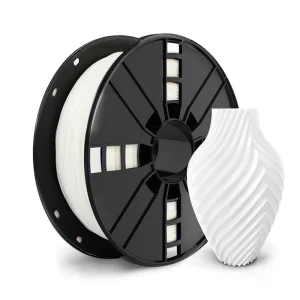
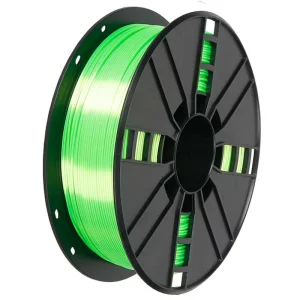
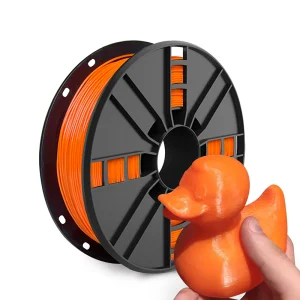
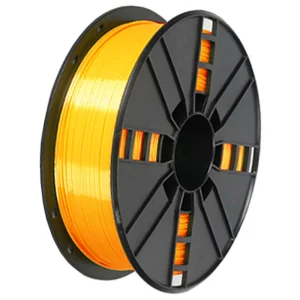
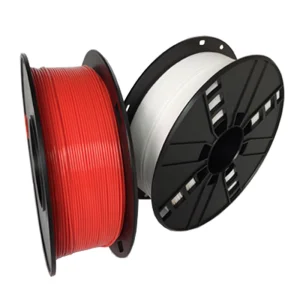
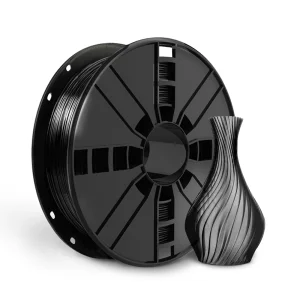
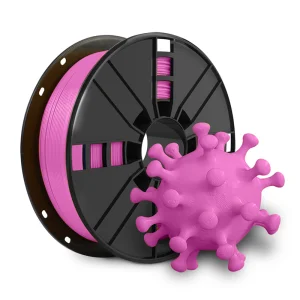
Explore our primary manufacturing outputs available for bulk procurement, container-load distribution, and OEM private labeling. Formulated for high-speed printing platforms with strict diameter consistency.
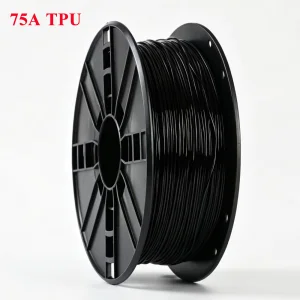
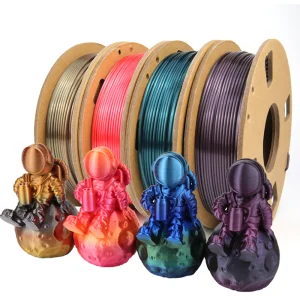
In the rapidly expanding additive manufacturing ecosystem, Polylactic Acid (PLA) filament in 1.75 mm diameter represents the absolute backbone of Fused Deposition Modeling (FDM) material consumption globally. Driven by the proliferation of high-speed CoreXY 3D printers, print farm scaling, and demanding industrial rapid prototyping requirements, the global procurement market for wholesale 3D printing materials has undergone a fundamental shift. Sourcing managers and brand owners no longer seek generic resin extrusions; the market demands precise melt flow indexes (MFI), enhanced inter-layer adhesion kinetics, structural modification, and absolute dimensional stability ($\pm 0.02\text{ mm}$ tolerance).
As dedicated manufacturers and direct export factories based in China's advanced polymer manufacturing hubs, we engineered this whitepaper to outline the key technical parameters, manufacturing advantages, material science innovations, and macro supply chain solutions that govern high-performance 1.75 mm PLA filament production today.
China’s dominance in the global 3D printing material manufacturing landscape is rooted in complete vertical integration. From primary raw material synthesis—converting bio-based cornstarch into lactide monomers and high-purity PLA resin—to specialized chemical masterbatch formulation, automated twin-screw extrusion, and automated spooling, Chinese factories provide unparalleled economy of scale and quality consistency.
Direct access to raw resin producers (such as NatureWorks Ingeo polymers) coupled with in-house compounding facilities allows Chinese factories to customize plasticizers, nucleating agents, and impact modifiers. This yields specialized variants like PLA+, PLA Pro, and Tough PLA with zero supply chain latency.
Modern production facilities utilize continuous dual-axis laser micrometers integrated directly into the extrusion puller speed feedback loop. If the filament diameter fluctuates beyond $\pm 0.02\text{ mm}$ or exhibits excessive ovality, automated system alarms reject the segment before spooling.
Operating multi-line automated production facilities 24/7 minimizes fixed manufacturing overheads. Bulk sourcing of spools, desiccants, cardboard boxes, and vacuum bags enables factory-direct wholesale pricing that empowers international distributors to achieve higher profit margins.
Achieving flawless print performance across diverse 3D printer hardware architectures requires fine-tuning the physical and thermal properties of Polylactic Acid. Standard PLA often suffers from brittleness, low heat deflection, and hotend clogging under rapid retraction cycles. Below is an engineering overview of our proprietary formulation adjustments compared to standard market filaments:
| Technical Property | Standard PLA | Torwell Optimized PLA+ / Pro | Test Standard |
|---|---|---|---|
| Density | 1.24 g/cm³ | 1.25 g/cm³ | ASTM D792 |
| Melt Flow Index (MFR) | 6–9 g/10min (210°C / 2.16kg) | 12–16 g/10min (210°C / 2.16kg) | ASTM D1238 |
| Tensile Strength (Yield) | 55–60 MPa | 65–70 MPa | ASTM D638 |
| Flexural Modulus | 3,500 MPa | 3,800 MPa | ASTM D790 |
| Izod Impact Strength (Notched) | 2.5 kJ/m² | 7.5–9.0 kJ/m² | ASTM D256 |
| Glass Transition Temp ($T_g$) | 55°C – 58°C | 60°C – 63°C | DSC Analysis |
| Recommended Nozzle Temp | 190°C – 210°C | 200°C – 230°C (High-Speed Capable) | FDM Print Calibration |
The 3D printing industry is experiencing dynamic shifts. Procurement managers must stock materials aligned with modern user preferences and advanced hardware capabilities:
With modern printers operating at speeds exceeding 300 to 600 mm/s, legacy PLA filaments fail to melt quickly enough, resulting in severe under-extrusion and layer separation. High-speed PLA engineered with elevated melt flow rates and rapid crystallization dynamics ensures smooth layer deposition at high volumetric flow rates ($>30\text{ mm}^3/\text{s}$).
Aesthetic materials are experiencing massive growth in retail channels. Co-extrusion technology allows multiple color streams (Dual-Color, Tri-Color, Pearl White, Metallic Gold) to run through the extrusion die simultaneously, creating stunning chromatic shifts on printed surfaces without mechanical color changes.
Global enterprise procurement guidelines increasingly mandate reduction of single-use plastics. Standardizing on high-strength recycled cardboard spools, biodegradable vacuum packaging bags, and FSC-certified unbleached master cartons provides a critical competitive edge in European and North American consumer markets.
While PLA is widely recognized for desktop hobby printing, specialized industrial formulations are utilized across diverse commercial and manufacturing sectors:
Product design agencies and R&D divisions rely on PLA 1.75 mm due to its dimensional stability and near-zero thermal shrinkage. Form-fit-function testing of mechanical enclosures, ducting, and consumer electronics can be executed overnight with tight assembly tolerances.
Architectural firms leverage matte and grey PLA filaments to produce high-resolution structural models. High-stiffness PLA maintains sharp corner definition, crisp edges, and flat bridge spans over large model footprints without warping off the build plate.
Surgical preparation and medical education require physical, patient-specific anatomical replicas converted from CT/MRI scans. Pigmented PLA provides crisp visual contrast and accurate tactile feedback for surgical pre-planning and classroom training.
Building a global 3D printing material brand requires more than just high-quality filament—it demands customized packaging, reliable batch traceability, strict regulatory compliance, and robust container shipping capabilities.
Our laboratory provides custom masterbatch synthesis matching exact Pantone codes or physical color samples within 5 business days, ensuring brand identity continuity across your entire product line.
We supply custom-printed spool stickers, desiccant pouches, vacuum sealed bags, individual box graphics, and outer master cartons tailored directly to your brand guidelines and Amazon FBA warehouse requirements.
All raw materials and pigments undergo rigorous third-party testing. We provide full compliance documentation including RoHS, REACH SVHC, FDA food-contact compliance, and MSDS safety data sheets.
Detailed answers to critical technical and logistical questions faced by global procurement managers, 3D printing brand owners, and industrial farm operators.
1.75 mm filament offers significantly lower extrusion resistance in the hotend melt zone, allowing faster heating kinetics and higher print speeds. Furthermore, 1.75 mm hardware dominates $>95\%$ of global desktop and print farm installations, offering superior market liquidity for distributors.
In modern printers operating at volumetric speeds above $20\text{ mm}^3/\text{s}$, an increase in filament diameter causes backpressure spikes in the heatbreak, leading to severe jamming or extruder gear slipping. Conversely, undersized filament causes under-extrusion and weak layer bonding. Our continuous inline laser monitoring eliminates these failures.
PLA is hygroscopic. Prior to spooling, our raw filaments are dehumidified to below $0.05\%$ moisture content. Immediately after winding, each spool is vacuum sealed inside a high-barrier aluminum-PE foil or heavy-duty vacuum pouch along with active 2g desiccant packs before insertion into master cartons.
Our standard MOQ for standard stock PLA colors starts at 100 spools per color. For custom Pantone color matching or custom branded cardboard spools and boxes, our baseline MOQ is typically 500 to 1,000 kg depending on material complexity.
PLA Plus / Pro formulations incorporate impact-modifying elastomers and organic nucleating agents. This reduces intrinsic polymer brittleness, increases Izod impact strength by up to $300\%$, and lowers hotend melt viscosity for cleaner retractions and higher layer adhesion.
Yes. In addition to standard 1 kg spools, we offer 2 kg, 3 kg, 5 kg, and 10 kg industrial spools designed specifically for continuous print farm operations, reducing spool changeover downtime and packaging waste.
Discover our comprehensive range of specialty optical effect PLA filaments, high-durability TPU flexes, ABS, and PETG polymers engineered for diverse commercial distribution needs.