Explore our premier production lines engineered with ±0.02 mm laser diameter control and specialized polymer formulations for OEM distributors and industrial consumers worldwide.
An authoritative analysis of Poly Lactic Acid (PLA) Black filament adoption in enterprise rapid prototyping, industrial print farms, and consumer additive manufacturing.
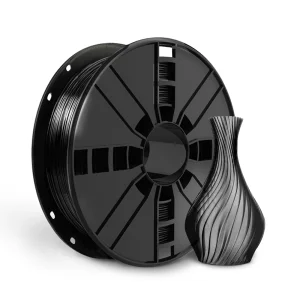
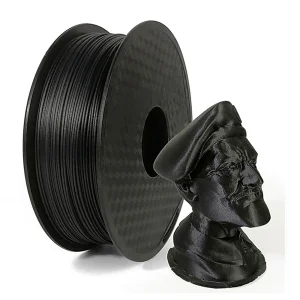
In the rapidly expanding additive manufacturing ecosystem, Black PLA (Poly Lactic Acid) maintains its dominance as the single most consumed color variant, accounting for approximately 38% of all global monochrome thermoplastic filament orders. This disproportionate market share is driven by a convergence of mechanical reliability, optical density requirements, aesthetic versatility, and cost efficiency. As enterprise product designers, tier-1 automotive component suppliers, and automated print farm operators transition from simple conceptual models to functional end-use parts, securing a reliable high-volume supply of premium black PLA filament has become a mission-critical procurement objective.
"Black PLA filament represents the baseline indicator of extruded polymer consistency. Achieving deep jet-black opacity without altering the thermal crystallization kinetics or mechanical tenacity of virgin Poly Lactic Acid requires precise pigment dispersion engineering."
Unlike natural or translucent filaments, formulated PLA Black introduces sub-micron carbon black or specialized organic black colorants into the bio-polyester matrix. When improperly compounded, carbon particles can agglomerate, creating micro-structural voids that cause thermal hot-spots, nozzle clogging, layer delamination, and brittle failure under shear stress. Modern high-speed 3D printing hardware—operating at kinematics between 300 mm/s and 600 mm/s—demands ultra-homogenized black PLA formulations capable of rapid melt flow, rapid thermal dissipation, and non-warping adhesion to textured PEI surfaces.
Rigorous engineering data backing our industrial Black PLA filaments. Every spool is manufactured under strict ISO 9001 quality controls.
Utilizing high-shear twin-screw extruders, carbon black particles are reduced to sub-micron scales and encased evenly within the L-lactic acid chains, delivering intense, non-fading opacity without nozzle erosion.
Extrusion lines incorporate continuous closed-loop laser gauge monitoring. Diameter drift beyond ±0.02 mm automatically triggers feed-rate correction or segment ejection, eliminating layer line banding.
Optimized Melt Flow Index (MFI) guarantees rapid liquid liquefaction inside high-flow hotends (CoreXY systems) while retaining crisp overhang bridge retention and minimal stringing at standard retract settings.
| Physical / Mechanical Property | Test Standard | Industrial Black PLA Spec | B2B Procurement Advantage |
|---|---|---|---|
| Filament Diameter & Ovality Tolerance | Laser Micrometer (Dual-Axis) | 1.75mm / 2.85mm ±0.02mm | Prevents hotend jams and under-extrusion gaps. |
| Density | ISO 1183 / ASTM D792 | 1.24 g/cm³ | Consistent volumetric feed calculations. |
| Melt Flow Index (MFI) | ISO 1133 (210°C / 2.16 kg) | 7 – 10 g / 10 min | Ideal liquidity for high-speed printing (>300 mm/s). |
| Tensile Strength at Yield | ISO 527 / ASTM D638 | 63 – 68 MPa | High structural integrity for functional prototypes. |
| Flexural Modulus | ISO 178 / ASTM D790 | 3,250 – 3,500 MPa | Rigid dimensional stability under mechanical loads. |
| Heat Deflection Temperature (HDT) | ISO 75 (0.45 MPa) | 55°C – 58°C | Predictable thermal performance for indoor housings. |
| Recommended Printing Temperature | Direct Extrusion Test | 190°C – 220°C | Broad printing window compatible with all FDM printers. |
| Bed Temperature Range | PEI / Glass / Glass-Ceramic | 0°C – 60°C | Zero warping; no heated chamber required. |
How our centralized production infrastructure in China delivers unmatched cost-per-kilogram, rapid lead times, and flexible OEM/ODM private labeling solutions.
Situated at the heart of Asia's polymer synthesis hubs, we source pure lactide monomer resins directly from primary producers. This eliminates intermediary markups and shields global buyers from raw material price volatility.
Our 2,500 m² factory operates automated multi-line extrusion arrays equipped with gravimetric dosing units, closed-loop melt pumps, and multi-stage desiccant drying towers, delivering a monthly capacity exceeding 60,000 kg.
We offer comprehensive white-label fulfillment: custom spool designs (eco-cardboard or recyclable PC/ABS), custom Pantone color matching, branded carton printing, custom QR code tracking, and localized technical datasheets.
Poly Lactic Acid is hygroscopic; moisture absorption during ocean transit leads to hydrolytic degradation, bubble formation, and severe stringing upon printing. To guarantee factory-fresh quality upon arrival at international warehouses, every roll of our wholesale Black PLA undergoes a standardized 4-layer preservation process:
Where Black PLA excels: From rapid aesthetic iterations to production-grade electronic housings and architectural masterworks.
Black PLA provides excellent surface opacity, hiding internal circuitry and wiring. Its low thermal expansion coefficient ensures snap-fit covers, sensor mounts, and Raspberry Pi cases hold exact tolerances.
Design studios utilize matte and satin black PLA for ergonomic steering wheel prototypes, dashboard vent mockups, and ducting concepts before committing to multi-thousand-dollar injection molds.
Print-on-demand operators relying on Bambu Lab, Voron, Creality K1, or Prusa arrays utilize our Black PLA for low failure rates, minimal bed maintenance, and clean part release on mass production runs.
How B2B purchasing directors evaluate factory credentials to prevent supply chain bottlenecks and guarantee batch-to-batch consistency.
Procuring 3D printer filament at scale requires looking beyond basic price-per-kilogram metrics. Substandard manufacturing leads to high yield-loss rates, clogged extruders, customer returns, and brand erosion. Procurement officers should evaluate suppliers against four critical pillars:
Ensure filaments comply with RoHS, REACH, and FDA food-contact safety standards. Heavy metal testing certificates and Safety Data Sheets (SDS) are mandatory for European and North American retail distribution.
Every production batch must be assigned a unique lot number linked to raw resin melt index records, laser gauge logs, and operator timestamps, ensuring full accountability in case of localized quality variances.
Verify spool flange rigidity and center bore tolerances. Spools must fit standard AMS (Automatic Material Systems) and multi-material feed hubs without wobbling, slipping, or generating plastic dust.
Advancements in bio-composite polymers shaping the future of industrial FDM black filaments.
Next-generation Black PLA utilizes organic plasticizers and flow enhancers that reduce melt viscosity at high shear rates, allowing extrusion speeds exceeding 600 mm/s without requiring elevated nozzle temperatures that cause stringing.
By blending bio-rubber elastomer impact modifiers into the PLA matrix, PLA+ Black achieves Izod impact strength up to 4 times higher than standard PLA, bridging the gap between PLA ease-of-use and ABS toughness.
Incorporating 10–15% chopped carbon fibers creates an ultra-stiff filament with an exquisite matte black finish that completely hides layer lines, offering higher flexural strength and dimensional accuracy.
Detailed answers to common questions asked by enterprise buyers, OEM clients, and print farm managers.
Expand your catalog with our full line of specialized materials, engineering polymers, and creative 3D printing supplies.