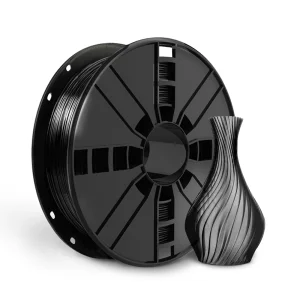
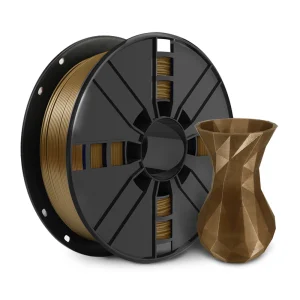
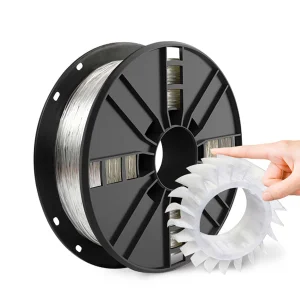
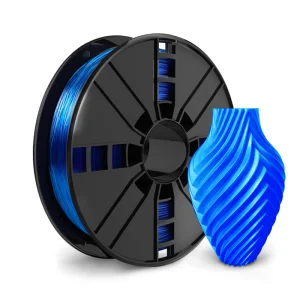
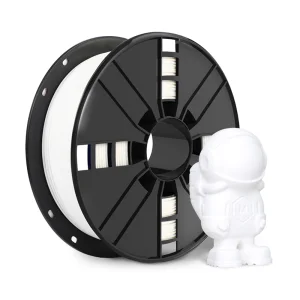
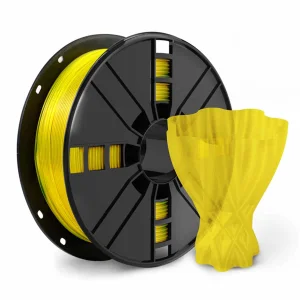
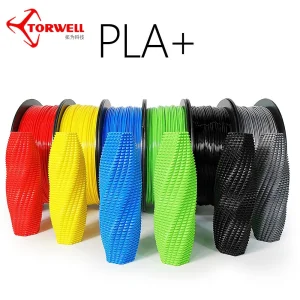
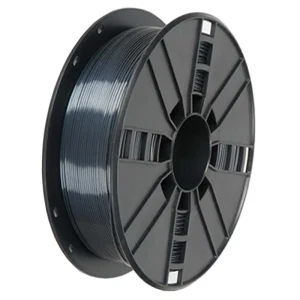
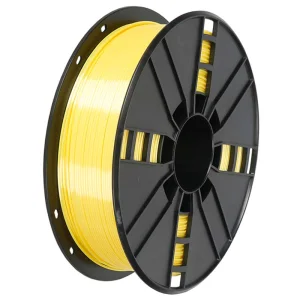
Direct factory supply of precision-extruded 1.75mm 1kg spools engineered for enterprise print farms and OEM distribution channels.
Analyzing the paradigm shift from rapid prototyping to high-speed mass additive manufacturing across global supply chains.
The global 3D printing filament market is undergoing a seismic architectural transition. Historically classified as an auxiliary consumable for rapid prototyping, Polylactic Acid (PLA) 1.75mm 1kg spools have matured into an essential industrial polymer format driving scalable additive manufacturing, rapid tooling, and commercial component production. Driven by the worldwide emergence of high-speed Core-XY 3D printers operating at acceleration speeds exceeding 20,000 mm/s² and volumetric flow rates above 30 mm³/s (such as Bambu Lab, Creality K1 series, Voron, and Prusa MK4), the technical performance requirements imposed on wholesale PLA suppliers have escalated exponentially.
Market analytical frameworks project the global 3D printing materials market to surpass USD 7.5 Billion by 2030, exhibiting a CAGR exceeding 21.4%. Within this polymer matrix, bio-based thermoplastics—specifically refined PLA polymer grades—command over 42% of total volume consumption. The strategic preference for 1.75mm diameter standard spools weighing 1kg stems from an optimized volumetric heat absorption profile, seamless integration with automatic material management systems (AMS/MMU), and standard logistics container utilization ratios.
Modern commercial print farms demand PLA formulations with tuned shear-thinning rheology. Standard PLA melts exhibit flow degradation at speeds exceeding 250 mm/s. Advanced high-speed PLA+ polymers utilize specialized chain-branching agents to maintain linear viscosity and instant layer fusion without stringing or thermal warping.
Global distributors and Amazon tier-1 vendors require direct factory partnership to eliminate multi-layer distributor margins. Sourcing 1kg spools at wholesale scale ($5.50 - $8.20 FOB factory rates depending on modification) secures operational profit margins while ensuring compliance with global environmental directives.
Enterprise procurement departments are prioritizing non-fossil carbon footprints. Derived from renewable starch feedstocks (corn, sugarcane, or tapioca), raw PLA polymer undergoes enzymatic hydrolysis and lactide polymerization, offering a carbon-neutral circular profile compliant with EU Green Deal mandates.
Understanding the molecular weight distribution, optical purity, and closed-loop laser telemetry governing premium 1.75mm filament manufacturing.
Polylactic Acid performance is defined by its enantiomeric isomer ratio between L-lactide and D-lactide. Standard commercial grade PLA resins (such as NatureWorks Ingeo 4032D, 2003D, or TotalEnergies Corbion Luminy) exhibit varying crystalline kinetics depending on D-lactide content:
The core vulnerability of generic filament lies in micro-diameter drift leading to catastrophic nozzle clogging or under-extrusion. Advanced OEM factories utilize dual-axis laser micrometer monitoring systems executing continuous feedback loops at 100 Hz frequencies:
How state-of-the-art extrusion plants achieve massive economies of scale, strict quality control, and rapid global fulfillment.
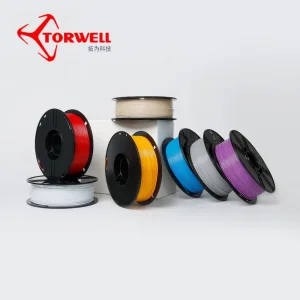
China's Pearl River Delta manufacturing hub (specifically Shenzhen, Dongguan, and Huizhou industrial clusters) houses over 80% of global additive manufacturing supply chain capabilities. Modern facilities—exemplified by Torwell Technologies—have evolved beyond basic extruders into fully automated Smart Factories operating under Industry 4.0 frameworks.
PLA is inherently hygroscopic. Industrial production begins with twin-tower desiccant air dryers reducing raw pellet moisture content below 0.02% (200 ppm). Continuous gravimetric feeders dynamically blend masterbatch pigments, toughners, and impact modifiers with zero human intervention.
Extrusion strands pass through servo-driven tensioning arms executing multi-layer traverse winding. Precise pitch control prevents cross-winding overlapping, guaranteeing 100% tangle-free feeding critical for unattended 72-hour print farm runs.
Within 90 seconds of spooled output, rolls undergo high-vacuum barrier sealing alongside concentrated silica gel packs inside 75-micron thick aluminum foil or high-density PE film bags. Packed spools are housed in reinforced double-wall corrugated shipping boxes built for ocean freight.
Tailored OEM/ODM solutions matching the operational priorities of distributors, Amazon brands, print farm operators, and educational entities.
Core Procurement Need: Differentiation, custom color palettes, and flawless unboxing reviews without inventory risk.
Core Procurement Need: Zero print failures, batch-to-batch flow consistency, long-run volume pricing structures.
Core Procurement Need: High impact resistance, thermal endurance, and flame retardancy for functional mockups.
Core Procurement Need: Zero odor, ultra-low volatile organic compound (VOC) emissions, biopolymer safety.
Comprehensive engineering evaluation of mechanical, thermal, and printing characteristics across primary 3D printing materials.
| Polymer Grade | Nozzle Temp (°C) | Bed Temp (°C) | Tensile Strength (MPa) | Heat Deflection (°C) | Volumetric Flow (mm³/s) | Primary Industrial Use |
|---|---|---|---|---|---|---|
| Standard PLA 1.75mm | 190 – 210 | 0 – 60 | 55 – 60 | 55 | 15 – 22 | Rapid Prototyping, Display Models |
| High-Speed PLA+ Pro | 200 – 230 | 50 – 60 | 62 – 68 | 60 – 65 | 25 – 35 | Functional Parts, High-Speed Print Farms |
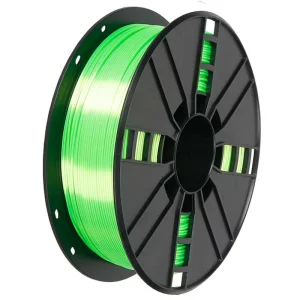
| Silk Gloss PLA | 205 – 225 | 50 – 60 | 48 – 52 | 52 | 12 – 18 | Cosplay, Aesthetics, Retail Packaging |
| PETG Engineering | 230 – 250 | 70 – 80 | 50 – 55 | 72 | 14 – 20 | Chemical Containers, Snap-Fit Housings |
| ABS Tough Grade | 230 – 260 | 90 – 110 | 40 – 45 | 85 | 12 – 16 | Automotive Interior, Tool Enclosures |
| ASA Weather-Proof | 240 – 260 | 90 – 110 | 42 – 48 | 95 | 10 – 15 | Outdoor Fixtures, Marine Components |
| TPU Flexible 95A | 210 – 230 | 30 – 60 | 35 (Elongation >450%) | 60 | 4 – 8 | Gaskets, Seals, Footwear, Dampeners |
| Carbon Fiber Composite | 240 – 270 | 80 – 100 | 85 – 110 | 140 – 160 | 10 – 14 | Drone Frames, Automotive Racing Props |
How global enterprises integrate wholesale 1.75mm PLA spools into local supply chains across key geographic sectors.
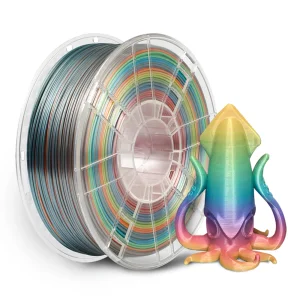
In the United States and Canada, print farms utilizing multi-color core-XY systems consume high volumes of Silk PLA, Matte PLA, and Rainbow PLA. Local distributors rely on quick-ship US warehouse fulfillment, branded packaging, and retail-ready 1kg spools for immediate consumer dispatch.
European Union buyers (Germany, France, UK, Netherlands) prioritize REACH, RoHS, and DIN EN ISO 14001 compliance. Micro-application hubs utilize PLA+ spools for architectural scale models, bio-compatible medical training models, and eco-friendly consumer product packaging prototypes.
Industrial centers in Japan, South Korea, UAE, and Southeast Asia implement high-durability PLA+ and PETG for assembly line jigs, fixtures, robot end-of-arm tooling (EOAT), and electronic component housings due to fast turnaround times and dimensional stability.
Comprehensive technical and commercial answers addressing OEM minimums, shipping moisture protection, quality verification, and custom branding.
Explore our secondary lineup of technical engineering thermoplastics, flexible TPU materials, ABS/PETG grades, and specialized PLA formulations.