Explore our top-tier wholesale filament formulations engineered with ±0.02 mm diameter precision, optimized melt flow, and export-grade vacuum packaging.
An executive analysis of High Impact Polystyrene (HIPS) adoption across multi-material additive manufacturing ecosystems, rapid prototyping, and specialized industrial manufacturing.
High Impact Polystyrene (HIPS) has solidified its strategic position within the global additive manufacturing material landscape. Originally recognized primarily as a sacrificial, dissolvable support thermoplastic paired with Acrylonitrile Butadiene Styrene (ABS) and Acrylonitrile Styrene Acrylate (ASA), modern chemical synthesis and precision extrusion technologies have elevated HIPS into a primary structural material for high-speed industrial Fused Deposition Modeling (FDM) and Fused Filament Fabrication (FFF).
The global market demand for wholesale HIPS filament is projected to expand at a compound annual growth rate (CAGR) of 8.4% through 2032. This trajectory is fueled by the rapid expansion of multi-extrusion 3D printing architectures, automated print farms, lost-core investment casting workflows, and automotive prototype fabrication. As industrial manufacturing facilities demand higher thermal stability and chemical dissolution precision, partnering with an established Wholesale HIPS Filament Supplier & Factory becomes a critical supply chain vector for international brand distributors, regional resellers, and enterprise end-users.
From a macro-regional vantage point, manufacturing dynamics exhibit specialized geographic clusters. The Asia-Pacific region, anchored by advanced polymer compounding infrastructure in China, controls over 65% of the global primary HIPS filament extrusion capacity. The region’s cost-optimized raw material procurement, combined with fully automated inline laser inspection lines, enables high-volume output at competitive tier-1 wholesale pricing. Europe and North America represent the highest consumption nodes for technical HIPS grades, driving demand for compliant formulations adhering to REACH, RoHS, and California Proposition 65 safety frameworks.
Perfect thermal glass transition matching ($T_g \approx 100^\circ\text{C}$) with ABS and ASA polymers prevents thermal stress cracking during multi-head printing.
Soluble in d-Limonene terpene solvents, providing zero-touch support removal for intricate internal cavities, fluid channels, and overhangs.
Grafted Polybutadiene Rubber (PBD) micro-domains absorb mechanical shock, making standalone HIPS prints far tougher than standard rigid GPPS.
Understanding the molecular dynamics, melt rheology, and thermal behavior of high-impact polystyrene against alternative 3D printing polymers.
High Impact Polystyrene is a graft copolymer synthesized by dissolving polybutadiene rubber (PBD) in monomeric styrene prior to polymerization. The resulting structure consists of a continuous General Purpose Polystyrene (GPPS) matrix embedded with discrete elastomer particles ranging from 1 to 5 microns in diameter. This phase-separated morphology is precisely what imparts HIPS with exceptional impact strength, low density (1.04 g/cm³), and smooth post-processing machinability.
When deployed as a support material, HIPS relies on chemical dissolution via d-Limonene ($C_{10}H_{16}$), a naturally derived terpene solvent. Because d-Limonene targets the non-polar hydrocarbon chains of polystyrene while leaving the acrylonitrile-based matrix of ABS completely unaffected, complex geometries with inaccessible internal channels can be printed with zero mechanical scarring.
| Property Metric | HIPS (High Impact) | ABS (Standard) | PVA (Water Soluble) | BVOH (Fast Soluble) | PETG (Tough Grade) |
|---|---|---|---|---|---|
| Density (g/cm³) | 1.04 – 1.06 | 1.05 – 1.08 | 1.19 – 1.23 | 1.14 – 1.16 | 1.27 – 1.29 |
| Glass Transition ($T_g$) | 98°C – 102°C | 105°C – 108°C | 45°C – 50°C | 68°C – 72°C | 78°C – 82°C |
| Tensile Strength (MPa) | 32 – 40 | 40 – 45 | 65 – 78 | 45 – 52 | 48 – 53 |
| Izod Impact (kJ/m²) | 10 – 15 | 12 – 18 | 2 – 4 | 3 – 5 | 7 – 9 |
| Primary Solvent | d-Limonene | Acetone | Warm Water ($H_2O$) | Cold Water ($H_2O$) | Ethyl Acetate |
| Moisture Sensitivity | Very Low | Moderate | Extreme (Hygroscopic) | Extreme (Hygroscopic) | Low-Moderate |
| Volumetric Cost Factor | Cost-Effective ($) | Cost-Effective ($) | High ($$$) | Premium ($$$$) | Moderate ($$) |
As demonstrated in the technical data sheet above, HIPS offers distinct advantages over hydro-soluble alternatives like PVA and BVOH when printing large-format engineering models. While PVA suffers from rapid hydrolytic degradation, nozzle clogging, and ambient humidity sensitivity, HIPS remains hydrophobic and dimensionally stable even in humid warehouse environments. This eliminates the requirement for expensive dry-boxes during long industrial print cycles.
How custom compound formulations, inline quality control, and private-label manufacturing optimize procurement for international distributors.
Dual-axis laser sensor arrays measure filament diameter at 100Hz continuously across production. Extrusion speeds automatically adjust to guarantee a strict tolerance of ±0.02 mm, preventing jam events in high-speed print heads.
We offer precise Pantone and RAL color-matching for OEM white-label clients. Our proprietary color masterbatches utilize carrier resins identical to the primary polymer matrix, eliminating layer weakness caused by incompatible color carriers.
Every spool is vacuum-sealed with high-absorption desiccant pouches and packaged in humidity-resistant inner cartons. We support full container load (FCL) and less than container load (LCL) shipments direct from factory floor to global ports.
How leading industrial sectors leverage wholesale HIPS filament to optimize prototyping efficiency, reduce scrap rates, and create intricate functional components.
Tier-1 automotive suppliers utilize HIPS to print complex internal air intake manifolds and fluid reservoirs. The HIPS core is wrapped in composite fiber and subsequently dissolved out in d-Limonene, leaving flawless hollow carbon-fiber parts.
Surgical planning laboratories employ multi-material printers to construct complex vascular networks and skeletal geometries using HIPS as the support framework for rigid ABS bone replicas.
Due to its ultra-smooth matte surface finish and ease of post-processing sanding, priming, and painting, standalone HIPS is widely specified by architectural modeling firms globally.
Exploring R&D breakthroughs in high-speed extrusion, eco-solvent solubility, and carbon composite modification.
The 3D printing industry is undergoing a massive shift toward ultra-high-speed printing (>500 mm/s) driven by modern CoreXY kinematics. Standard HIPS filaments often experience shear thinning issues and melt fracture under aggressive volumetric flow rates (>30 mm³/s). To address these operational hurdles, our R&D team has implemented a three-stage technical innovation roadmap:
Clear, authoritative answers to critical technical and commercial questions posed by global procurement directors and industrial engineers.
HIPS is thermally compatible with ABS and ASA because its glass transition temperature ($T_g \approx 100^\circ\text{C}$) closely matches the thermal expansion properties of ABS ($T_g \approx 105^\circ\text{C}$). This thermal alignment prevents warping, delamination, and thermal cracking at the interface during printing in heated enclosures (60°C–80°C). Additionally, HIPS is hydrophobic, making it far less susceptible to moisture degradation in humid production environments than water-soluble PVA or BVOH.
Optimal printing parameters for Torwell HIPS filament include: Nozzle Temperature: 230°C – 250°C; Heated Bed Temperature: 90°C – 110°C; Enclosure Temperature: 50°C – 70°C; Print Speed: 40 – 150 mm/s (up to 300 mm/s for high-flow grades); Bed Surface: PEI sheet with glue stick or Kapton tape.
Dissolution time depends on support volume, infill density, solvent temperature, and agitation. In a standard static d-Limonene bath at room temperature (20°C), dissolution takes between 8 to 24 hours. Employing ultrasonic agitation or heated solvent baths (35°C – 45°C) reduces dissolution time by up to 60%.
Yes. Due to its polybutadiene rubber modification, HIPS features superior impact resistance compared to standard GPPS polystyrene. It is lightweight, dimensionally stable, easy to sand, paint, and glue, making it an excellent low-cost material for electronic housings, toys, gaming miniatures, and industrial jigs.
Torwell utilizes dual-axis inline laser diameter monitors on all extrusion lines. We guarantee a continuous diameter tolerance of ±0.02 mm and an ovality (roundness) threshold of <1.5% across every spool, preventing feeding friction and nozzle clogging.
We provide full turnkey OEM/ODM services including custom masterbatch color matching (Pantone/RAL), custom spool weights (250g, 500g, 1kg, 3kg, 5kg, 10kg), branded cardboard or plastic spools, custom die-cut inner packaging boxes, and private-label barcode branding.
Stored in its original factory vacuum-sealed bag with desiccant in a cool, dry place (15°C – 25°C), Torwell HIPS filament has a shelf life exceeding 24 months. HIPS resists atmospheric moisture absorption better than PLA or PVA, but dry storage protects original melt flow characteristics.
Yes. All Torwell HIPS raw materials and finished spools fully comply with EU RoHS, REACH chemical safety standards, and contain no hazardous heavy metals or halogenated flame retardants. Full Safety Data Sheets (SDS) and Technical Data Sheets (TDS) are provided with every wholesale shipment.
Additional popular engineering grade and decorative wholesale filaments available for factory-direct container delivery.
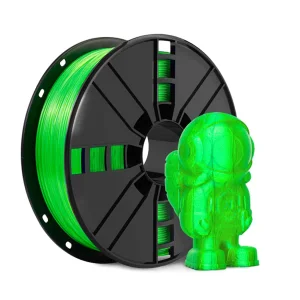
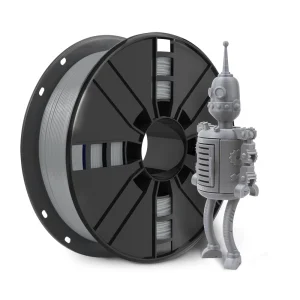
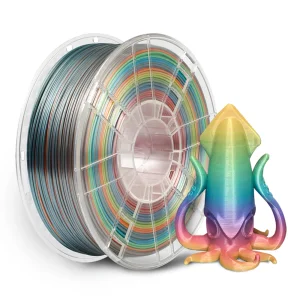
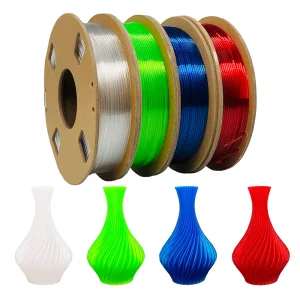
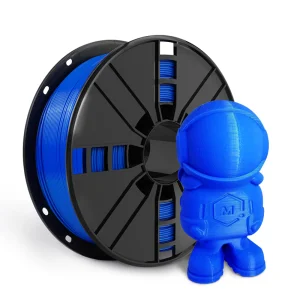
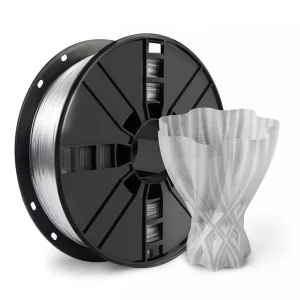
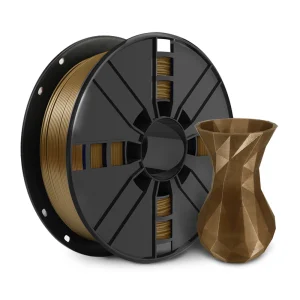
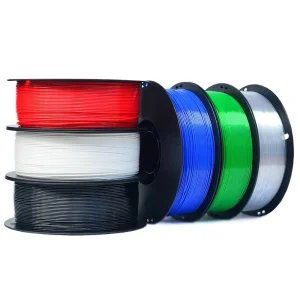
Founded in 2011, Torwell Technologies operates 2,500 m² of standardized cleanrooms running 6 fully automated lines. Partner with us for reliable wholesale prices, custom colors, and strict ±0.02 mm tolerances.