Explore top-tier, factory-extruded 3D printer materials manufactured under strict ISO 9001 quality frameworks. Designed for global brand distributors, high-speed print farms, and B2B procurement networks.
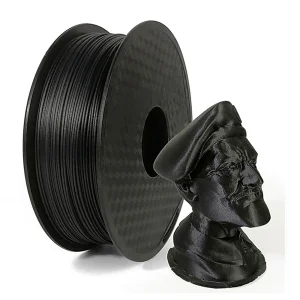
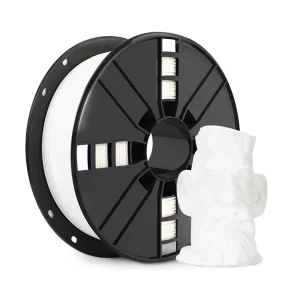
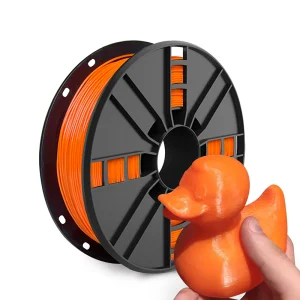
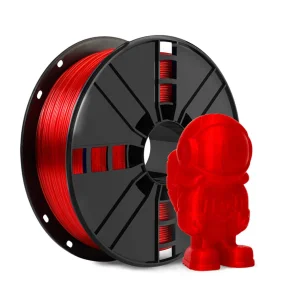
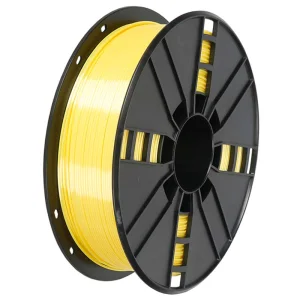
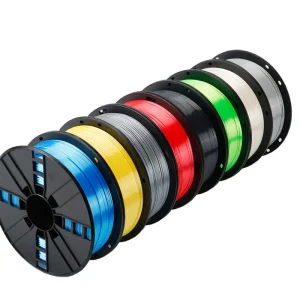
The global industrial additive manufacturing sector has crossed a decisive tipping point. Fused Deposition Modeling (FDM) and Fused Filament Fabrication (FFF) technologies are no longer confined to rapid visual prototyping or hobbyist experimentation. Today, enterprise-scale print farms, automotive original equipment manufacturers (OEMs), aerospace contractors, and consumer goods brands utilize polymer filaments for direct digital manufacturing (DDM), low-volume end-use product runs, continuous production line jigs, fixtures, and specialized functional components.
According to industry reports, the global 3D printing filament market is projected to reach several billion dollars over the next decade, accelerating at a compound annual growth rate (CAGR) exceeding 20%. This rapid expansion is propelled by breakthroughs in high-speed FDM printers (capable of print velocities between 300 mm/s and 600 mm/s), advanced melt-flow polymer chemistry, and automated multi-material handling systems. As a consequence, procurement requirements for global B2B buyers—including brand owners, regional distributors, Amazon FBA sellers, and institutional print farms—have transformed dramatically.
B2B procurement is no longer just about searching for cheap commodity spools. Enterprise buyers now evaluate filament manufacturers and factories based on rigorous engineering benchmarks: tight dimensional tolerance stability, precise melt flow indices (MFI), zero-void inner cross-sections, moisture control packaging, raw virgin resin integrity, and absolute batch-to-batch color repeatability. This whitepaper provides a comprehensive engineering and supply chain analysis designed to guide commercial buyers in navigating global procurement options.
To secure a competitive advantage in the 3D printing market, brand managers and enterprise engineers must understand the molecular composition and processing characteristics of modern thermoplastic filaments. Extrusion factories utilize distinct resin compounding techniques to balance mechanical strength, thermal endurance, layer adhesion, and surface finish.
Polylactic Acid (PLA) remains the dominant material in volume sales due to its low thermal expansion coefficient, low printing temperature range (190°C–220°C), and negligible odor emissions. Made from renewable starches such as corn or sugarcane, standard PLA exhibits high tensile modulus but suffers from brittle impact failure.
Modern factory-grade PLA+ (Tough PLA) integrates core-shell rubber impact modifiers and specialized nucleating agents. These additives accelerate crystallization rates during fast cooling, enabling clean bridge spans and overhangs at speeds exceeding 400 mm/s while raising impact strength by up to 300% over standard PLA raw polymers.
Polyethylene Terephthalate Glycol-modified (PETG) bridges the gap between easy-to-print PLA and high-strength engineering plastics. Incorporating cyclohexane dimethanol (CHDM) into the polymer chain disrupts crystallization, making PETG transparent, ductile, and chemically resistant to acids, alkalis, and moisture degradation.
When reinforced with 15%–20% chopped high-modulus carbon fiber micro-strands, PETG-CF and Carbon Fiber PLA display exceptional flexural stiffness, reduced structural mass, high heat deflection temperatures (HDT), and an aesthetic matte surface finish that completely hides 3D layer lines.
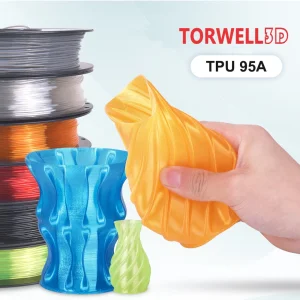
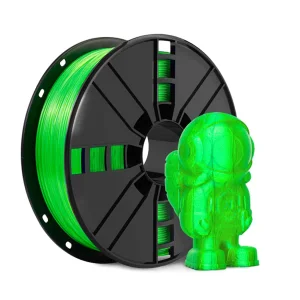
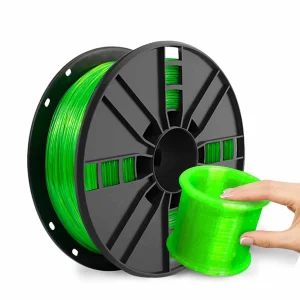
Thermoplastic Polyurethane (TPU) filaments feature linear block copolymer chains consisting of hard polyurethane segments and soft polyester or polyether polyol blocks. Adjusting this ratio alters the Shore hardness rating, with 95A, 90A, and 85A being the standard commercial offerings.
Extruding elastomeric filaments demands tight diameter tolerance (±0.02 mm) and consistent column stiffness. Without strict factory tensioning, soft filaments buckle inside Bowden extruders or cause feeding jams in direct-drive hotends.
Acrylonitrile Butadiene Styrene (ABS) offers high impact strength and elevated glass transition temperature ($T_g \approx 105^\circ\text{C}$), making it ideal for automotive housings and functional industrial components. However, thermal contraction during rapid cooling causes warping if printed without enclosed chambers.
Acrylonitrile Styrene Acrylate (ASA) solves outdoor degradation by replacing butadiene rubber with acrylate elastomer. ASA maintains outstanding UV radiation stability, weatherability, and mechanical toughness, making it the preferred material for outdoor industrial fixtures.
The following dataset summarizes key engineering metrics across primary wholesale 3D printer material lines, aiding technical buyers in specifying products for target markets.
| Polymer Grade | Density (g/cm³) | Tensile Strength (MPa) | Flexural Modulus (MPa) | Glass Transition ($T_g$) | Heat Deflection (HDT @ 0.45MPa) | Primary Industrial Application |
|---|---|---|---|---|---|---|
| Standard PLA | 1.24 | 55 - 65 | 3,200 - 3,800 | 58 °C | 55 °C | Rapid visual prototypes, educational models |
| High-Speed PLA+ | 1.25 | 60 - 70 | 3,100 - 3,600 | 60 °C | 58 °C | Functional prosumer parts, high-speed print farms |
| Silk Aesthetic PLA | 1.22 | 45 - 55 | 2,800 - 3,200 | 56 °C | 52 °C | Cosplay, retail display, visual arts, packaging |
| Engineering PETG | 1.27 | 48 - 58 | 2,100 - 2,400 | 78 °C | 70 °C | Chemical containers, protective housings, brackets |
| PETG Carbon Fiber | 1.34 | 75 - 90 | 5,500 - 6,800 | 82 °C | 80 °C | Drones, automotive jigs, rigid lightweight tooling |
| Flexible TPU 95A | 1.21 | 35 - 45 | N/A (Elongation > 450%) | -40 °C | N/A | Gaskets, footwear soles, dampeners, wearables |
| Industrial ABS | 1.05 | 40 - 50 | 2,100 - 2,500 | 105 °C | 95 °C | Automotive interior trim, electron enclosure boxes |
| Outdoor ASA | 1.07 | 42 - 52 | 2,200 - 2,600 | 103 °C | 96 °C | Solar mounting fixtures, outdoor sensor housings |
Global B2B procurement of 3D printer filament has shifted toward integrated manufacturing hubs in China. Modern Chinese extrusion factories combine economies of scale, advanced material chemistry research, and digital twin monitoring to provide global buyers with unmatched cost-to-quality performance.
High-speed extrusion lines are equipped with closed-loop quad-axis laser diameter micrometers. Monitoring filament diameter and ovality across multiple axes thousands of times per second guarantees a strict target tolerance of ±0.02 mm. Any out-of-spec segment automatically triggers automated puller adjustments or rejects the spool section.
Filament tangling remains one of the primary causes of failed prints in automated print farms. State-of-the-art Chinese factories utilize servo-driven, tension-controlled automatic winding machines. Every layer is laid side-by-side with uniform pitch, preventing overlapping loops and ensuring smooth feed performance in AMS multi-spool systems.
Polymers like PETG, TPU, ABS, and Nylon are hygroscopic—they readily absorb atmospheric moisture, resulting in steam bubbles, stringing, and weak layer adhesion during printing. Factory procedures include desiccant dehumidification drying before extrusion, followed by immediate vacuum sealing with high-capacity desiccant packs in heavy-duty aluminum-foil/PE film.
Working directly with an established China filament manufacturer gives brands total control over material formulation, custom Pantone color matching, eco-friendly cardboard spool production, OEM branded packaging, and raw material safety documentation (RoHS, REACH, SDS).
Navigating global B2B procurement requires balancing pricing structures, shipping timelines, minimum order quantities (MOQs), and private label branding flexibility. Factories support custom manufacturing pipelines designed to serve diverse buyer profiles.
While 1 kg spools represent the retail standard, industrial print farms and enterprise buyers often require large-format spools (3 kg, 5 kg, or 10 kg spools) to support uninterrupted multi-day production. Factories offer high-precision plastic spools, transparent PC spools, or 100% recyclable heavy-duty cardboard spools aligned with global sustainability standards.
Corporate brand identity relies on consistent color presentation across marketing materials and product lines. In-house color compounding labs utilize masterbatch pigment blenders and spectrophotometers to match target Pantone, RAL, or physical sample colors with a Delta E ($\Delta E$) color variance of less than 1.0.
Full white-label branding options cover custom-printed outer die-cut boxes, customized spool side stickers, localized instruction inserts, custom barcode labels (UPC/EAN/Amazon FNSKU), and branded tamper-evident security seals.
Filament formulations are targeted to specific operational environments across consumer, commercial, and heavy industrial sectors globally.
Assembly plants deploy Carbon Fiber PETG and High-Temp ABS for custom robotic end-of-arm tooling (EOAT), handheld assembly alignment jigs, CMM inspection fixtures, and ductwork prototyping. The high strength-to-weight ratio replaces heavier CNC-machined aluminum components while drastically cutting lead times from weeks to hours.
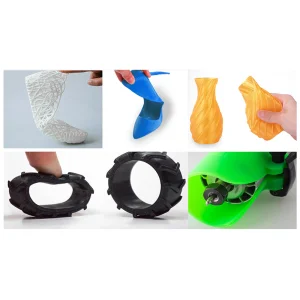
Biocompatible grade TPU Flexible Filaments (Shore 95A / 85A) are extensively used to print custom orthotic footwear insoles, protective prosthetic socket liners, patient-specific wrist braces, and ergonomic dampeners. TPU's high fatigue resistance ensures long service life under repeated mechanical flexing.
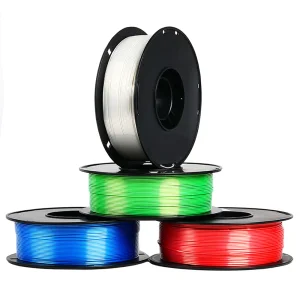
Silk PLA and Co-Extrusion Multi-Color Filaments serve high-end retail visual display designers, scale architectural modelers, and tabletop gaming manufacturers. Co-extrusion technology embeds 2 or 3 distinct color tones across the filament strand, producing dynamic color-shifting prints without surface post-processing.
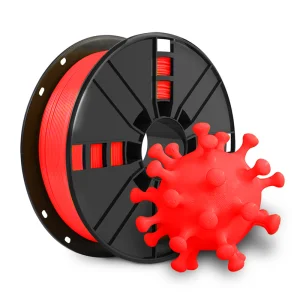
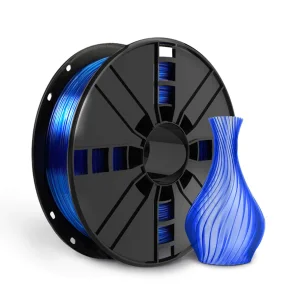
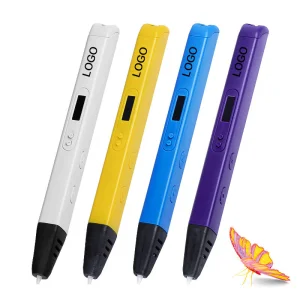
Browse our additional catalog of specialized flexible TPU formulations, high-impact PETG variants, aesthetic Silk polymers, and consumer 3D pen materials available for bulk international export.
Key technical and logistical questions answered by factory engineers to assist enterprise buyers, brand managers, and sourcing agents.
Our automated production lines maintain a tight diameter tolerance of ±0.02 mm on standard 1.75 mm and 2.85 mm filaments. Every line uses real-time, quad-axis laser micrometers that continuously record diameter and roundness (ovality) metrics. Out-of-spec segments are automatically purged prior to spool winding.
Filament tangling is eliminated by utilizing multi-axis CNC servo-controlled auto-winders. These systems manage line tension dynamically, laying every filament wrap side-by-side with uniform pitch across the spool width. This ensures smooth, snag-free feeding in high-speed FDM printers and automated material handling systems (AMS).
Standard stock colors and material lines feature flexible minimum order quantities starting at 100 kg per SKU. For custom Pantone color matching, private-label box artwork, or specialized spool configurations, our typical OEM production run starts at 500 kg per material type. Contact our sales engineering team for tiered volume discounts.
Every spool undergoes a multi-stage moisture control protocol: after dehumidification drying and extrusion, spools are immediately vacuum-sealed in heavy-duty moisture-barrier foil bags alongside high-absorption desiccant packs. Sealed spools are packed in rigid corrugated inner cartons and reinforced outer shipping master boxes to ensure long-term shelf stability during maritime transport.
Yes. We provide complete regulatory documentation packages for global market compliance, including Material Safety Data Sheets (MSDS / SDS), RoHS compliance certificates, REACH registration documentation, and FDA-compliant resin food-contact statements where applicable.
Yes. Our high-speed PLA+ formulation is engineered with elevated Melt Flow Index (MFI) characteristics and optimized thermal conductivity. It melts rapidly within high-flow ceramic heater blocks and solidifies quickly under part-cooling fans, maintaining crisp layer resolution and structural strength at print speeds up to 600 mm/s.