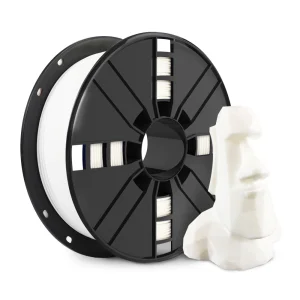
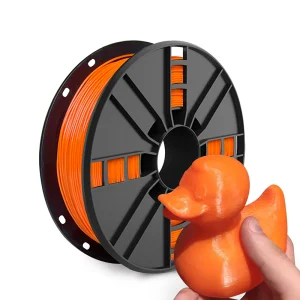
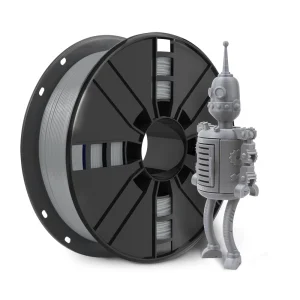
Precision extruded polymers engineered for consistent melt flow, zero bubble void formation, and strict ±0.02 mm dimensional accuracy.
The additive manufacturing landscape is undergoing a structural transition from rapid prototyping to direct production of end-use industrial components. While standard polylactic acid (PLA) dominates consumer decorative models and polyethylene terephthalate glycol (PETG) satisfies general functional needs, modern engineering sectors require materials capable of surviving prolonged environmental stress. Acrylonitrile Styrene Acrylate (ASA) has emerged as the premier thermoplastic elastomer-modified terpolymer for demanding outdoor, automotive, and industrial applications.
Historically, Acrylonitrile Butadiene Styrene (ABS) was the default choice for high-impact structural enclosures. However, standard ABS exhibits a critical vulnerability: the double bonds within its polybutadiene rubber phase undergo photo-oxidative degradation when exposed to solar ultraviolet (UV) radiation. This degradation leads to polymer chain scission, micro-cracking, yellowing, and severe impact strength embrittlement within months of outdoor deployment. ASA overcomes this structural defect by replacing butadiene rubber with a chemically saturated acrylic ester elastomer matrix. This macromolecular modification grants ASA exceptional resistance to photo-oxidation, thermal stress, and chemical degradation while maintaining mechanical toughness matching or exceeding standard engineering ABS.
ASA exhibits virtually zero loss in mechanical tensile strength or impact resistance after 3,000+ hours of accelerated Xenon Arc weathering tests (ISO 4892-2 standard), preserving structural integrity under direct solar radiation.
High resistance to aqueous acids, alkalis, salt-spray environments, animal fats, and industrial lubricants. Ideal for agricultural equipment, marine fittings, and chemical processing covers.
With a Glass Transition Temperature ($T_g$) of approximately 105°C and Heat Deflection Temperature (HDT) up to 98°C, ASA components retain dimensional stability inside hot vehicle interiors and high-heat industrial enclosures.
For enterprise procurement officers, industrial distributors, and high-volume print farm operators, selecting a qualified ASA filament manufacturer extends far beyond raw per-kilogram material pricing. Industrial-scale FDM additive manufacturing requires strict material batch-to-batch repeatability to eliminate costly recalibration downtime, print failure rates, and customer returns.
Unmonitored diameter fluctuations lead to volumetric flow rate inconsistencies. Over-extrusion causes nozzle clogging, surface blobbing, and dimensional deviation, whereas under-extrusion reduces layer bonding strength. Torwell enforces closed-loop dual-axis laser diameter feedback systems operating at 500 Hz, maintaining a ultra-narrow tolerance of ±0.02 mm across whole 1,000-meter spool runs.
ASA polymer resins are moderately hygroscopic. Absorbed atmospheric moisture vaporizes inside the hotend nozzle at 240–260°C, creating micro-void bubbles, violent popping sounds, surface roughness, and drastic reduction in interlayer shear strength. Our factory integrates dehumidifying desiccant drying systems down to < 0.05% moisture levels before extrusion, followed by immediate vacuum sealing with high-capacity desiccant pouches inside multi-layer aluminum-barrier bags.
The mechanical efficiency of Torwell ASA filament stems from precise copolymer ratios synthesized during emulsion polymerization. The chemical matrix comprises three distinct monomeric building blocks:
Legacy ASA formulations were optimized for slow Cartesian 3D printers operating at 40–60 mm/s print speeds. Modern enterprise print farms utilize high-speed Core-XY platforms running at 300 to 500 mm/s with volumetric melt rates exceeding $30\text{ mm}^3/\text{s}$. Standard ASA formulations suffer from melt fracture, poor layer adhesion, and severe warping at these elevated print speeds due to high melt viscosity and rapid cooling stresses.
Torwell’s advanced R&D team has engineered a modified high-speed ASA grade utilizing optimized melt flow index (MFI) resins combined with specialized plasticizing nucleating additives. This achieves zero-shear viscosity reduction inside the thermal melting chamber without compromising ultimate mechanical heat deflection or structural toughness.
Empirical mechanical data derived from standard ASTM D638 ISO 527 test specimens printed at 1.75mm diameter standard settings.
| Mechanical / Thermal Property | Torwell ASA | Standard ABS | Industrial PETG | High-Impact PC | Carbon Fiber ASA |
|---|---|---|---|---|---|
| Tensile Strength (MPa) | 45 – 52 | 40 – 46 | 48 – 53 | 62 – 70 | 65 – 78 |
| Flexural Modulus (GPa) | 2.1 – 2.4 | 1.9 – 2.2 | 2.0 – 2.2 | 2.3 – 2.6 | 4.5 – 5.8 |
| Izod Impact Strength (kJ/m²) | 18 – 22 | 12 – 16 | 8 – 11 | 35 – 50 | 14 – 18 |
| Heat Deflection Temp (HDT @ 0.45MPa) | 98°C | 95°C | 74°C | 135°C | 105°C |
| UV & Weathering Resistance | Outstanding (Grade 5/5) | Poor (Yellowing / Brittle) | Moderate | Moderate (Requires Coating) | Outstanding (Grade 5/5) |
| Warping Tendency | Low to Moderate | High | Very Low | Very High | Extremely Low |
| Recommended Nozzle Temp | 240°C – 260°C | 230°C – 250°C | 230°C – 250°C | 270°C – 300°C | 250°C – 270°C |
Automotive OEMs and aftermarket components manufacturers utilize Torwell ASA to produce custom side mirror housing covers, radiator grille bezels, roof rack mounting pods, EV charging station covers, and bumper air ducts. ASA withstands temperature swings from -40°C winter cold to +90°C engine bay ambient heat without structural warping.
Unmanned Aerial Vehicle (UAV) manufacturers mandate UV-stable, high-rigidity polymers for drone shell bodies, antenna housing domes, and battery bay covers. ASA provides high structural stiffness-to-weight ratio while resisting yellowing and UV degradation during high-altitude solar exposure.
Outdoor electrical enclosures, smart solar meter housings, inverter junction boxes, and 5G telecommunication sensor pods require 10-to-15-year outdoor lifespans. Torwell ASA delivers long-term dielectric insulation, water tightness, and flame-retardant grade options suitable for harsh environmental mounting.
Standard plastics break down rapidly under salt-spray corrosion and intense marine solar reflection. ASA components retain mechanical strength in marine navigation lights, boat dashboard instrument housings, deck clamps, and exterior architectural facade prototypes.
From virgin polymer resin inspection to automated robotic spooling, every roll of filament follows a rigorous quality protocol.
Raw ASA pellets undergo 4-hour desiccant hopper drying at 80°C to eliminate absorbed humidity down to <0.03% water fraction.
Precision twin-screw extruders melt and homogenize resin through 5 independent temperature zones, equipped with 200-mesh melt screens.
Continuous 360-degree laser sensors record diameter and ovality, adjusting haul-off tractor speed dynamically to maintain ±0.02 mm margin.
Tension-controlled robotic winders lay smooth layer-by-layer spooling to prevent overlaps, tangles, and spooling snags during print farm operation.
Each spool is weighed, vacuum sealed with active silica desiccant, drop-tested, and tracked with a unique lot batch barcode number.
Torwell Technologies supports international brand owners, regional distributors, and e-commerce sellers with complete private label OEM/ODM services. Operating out of our 2,500 m² facility with 6 automated extrusion lines, we deliver reliable volume production tailored to your brand’s market specifications.
Match exact Pantone, RAL, or physical color samples within 5 to 7 business days. High-opacity pigments ensure vibrant, UV-resistant color matching with zero batch variation.
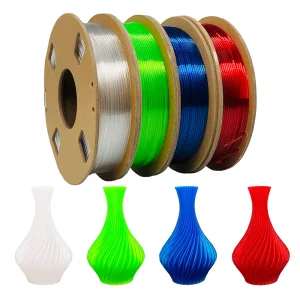
Choose from standard high-clarity plastic spools, high-temperature ABS master spools, or eco-friendly 100% recyclable heavy-duty cardboard spools with custom flange printing.
All ASA materials are fully certified under EU REACH (EC 1907/2006) SVHC chemical requirements, RoHS 3.0 (Directive 2015/863) heavy metal limits, and complete SDS/TDS documentation.
Expert answers from our polymer engineers to assist wholesale procurement decisions and printer setup optimization.
High-performance filaments designed for commercial distributors, education, and enterprise print farms.