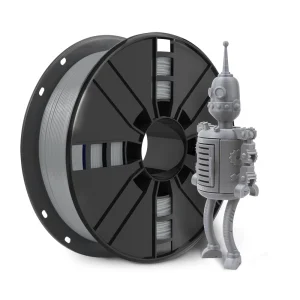
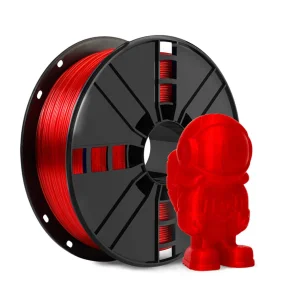
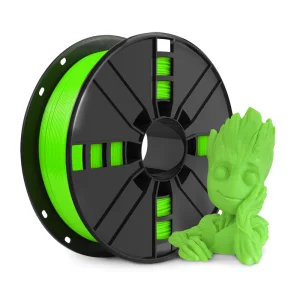
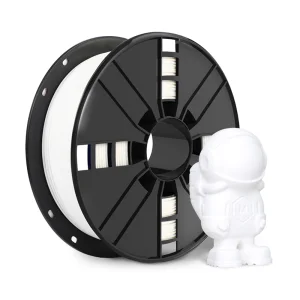
Explore our top-tier precision extruded 1.75mm filaments, engineered in our ISO9001-certified factory for zero-clog reliability and mechanical integrity.
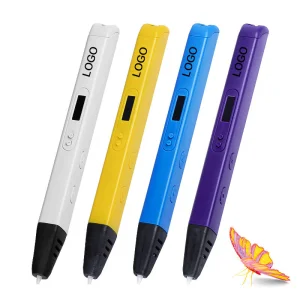
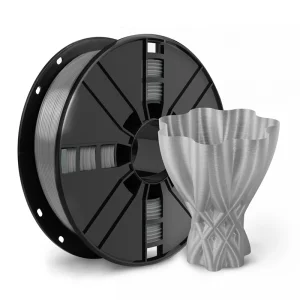
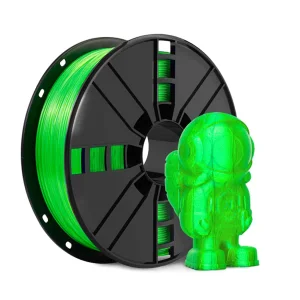
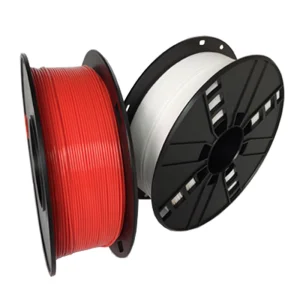
In fused deposition modeling (FDM) and fused filament fabrication (FFF), rubber-like elastic polymers represent a fundamental paradigm shift from rigid thermoplastic modeling toward true functional elastomeric component manufacturing. Colloquially designated in global procurement markets as "3D Printer Filament 1.75mm Rubber," these advanced materials are primarily synthesized from engineered Thermoplastic Polyurethanes (TPU), Thermoplastic Elastomers (TPE), and Thermoplastic Vulcanizates (TPV). Unlike standard rigid filaments such as PLA or ABS, flexible elastomeric filaments combine the elasticity, dampening properties, and chemical resilience of vulcanized rubber with the thermal re-processability of industrial polymers.
Achieving stable high-speed extrusion with a 1.75mm flexible strand requires meticulous polymer compounding. The structural dilemma of extruding low-durometer elastomers lies in columnular buckling strength. As the extruder gear pushes the 1.75mm flexible strand into the thermal melt zone, the filament acts as a slender structural column under compressive load. According to Euler's buckling theory, the critical buckling load ($P_{cr}$) is directly proportional to the flexural modulus of the material and the fourth power of the diameter, and inversely proportional to the square of the unguided length:
$$P_{cr} = \frac{\pi^2 E I}{(K L)^2}$$ — Where $E$ represents the dynamic flexural modulus of the elastomeric resin, $I$ is the area moment of inertia for the 1.75mm cross-section, $L$ is the unguided gap distance within the drive gear housing, and $K$ is the column effective length factor. Our proprietary compounding elevates $E$ during solid-state feeding while maintaining high elastic compliance post-extrusion.
Industrial applications demand distinct elastomeric responses depending on dynamic load conditions, vibration absorption frequencies, and seal compression ratios. As a premier manufacturer and global supplier, we engineer 1.75mm rubber filaments across the full commercial Shore hardness spectrum:
To provide full transparent technical validation for enterprise buyers and material procurement officers, the following matrix details the physical, thermal, and mechanical parameters of our flagship 1.75mm rubber and flexible elastomer product portfolio:
| Technical Parameter | Shore 80A Soft Rubber | Shore 85A Flexible TPE | Shore 90A Standard TPU | Shore 95A Industrial TPU |
|---|---|---|---|---|
| Nominal Diameter | 1.75 mm ±0.02 mm | 1.75 mm ±0.02 mm | 1.75 mm ±0.02 mm | 1.75 mm ±0.02 mm |
| Ovality Roundness Tolerance | ≤ 0.015 mm | ≤ 0.015 mm | ≤ 0.010 mm | ≤ 0.010 mm |
| Density (g/cm³) | 1.14 g/cm³ | 1.18 g/cm³ | 1.20 g/cm³ | 1.22 g/cm³ |
| Tensile Strength at Yield (ISO 527) | 18 MPa | 28 MPa | 38 MPa | 48 MPa |
| Elongation at Break (ISO 527) | > 650 % | > 580 % | > 500 % | > 450 % |
| Tear Strength (ISO 34-1) | 55 kN/m | 75 kN/m | 110 kN/m | 140 kN/m |
| Recommended Extrusion Temp | 210°C – 230°C | 215°C – 235°C | 220°C – 240°C | 225°C – 245°C |
| Recommended Bed Temp | 30°C – 50°C | 40°C – 60°C | 50°C – 70°C | 50°C – 70°C |
| Hydrolysis Resistance (85°C/85% RH) | Excellent (> 1000 hrs) | Superior (> 1500 hrs) | Outstanding (> 2000 hrs) | Industrial Grade |
Because flexible filaments are susceptible to elastic deformation during high-speed pulling across extrusion water-cooling troughs, traditional single-axis mechanical micrometers are inadequate. Our factory utilizes multi-stage closed-loop laser gauge stations. Operating at 2,000 optical scans per second per axis, our system dynamically adjusts capstan puller speed via real-time feedback loops. This guarantees an absolute diameter standard of 1.75 mm ±0.02 mm across 100% of extruded spools, entirely eliminating nozzle pressure fluctuations, flow starvation, and over-extrusion jams during long-duration enterprise prints.
Navigating global wholesale procurement for high-volume polymer consumables requires total confidence in supply chain stability, raw material consistency, and scalable manufacturing infrastructure. Situated at the center of China’s advanced polymer compounding hub in Guangdong, our 2,500 square-meter facility provides global buyers with unmatchable production scalability and cost efficiency.
Direct strategic partnerships with chemical suppliers (Covestro, BASF, Wanhua) enable us to source virgin polyether and polyester TPU pellets at prime tier-1 pricing, preventing batch discoloration and hydrolytic degradation.
Equipped with specialized continuous twin-screw extruders, precise multi-stage temperature zone controllers, and auto-tension precision spooling machines capable of yielding over 60,000 kg monthly capacity.
Every production run undergoes strict melt flow index (MFI) testing, tensile bar break tests, and real-time printability trials across popular industrial FDM printing systems.
By consolidating raw material procurement, specialized screw geometry engineering, inline optical testing, and automated vacuum packing under one roof, our facility delivers significant Total Cost of Ownership (TCO) reductions for overseas wholesale distributors, brand owners, and high-volume print farm operators.
Wholesale buyers of 1.75mm flexible rubber filament service diverse industrial markets where conventional subtractive rubber molding (compression molding or liquid injection) is prohibitively expensive for low-to-medium batch runs or complex internal geometries.
Our Shore 85A/90A flexible filaments are heavily deployed for rapid prototyping and low-volume production of custom door weatherstripping seals, cable routing grommets, dashboard NVH (Noise, Vibration, and Harshness) dampening dampeners, and intake manifold soft connectors. Resistance to automotive fluids, greases, and ozone degradation makes our ether-based TPU ideal for under-the-hood test environments.
Soft robotics relies on pneumatic compliance. Utilizing Shore 80A and 85A rubber filaments, automation engineers 3D print customized pneumatic suction cups, conformable end-of-arm tooling (EOAT) grippers, dynamic protective cable bellows, and anti-marring robot jaw pads that gently handle fragile glass or electronics without surface scratches.
Custom healthcare solutions require individualized anatomical fit. Our non-cytotoxic, skin-safe flexible TPE formulations enable medical labs to additive-manufacture customized orthopedic insoles with variable density infills, flexible prosthetic socket liners, impact-absorbing cranial helmet pads, and dynamic wrist braces.
Leading footwear brands and consumer electronics manufacturers utilize our 1.75mm rubber filaments to produce functional prototype shoe midsoles with complex lattice energy-return structures, drop-tested shockproof smartphone cases, ruggedized walkie-talkie bumpers, and ergonomic power tool handle grips.
To support global distributors, Amazon FBA private label brand owners, and regional resellers, we offer a seamless, fully integrated OEM/ODM manufacturing framework designed to minimize lead times and ensure regulatory compliance in target destination countries.
Color consistency is paramount for commercial brand identity. Operating an in-house spectrophotometer color-matching lab, we match precise Pantone (PMS) or RAL color codes within a Delta-E ($\Delta E$) threshold of less than 1.0. Whether your brand demands translucent neon safety colors, solid industrial matte black, or metallic-infused flexible shades, our compounding team produces stable masterbatches without compromising tensile elasticity.
Elastomeric polymers—particularly polyester-based TPUs—are inherently hygroscopic. Absorbed atmospheric moisture leads to plasticizer hydrolysis during extrusion, manifesting as audible popping at the nozzle, severe stringing, surface micro-voids, and diminished inter-layer bond strength. Our export packaging protocol completely mitigates moisture risks:
Our 1.75mm flexible rubber filaments fully comply with international chemical safety standards, including EU REACH (Registration, Evaluation, Authorization and Restriction of Chemicals), RoHS (Restriction of Hazardous Substances Directive 2011/65/EU), and CPSIA standards. Food-grade and biocompatible ISO 10993 certified TPE grades are available upon custom B2B inquiry.
The additive manufacturing sector is accelerating away from slow prototyping toward high-throughput automated end-use manufacturing. Key technological developments driving the evolution of 1.75mm rubber filaments over the next decade include:
Modern high-speed 3D printers operating at speeds exceeding 300 mm/s and accelerations above 10,000 mm/s² require flexible materials with modified shear-thinning behavior. Our next-generation high-flow flexible formulations drop melt viscosity under high shear rates without causing post-extrusion droop.
Commercial demand for functional smart elastomers has spurred the development of carbon-nanotube (CNT) doped ESD-safe flexible filaments for electronics handling, as well as UL94-V0 self-extinguishing flame-retardant rubber filaments for aerospace interiors.
Aligning with global ESG initiatives, our R&D lab is pioneering bio-derived TPE materials synthesized from castor oil monomers, offering up to 45% bio-based carbon content while preserving classic Shore 85A/90A mechanical performance.
Comprehensive engineering and procurement answers regarding bulk 1.75mm flexible rubber filament sourcing, printer setup, and custom factory manufacturing.
From engineering grade ABS and PETG to high-stiffness Carbon Fiber composite filaments, discover our factory-direct bulk product selection.