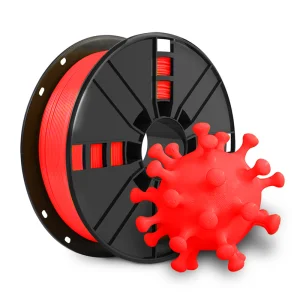
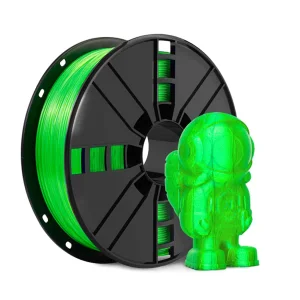
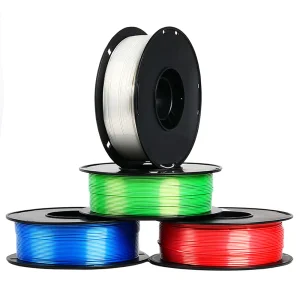
Precision-engineered thermoplastic extrusions for commercial distributors, high-speed print farms, and OEM private label brands.
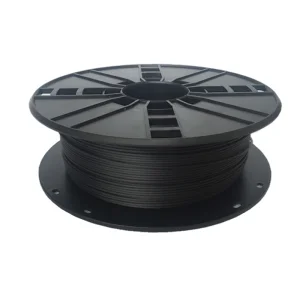
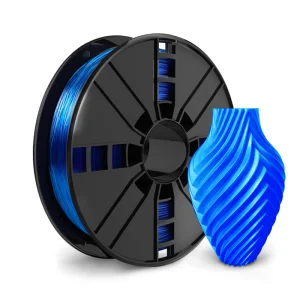
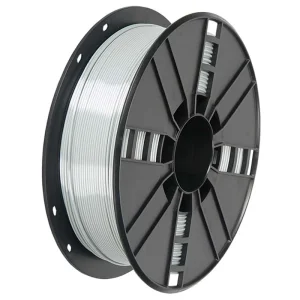
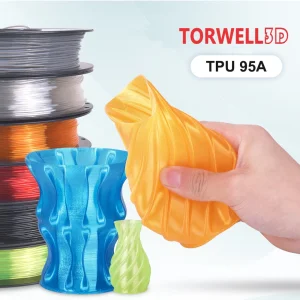
Analyzing the systemic transition from legacy Polylactic Acid (PLA) to engineered PLA Plus (PLA+) in commercial additive manufacturing and high-throughput B2B supply chains.
Additive manufacturing (AM) has fundamentally evolved from an isolated rapid prototyping curiosity into a mission-critical cornerstone of modern industrial production. At the epicentre of this transformation is Fused Deposition Modeling (FDM), powered predominantly by bio-based thermoplastic filaments. Historically, standard Polylactic Acid (PLA)—derived from renewable starch sources such as cornstarch or sugarcane—dominated the market due to its low thermal expansion coefficient, minimal warp tendency, and ease of processing. However, as enterprise procurement managers, automated print farm operators, and industrial design engineers push FDM capabilities toward functional end-use parts, legacy PLA's mechanical boundaries—specifically its inherent brittleness, poor Z-axis tensile adhesion, low impact strength, and narrow thermal deflection threshold—became severe bottlenecks.
This technical boundary catalyzed the market adoption of PLA Plus (PLA+). Formulated by blending pure virgin PLA resin (such as NatureWorks Ingeo™ series) with advanced chemical impact modifiers, nucleation control agents, and specialized plasticizers, PLA Plus bridge the performance gap between consumer-grade ease of printing and industrial-grade mechanical integrity. Today, global enterprise procurement of PLA+ is surging across North America, Europe, and the Asia-Pacific region, commanding over 45% of the overall extrusion material volume in industrial print farms and B2B retail distribution.
Unlike standard PLA, which suffers from physical aging and embrittlement within months of exposure to ambient humidity, industrial-grade PLA+ engineered by leading Chinese suppliers incorporates elastomeric core-shell rubber (CSR) polymers. This elevates Izod impact strength from ~2.5 kJ/m² up to 18–22 kJ/m², eliminating shipping breakage and enabling snap-fit functional assembly.
Optimized melt flow index (MFI 12–16 g/10min) allows seamless high-throughput printing at speeds up to 600 mm/s without nozzle drag or under-extrusion on modern Klipper and CoreXY platforms.
Re-engineered polymer chain entanglement drastically increases Z-axis shear strength, ensuring printed parts withstand heavy mechanical loads without layer splitting.
Near-zero internal stress accumulation during rapid cooling permits large-format prints (500mm+) with flat build-plate contact and flawless corner geometry.
An engineering comparison of structural polymer behavior: Standard PLA versus Formulated PLA Plus (PLA+).
To understand why global buyers demand qualified PLA Plus suppliers, one must analyze the polymer physics governing the extrusion and cooling cycles. Standard PLA is a semi-crystalline aliphatic polyester. During FDM extrusion, the molten polymer exits the heated nozzle (typically 190°C–210°C) and undergoes rapid glass transition cooling. Because the crystallization kinetics of neat PLA are relatively slow, the extruded strands freeze primarily in an amorphous state, leaving unreinforced intermolecular bonds vulnerable to stress propagation along the layer lines.
PLA Plus formulation chemistry resolves these physical limitations through three key compounding methodologies:
| Mechanical / Thermal Parameter | Standard PLA | Engineered PLA Plus (PLA+) | Test Standard | B2B Performance Advantage |
|---|---|---|---|---|
| Tensile Strength (X-Y Axis) | 55 – 60 MPa | 65 – 72 MPa | ISO 527 / ASTM D638 | +20% higher structural load capacity |
| Tensile Strength (Z-Axis / Interlayer) | 22 – 28 MPa | 42 – 48 MPa | ISO 527 | Prevents layer separation under shear stress |
| Charpy Impact Strength (Notched) | 2.5 – 3.2 kJ/m² | 16.5 – 22.0 kJ/m² | ISO 179 / ASTM D256 | >600% higher impact & drop shock resistance |
| Elongation at Break | 3.5% – 5.0% | 12.0% – 18.0% | ISO 527 | Ductile yield behavior; snap-fit reliability |
| Melt Flow Index (MFI @ 210°C/2.16kg) | 4 – 7 g/10min | 12 – 18 g/10min | ISO 1133 | Essential for 300–600 mm/s high-speed printing |
| Diameter Tolerance Precision | ±0.05 mm | ±0.02 mm | Laser Inline Monitoring | Prevents nozzle clogging & flow fluctuation |
| Water Absorption Rate (24h) | 0.45% | < 0.25% | ISO 62 | Reduced hygroscopic degrade & bubbling |
How advanced extrusion infrastructure, closed-loop laser quality control, and regional chemical ecosystems deliver unbeatable value for global enterprise buyers.
Global B2B procurement directors consistently select top-tier OEM factories in China due to an unparalleled combination of raw material supply chain integration, state-of-the-art multi-axis extrusion technology, and rigorous automated quality assurance systems. Producing high-grade PLA+ filament is not merely a matter of feeding resin into an extruder; it requires precise thermal profiling across 5-zone barrels, sub-micron melt filtration, continuous tension-controlled water bath cooling, and real-time diameter measurement.
Leading Chinese factories leverage customized dual-axis and quad-axis laser micrometers that measure filament diameter and roundness (ovality) at 500 Hz frequency. If a strand deviates beyond ±0.02 mm, automated closed-loop feedback algorithms adjust the haul-off tractor speed within milliseconds. Furthermore, specialized inline vacuum desiccant drying tunnels ensure that the extruded filament is wound onto spools at moisture levels below 200 ppm, preventing hydrolysis during transit and storage.
CNC tension-controlled winding machines guarantee neat, zero-tangle filament layering across every spool, rendering them 100% compatible with automatic material systems (AMS) and high-speed print farm feeders.
Complete brand customization including custom Pantone color matching, eco-friendly cardboard or clear polycarbonate spools, branded vacuum foil packaging, and custom retail carton design.
Where engineered PLA Plus delivers tangible operational efficiency and structural durability across key economic sectors.
Manufacturing plants utilize PLA+ for lightweight assembly jigs, drill guides, and robotic end-effector grips requiring dimensional rigidity and resistance to workplace drops.
Ideal for housing printed circuit boards (PCBs), sensor arrays, and IoT gateways where smooth surface finish, tight screw-boss threads, and low warping are required.
Architectural firms rely on PLA+ for complex spatial models. Its low thermal shrinkage eliminates layer separation over long print cycles (100+ hours).
High-speed print farms operating hundreds of machines maximize uptime and batch yield through PLA+'s wide printing temperature window and non-clogging melt profile.
Strategic guidelines for volume buyers, regional distributors, and e-commerce brand owners establishing factory-direct supply agreements.
When selecting a primary PLA Plus supplier or manufacturing factory in China, procurement teams must evaluate beyond base cost per kilogram. A robust supplier assessment strategy should incorporate the following operational checkpoints:
Polymer hydrolysis during 30-to-45-day ocean transit can ruin bulk shipments if moisture barrier standards are compromised. Premium factories utilize vacuum heat-sealed bags with low water vapor transmission rates (WVTR < 0.1 g/m²/24h) and palletize shipments with plastic moisture shrouds and corner protection boards.
The technological trajectory of bio-based thermoplastics in high-speed and composite additive manufacturing.
Next-generation PLA+ formulations are engineered for volumetric flow rates exceeding 30 mm³/s, unlocking the full acceleration potential of modern 1000 mm/s high-speed 3D printers.
Transitioning to 100% recyclable heavy-duty pressed cardboard spools with smooth turned edges, minimizing carbon footprint and eliminating plastic spool waste for print farms.
Integration of micro-milled carbon fibers, glass spheres, and bio-ceramic fillers into PLA+ matrixes to create ultra-stiff matte surfaces with elevated structural heat deflection.
Clear, authoritative answers to essential questions regarding PLA+ parameters, factory capabilities, quality standards, and OEM logistics.
Explore our expanded collection of high-performance PLA, Silk, TPU, and PETG filaments engineered for global distribution.