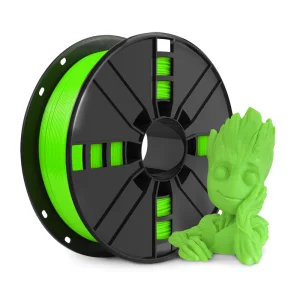
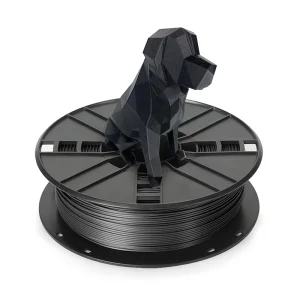
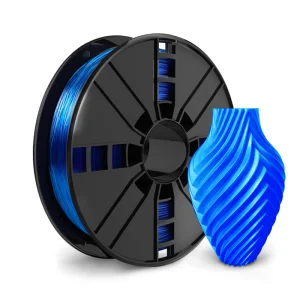
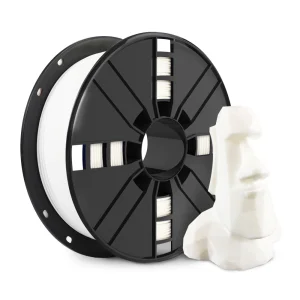
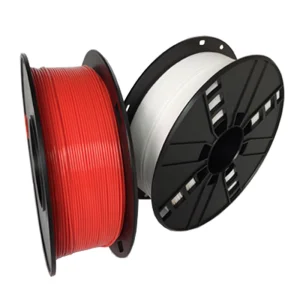
Explore our top-tier 1.75mm & 2.85mm thermoplastic filaments engineered for precise dimensional tolerance, low shrinkage, and seamless extruder flow across global print farms.
Analyzing the rapid convergence of natural organic fibers and high-performance bio-polymers in modern additive manufacturing supply chains.
Additive manufacturing has entered a pivotal era where material sustainability is no longer merely a brand claim, but an engineering mandate. Among specialized Fused Deposition Modeling (FDM) and Fused Filament Fabrication (FFF) materials, Wood Filament 1.75mm has emerged as the premier biomass composite across North American, European, and Asia-Pacific markets.
By blending high-purity micro-milled wood flour (derived from recycled pine, oak, poplar, or bamboo) with a biodegradable Polylactic Acid (PLA) or Polyhydroxyalkanoate (PHA) binder matrix, Wood Filament bridges the gap between synthetic thermoplastics and authentic organic timber aesthetics. Unlike standard pigmented PLA, parts printed with 1.75mm wood composite feature authentic timber aroma, tactile wood-grain textures, and natural post-processing characteristics—including sandability, stainability, and drillability.
The global market for wood-filled 3D printing filaments is expanding at a projected CAGR of over 14.2% through 2030. Key macro drivers accelerating international B2B procurement include:
Overcoming traditional WPC filament degradation through precise particle mesh sizing, interfacial coupling agents, and dual-axis laser diameter feedback.
The historical bottleneck of wood filaments has been nozzle clogging caused by oversized wood fiber clusters. As a leading China Wood Filament 1.75mm factory, Torwell utilizes multi-stage air-classifier milling to restrict wood particle size strictly below 100 micrometers (<200 mesh). This guarantees smooth melting and flow through standard 0.4mm brass and hardened steel nozzles without heat-break blockage.
Hydrophilic natural wood fibers inherently resist bonding with hydrophobic thermoplastic polymers like PLA. Our R&D team incorporates proprietary silane coupling agents and bio-compatibilizers. This chemical modification enhances interfacial adhesion between the wood particles and polymer matrix, yielding a 35% increase in layer-to-layer tensile strength and reducing strand brittleness during spooling.
Wood-filled melt streams exhibit non-Newtonian swell behavior during die exit. Torwell deploys dual-axis inline laser measuring sensors on all 6 automated extrusion lines. Real-time feedback loops continuously adjust puller speed and melt pump pressure, maintaining strict roundness and a tight diameter tolerance of ±0.02 mm along the entire 1 kg or 3 kg spool volume.
Engineering Breakthrough: Torwell’s Wood Filament 1.75mm formula eliminates volatile organic compound (VOC) off-gassing during extrusion while maintaining high melt-flow index (MFI) stability compatible with modern high-speed CoreXY 3D printers operating at speeds up to 300 mm/s.
| Property Parameter | Test Method Standard | Torwell Wood PLA 1.75mm | Standard Market Competitor |
|---|---|---|---|
| Organic Fiber Ratio (wt%) | Thermogravimetric Analysis (TGA) | 20% – 30% Pure Wood Flour | 10% – 15% Synthetic Powder |
| Diameter Tolerance | Dual-Axis Laser Gauge | ±0.02 mm | ±0.05 mm |
| Print Nozzle Temperature | FDM Extrusion Test | 190°C – 220°C | 210°C – 230°C (High Clogging Risk) |
| Recommended Nozzle Diameter | Flow Geometry Analysis | ≥ 0.4mm (0.6mm Optimal for Texture) | ≥ 0.6mm (Strict Requirement) |
| Layer Adhesion Strength | ISO 527 Tensile Test | 42.5 MPa | 31.0 MPa |
| Heat Deflection Temp (HDT) | ISO 75 (0.45 MPa) | 56°C | 52°C |
How high-speed printing platforms, circular economy mandates, and micro-texture control are defining the next decade of wood composite 3D printing materials.
The rapid adoption of high-speed FDM hardware (such as Bambu Lab, Voron, Creality K1, and Prusa MK4) operating with acceleration rates up to 20,000 mm/s² requires filaments with rapid thermal response. Traditional wood filaments suffer from thermal lag and nozzle stringing under high volumetric flow rates.
Torwell’s technology roadmap integrates modified melt-strength enhancers that optimize shear-thinning viscosity. Our 1.75mm Wood Filament melts rapidly in high-flow ceramic heater zones and solidifies instantly upon layer deposition, preventing stringing and allowing reliable automatic material swapping system (AMS) feeding without strand brittle snapping.
An emerging technique among professional industrial designers is real-time dynamic thermal tuning. Because natural wood fibers undergo subtle caramelization at varying temperatures, printer G-code can dynamically modulate nozzle temperature during extrusion:
Torwell’s heat-stable carrier polymer ensures consistent color transition responsiveness without thermal polymer degradation or nozzle carbonization.
From architectural design studios in Europe to luxury automotive concept workshops in North America, see how Wood Filament 1.75mm delivers real-world value.
Architects utilize 1.75mm wood filament to print structural scale models that mimic real timber framing, terrain contours, and wooden facades, avoiding labor-intensive manual balsa wood crafting.
OEM prototyping studios print custom dashboard trims, gear shift knobs, and door inlay concepts with authentic wood feel, allowing rapid client ergonomics testing before expensive tooling injection.
High-end perfume houses, cosmetic brands, and spirit distillers print eco-friendly bespoke closures, gift boxes, and display stands that align with zero-plastic circular packaging initiatives.
Luthiers and acoustic engineers prototype ukulele bodies, speaker enclosures, guitar pickguards, and decorative art sculptures, benefiting from the unique acoustic damping properties of wood-filled composites.
Why leading international 3D printing material brands, regional distributors, and mega print farms partner with Torwell Technologies for OEM private label manufacturing.
We provide end-to-end custom packaging solutions. From custom Pantone color matching for specialized wood tones (Pine, Walnut, Ebony, Redwood) to custom spool design, branded carton printing, custom die-cut labels, and specialized spool weights (250g, 500g, 1kg, 3kg, 5kg).
Organic fibers are naturally hygroscopic. Torwell enforces strict pre-extrusion resin drying to <0.05% moisture content. Each finished spool is immediately vacuum sealed in high-barrier foil bags with premium active silica desiccant pouches to guarantee pristine shelf-life during long sea freights.
Operating a 2,500 m² modern factory equipped with 6 precision automatic extrusion lines, Torwell maintains a monthly output of 50,000 to 60,000 kg. We offer reliable container-load delivery schedules, strict ISO9001 compliance, and full SDS / REACH / RoHS safety documentation.
Get authoritative technical and commercial answers regarding Wood Filament 1.75mm extrusion, printer setup, OEM orders, and shipping safety.
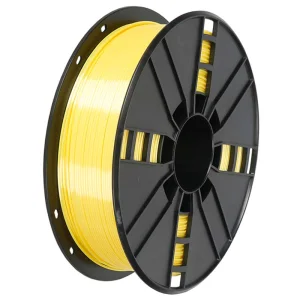
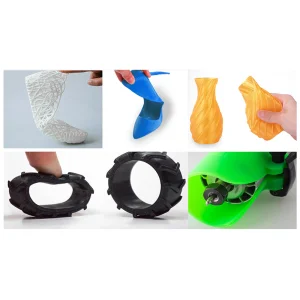
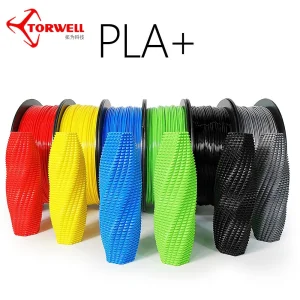
In addition to specialty Wood Filaments, Torwell produces high-performance ABS, Flexible TPU, High-Strength PLA+, and Silky PLA materials for distributors and brand owners worldwide.