Direct factory supply of precision extruded filaments, engineered for high dimensional stability, zero-clog printing, and optimal mechanical performance across FDM/FFF systems.
How China’s Advanced Polymer Manufacturing Ecosystem is Driving the Transition from Prototyping Elastomers to Mass Industrial Production
Global enterprise procurement is shifting rapidly from rigid polymers toward flexible Thermoplastic Polyurethanes (TPU). Automotive OEM print farms, footwear prototyping hubs, and robotics integrators require high-elasticity materials with Shore hardness levels ranging from 70A to 95A to replace injection-molded silicone and EPDM rubbers.
China's polymer manufacturers have established centralized chemical synthesis and filament extrusion lines. By coupling raw pellet polymerization with inline laser precision control, Chinese factories deliver volume pricing, certified batch consistency, and reliable international freight logistics for enterprise buyers across 75+ countries.
Modern FDM/FFF 3D printers operating at speeds exceeding 300 mm/s demand optimized melt flow indices (MFI). Next-generation TPU formulations engineered in China resolve feeding friction, prevent buckling inside direct-drive extruders, and ensure rapid thermal crystallization during high-speed layer deposition.
Understanding Polyether vs. Polyester Soft Segments, Hard Segment Crystallinity, and Viscoelastic Behavior in Extrusion Additive Manufacturing
Synthesized via reaction of diisocyanates with polyester polyols. Features superior mechanical tensile strength, high tear resistance, and outstanding oil, fuel, and grease resistance. Ideal for industrial seals, automotive gaskets, and heavy-duty mechanical dampeners where chemical exposure is prevalent.
Formulated using polyether polyols, offering exceptional hydrolytic stability, micro-organism resistance, and low-temperature flexibility ($T_g$ down to -40°C). Perfect for medical wearables, aquatic equipment, and outdoor environmental applications exposed to high humidity and water contact.
Aromatic TPUs provide robust cost-effective mechanical properties for general industrial parts, though susceptible to UV yellowing over time. Aliphatic TPUs incorporate aliphatic diisocyanates, providing absolute optical clarity, UV color stability, and non-yellowing characteristics for optical covers and premium consumer products.
TPU displays non-Newtonian, shear-thinning fluid behavior during extrusion. Factory compounding precisely tunes the Melt Flow Index (MFI at 210°C/1.2kg) to prevent nozzle ooze, stringing, and buckling in direct-drive feed mechanisms, maintaining instantaneous layer bonding under varying shear rates.
TPU polymers are highly hygroscopic. Absorbed atmospheric moisture ($H_2O$) causes hydrolytic degradation during hot-melt extrusion at temperatures above 200°C. Moisture breaks the urethane ester/ether bonds, leading to chain scission, bubble formation, surface pop marks, severely reduced inter-layer adhesion strength, and nozzle clogging. China’s leading TPU filament factories dry virgin pellets down to critical moisture levels below 0.02% (200 ppm) using desiccant dehumidifying dryers before continuous twin-screw extrusion, immediately followed by inline vacuum sealing with active desiccant packs.
Deploying Custom TPU Formulations Across High-Performance Engineering Sectors
Custom orthopedic insoles and high-rebound athletic midsoles printed with lattice structures. TPU Shore 85A to 90A provides variable mechanical density, energy return rates over 65%, and long-term dynamic fatigue resistance without permanent deformation.
Noise, Vibration, and Harshness (NVH) damping elements, flexible air intake ducts, protective wire harness grommets, and custom weather seals engineered to withstand engine bay temperatures (-30°C to +110°C) and hydrocarbon contact.
Pneumatic soft grippers, robotic joints, protective bumper guards, and vacuum suction cups printed with TPU 70A to 95A. High elongation at break (>550%) enables repeated cyclic pneumatic flexing without tearing.
Impact-absorbing helmet liners, drone landing gear bumpers, smartwatch bands, and phone protection cases. Outstanding energy absorption profiles reduce force transmission during dynamic impact events.
Comparative Physical Properties, Hardness Standards, and Thermal Parameters for Engineering Design
| TPU Grade | Shore Hardness | Tensile Strength (MPa) | Elongation at Break (%) | Print Temp Range (°C) | Bed Temp Range (°C) | Primary Industrial Feature |
|---|---|---|---|---|---|---|
| TPU Ultra-Soft 80A | 80A (ASTM D2240) | 28 MPa | > 650% | 205°C – 225°C | 30°C – 50°C | Maximum tactile flexibility, pneumatic seals |
| TPU Standard 95A | 95A (ASTM D2240) | 42 MPa | > 500% | 215°C – 235°C | 40°C – 60°C | Balanced feedability, general industrial parts |
| High-Speed TPU 95A | 95A (ASTM D2240) | 45 MPa | > 480% | 220°C – 250°C | 50°C – 70°C | Low melt viscosity for 300-500mm/s printing |
| Carbon Fiber TPU (TPU-CF) | 55D (ASTM D2240) | 58 MPa | > 120% | 230°C – 250°C | 50°C – 70°C | High modulus, anti-static, structural stiffness |
| ESD Conductive TPU | 90A (ASTM D2240) | 35 MPa | > 400% | 220°C – 240°C | 40°C – 60°C | Surface resistivity $10^6 - 10^9 \, \Omega/\text{sq}$ for electronics |
| Flame Retardant TPU (UL94-V0) | 92A (ASTM D2240) | 38 MPa | > 450% | 215°C – 235°C | 40°C – 60°C | Self-extinguishing halogen-free additive for EV/aerospace |
How China’s Premier TPU Factories Guarantee ±0.02mm Diameter Accuracy and Tangle-Free Spooling
Raw TPU elastomer resin is conditioned inside multi-stage dry-air hoppers at 80°C for 4 hours, guaranteeing dew points under -40°C to eliminate micro-moisture bubbles.
High L/D ratio (44:1) co-rotating twin-screw extruders melt and homogenize the polymer melt under 6 controlled thermal zones with high-pressure melt pump metering.
Continuous inline laser gauge feedback systems scan the 1.75mm / 2.85mm filament strand at 1000 Hz, instantly adjusting puller speed to enforce ±0.02mm tolerance.
Servo-driven traverse winding mechanisms arrange the elastic filament in neat, parallel layers without crossover tangles, guaranteeing flawless unspooling in AMS units.
Immediately spooled filaments are heat-sealed inside thick aluminum foil or high-barrier moisture bags alongside fresh desiccant packs, protecting against environmental humidity during sea transport.
Turnkey Private Label Manufacturing for Global Distributors, Brands, and Industrial Print Farms
In-house color spectrophotometers allow precise color matching to RAL or Pantone solid codes with batch-to-batch variation guaranteed under $\Delta E < 1.0$. Custom metallic, fluorescent, and translucent tinting options available.
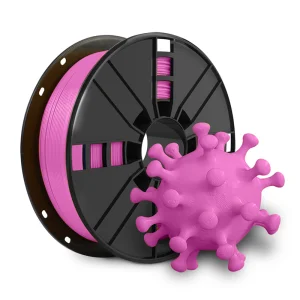
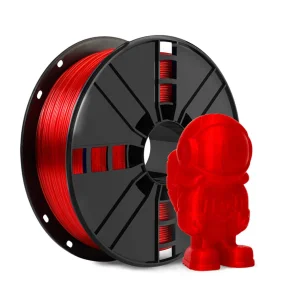
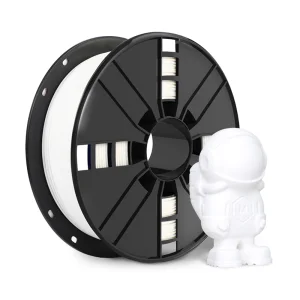
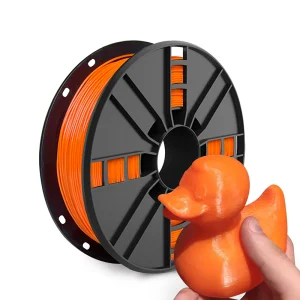
Fully customized branded packaging boxes, sticker labels, QR code batch tracking, spool sticker graphics, and eco-friendly cardboard or transparent PC spools (250g, 500g, 1kg, 3kg, 5kg, 10kg master reels).
All TPU filaments pass rigorous European and American environmental standards. Complete technical dossiers provided upon order placement: ISO 9001 quality systems, REACH compliance, RoHS certification, and FDA food-contact safe raw material certificates.
Pioneering Sustainability, Bio-Based Monomers, and Ultra-High-Speed Extrusion Additives
Synthesis of TPU using plant-derived polyols (castor oil monomer bases) achieving up to 60% bio-based carbon content. Reduces reliance on fossil fuels while preserving identical tensile strength and thermal stability as virgin petroleum elastomers.
Incorporation of dynamic reversible hydrogen bonding network architectures inside the polymer matrix. Micro-scratches and internal structural fatigue voids heal automatically under moderate thermal stimulation (60°C - 80°C annealing), extending part lifespan.
Development of post-industrial TPU waste recycling protocols. Re-granulated printed scrap is re-compounded with virgin stabilizing additives, producing high-grade recycled TPU (rTPU) filament without compromising tensile modulus.
Next-gen hyper-flow TPU polymers designed specifically for core-XY high-speed additive printers. Features instant shear-recovery viscosity and accelerated solid-state crystallization for crisp overhanging geometry without sagging.
Authoritative Answers to Common Technical and Logistics Queries for TPU Material Buyers
China houses the world's most integrated chemical polymer synthesis hubs and extrusion engineering facilities. Sourcing directly from qualified Chinese TPU factories provides direct access to raw material economies of scale, rigorous multi-axis laser diameter monitoring (±0.02mm), rapid custom color matching, lower cost per kilogram at volume, and comprehensive OEM private labeling capabilities backed by ISO 9001 and REACH/RoHS compliance.
Shore 95A is the industry sweet spot for general FDM 3D printing. It offers sufficient column stiffness to prevent filament buckling inside Bowden tubes and direct-drive extruders while maintaining high elasticity in printed parts. Softer grades like Shore 80A or 85A require direct-drive extruders with constrained filament paths, reduced retraction speeds, and slower feed rates (15–30 mm/s) to prevent unspooled flex wrapping around drive gears.
TPU is highly hygroscopic and readily absorbs atmospheric humidity. Prior to printing, TPU spools should be dried in a blast dry oven or dedicated filament dryer at 70°C to 80°C for 4 to 6 hours. Printing wet TPU results in steam popping micro-cavities, excessive stringing, poor layer adhesion strength, and dark discoloration due to thermal hydrolysis.
Yes. Premier Chinese manufacturers offer compound modifications including ESD conductive TPU (surface resistivity $10^6-10^9\,\Omega/\text{sq}$), UL94-V0 rated halogen-free flame retardant TPU, high-speed printed TPU, glass-fiber reinforced TPU, and carbon-fiber composite TPU (TPU-CF) for advanced industrial defense, automotive, and electronic assembly applications.
For standard stock TPU colors (e.g., Black, White, Clear, Red, Blue in 95A), standard MOQs range from 50 to 100 kg. Custom Pantone color matching or custom spool sizes (such as 3kg or 5kg reels) typically carry an MOQ of 300 kg to 500 kg per SKU, with production turnaround times between 10 to 15 business days following sample sign-off.
Factory packaging protocols mandate drying filament to <0.02% moisture before immediate winding. Spools are vacuum sealed inside multi-layer aluminum foil or high-density PE moisture barrier bags containing active silica gel desiccant. Master shipping cartons are further sealed inside moisture-proof outer pallet liners to withstand high ambient humidity during sea transit.
Explore our expanded material portfolio engineered for diverse thermal requirements, mechanical durability, and specialty aesthetic surface finishes.