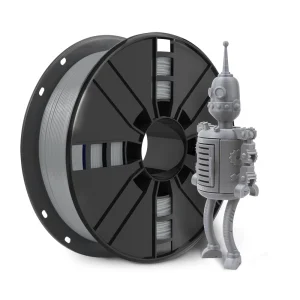
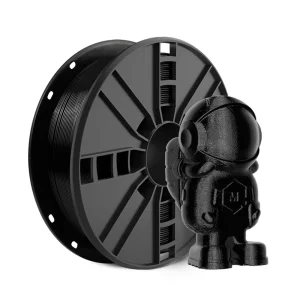
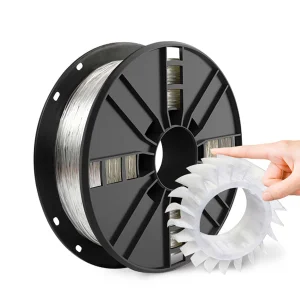
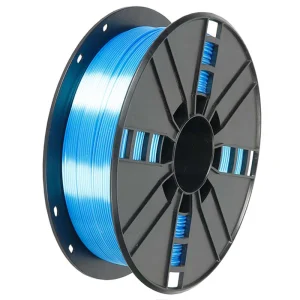
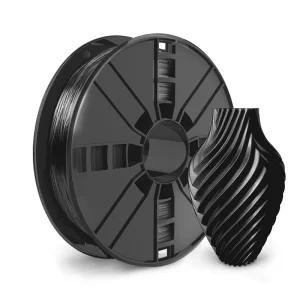
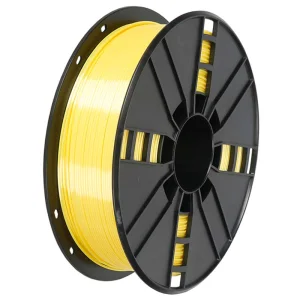
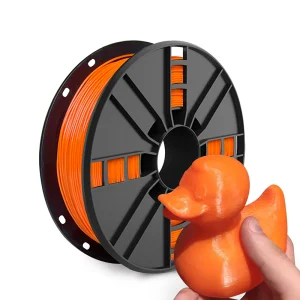
Precision-extruded materials engineered for seamless performance across industrial print farms and desktop FDM systems.
In the landscape of additive manufacturing polymers, Thermoplastic Polyurethane with a Shore 95A hardness rating (TPU 95A) occupies a critical nexus between flexible elastomers and semi-rigid structural plastics. While softer elastomers such as Shore 75A or 85A TPU offer exceptional flexibility, they present severe feeding challenges in direct-drive extruders and are virtually unprintable in reverse-Bowden configurations due to structural buckling under column loading. Conversely, rigid polymers like PLA and PETG lack shock absorption, vibration damping, and cyclic fatigue endurance. TPU 95A solves this trade-off by offering an optimal flexural modulus (55–65 MPa), high tensile strength (>42 MPa), and exceptional elongation at break exceeding 450%.
China has emerged as the global epicenter for TPU 95A manufacturing, combining advanced polymer compounding, scale extrusion technology, and integrated raw material supply chains. Leading Chinese TPU factories synthesize high-purity polyether- and polyester-based polyurethane resins to meet rigorous global standards, including ISO 10993 for biocompatibility, REACH, and RoHS compliance. For procurement officers, OEM brand managers, and industrial print farm operators, establishing a strategic sourcing pipeline with a qualified China TPU 95A manufacturer provides distinct commercial and technical advantages.
Shore 95A represents an ideal durometer value—rigid enough to prevent extrusion column buckling, yet flexible enough to absorb high dynamic impact and withstand millions of flex cycles without micro-fracturing.
Featuring a melt volume-flow rate (MVR) tailored for fused deposition modeling (FDM), Chinese TPU 95A exhibits stable non-Newtonian flow behavior, maintaining layer adhesion while preventing die swell during high-speed extrusion.
Polyether-based TPU 95A resists hydrolytic degradation, fungal growth, oils, greases, and aliphatic hydrocarbons, making it ideal for harsh industrial environments and outdoor marine applications.
The global additive manufacturing material supply chain has evolved rapidly. Today, sourcing TPU 95A filament directly from tier-1 Chinese production facilities goes far beyond simple unit-cost reductions; it delivers access to end-to-end industrial infrastructure, vertical integration, and cutting-edge quality control systems.
China hosts world-class chemical conglomerates (such as Wanhua Chemical and domestic Sinopec facilities) operating alongside international leaders (Covestro, BASF). This proximity allows Chinese filament manufacturers to acquire raw polyurethane pellets with specialized chain extenders, tailored glass transition temperatures ($T_g$), and controlled molecular weight distribution (MWD). Direct access to virgin resins eliminates raw material contamination and reduces lot-to-lot property variance.
Top-tier Chinese factories utilize automated dual-screw extrusion lines equipped with inline closed-loop laser gauge system networks. Real-time feedback loops continuously adjust haul-off capstan speeds to maintain a strict ±0.02 mm diameter tolerance and ovality threshold below 1.5%. This precision guarantees consistent volumetric flow ($Q = \pi \cdot r^2 \cdot v$) inside FDM hotends, eliminating underextrusion or nozzle clogging caused by filament swelling.
With multi-line production capabilities generating between 50,000 kg and 100,000 kg per month, major Chinese manufacturers support global OEM/ODM demands. Factories provide comprehensive private-labeling packages—ranging from custom Pantone color matching, specialized masterbatch compounding (UV-stabilized, glow-in-the-dark, matte finish), custom spool dimensions (250g to 5kg bulk spools), to moisture-barrier packaging compliant with international logistics requirements.
Empirical lab test values comparing TPU 95A against alternative flexible and semi-rigid printing polymers.
| Property Parameter | Testing Standard | TPU 95A (Factory Standard) | TPU 85A (Soft Grade) | TPE 90A (Polyolefin Base) | PETG (Reference Rigid) |
|---|---|---|---|---|---|
| Hardness (Shore Scale) | ISO 868 / ASTM D2240 | 95A / 46D | 85A / 35D | 90A / 40D | 78D |
| Tensile Strength at Yield | ISO 527 / ASTM D638 | 45 MPa | 28 MPa | 22 MPa | 50 MPa |
| Elongation at Break (%) | ISO 527 / ASTM D638 | 520% | 650% | 400% | 120% |
| Tear Strength (kN/m) | ISO 34-1 (Trouser Tear) | 125 kN/m | 90 kN/m | 75 kN/m | N/A (Brittle) |
| Glass Transition Temp ($T_g$) | DSC (10°C/min) | -28°C | -35°C | -40°C | +80°C |
| Recommended Printing Temp | FDM Hotend | 215°C – 235°C | 205°C – 225°C | 210°C – 230°C | 230°C – 250°C |
| Direct Drive vs Bowden Compatibility | Printability Audit | Universal (100% Ok) | Direct Drive Only | Direct Drive Only | Universal |
The 3D printing sector is transitioning rapidly from rapid prototyping to end-use industrial manufacturing. This evolution drives innovation across Chinese TPU factory R&D labs. Buyers seeking long-term competitive advantage should align with suppliers mastering the following technological frontiers:
Traditional TPU printing was constrained to low speeds (20–40 mm/s). Advanced Chinese formulations incorporate shear-thinning rheology modifiers, allowing stable flow at printing speeds of 150 mm/s to 300 mm/s on modern CoreXY high-speed 3D printers without layer delamination.
New surface-passivated TPU 95A variants feature low coefficient of friction (CoF) coatings. This engineered surface prevents jams inside automatic material feeding systems (like Bambu Lab AMS) while retaining internal elasticity.
To support carbon-neutral mandate requirements across Western markets, Chinese factories are expanding bio-based TPU 95A derived from castor oil monomers, reducing environmental footprint by up to 45% compared to petroleum-derived polyols.
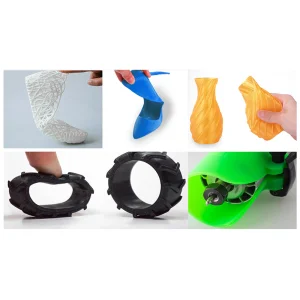
The mechanical versatility of TPU 95A makes it an essential polymer across multiple global sectors. Leading Chinese manufacturing partners assist international clients by developing custom grade modifications for specialized industrial applications.
Automotive OEMs utilize TPU 95A for low-volume production and rapid prototyping of flexible components. Applications include custom wiring harness grommets, air intake duct dampeners, dust boots, weather-sealing gaskets, and protective vibration-isolation mounts. Polyether TPU 95A withstands grease, engine bay oils, and thermal cycles from -30°C to +105°C.
In the footwear sector, TPU 95A provides ideal energy return (resilience > 55%) for 3D printed shoe midsoles, heel counters, and custom orthotic insoles. Its anti-microbial resistance and skin-contact compliance (ISO 10993-10 cytotoxicity testing) allow safe application in smartwatch straps, wearable medical sensor enclosures, and protective sports gear.
Robot integrators deploy TPU 95A to print soft-robotic end-effectors, custom vacuum suction cups, strain-relief boot connectors, and protective bumper guards. In drone manufacturing, TPU 95A is the primary material for camera gimbal shock absorbers, landing gear pads, and FPV frame bumpers due to its high impact dissipation rate.
Manufacturing plants utilize TPU 95A for non-marring assembly fixtures, soft-jaw vice inserts, and ruggedized housing covers for industrial handheld terminals. The high abrasion resistance prevents scratch damage on polished finished metal components during assembly.
To ensure consistent quality across container-load orders, global distributors and procurement heads should implement a standardized verification workflow when selecting a China TPU 95A supplier.
| Audit Stage | Critical Inspection Parameters | Standard Quality Threshold | Non-Compliance Risk |
|---|---|---|---|
| Raw Material Intake | Desiccant drying status & virgin resin certificate | Moisture content < 0.03% wt | Extrusion bubbles, stringing, micro-voids |
| Inline Extrusion | Dual-axis laser micrometer monitoring | 100% inspection, tolerance ±0.02 mm | Extruder jams, volumetric flow variations |
| Winding & Spooling | Tension-controlled automatic spooling | Zero crossover, neat layer alignment | Print failure due to tangled spools |
| Packaging Integrity | Vacuum bag micron thickness & desiccant ratio | Aluminum foil / PE vacuum seal < 5 mbar | Moisture re-absorption during ocean freight |
| Batch Testing | Tensile testing & print test farm validation | Layer bond strength > 35 MPa | Interlayer delamination under stress |
Quality Chinese factories provide comprehensive documentation for each shipping batch, including Material Safety Data Sheets (MSDS), Technical Data Sheets (TDS), Certificate of Analysis (COA), and REACH/RoHS compliance certification.
Direct answers to crucial commercial, technical, and logistics questions from enterprise buyers.
Factory-direct bulk supply for global distributors, OEM brands, and enterprise accounts.