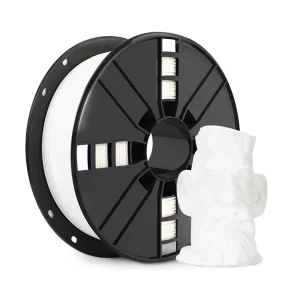
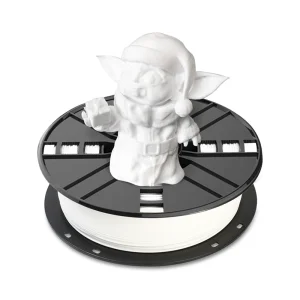
Factory-direct 3D printing filaments manufactured under strict ±0.02 mm laser telemetry tolerances for global distributors, brands, and automated print hubs.
Evaluating global market demand shifts, supply chain economics, and why Chinese factory partners lead high-performance elastomer extrusion.
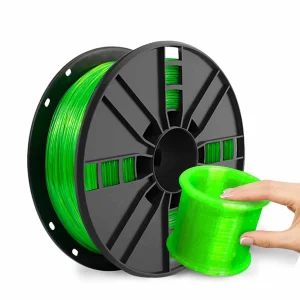
Industry Definition: Thermoplastic Polyurethane (TPU) represents a bridge between flexible rubbers and rigid engineering plastics. As industrial Fused Deposition Modeling (FDM / FFF) transitions from rapid prototyping to direct functional manufacturing, China TPU 3d Filament Suppliers & Factory partners have emerged as pivotal hubs, delivering material formulation stability, high melt-strength polymers, and scalable OEM manufacturing.
The global 3D printing materials sector is undergoing a profound paradigm shift. While rigid thermoplastics like PLA and PETG dominated early desktop 3D printing adoption, industrial end-users in automotive engineering, footwear innovation, medical prosthetics, and soft robotics increasingly demand elastomeric flexibility, high impact energy absorption, and chemical resistance. TPU filaments fulfill these criteria by incorporating alternating soft and hard chemical segments within their polymer backbones.
Sourcing directly from established Chinese manufacturing factories provides distinct competitive advantages for global distributors and enterprise buyers. China's integrated chemical supply chain guarantees direct access to high-purity virgin polyurethane resins (such as BASF Elastollan, Covestro Desmopan, and Wanhua Chemical grades), enabling advanced rheological tuning at lower raw material costs. Furthermore, specialized factory setups utilize automated multi-zone screw extruders paired with closed-loop dual-axis laser diameter monitoring systems, maintaining strict ±0.02 mm diameter tolerance and zero internal micro-voids across continuous multi-kilometer production runs.
Deep dive into Polyether vs. Polyester formulations, viscoelastic behavior, and extrusion dynamics.
Polyether polyol building blocks impart exceptional hydrolytic stability and microbiological resistance. Recommended for applications exposed to moisture, marine environments, or continuous aqueous contact.
Polyester polyols create strong intermolecular forces between polymer chains, delivering maximum tensile strength, cut resistance, and superior durability against mineral oils, lubricants, and fuels.
Precise stoichiometry during polymerization defines filament hardness. Ranging from ultra-flexible Shore 70A (rubber band feel) to semi-rigid Shore 98A / 58D (high-impact engineering casings).
Extruding flexible polymer strands presents unique fluid dynamics challenges compared to rigid thermoplastics. When melted inside an extruder barrel, TPU exhibits non-Newtonian, shear-thinning viscoelastic behavior. If cooling rates or extrusion pressures fluctuate even slightly, the molten filament experiences die swell, leading to ovality defects and variable cross-sectional areas.
To eliminate feed jams in 3D printer extruders (especially Bowden-style tube configurations), Torwell's state-of-the-art manufacturing lines deploy water-bath vacuum calibration channels combined with multi-axis laser gauging. Real-time feedback loops instantly adjust the puller speed to maintain strict roundness and diameter consistency. Furthermore, post-extrusion stress-relief annealing steps neutralize internal thermal stresses, preventing filament curling or buckling during automated winding onto 1 kg, 3 kg, or 5 kg spools.
How tier-1 manufacturers leverage high-performance TPU 3D printing filaments to streamline production and cut tooling costs.
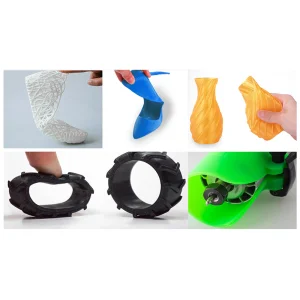
TPU filaments are extensively used for rapid tooling, prototype dampeners, custom wire harness grommets, flexible conduit joints, and dust protection bellows. Outstanding fatigue resistance ensures long-term performance under engine-bay vibration.
Leading athletic footwear brands utilize TPU 3D printing for customized lattice midsoles, energy-return heel pads, and ergonomic wearable bands. Shore 85A to 90A formulations provide optimal cushioning and mechanical rebound memory.
Custom pneumatic suction cups, soft robotic end-effector grippers, and impact-resistant bumper guards for Automated Guided Vehicles (AGVs) are printed on-demand, reducing manufacturing downtime from weeks to hours.
Biocompatible TPU grades allow orthotic clinics to manufacture tailored orthopedic insoles, soft prosthetic liners, surgical pre-planning models, and breathable wrist braces with gradient flexibility zones.
Vibration-isolation camera mounts, drone landing pads, and shock-absorbing battery enclosures printed in flame-retardant or carbon-fiber-reinforced TPU protect delicate electronics during high-G landings.
Compare physical, thermal, and printability parameters across our core TPU elastomer grades.
| TPU Grade | Hardness (Shore) | Tensile Strength | Elongation at Break | Printing Speed | Nozzle Temp Range |
|---|---|---|---|---|---|
| TPU 85A Soft Flex | 85A | 38 MPa | 650% | 15 - 30 mm/s | 210°C - 230°C |
| TPU 95A Industrial Standard | 95A | 45 MPa | 500% | 30 - 60 mm/s | 215°C - 235°C |
| High-Speed TPU 95A (HS) | 95A | 42 MPa | 480% | 100 - 250 mm/s | 230°C - 255°C |
| TPU Carbon Fiber Reinforced | 55D / 98A | 62 MPa | 180% | 30 - 80 mm/s | 235°C - 260°C |
| TPU Flame Retardant (UL94 V-0) | 95A | 40 MPa | 450% | 25 - 50 mm/s | 220°C - 240°C |
| TPU Biocompatible Medical Grade | 90A | 44 MPa | 580% | 20 - 45 mm/s | 210°C - 230°C |
*Note: Technical metrics reflect ISO 527 tensile testing standard protocols conducted on 100% dense 3D printed test specimens.
Ensuring legal safety, environmental compliance, and zero moisture degradation across long-distance sea and air logistics.
Our raw material sourcing, masterbatch blending, extrusion, spooling, and packaging lines operate strictly under ISO 9001 certified quality management systems, guaranteeing full batch traceability from monomer resin lot to customer spool.
All TPU formulations strictly comply with EU Directive 2011/65/EU (RoHS 3) and REACH Regulation (EC No 1907/2006). Filaments are free from SVHCs (Substances of Very High Concern), heavy metals, phthalates, and halogenated flame retardants.
Polyurethane is inherently hygroscopic. To maintain zero internal bubbles during printing, every spool undergoes forced-air desiccant drying before being sealed in heavy-duty aluminum vacuum bags with activated silica gel desiccant packs.
Turnkey private-label services tailored for regional 3D printing distributors, e-commerce sellers, and industrial suppliers.
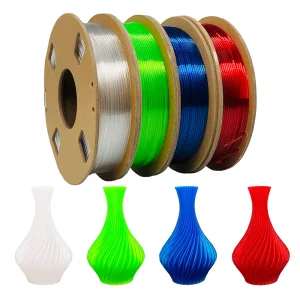
Our color laboratory formulates custom masterbatches matching Pantone, RAL, or physical resin samples within a tight color deviation margin (ΔE < 1.0).
Choose between recyclable cardboard spools or high-clarity PC/ABS spools. We provide custom die-cut artwork templates for branded outer cartons and spool labels.
Pilot extrusion samples (5-10 spools) are produced and dispatched via air express for customer print testing, surface evaluation, and tensile verification prior to mass production.
Automated extrusion lines output up to 2,000 spools daily. Finished goods are palletized, stretch-wrapped, and prepared for FOB, CIF, or DDP global freight fulfillment.
Pioneering next-generation elastomeric materials for high-speed printing platforms, smart wearables, and circular sustainability.
Modern CoreXY and Klipper 3D printers achieve speeds over 300 mm/s. Future TPU grades incorporate modified molecular chain branching to decrease shear viscosity at high melt rates while retaining 100% layer adhesion strength.
Impregnating polyurethanes with conductive carbon nanotubes (CNTs) or graphene nanoplatelets creates flexible, piezoresistive filaments capable of printing integrated strain sensors, soft circuits, and touch-sensitive robotic skins.
Transitioning from petrochemical feedstocks to plant-derived bio-polyols (derived from non-edible castor oils) allows up to 60% bio-based carbon content, drastically lowering life-cycle carbon footprints without sacrificing mechanical elasticity.
Expert answers regarding TPU 3D filament printing, extruder tuning, factory OEM terms, and storage recommendations.
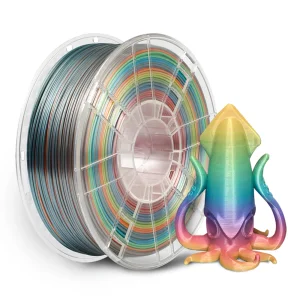
Discover our factory direct line of high-grade PLA+, PETG, Silk PLA, and elastomeric TPU 3D printing filaments.