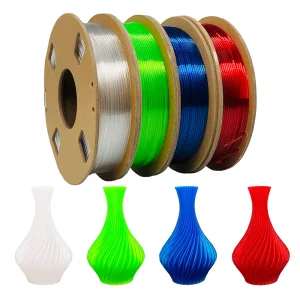
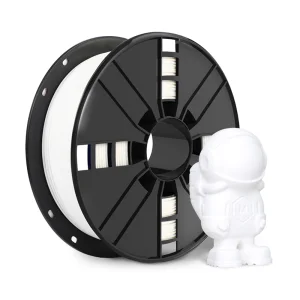
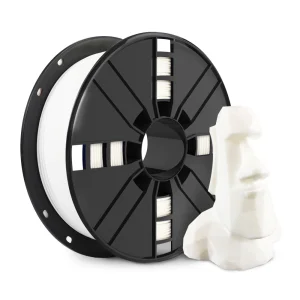
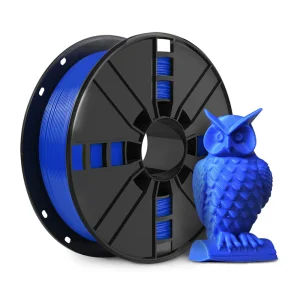
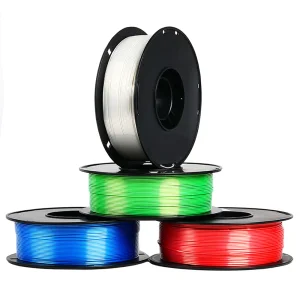
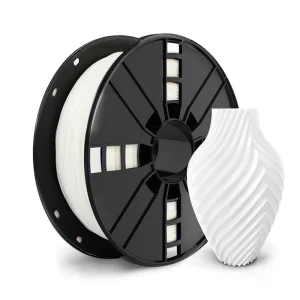
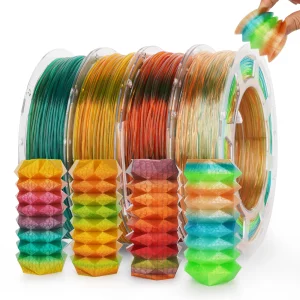
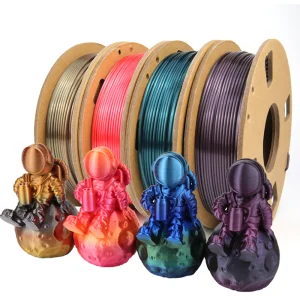
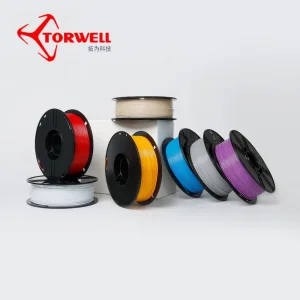
Explore our flagship precision-extruded filaments manufactured for global distributors, OEM brands, and high-speed industrial print farms.
Analyzing the shift from rigid rapid prototyping to functional elastomeric production in modern additive manufacturing.
Additive manufacturing (AM) has crossed a critical threshold, transitioning from aesthetic concept models into real-world functional end-use components. At the forefront of this industrial transformation is Thermoplastic Elastomer (TPE) filament—a class of flexible polymers that bridge the gap between soft vulcanized rubbers and rigid engineering plastics. As global original equipment manufacturers (OEMs), Tier-1 automotive vendors, and specialized medical device innovators accelerate their adoption of Fused Deposition Modeling (FDM) and Fused Filament Fabrication (FFF), the demand for high-consistency China TPE filament flexible suppliers and factories has reached an all-time high.
Historically, elastomeric 3D printing was plagued by severe processing bottlenecks: unstable melt flow, filament buckling within extruder gears, persistent stringing, and catastrophic moisture-induced degradation. However, breakthroughs in polymer formulation chemistry—specifically block copolymer synthesis—and ultra-precise extrusion control have established modern TPE filaments as indispensable industrial materials. Today, global supply chain directors rely on dedicated manufacturing hubs in China to deliver scalable, laboratory-tested, and cost-effective flexible raw materials.
Formulated to resist fatigue, impact, ozone, and chemical solvents, making TPE ideal for harsh under-the-hood automotive and factory automation environments.
Exhibiting elongation at break values exceeding 600%, Torwell TPE strands recover their initial geometry after repeated cyclic compression and elongation.
Modified glass transition ($T_g$) profiles and column stiffness minimize filament flexing, enabling reliable feeding across both direct-drive and modern high-speed bowden systems.
As a pioneer in polymer extrusion established in 2011, Torwell Technologies Co., Ltd. operates a 2,500 m² clean factory equipped with 6 automated extrusion lines. By pairing raw material formulation expertise with inline dual-axis laser diameter monitoring, Torwell resolves the fundamental challenges of flexible 3D printing for B2B buyers across 75+ countries.
Understanding the molecular structures, Shore hardness spectrum, and viscoelastic characteristics governing flexible 3D printing performance.
In industry nomenclature, the terms TPE (Thermoplastic Elastomer) and TPU (Thermoplastic Polyurethane) are frequently used interchangeably, yet they represent distinct polymer chemistry sub-families with unique physical and rheological behaviors:
Shore Durometer ratings govern flexible material performance. Hardness spans from soft, rubber-like 70A to semi-rigid 60D. Lower durometers (70A–83A) offer maximum dampening and flexibility but demand constrained drive paths. Higher durometers (95A–60D) handle higher volumetric print speeds with minimal warping.
| Durometer Rating | Flexural Modulus (MPa) | Elongation at Break (%) | Tensile Strength (MPa) | Primary Industrial Application Scenarios |
|---|---|---|---|---|
| Shore 70A - 80A | 15 - 35 | > 750% | 12 - 18 | Medical prosthetic liners, ultra-soft gaskets, bio-mimetic soft robotics |
| Shore 83A - 88A | 40 - 75 | > 650% | 22 - 30 | Ergonomic handle grips, footwear insoles, acoustic vibration isolation mounts |
| Shore 90A - 95A | 80 - 140 | > 500% | 35 - 45 | Industrial pneumatic tubing, automotive bushings, protective phone/device armor |
| Shore 55D - 60D | 350 - 550 | > 300% | 50 - 65 | High-impact snap-fits, automotive ducting, protective skid plates, structural hinges |
How international enterprises utilize Torwell TPE/TPU flexible filaments across key manufacturing markets.
Region: North America & Germany
Used extensively for high-speed rapid prototyping of engine bay weather-stripping, custom wiring harness grommets, interior dash vibration dampeners, and flexible air intake couplers capable of withstanding oil splatter and temperatures up to 100°C.
Region: Western Europe (UK, Netherlands, Germany)
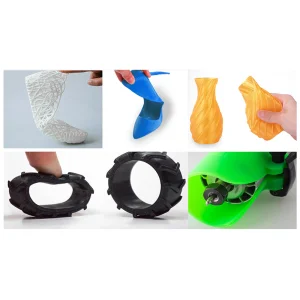
Podiatrists and orthotic laboratories utilize Torwell Shore 85A TPE to print lattice-structured patient-specific shoe insoles. The tunable infill density alters dynamic cushioning across plantar pressure zones, outperforming traditional EVA foams.
Region: Japan, South Korea & East Asia
Automated factory lines deploy multi-material pneumatically actuated grippers printed with TPE. The elastic memory enables soft grippers to handle delicate objects—such as glass vials or fresh food items—without mechanical marring.
Overcoming Euler buckling, retraction stringing, and thermal control during flexible TPE extrusion.
Printing flexible filaments successfully requires precise mechanical alignment across the printer's drive train. Because TPE acts like a compression spring under load, unconstrained filament paths lead to Euler buckling—where the strand flexes sideways and wraps around drive gears. Torwell engineers recommend the following parameter framework for optimal extrusion performance:
Direct-drive extruders featuring dual dual-driven hardened steel gears with a fully constrained, tight PTFE tube line leading straight into the heat break are strongly recommended. Bowden setups are suitable primarily for Shore 95A+ grades.
Maintain nozzle temperatures between 210°C – 240°C depending on print velocity. Heated bed temperatures should be set to 30°C – 60°C. Disable active cooling for the first 2 layers to maximize bed bonding.
Cap linear speeds to 20–40 mm/s for soft 83A grades, scaling up to 100+ mm/s for modern 95A high-speed grades. Turn on Linear Advance / Pressure Advance to eliminate blobbing during retractions.
How Torwell Technologies guarantees batch-to-batch consistency for international brand owners and bulk purchasers.
For global brand owners and distributors, material inconsistency is the leading cause of customer churn and warranty returns. Torwell Technologies enforces a strict 5-stage Quality Management System (QMS) across all production runs of TPE, TPU, PLA, PETG, and ABS filaments:
Anticipating future market shifts, bio-sustainability demands, and ultra-high-speed additive manufacturing trends.
Developing shear-thinning TPE formulations engineered specifically for high-speed CoreXY 3D printers. Modified melt-flow indices enable rapid plasticization without nozzle backpressure jams.
Integrating non-halogenated flame retardants into flexible polymers to satisfy stringent aerospace, rail transit, and electronics housing safety compliance requirements.
Compounding surface resistivity-tuned carbon nanotube (CNT) networks into flexible TPE for anti-static electronic component handling trays and wearable sensors.
Detailed engineering and procurement answers for B2B buyers, sourcing managers, and 3D printing professionals.
Direct from our factory floor: versatile 3D printing supplies engineered to meet rigorous international standards.