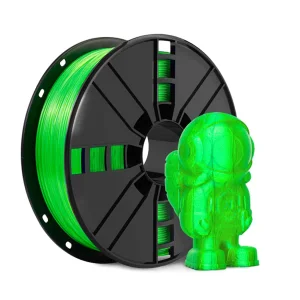
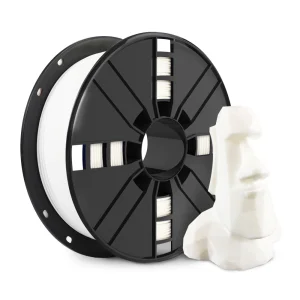
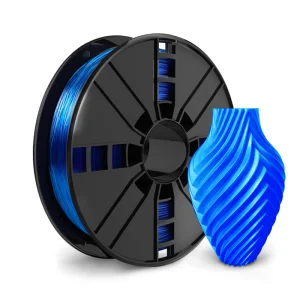
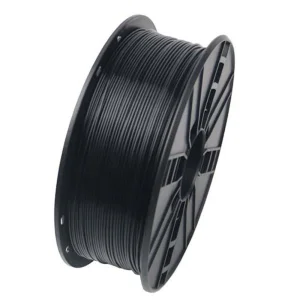
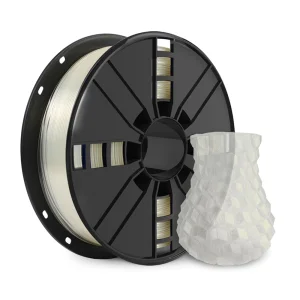
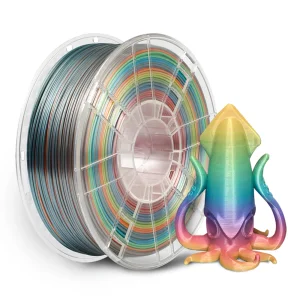
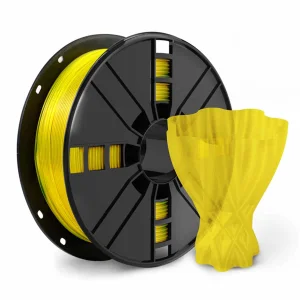
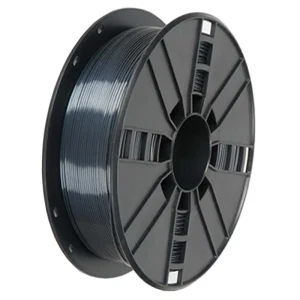
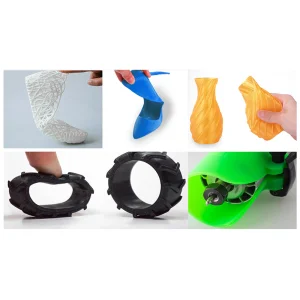
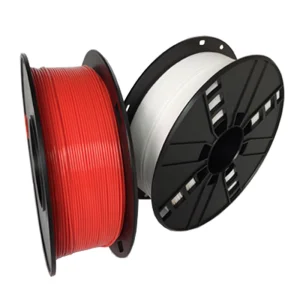
Factory-direct bulk 3D printing filaments manufactured under ISO 9001 certified extrusion processes with strict inline laser micrometric inspection.
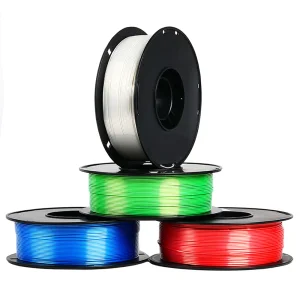
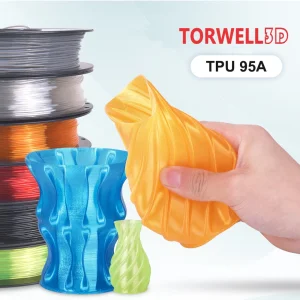
As Additive Manufacturing (AM) transitions from rapid prototyping into full-scale industrial production, Polylactic Acid (PLA) bulk procurement has evolved into a strategic supply chain asset.
The global 3D printing filament market is experiencing unprecedented compound annual growth, heavily anchored by the consumer, educational, and industrial adoption of Fused Deposition Modeling (FDM) and Fused Filament Fabrication (FFF) technologies. Within this ecosystem, Polylactic Acid (PLA) commands over 60% of total volumetric consumption globally. Originating from renewable biological feedstocks—primarily fermented plant starch derived from corn, cassava, and sugar cane—PLA stands at the nexus of the circular bioeconomy and high-precision manufacturing.
Key Market Shift: Industrial B2B buyers no longer evaluate PLA filament solely as a retail commodity. Modern procurement strategies focus on batch-to-batch polymer stability, melt flow index (MFI) consistency for high-speed printing engines (exceeding 500 mm/s), and supply chain resilience against raw material price volatility.
China has solidified its position as the world's primary hub for bulk PLA filament manufacturing. This dominance is driven by integrated chemical supply chains, localized synthetic resin refinement (L-lactide and D-lactide optical purity optimization), direct access to advanced single and twin-screw extrusion machinery, and unparalleled economies of scale. Enterprise distributors, print farm operators, and original equipment manufacturers (OEMs) across North America, Europe, and Asia-Pacific overwhelmingly partner with qualified Chinese manufacturers to secure cost efficiency without compromising technical precision.
Achieving enterprise-grade filament performance requires strict controls from raw pellet dehydration to high-speed dual-axis laser micro-gauging.
Bulk PLA extrusion starts with high-purity Poly-L-Lactic Acid (PLLA) resins synthesized via ring-opening polymerization of lactide dimers. Controlling the optical purity ratio between L- and D-isomers dictates the thermal properties, crystallization rate, and mechanical toughness of the finished filament.
PLA is inherently hygroscopic. Absorbed atmospheric moisture hydrolyzes polymer chains at melt temperatures, leading to nozzle bubbling, stringing, and severe brittle degradation. Our factory utilizes closed-loop dehumidifying dryers to lower resin moisture levels below 0.02% (200 ppm) prior to extrusion.
Custom-designed multi-stage twin-screw extruders ensure homogeneous melt mixing of raw PLA with specialized nucleating agents, impact modifiers, and organic masterbatch pigments. Melt flow index (MFI) is precisely tuned to balance high-speed flow dynamics with layer-to-layer adhesion strength.
To eliminate diameter variance, extrusion lines feature inline 2-axis laser gauges operating at 500 Hz. Real-time feedback loops adjust haul-off capstan speeds dynamically, strictly bounding diameter deviation within ±0.02 mm and monitoring ovality to prevent printer extruder jams.
Extruded filament strands pass through multi-stage temperature-regulated water tanks. Gradual water cooling prevents internal thermal stress accumulation, ensuring the filament remains perfectly round and resists snapping during automatic spool winding or long-term storage.
Tension-controlled robotic winders lay down smooth, crisscross filament layers across cardboard or plastic spools. Perfect layer alignment prevents overlapping loops—a primary cause of printer feeding failures in long-duration industrial print runs.
From enterprise print farms to specialized medical visualizers, PLA filaments serve diverse commercial environments requiring specific material properties.
Commercial print farms operating hundreds of high-speed FDM machines demand high-MFI PLA+ formulations. Minimal warping, zero odor, fast solidification, and seam-free automatic spool swaps via multi-material systems (AMS) enable uninterrupted 24/7 contract manufacturing of end-use consumer products.
Architects and industrial designers rely on opaque Matte and White PLA filaments for precise scale modeling. The low thermal shrinkage coefficient of PLA allows for printing large-footprint structures with sharp right-angled corners and clean surface details without requiring heated chamber enclosures.
Silk PLA and Multicolored Rainbow variants serve retail visual displays, movie prop studios, and luxury decorative item creators. Co-extruded bi-color and tri-color filaments yield striking metallic sheen aesthetics directly off the print bed, eliminating post-processing painting costs.
Educational institutions require non-toxic, eco-friendly, and odorless printing supplies. Standard PLA releases virtually zero harmful volatile organic compounds (VOCs) during melting, making it the safest choice for school classrooms, university maker spaces, and public libraries.
Hospitals and medical diagnostic centers utilize radio-opaque modified PLA for printing patient-specific anatomical bone structures and organ mockups from CT/MRI scans, facilitating surgeon pre-operative planning and medical student training.
Consumer goods companies testing sustainable bottle designs, cosmetic caps, and thermoforming molds use PLA to maintain corporate carbon-neutrality mandates, leveraging the resin's industrial compostability under EN 13432 standards.
Understand how PLA compares against alternative thermoplastic filaments across critical mechanical, thermal, and operational metrics.
| Material Grade | Tensile Strength (MPa) | Flexural Modulus (GPa) | Heat Deflection Temp (°C @ 0.45MPa) | Impact Strength (kJ/m²) | Print Speed Capability | Primary Industrial Use Case |
|---|---|---|---|---|---|---|
| Standard PLA | 60 - 65 | 3.5 - 3.8 | 55 - 60 | 3.0 - 4.0 | Up to 300 mm/s | Visual models, aesthetic prototypes, education |
| High-Speed PLA+ | 65 - 70 | 3.8 - 4.0 | 60 - 65 | 6.5 - 8.5 | Up to 600 mm/s | High-throughput print farms, functional jigs |
| PETG (Polyethylene Terephthalate Glycol) | 45 - 50 | 2.1 - 2.4 | 70 - 75 | 7.0 - 9.0 | Up to 250 mm/s | Waterproof containers, chemical resistant parts |
| ABS (Acrylonitrile Butadiene Styrene) | 40 - 45 | 2.2 - 2.5 | 85 - 95 | 15.0 - 20.0 | Up to 300 mm/s | Automotive housings, enclosures, high-impact items |
| ASA (Acrylonitrile Styrene Acrylate) | 42 - 48 | 2.3 - 2.6 | 90 - 98 | 12.0 - 18.0 | Up to 250 mm/s | Outdoor fixtures, UV-exposed industrial equipment |
| TPU 95A (Thermoplastic Polyurethane) | 35 - 40 | N/A (Flexible) | 60 - 65 | No Break | 50 - 150 mm/s | Gaskets, seals, footwear, vibration dampeners |
We provide comprehensive turn-key manufacturing, private labeling, and global logistics support tailored for regional distributors and international brand owners.
Build your proprietary brand effortlessly. We offer custom spool colorways, Pantone matching (PMS), customized box graphics, private-labeled spools (cardboard, ABS, or PC), barcode generation, and customized multilingual instruction inserts.
Ocean freight exposes goods to humidity fluctuations. Every bulk spool is immediately oven-dried, vacuum-sealed in heavy-duty aluminum-foil moisture barrier bags with high-capacity desiccant packs, and packed into reinforced corrugated outer cartons.
Our materials comply fully with international environmental and chemical safety standards, including RoHS 3 (EU 2015/863), REACH (EC 1907/2006), food-contact raw resin declarations (FDA 21 CFR), and ISO 9001 quality management systems.
As 3D printers achieve higher accelerations and eco-regulations tighten worldwide, PLA manufacturing is undergoing rapid technological evolution.
By blending enantiomeric PLLA and PDLA chains, stereocomplexation pushes the melting temperature of modified PLA up to 220°C and heat deflection temperatures past 110°C, bridging the gap between low-cost PLA and high-performance engineering plastics like ABS and PA.
Next-generation CoreXY printers operate at extreme volumetric flow rates. Advanced polymer engineering integrates hyper-branched flow promoters and rapid-crystallization nucleators to prevent thermal shearing and preserve layer strength at high speed.
Transitioning from mechanical recycling to chemical depolymerization allows post-industrial and post-consumer PLA scrap to be converted back into virgin-grade L-lactide monomers, creating true circular economy closed-loop filament products with zero degradation in mechanical properties.
Detailed answers to fundamental technical and commercial questions raised by global distributors, sourcing managers, and brand engineers.
Explore our broader portfolio including ASA, PETG, Silk Rainbow, TPU, and High-Strength Carbon Fiber composite filaments.
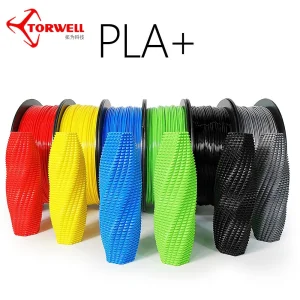
Before finalizing your bulk purchase order with a China PLA filament manufacturer, verify these crucial technical and operational criteria.