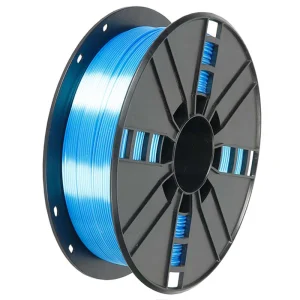
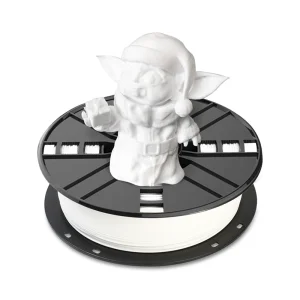
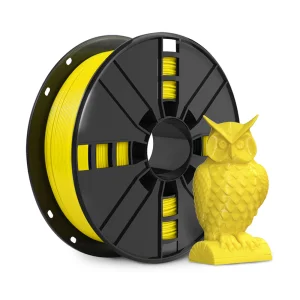
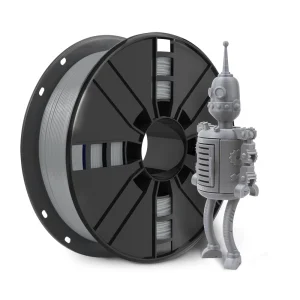
Direct-from-factory extrusion solutions optimized for FDM/FFF additive manufacturing systems
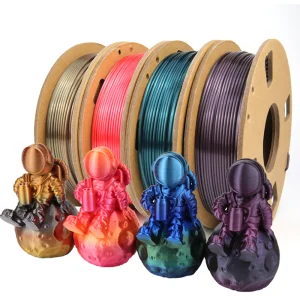
Examining the structural migration of additive manufacturing materials from basic prototyping resins to functional industrial thermoplastics.
In the evolving ecosystem of Fused Deposition Modeling (FDM) and Fused Filament Fabrication (FFF), Polyethylene Terephthalate Glycol-modified (PETG) in 1.75mm diameter has solidified its role as the bridge material of choice between entry-level Polylactic Acid (PLA) and high-temperature engineering polymers such as Acrylonitrile Butadiene Styrene (ABS), Polycarbonate (PC), and Polyether Ether Ketone (PEEK). As global industries pivot toward rapid tooling, localized end-use part production, and high-throughput print farms, PETG volume demands have surged exponentially across North America, Europe, and the Asia-Pacific region.
Unlike standard PET (Polyethylene Terephthalate), which crystallizes rapidly during slow cooling cycles—resulting in high brittleness, cloudiness, and severe warping—PETG is synthesized by introducing 1,4-cyclohexanedimethanol (CHDM) into the polymer chain. This glycol substitution disrupts the rigid molecular structure, yielding an amorphous copolymer that retains optical clarity, eliminates thermal crystallization shrinkage, and exhibits exceptional layer-to-layer cohesion across a broad thermal window (230°C to 250°C).
1.75mm PETG provides zero-warpage characteristics on non-enclosed print beds, allowing 24/7 continuous operation without nozzle clogging or thermal bed detachment.
Highly resistant to dilute acids, alkalis, aliphatic hydrocarbons, and alcohols. Essential for chemical processing jigs, fluid reservoirs, and workshop containers.
Exhibits higher Charpy impact strength than PLA and PLA+, preventing catastrophic snap failures under mechanical shock or torque loads.
While PLA dominates educational and decorative sectors due to ease of printing, enterprise buyers systematically choose PETG 1.75mm for structural applications requiring Heat Deflection Temperatures (HDT) of 70°C to 78°C alongside food-contact compliance potential under FDA CFR 177.1315 regulations.
A comprehensive examination of intrinsic viscosity, crystallization kinetics, melt flow indices, and thermal parameters.
Achieving extreme dimensional stability and consistent flow dynamics in a 1.75mm filament strand requires tight control over the virgin copolymer resin formulation. Premium Chinese factories select dedicated raw materials with a strictly tuned Intrinsic Viscosity (IV) ranging between 0.70 dL/g and 0.82 dL/g. Lower IV resins yield excessive stringing and nozzle droop due to low melt strength, whereas elevated IV values increase melt fracture risks during high-speed extrusion lines operating above 100 m/min.
| Polymer Parameter | PETG (Standard) | PLA (Polylactic Acid) | ABS (Acrylonitrile Butadiene) | PC (Polycarbonate) |
|---|---|---|---|---|
| Density (g/cm³) | 1.27 | 1.24 | 1.04 | 1.20 |
| Tensile Strength (MPa) | 48 - 53 | 55 - 65 | 40 - 45 | 60 - 72 |
| Flexural Modulus (GPa) | 2.1 | 3.1 | 2.3 | 2.4 |
| Glass Transition Temp ($T_g$) | 80°C | 60°C | 105°C | 145°C |
| Heat Deflection Temp (HDT @ 0.45MPa) | 73°C | 55°C | 95°C | 135°C |
| Moisture Absorption (24h Saturation) | 0.15% - 0.20% | 0.30% | 0.20% - 0.40% | 0.35% |
| Shrinkage Rate (%) | 0.2% - 0.4% | 0.3% - 0.5% | 0.7% - 1.0% | 0.5% - 0.7% |
The standard nominal diameter for modern high-speed bowden and direct-drive extruders is 1.75mm. A deviation exceeding $+0.05\text{mm}$ causes mechanical jamming inside PTFE linertubes or heat-break throats, while a negative deviation below $-0.05\text{mm}$ induces severe under-extrusion, layer delamination, and volumetric voiding. Tier-1 Chinese suppliers utilize dual-axis or triple-axis high-frequency laser micrometers installed downstream of water cooling troughs.
These laser systems sample filament dimensions at 1000 Hz, feeding real-time digital signals back to the melt pump motor and capstan puller. If the cross-sectional ovality (calculated as $D_{\max} - D_{\min}$) exceeds $0.015\text{mm}$, automated air knives adjust cooling rates, maintaining strict volumetric consistency throughout 1kg, 3kg, or 5kg spool spools.
Strategic analysis of feedstock integration, automated extrusion infrastructure, and cost-competitiveness.
China produces over 70% of the world's 3D printing consumables. This market dominance is supported by integrated chemical supply chains, advanced machine manufacturing capabilities, and centralized industrial clusters located in Guangdong (Shenzhen, Dongguan), Zhejiang, and Jiangsu provinces.
Direct pipeline and bulk container access to chemical giants (e.g., SK Chemicals, Eastman, and domestic Sinopec PETG polymer plants) stabilizes virgin resin procurement costs, insulating global OEMs from market price spikes.
Factories utilize multi-line automated extrusion halls operating 24/7 with continuous gravimetric dosing feeders, melt filtering screens, dynamic water temperature control, and robotized spool winding systems.
Proximity to major shipping hubs (Yantian, Nansha, Ningbo) enables fast containerization. In-house packaging factories provide custom vacuum bags, high-absorption desiccants, and FSC-certified retail cartons.
When evaluating supply partners in China, enterprise buyers benefit from transparent cost allocations. A standard 1kg spool of premium 1.75mm PETG manufactured under OEM contract reflects the following operational breakdown:
Deploying 1.75mm PETG across specialized engineering, medical, automotive, and commercial sectors.
PETG’s resistance to greases, oils, and diesel fuels renders it ideal for custom end-of-arm robotic grippers, sensor brackets, assembly positioning jigs, and protective covers on production lines.
Biocompatible grades meeting ISO 10993 standards allow production of non-invasive medical instrument enclosures, test-tube racks, and sterilization trays capable of withstanding chemical wipedowns.
With a dielectric strength of approximately 16–20 kV/mm, PETG provides robust electrical insulation for terminal blocks, PCB junction boxes, and outdoor IoT sensor housings.
While un-stabilized PLA degrades within 6 months under direct UV radiation and heat, UV-inhibited 1.75mm PETG maintains over 85% of its structural tensile strength after 24 months of outdoor exposure, presenting a cost-effective alternative to expensive ASA formulations.
A step-by-step evaluation roadmap for global brands, Amazon sellers, and regional distributors establishing private label lines.
Sourcing bulk 1.75mm PETG requires rigorous vendor qualification to guarantee batch-to-batch color fidelity, physical performance, and spooled winding quality. Procurement teams should mandate compliance with the following five quality control benchmarks:
| Audit Checkpoint | Technical Requirement Standard | Verification Method / Instrument |
|---|---|---|
| Raw Material Purity | 100% Virgin copolymer; zero recycled post-consumer flake blend | Differential Scanning Calorimetry (DSC) / FTIR Analysis |
| Diameter Consistency | 1.75mm Nominal $\pm 0.02\text{mm}$; Ovality $\le 0.015\text{mm}$ | Continuous Dual-Axis Laser Micrometer Logging Data |
| Moisture Content | $< 0.04\%$ (400 ppm) prior to spool vacuum sealing | Karl Fischer Coulometric Titration |
| Winding Precision | Neat, layer-by-layer parallel winding; zero overlapping cross-overs | Automated Optical Inspection (AOI) on Winding Heads |
| Packaging Integrity | Vacuum pressure $< -0.08\text{ MPa}$; High-barrier PE/PA Pouch | Helium Leak Testing & Vacuum Retention Chamber Checks |
Professional Chinese suppliers offer comprehensive OEM customization options:
Innovations driving high-speed printing, carbon fiber integration, and circular economy compliance.
With CoreXY 3D printers exceeding speeds of 300 mm/s to 600 mm/s, modern PETG formulations incorporate flow enhancers and modified molecular weight distributions. These enable high volumetric flow rates ($> 24\text{ mm}^3/\text{s}$) without requiring elevated hotend temperatures that induce polymer degradation.
Incorporating 15% to 20% high-aspect-ratio chopped carbon fibers into the PETG matrix increases flexural modulus to over 4.5 GPa, eliminates thermal expansion, and creates a matte surface finish that hides layer lines.
Industrial-grade recycled PETG (rPETG) sourced from post-industrial clean waste streams allows eco-conscious brands to supply 100% recycled filaments with mechanical properties within 95% of virgin resin metrics.
Explore our extensive range of high-performance materials manufactured to international enterprise standards
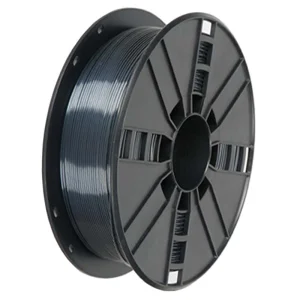
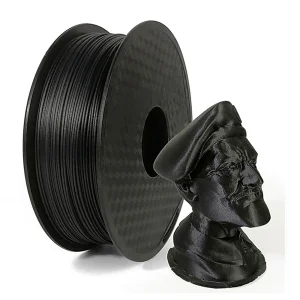
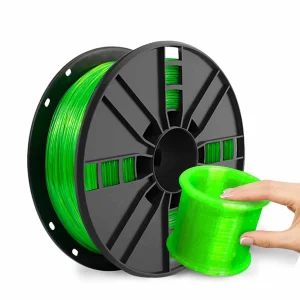
Expert insights covering procurement specifications, extrusion parameters, and quality assurance.
The 1.75mm format has become the global standard due to its lower heating power requirements in hotend heat blocks, lower extrusion force requirement, and universal compatibility with modern direct-drive extruders (e.g., dual-gear systems) and automated material switching stations. 1.75mm allows precise retraction control, minimizing stringing and oozing—a key advantage for unattended print farms.
PETG is hygroscopic and absorbs moisture if exposed to ambient air. Chinese suppliers mitigate this by drying virgin resin in desiccant hopper dryers down to $< 0.04\%$ moisture content before extrusion. Post-spooling, filaments are immediately sealed in heavy-duty vacuum bags containing high-capacity silica gel packs. Cartons are palletized and stretch-wrapped to protect against oceanic moisture during transit.
Optimal print parameters depend on print speeds and hotend flow capacity. Standard baseline settings include:
For standard stock colors (Black, White, Grey, Clear, Blue, Red), factory MOQs typically start at 100 to 300 spools. Custom Pantone color matching or custom branded packaging boxes require an MOQ of 1,000 spools per SKU to optimize extrusion line purging and custom printing setup costs.
PLA+ offers higher tensile stiffness and slightly easier printability, but PETG excels in impact toughness, chemical resistance, and thermal tolerance. PETG’s Heat Deflection Temperature (HDT) of 73°C far exceeds PLA+ (55°C), preventing part deformation inside hot automotive interiors or outdoor industrial settings.
Enterprise buyers should request ISO 9001:2015 Quality Management certification, RoHS & REACH compliance reports for European market entry, FDA CFR 177.1315 statements for food contact applications, and UL94 flammability test reports (typically HB rating for standard PETG).