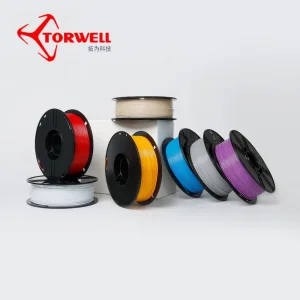
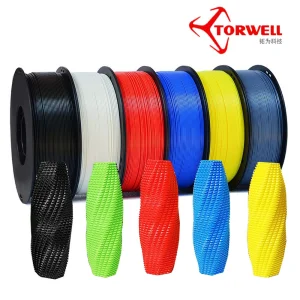
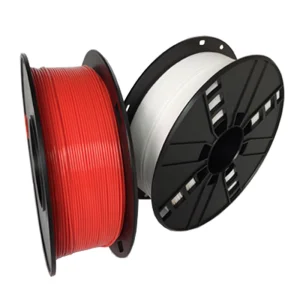
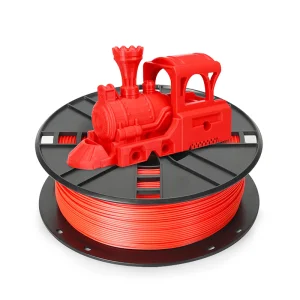
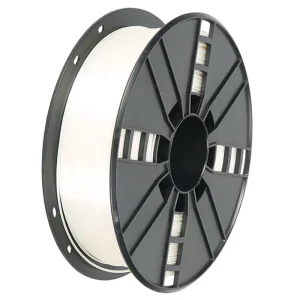
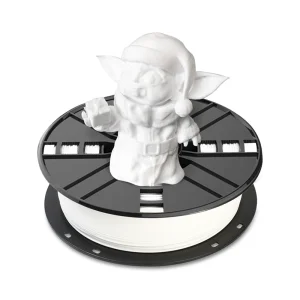
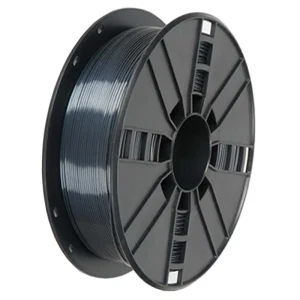
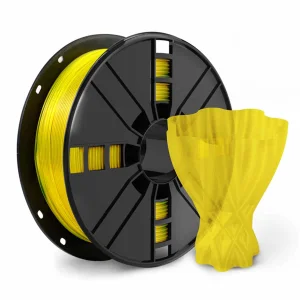
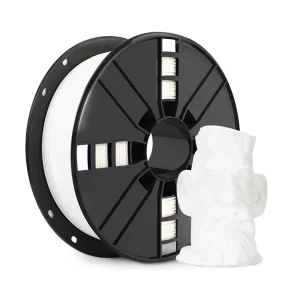
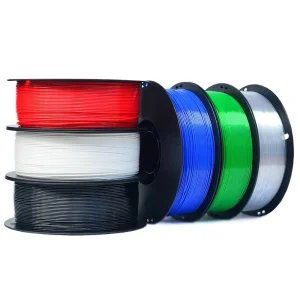
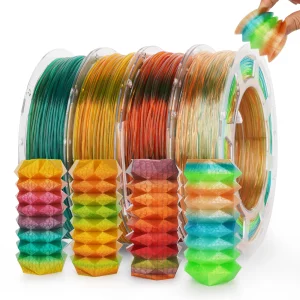
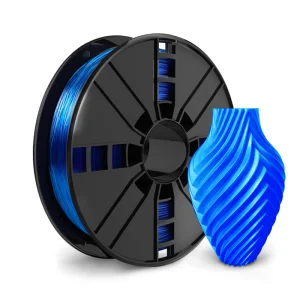
Explore our flagship high-performance 3D printing filaments engineered with tight ±0.02 mm diameter tolerances, low warping, and exceptional inter-layer cohesion.
An authoritative evaluation of how elastomeric polymers, direct-drive extrusion mechanics, and advanced polymer synthesis are redefining functional additive manufacturing.
Additive manufacturing has transcended the era of static aesthetic models. Industry 4.0 demands functional end-use components capable of absorbing kinetic impact, withstanding repetitive cyclic flexure, and resisting aggressive chemicals. Central to this transformation is the development of advanced flexible 3D printer filaments, predominantly Thermoplastic Polyurethane (TPU), Thermoplastic Elastomer (TPE), and Polyether Block Amide (PEBA).
Unlike rigid thermopolymers like PLA or ABS, flexible filaments possess viscoelastic material profiles characterized by dynamic storage and loss moduli. When processed via Fused Deposition Modeling (FDM) or Fused Filament Fabrication (FFF), elastomeric filaments allow engineers to print gaskets, pneumatic seals, soft robotics, footwear midsoles, and ergonomic vibration dampeners without requiring complex vulcanized rubber tooling.
Understanding the extrusion dynamics of flexible materials requires analyzing shear rate melt viscosities. As flexible filament enters the thermal hotend, it exhibits non-Newtonian pseudoplastic (shear-thinning) behavior. Higher print speeds increase shear rates, which temporarily lowers melt viscosity, enabling smoother flow through narrow nozzles (0.4mm to 0.6mm).
Key processing parameters managed by China leading flexible filament suppliers include:
| Polymers Grade | Shore Hardness | Tensile Strength | Elongation at Break | Chemical & Oil Resistance | Primary Industrial Application |
|---|---|---|---|---|---|
| Ether-based TPU | 85A – 95A | 35 – 45 MPa | 550% – 700% | High Hydrolysis | Medical tubing, aquatic seals, wearable devices |
| Ester-based TPU | 90A – 98A | 45 – 55 MPa | 450% – 600% | High Oil/Solvent | Automotive gaskets, industrial drive belts, bumpers |
| TPE (Styrenic Block) | 65A – 80A | 15 – 25 MPa | 700% – 900% | Moderate | Ultra-soft tactile grips, prosthetic liners, toys |
| PEBA (Polyether Block) | 90A – 95A | 30 – 40 MPa | 400% – 500% | Extreme Cold Flex | High-performance athletic footwear, aerospace dampers |
| High-Speed TPU 95A | 95A | 40 MPa | 500% | High Chemical | High-throughput print farm production components |
Why international buyers, OEM brands, and enterprise print farms evaluate raw material purity, spooling tension, and moisture mitigation protocols during supplier qualification.
Continuous dual-axis inline laser micrometers track diameter and ovality at 500 Hz per second. Deviations trigger automatic extrusion speed adjustments to prevent hotend friction spikes and nozzle clogging.
Hygroscopic TPU resins are dehumidified in desiccant towers to below 0.04% H₂O content before spooling. Finished spools are sealed with active desiccant in heavy-duty foil-laminated vacuum pouches.
Controlled layer-by-layer automated winding eliminates overlapping loops and cross-winding tension knots, guaranteeing uninterrupted multi-day operations on AMS and high-speed print farm systems.
For international distributors and private label brands seeking turnkey manufacturing solutions from China, flexible filament production requires comprehensive OEM customization services:
Leveraging Guangdong’s advanced chemical engineering clusters, automated extrusion infrastructure, and logistics integration to deliver unbeatable cost-efficiency and quality stability.
China accounts for over 60% of the world’s global thermoplastic polyurethane resin synthesis capacity. By sourcing raw polymer pellets directly from integrated chemical hubs, Chinese filament manufacturers eliminate multi-tier supply chain markups, insulate international buyers from global material spot-price volatility, and secure priority allocations during global resin shortages.
Modern Chinese manufacturing facilities operate standardized 2,500+ m² plants equipped with multi-stage automated extrusion lines. These lines incorporate gravimetric dosing feeders, melt pump pressure stabilizers, active temperature-controlled multi-pass water baths, and robotic auto-spooling systems capable of producing over 60,000 kg of premium filament per month.
Discover how top-tier OEMs and innovative engineering enterprises deploy flexible 3D printed components across critical industrial sectors.
Direct printing of custom wiring harness grommets, intake dust boots, vibration dampening engine mounts, and protective bumper gaskets resistant to oils, grease, and ambient temperatures up to 90°C.
Production of custom 3D printed orthotic shoe insoles featuring variable infill densities to correct biomechanical gait, flexible prosthetic socket liners, and patient-tailored anatomical surgical rehearsal models.
Rapid fabrication of soft pneumatic robotic end-effectors, compliant vacuum suction cups, flexible cable track carriers, and impact-absorbing end-of-arm tooling (EOAT) for automated assembly lines.
Detailed answers regarding material performance, printing guidelines, OEM customization, and export logistics.
Complete your sourcing catalog with high-margin specialty filaments, dual-color silk aesthetics, and industrial-grade PETG/TPU formulations.
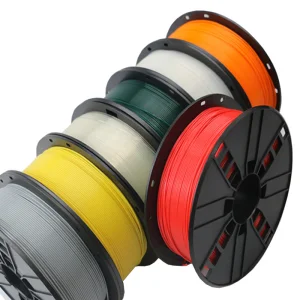
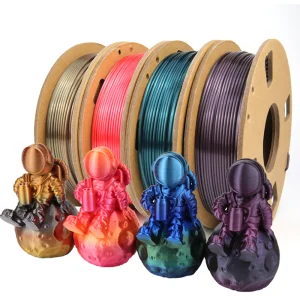
Scale your 3D printing material business with guaranteed ±0.02 mm tolerances, factory-direct OEM/ODM customization, and robust container-level global logistics support.
Request Factory Direct Quotation & Technical Samples