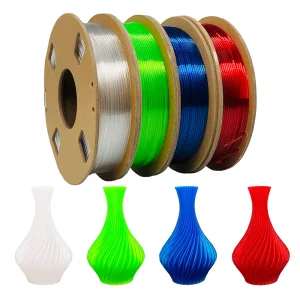
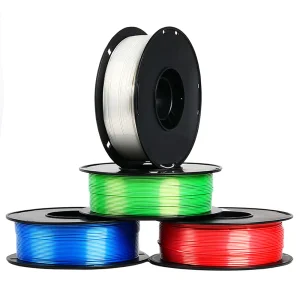
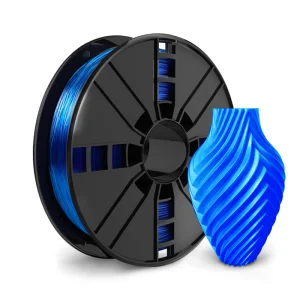
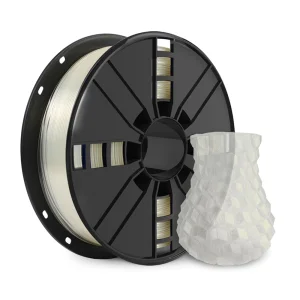
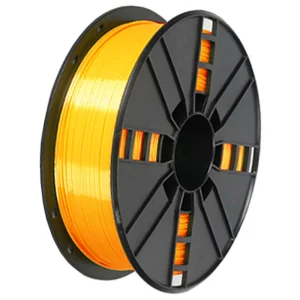
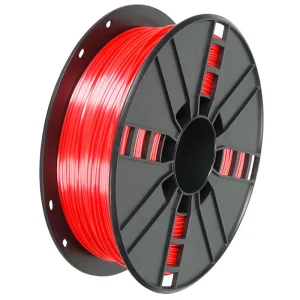
Direct factory production from Torwell Technologies — Engineered with ±0.02 mm laser tolerance and zero-bubble vacuum packaging for tier-one brands, distributors, and large-scale print farms worldwide.
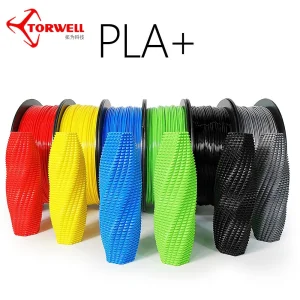
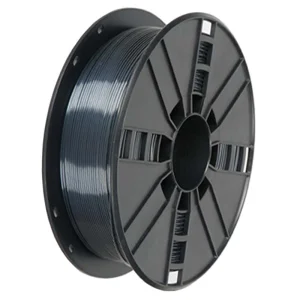
Founded in 2011, Torwell Technologies operates a state-of-the-art polymer processing facility designed specifically for high-speed additive manufacturing filaments.
Polyethylene Terephthalate Glycol-modified (PETG) represents a vital bridge in additive manufacturing materials, occupying the crucial performance gap between easy-to-print Polylactic Acid (PLA) and high-strength Acrylonitrile Butadiene Styrene (ABS). In the evaluation of China Filament PETG 1.75 manufacturers & factories, technical buyers must analyze polymer formulation at the molecular level to understand how raw material quality translates into printed part reliability.
Standard PET (Polyethylene Terephthalate) is a semi-crystalline polymer widely used in blow-molding bottles and synthetic fibers. However, during Fused Deposition Modeling (FDM) extrusion, raw PET tends to crystallize rapidly upon cooling from the melt phase, leading to severe thermal shrinkage, layer separation, and brittleness. PETG solves this fundamental limitation through the chemical insertion of Cyclohexanedimethanol (CHDM) into the polymer backbone replacing ethylene glycol units.
This glycol modification disrupts the structural regularity of the polymer chain, preventing micro-crystallization during rapid cooling. The resulting polymer remains purely amorphous across a broad temperature window. For B2B procurement managers and print farm operators, this amorphous behavior yields three decisive technical advantages:
PETG resins are inherently hygroscopic. Prior to extrusion, virgin raw resin must be processed through molecular sieve desiccant drying towers down to moisture levels under 200 ppm (0.02%) to prevent hydrolytic degradation inside the extruder barrel.
Torwell controls the Melt Flow Index (MFI) within tight operational windows (15–20 g/10min at 210°C/2.16kg). This optimized melt viscosity ensures smooth extrusion dynamics without nozzle droop, stringing, or die swell.
Extrusion lines utilize high-speed optical laser micrometers reading at 500 Hz across two orthogonal axes. Automatic feedback adjustments modulate capstan speed in real time to enforce a strict ±0.02 mm diameter tolerance.
Evaluating a supplier goes far beyond testing a single sample spool. Global procurement directors require partners capable of delivering thousands of rolls per month with absolute batch-to-batch consistency, competitive pricing structure, and uninterrupted supply chain execution. China's advanced manufacturing infrastructure provides an unmatched environment for high-volume 3D printing material synthesis.
Our 2,500 square-meter facility houses 6 fully automated extrusion lines operating under ISO 9001:2015 quality standards. Dedicated production channels for PLA, PETG, TPU, ABS, and composite materials eliminate cross-contamination risks and ensure tight lead times even during peak global demand cycles.
Every spool of 1.75mm PETG filament manufactured at Torwell undergoes a meticulous 5-phase quality control pipeline designed to mitigate the operational points of failure common in low-tier manufacturing facilities:
Raw pellets dried in vacuum ovens to moisture content < 0.02%.
Multi-zone PID barrel heating ensures zero thermal degradation.
Inline 2-axis optical measurement targeting ±0.02 mm tolerance.
Precision CNC layer winding to eliminate overlaps and tangles.
Vacuum-sealed with silica desiccant & individual box protection.
Modern global brands demands sustainable supply chain partners. Torwell actively implements eco-friendly production strategies across its manufacturing workflow:
Due to its harmonious balance of chemical resistance, mechanical toughness, and dimensional stability, 1.75mm PETG filament serves as a foundational material across major industrial sectors. Torwell collaborates with enterprise clients to tailor physical property profiles for targeted application environments.
Extremely resistant to motor oils, diesel, diluted acids, and alkaline cleaning agents. Used extensively for printing custom assembly jigs, soft-jaw vice inserts, and ergonomic hand-tool holders in automotive manufacturing lines.
Offers high dielectric strength and electrical insulation properties. Ideal for custom sensor housings, terminal block covers, PLC mounting brackets, and protective covers for automated robotics cells.
Optimized melt dynamics support printing speeds up to 300 mm/s on modern high-speed CoreXY platforms (e.g., Bambu Lab, Voron, Creality K1 series) without suffering layer adhesion failure or nozzle clogging.
To assist procurement managers and mechanical engineers in material selection, the following technical dataset highlights the comparative mechanical properties of Torwell 1.75mm PETG alongside alternative FDM thermoplastics.
| Polymer Grade | Tensile Strength (MPa) | Flexural Modulus (GPa) | Heat Deflection Temp (HDT @ 0.45MPa) | Impact Strength (kJ/m²) | Layer Adhesion | Chemical Resistance |
|---|---|---|---|---|---|---|
| Torwell PETG 1.75mm | 48 – 52 | 2.0 – 2.2 | 75 °C – 78 °C | 8.5 – 9.0 | Excellent | High |
| Standard PLA | 55 – 65 | 3.1 – 3.5 | 52 °C – 55 °C | 3.0 – 3.5 | Moderate | Low |
| Torwell PLA+ Pro | 60 – 68 | 3.2 – 3.6 | 55 °C – 58 °C | 5.5 – 6.2 | High | Low |
| Torwell ABS | 40 – 45 | 1.8 – 2.1 | 85 °C – 92 °C | 12.0 – 15.0 | Moderate | Moderate |
| Torwell ASA | 42 – 48 | 1.9 – 2.2 | 88 °C – 95 °C | 10.0 – 12.0 | Moderate | High (UV Stable) |
| TPU 95A Elastomer | 30 – 35 | N/A (Flexible) | 60 °C | No Break | Exceptional | High |
*Data represents average laboratory test results obtained under ISO 527 and ISO 179 standard testing conditions on 100% infill 3D printed specimens.
As an established manufacturer serving international customers in more than 75 countries, Torwell provides complete end-to-end white-label and OEM production services tailored to retail brands, regional distributors, and e-commerce enterprise sellers.
Our in-house masterbatch color compounding laboratory accurately matches custom physical samples, RAL codes, or Pantone color targets with tight batch-to-batch color repeatability (ΔE < 1.0).
We supply clear, black, or eco-cardboard spools in 250g, 500g, 1kg, 3kg, and 5kg sizes. Custom branded labels, full-color retail boxes, and outer master cartons are designed to your exact specs.
Every shipment is delivered with comprehensive technical documentation required for European and North American customs clearance, including SDS, TDS, RoHS, REACH, and FDA compliance certificates.
Navigating global B2B trade requires supply chain transparency and regulatory compliance. Torwell guarantees that all extruded 1.75mm PETG filaments adhere strictly to international safety and environmental regulations.
As 3D printing equipment evolves toward ultra-high speed extrusion and intelligent material recognition, Torwell R&D engineers are actively developing advanced material formulations designed for the next era of digital manufacturing:
Modified molecular weight distribution polymers capable of printing up to 500 mm/s with instant thermal melt relaxation and zero volumetric flow starvation.
Incorporating micro-carbon fibers (15% by weight) to boost flexural modulus up to 4.5 GPa while maintaining thermal stability and matte surface finish.
Seamless auto-detection compatibility with multi-material systems (such as Bambu Lab AMS) for automated filament recognition, telemetry tracking, and setting presets.
Detailed technical answers to common questions from global OEM buyers, distributors, and print farm engineers.
PETG delivers a unique balance of mechanical toughness, chemical resistance, and ease of printing. Unlike PLA, PETG offers higher heat resistance (HDT ~75°C) and superior impact strength without brittleness. Unlike ABS, PETG does not emit harsh styrene odors, does not require a high-temperature enclosed chamber, and exhibits practically zero volumetric warping during printing.
Torwell guarantees a standard diameter tolerance of ±0.02 mm across every 1.75 mm filament spool. Extrusion lines utilize continuous dual-axis laser micrometers operating at 500 Hz to continuously audit filament roundness and diameter, automatically correcting extrusion capstan speed in a closed loop.
Raw polymer resin is vacuum-dried to under 200 ppm moisture before extrusion. Immediately post-spooling, each roll is hermetically vacuum-sealed in heavy-duty moisture-barrier bags accompanied by active cobalt-free silica desiccant packs. Individual spools are packed in thick corrugated cartons to ensure zero moisture ingress during ocean freight.
Recommended nozzle temperature range is 230°C – 250°C, with a heated bed temperature of 70°C – 80°C. Cooling fan speed should be kept around 30% – 50% for optimal balance between detail crispness and maximum interlayer adhesion. PEI spring steel plates or textured glass build surfaces are ideal.
Our standard MOQ for OEM private label orders is 100 spools per color/type for standard stock colors. For custom Pantone color matching, the standard MOQ is 500 kg per batch. We offer flexible mixed-SKU container loading options to support growing brand distributors.
Yes, Torwell 1.75mm PETG spools are engineered with precise outer rim dimensions and uniform winding tension, making them fully compatible with modern multi-material automatic feeding systems such as Bambu Lab AMS, Creality CFS, and similar automated units.
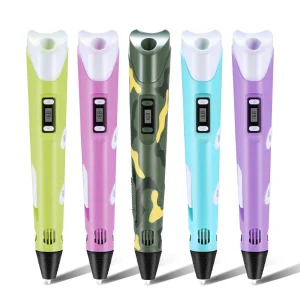
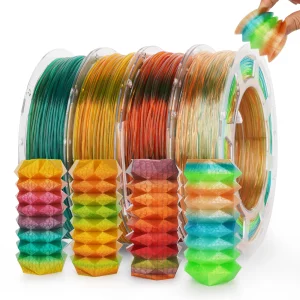
Expand your product catalog with Torwell's complete range of FDM materials including silk gradients, flexible elastomers, UV-resistant compounds, and creative pens.