China Carbon Filament Supplier & Factories

The Definitive B2B Technical Whitepaper & Global Industrial Sourcing Guide for Carbon Fiber Composite 3D Printing Materials

Featured Enterprise Extrusion Materials

Explore our top-tier precision thermoplastic filaments, manufactured with sub-micron laser gauging and tight volumetric tolerances for professional desktop & industrial FDM platforms.
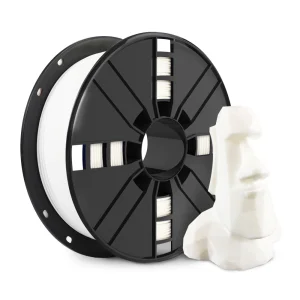
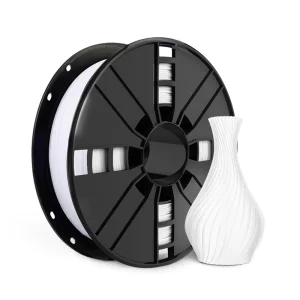
China PLA filament white for 3D printing Manufacturer
China PLA filament white for 3D printing Manufacturer, Manufacturers
View Product Details
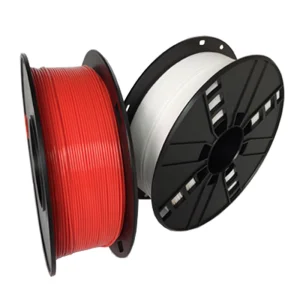
China ABS Filament for 3D printing
China ABS Filament for 3D prinitng 3D printing materials Factory, Factories
View Product Details
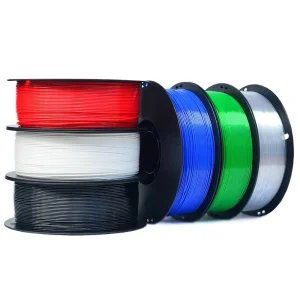
Wholesale PETG 3D Printer Filament
Wholesale PETG 3D Printer Filament 1.75mm/2.85mm, 1kg Manufacturers, Factories
View Product Details
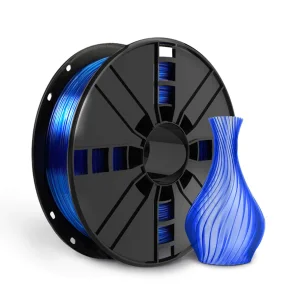
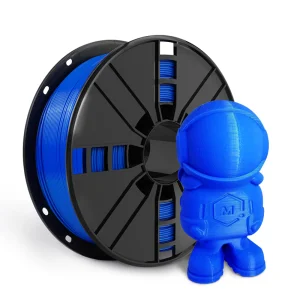
China ABS 3D Printer Filament Blue
China ABS 3D Printer Filament, Blue Color, ABS 1kg Spool 1.75mm Filament Manufacturers, Supplier
View Product Details
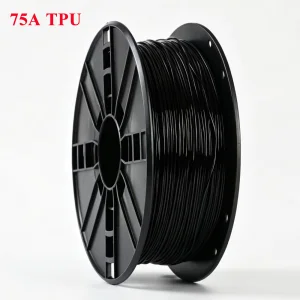
China 75A TPU filament flexible
China 75A TPU filament flexible 3D filament 175mm 1kg spool Manufacturer, Suppliers
View Product Details
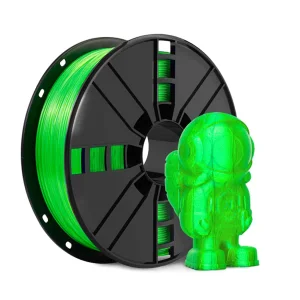
China Green 3D filament PETG
China Green 3D filament PETG for FDM 3D printers Manufacturers, Factories
View Product Details
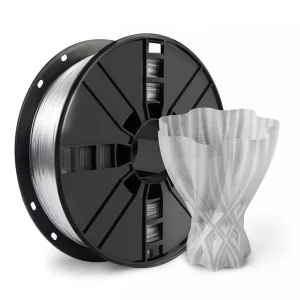
China PETG Transparent 3D filament
China PETG Transparent 3D filament Clear Supplier, Suppliers
View Product Details
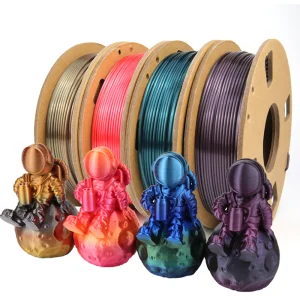
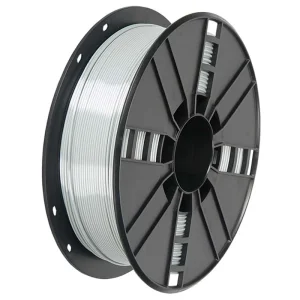
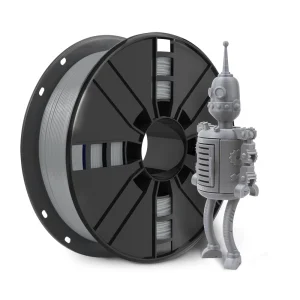
China Silk Like Grey PLA filament
China Silk Like Grey PLA filament 3D printer filament Supplier, Suppliers
View Product Details

Executive Summary: The Rise of Carbon-Reinforced Additive Manufacturing

In the rapidly evolving global additive manufacturing ecosystem, Carbon Fiber Reinforced Polymer (CFRP) filaments represent a paradigm shift from rapid prototyping to end-use structural engineering. By combining high-performance matrix resins—such as Polyamide (PA), Polyether Ether Ketone (PEEK), Polycarbonate (PC), and Polyethylene Terephthalate Glycol (PETG)—with high-modulus micro-carbon fibers, Chinese extrusion factories have redefined the cost-to-performance ratio for lightweight, high-strength industrial parts.

Global demand for carbon fiber filaments is projected to grow at a Compound Annual Growth Rate (CAGR) exceeding 18.5% over the next decade. Industry adoption is heavily driven by aerospace weight reduction targets, automotive metal-replacement strategies, uncrewed aerial vehicle (UAV) structural optimization, and the rapid expansion of high-speed FDM/FFF (Fused Deposition Modeling / Fused Filament Fabrication) print farms worldwide.

Key Manufacturing Insight: Modern carbon fiber filaments do not merely increase tensile strength; they drastically eliminate anisotropic warping, elevate Heat Deflection Temperatures (HDT), and deliver exceptional surface aesthetics with near-zero visible layer lines.
+250%
Tensile Modulus vs Unfilled Resin
±0.02mm
Laser Gauged Tolerance
180°C+
Peak Heat Deflection (PA-CF)
75+
Global Export Markets
Material Science & Rheological Engineering

Understanding the micro-structural reinforcement mechanisms behind short chopped carbon fiber loading and continuous polymer matrices.

Fiber Aspect Ratio & Alignment
Extrusion factories in China utilize high-shear twin-screw compounding to optimize fiber length (typically 100–150 µm) and aspect ratio. During nozzle extrusion, the shear forces force micro-carbon fibers to align parallel to the print bead, multiplying tensile strength along the X-Y vector.
Interfacial Coupling Agents
Raw carbon fiber is naturally hydrophobic and chemically inert. Leading Chinese suppliers apply specialized silane or maleic anhydride grafted (MAh) coupling agents to ensure robust chemical bonding between the polymer chains and carbon filaments, preventing micro-void formation and delamination under stress.
Thermal & Dimensional Control
Carbon fibers possess a near-zero Coefficient of Thermal Expansion (CTE). Incorporating 15% to 30% carbon fiber by weight reduces volumetric shrinkage by up to 80%, enabling large-format industrial 3D printing without heated chamber warping or edge lifting.

Polymers Matrix Breakdown for Carbon Composite Filaments

Choosing the correct base matrix determines chemical resistance, thermal limits, and mechanical ductility:

  • PA6-CF / PA12-CF (Nylon Carbon Fiber): The benchmark for industrial tooling, end-of-arm tooling (EOAT), and automotive brackets. Offers supreme impact strength, heat resistance up to 180°C (after annealing), and outstanding fatigue resistance.
  • PETG-CF: The ideal choice for mid-tier functional prototyping. Combines chemical resistance, ease of printing on standard desktop equipment without an enclosed chamber, and an attractive matte finish.
  • PC-CF (Polycarbonate Carbon Fiber): High-modulus composite engineered for flame retardancy, structural stiffness, and extreme dimensional stability under heavy mechanical loads.
  • PEEK-CF / PEKK-CF: Ultra-high-performance thermoplastic composites designed for aerospace structures, oil & gas subsea components, and biocompatible medical implants, operating continuously above 250°C.
Global Industrial Application Scenarios

From automotive assembly lines to lightweight aerospace frames, Chinese carbon composite filaments power high-demand applications across sectors.

1. Automotive Jigs, Fixtures & End-of-Arm Tooling (EOAT)
Traditional aluminum tooling is heavy and costly to CNC-machine. By switching to 3D printed PA-CF components, automated robotic arms benefit from reduced payload weight, accelerating cycle times and lowering motor wear. Carbon fiber filaments deliver the rigidity required to maintain precise dimensional tolerances during high-speed robotic manipulation.
2. Aerospace, UAV & Defense Structural Frameworks
Commercial and tactical drone manufacturers utilize carbon fiber composites to print custom motor mounts, arm connectors, fuselage ribs, and payload housings. The high stiffness-to-weight ratio allows UAVs to achieve longer flight times while resisting high-frequency vibration strain.
3. Industrial Manufacturing & Electronics Enclosures
Carbon-reinforced filaments provide inherent Electrostatic Discharge (ESD) protection when formatted with specific conductive carbon loadings (surface resistivity between 104 to 109 Ω/sq). This makes them essential for printing semiconductor handling trays, PCB fixtures, and sensitive sensor housings.
4. High-Performance Consumer & Motorsport Gear
Custom racecar air intakes, bespoke cycling components, exoskeleton brackets, and sports gear require tailored geometry and high fatigue endurance. Carbon fiber filaments allow rapid iteration and low-volume production without expensive injection mold tooling.

OEM Manufacturing Engineering & Factory Quality Control

Sourcing carbon fiber filaments from top-tier Chinese factories involves complex manufacturing processes far superior to standard PLA or ABS extrusion. Premium manufacturers deploy multi-stage quality assurance systems to eliminate common buyer pain points such as nozzle clogging, diameter variation, moisture absorption, and spool tangling.

Core Steps in Advanced Carbon Composite Extrusion:

  1. Compounding & Homogenization: Micro-carbon fibers are compounded with virgin matrix resin pellets in twin-screw extruders operating at controlled temperature gradients. Liquid coupling agents are metered to ensure uniform fiber dispersion.
  2. Devolatilization & Moisture Removal: Hygroscopic polymers like Nylon (PA) and PETG undergo continuous vacuum degassing to remove trapped moisture down to <0.02% prior to melt extrusion.
  3. Quad-Axis Laser Diameter Monitoring: Continuous dual- or quad-axis laser micrometers measure strand diameter 500 times per second, maintaining strict ±0.02 mm tolerances and auto-adjusting puller speeds.
  4. Controlled Water Bath Annealing: Cooling bath temperatures are carefully regulated to manage polymer crystallization rates, preventing internal stresses that lead to filament brittleness.
  5. Precision Spool Winding & Vacuum Packaging: Servo-driven traverse winders ensure crisp layer-by-layer spooling to prevent cross-winding on high-speed AMS systems. Filaments are immediately vacuum-sealed with high-capacity desiccant packs inside aluminum foil barrier bags.
Supply Chain Advantage: Leading OEM factories in China offer fully customized B2B solutions, including custom carbon loading percentages (10% to 35%), private-label spool design, branded eco-cardboard spools, and custom retail packaging boxes.
Industrial Material Performance Comparison Matrix

Compare mechanical properties, printing parameters, and thermal thresholds across major carbon fiber composite filaments.

Material Grade Tensile Strength (MPa) Flexural Modulus (GPa) Heat Deflection (HDT @ 0.45MPa) Nozzle Temp (°C) Bed Temp (°C) Recommended Nozzle
PA6-CF 20% 110 - 140 7.5 - 9.5 185 °C (Annealed) 270 - 300 70 - 90 Hardened Steel / Ruby
PA12-CF 15% 90 - 115 6.0 - 7.5 150 °C 260 - 290 60 - 80 Hardened Steel
PETG-CF 15% 55 - 70 4.5 - 5.8 78 °C 230 - 260 60 - 75 Hardened Steel
PC-CF 20% 85 - 105 6.8 - 8.2 140 °C 280 - 310 90 - 110 Hardened Steel / Carbide
PLA-CF 15% 60 - 75 5.0 - 6.2 62 °C 200 - 230 40 - 60 Hardened Steel
PEEK-CF 30% 170 - 210 13.5 - 16.0 315 °C 380 - 420 130 - 150 Tungsten Carbide / Ruby

Strategic Sourcing & Evaluation Checklist for China Suppliers

When selecting a carbon filament factory in China, global buyers, brand owners, and distributors should evaluate vendors based on strict technical capability criteria rather than raw unit price alone:

Key Supplier Evaluation Pillars:

  • Raw Material Traceability: Reliable suppliers use certified virgin resins (e.g., EMS-CHEMIE, Dupont, Sabic, Arkema) and high-grade chopped carbon fiber tow with consistent fiber length distributions.
  • In-House Testing Laboratory: Verify if the factory possesses universal testing machines (UTM) for tensile/flexural analysis, melt flow indexers (MFI), Karl Fischer moisture titrators, and thermal deflection testing apparatus.
  • OEM/Private Label Capability: Look for automated packaging capabilities, custom spool color injection molding, laser etching on spools, and custom barcode integration for Amazon FBA or direct warehouse distribution.
  • International Regulatory Compliance: Ensure materials comply with RoHS, REACH, SVHC, UL94 V-0 flame retardancy standards, and ISO 9001 quality management certifications.
B2B Procurement & Technical FAQ

Answers to common engineering and commercial questions regarding carbon fiber 3D printing filaments.

Q1: Why does carbon fiber filament require hardened steel or ruby nozzles?
Chopped carbon fibers act as micro-abrasives when forced through narrow extrusion orifices under high pressure. Standard brass nozzles will experience rapid diameter expansion (e.g., 0.4mm expanding to 0.6mm within 200g of printing), destroying print precision. Hardened steel, tungsten carbide, or ruby-tipped nozzles resist abrasive wear and maintain accurate flow geometry over hundreds of print hours.
Q2: How do Chinese carbon filament suppliers prevent nozzle clogging?
Nozzle clogging is primarily caused by un-dispersed carbon fiber clumps or overly long fibers. Leading Chinese factories utilize precision double-melt filtration screens during compounding to eliminate fibers larger than 200 µm and maintain a tight fiber length bell curve. Using a nozzle diameter of 0.4mm or larger is recommended for carbon composites.
Q3: What are the storage and moisture management requirements for PA-CF filaments?
Polyamide (Nylon) matrix filaments are highly hygroscopic and can absorb atmospheric moisture within a few hours of exposure. Printing wet filament leads to steam bubbling, stringing, surface degradation, and weak layer adhesion. PA-CF must be dried at 70°C–80°C for 6–8 hours prior to printing and fed directly from a active dry-box maintained below 15% relative humidity.
Q4: What is the standard Minimum Order Quantity (MOQ) for custom OEM carbon filament orders?
Standard stock catalog products usually have low MOQs (e.g., 50–100 spools). For custom formulations, specialized color matrices, or private-label packaging boxes, standard MOQs typically start at 500 kg to 1,000 kg per batch run to optimize extrusion compounding line setups.
Q5: Can carbon fiber filaments be recycled or re-extruded?
Yes, post-industrial scrap and support structures can be granulated and re-compounded. However, each thermal cycle reduces fiber length due to shear forces, slightly decreasing the ultimate tensile strength. Premium suppliers maintain tight ratios of recycled material inputs to preserve specified mechanical properties.
Q6: Are carbon fiber printed parts electrically conductive?
Standard chopped carbon filaments containing 15%–20% fiber by weight typically provide static dissipative (ESD) properties rather than high conductivity, as fibers are isolated by non-conductive polymer resin. For high electrical conductivity, specialized carbon nanotube (CNT) or graphene additives are required.
Complete Filament Product Portfolio

Discover our comprehensive range of specialized FDM filaments designed for global B2B supply chains, retail brands, and industrial printing farms.
Wholesale Shiny Pearl White PLA Filament
Wholesale Shiny Pearl White PLA Filament Supplier, Factories
View Product Details
Wholesale PETG filament 1.75 Blue
Wholesale PETG filament 1.75 Blue for 3D printing Manufacturers, Factories
View Product Details
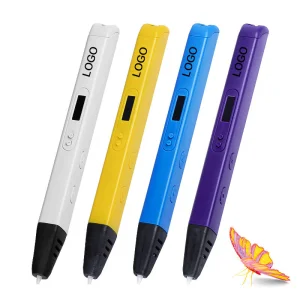
China 3D Printing Pen with Display
China 3D Printing Pen with Display - Includes 3D Pen, 3 Colors PLA Filament Manufacturers, Factories
View Product Details
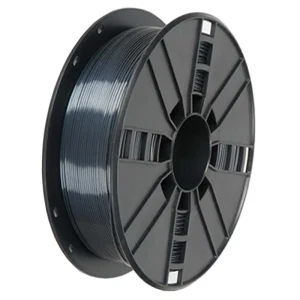
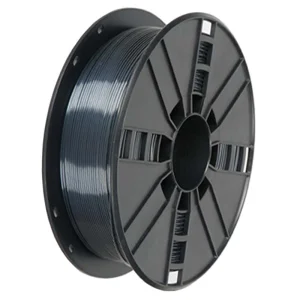
Wholesale Silk Black PLA Filament
Wholesale Silk Black PLA Filament 1.75mm 3D Printing Filament Manufacturers, Factories
View Product Details
Wholesale 1.75mm white PETG Filament
Wholesale 1.75mm white PETG Filament for 3D printing Manufacturers, Factory
View Product Details
Wholesale Silk PLA 3D Filament Silk shiny
Wholesale Silk PLA 3D Filament Silk shiny 3D filament Manufacturer, Factories
View Product Details
China PLA Filament Grey color
China PLA Filament Grey color 1kg spool Manufacturers, Factories
View Product Details
Wholesale Dual Color Silk PLA
Wholesale Dual Color Silk PLA 3D Filament, Pearlescent 1.75mm, Coextrusion Rainbow Suppliers, Factory
View Product Details