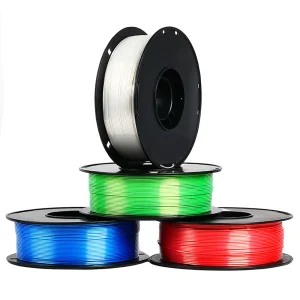
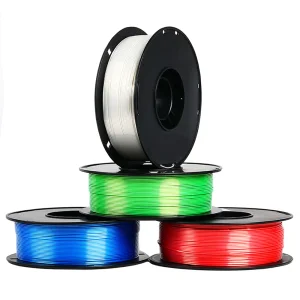
Explore volume-proven formulations manufactured under ISO 9001 standard operating procedures with multi-axis inline laser micrometer gauging.
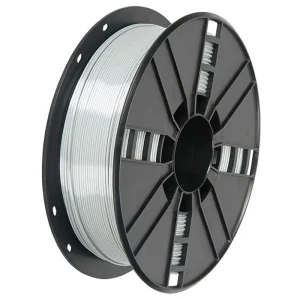
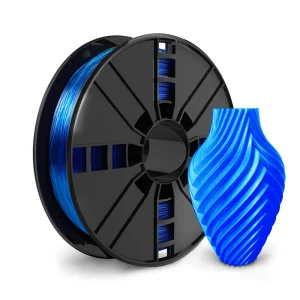
Additive manufacturing has decisively transitioned from cosmetic prototyping to structural, end-use manufacturing. At the core of this engineering transformation sits Carbon Fiber Reinforced Polylactic Acid (CF-PLA). By compounding high-purity, chopped micro-carbon fibers into an optimized semi-crystalline PLA polymer matrix, Torwell Technologies delivers an advanced composite engineered for rigidity, exceptional dimensional stability, near-zero warp, and a premium matte industrial surface finish. As an authoritative China carbon fiber PLA manufacturer, we bridge the gap between easy consumer-grade printability and rigorous industrial mechanical requirements.
We incorporate precisely milled short carbon fibers with an average length of 100 to 150 microns. This specific fiber length distribution prevents extruder clogging while guaranteeing maximum shear-induced axial alignment within standard 0.4mm and 0.6mm hardened steel nozzles.
Unreinforced PLA exhibits moderate shrinkage during cooling phase crystallization. Our proprietary carbon fiber loading acts as a physical skeletal network, reducing the linear coefficient of thermal expansion (CTE) by over 62%, ensuring razor-sharp dimensional accuracy on large-format builds.
Standard PLA suffers from plastic deformation under sustained mechanical loading. CF-PLA increases bending strength and flexural modulus by up to 50%, producing structural drone airframes, robotics arms, and manufacturing jigs that resist bending deflection under operational stress.
Torwell solves the classic compromises of fiber-reinforced FDM polymers through advanced screw design, coupling chemistry, and tight melt-flow indexing.
Carbon fibers naturally resist adhesion to raw biopolymer matrices. Our chemical compounding utilizes reactive organofunctional silane coupling agents that chemically bond the graphitic fiber surface to the PLA polyester chains, eliminating micro-void formation and interlaminar delamination under heavy structural loads.
Uncontrolled fiber dispersion degrades melt rheology, leading to inconsistent backpressure and under-extrusion at high print velocities. Our twin-screw extrusion profile achieves an optimized MFI (8-12 g/10 min at 210°C/2.16kg), allowing seamless high-speed extrusion across CoreXY platforms like Bambu Lab, Voron, and Creality K1.
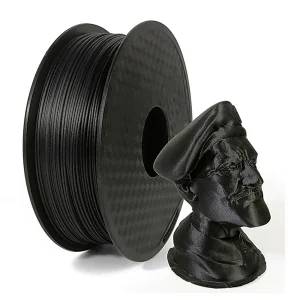
The orientation of micro-fibers during deposition scatters reflected light, virtually eliminating visible layer lines without chemical post-processing. This imparts a sophisticated, non-reflective matte carbon finish prized by automotive interior customizers, tactical gear fabricators, and drone designers.
Quantitative mechanical benchmarking conducted in Torwell's internal metrology laboratory in accordance with ASTM and ISO test methodologies.
| Mechanical Property | Testing Standard | Standard Neat PLA | Torwell Industrial CF-PLA | Standard PETG | Engineering ABS |
|---|---|---|---|---|---|
| Tensile Strength (Yield) | ASTM D638 / ISO 527 | 58 MPa | 72 - 76 MPa | 49 MPa | 42 MPa |
| Tensile Modulus | ASTM D638 / ISO 527 | 3,120 MPa | 4,850 MPa | 2,110 MPa | 2,250 MPa |
| Flexural Modulus | ASTM D790 / ISO 178 | 3,350 MPa | 5,400 MPa | 2,150 MPa | 2,400 MPa |
| Heat Deflection Temp (0.45 MPa) | ASTM D648 / ISO 75 | 54 °C | 62 - 65 °C | 70 °C | 86 °C |
| Linear Thermal Shrinkage | Torwell Internal Bath Test | 0.48 % | < 0.12 % | 0.35 % | 0.75 % |
| Layer Line Visual Concealment | Optical Profilometry | Low (Gloss Reflective) | Exceptional (Matte Diffuse) | Low | Moderate |
| Recommended Nozzle Type | Extrusion Longevity Check | Brass / Stainless Steel | Hardened Steel / Ruby / Tungsten | Brass / Standard | Brass / Standard |
Procuring composite filament at volume requires balancing resin consistency, batch tolerances, packaging integrity, and private label flexibility.
Fiber compounding can cause micro-pulsing in standard extrusion dies. Torwell deploys continuous, closed-loop multi-axis laser measuring systems that sample diameter 1,000 times per second, discarding out-of-spec batches automatically.
Modern commercial print farms rely heavily on automated material systems (AMS). Our tension-controlled neat winding lines ensure zero line crossings, snag-free feeds, and compatibility with standardized reusable spool hubs.
Micro-carbon fibers naturally accelerate ambient moisture absorption via capillary action. We enforce in-line drying to under 200 ppm moisture before packaging with high-barrier multi-layer vacuum foil pouches and high-adsorption silica.
We empower regional 3D filament brands and distributors with tailored packaging, custom-branded spool labels, bespoke box art, Pantone-matched accent spools, and comprehensive SDS/TDS regulatory compliance sheets.
Real-world engineering applications where mechanical stiffness, ease of printing, and aesthetic perfection converge.
UAV chassis, quadcopter arms, payload camera gimbals, and wing spars demand ultra-high rigidity-to-weight ratios. Torwell CF-PLA eliminates vibration resonance and prevents in-flight flexing, replacing costly CNC-milled aluminum brackets with rapid on-demand additive components.
From intake ducting prototypes and sensor housings to lightweight gauge clusters and aerodynamic wing mockups, CF-PLA withstands airflow pressure without deformation while providing an OEM-grade matte carbon aesthetic that blends with supercar cabin trims.
Factory assembly lines require ergonomic, stiff handheld assembly gauges, drill guides, and CMM inspection nest fixtures. CF-PLA maintains critical geometric tolerances under repeated cyclic physical clamp stresses without the excessive weight of machined tooling steel.
Enterprise procurement requires verifiable quality audits, environmental certifications, and dependable supply chain traceability.
Every raw polymer pellet, coupling compound, and recycled carbon fiber stream undergoes annual chemical toxicity audits to ensure complete exemption from hazardous substances, heavy metals, halogenated flame retardants, and SVHC candidate list chemicals.
Torwell assigns unique QR-coded tracking tags to every manufactured spool. Scanning grants immediate access to the specific compounding lot, laser micrometer tolerance curves, raw material drying moisture logs, and post-winding tensile break audits.
Torwell commits to environmental stewardship by utilizing certified renewable starch-derived PLA as our base resin. Combined with circular recycled carbon fiber scrap reclaimed from aerospace manufacturing, we provide an eco-responsible engineering composite.
Anticipating the demands of ultra-high-speed kinematics, higher thermal resistance, and multifunctional smart composites.
Modern high-speed 3D printers generate rapid volumetric flow bottlenecks. We are engineering low-viscosity, high-thermal-conductivity base blends that absorb heat faster inside hotends, enabling seamless 35 mm³/s melt volume flow rates without fiber bunching or nozzle clogs.
Standard PLA softens around 55°C. Our next-generation CF-PLA formulations incorporate nucleating agents that trigger rapid crystalline reorganization during brief post-print thermal annealing cycles, increasing heat deflection temperatures (HDT) up to 95°C without warping.
By controlling carbon fiber loading thresholds and graphitic percolation networks, our technical lab is validating specialized ESD-safe carbon fiber PLA for electronics manufacturing fixtures, cleanrooms, and robotic end-of-arm tooling susceptible to static discharge.
Comprehensive technical and commercial insights for distributors, supply chain procurement managers, and industrial print operations.
Torwell Carbon Fiber PLA delivers substantially higher rigidity (tensile modulus over 4,800 MPa) and a much lower thermal shrinkage coefficient (<0.12%) than standard PLA or PETG. It prints with near-zero warp even on large footprint models, maintains strict dimensional tolerances, and provides a clean matte black finish that hides layer striations entirely.
Because chopped micro-carbon fibers are abrasive, standard brass nozzles will enlarge in diameter rapidly after 200–500 grams of extrusion. We strongly recommend hardened tool steel, tungsten carbide, or ruby-tipped nozzles with a minimum diameter of 0.4mm (0.6mm is optimal for high-flow printing speeds) to prevent wear and ensure diameter stability.
Our 2,500 m² modern factory operates 6 automated extrusion lines with a monthly output of 50,000–60,000 kg. For custom OEM / private label branding (custom spools, box design, and labels), our standard MOQ starts at 500 kg per order with an average production turnaround of 12 to 18 business days.
Torwell uses strict inline filtering during pellet compounding to screen out oversized fibers, enforcing a tight 100–150 micron length threshold. Furthermore, our specialized twin-screw shear dispersion profile prevents agglomeration, ensuring uniform fiber orientation throughout the continuous filament cross-section.
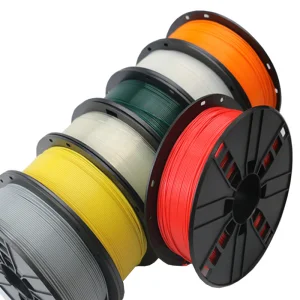
Yes. We provide 100% recyclable heavy-duty cardboard spools, AMS-compatible molded plastic spools with optimized flange dimensions, as well as refill cores without spools. Spool weights can be customized to 500g, 800g, 1000g, 2.5kg, and industrial 5kg bulk reels.
We provide full technical documentation packages with every shipment, including certified Technical Data Sheets (TDS), Safety Data Sheets (SDS compliant with OSHA and GHS standards), RoHS 2.0 and REACH 235 SVHC compliance declarations, and Certificates of Analysis (COA) for incoming customs clearance.
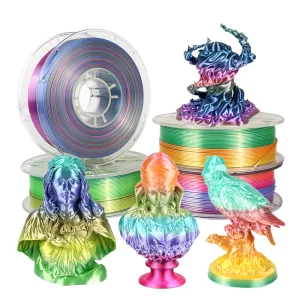
Complementary engineering and aesthetic materials engineered to expand distributor catalog offerings and capture high-margin retail segments.