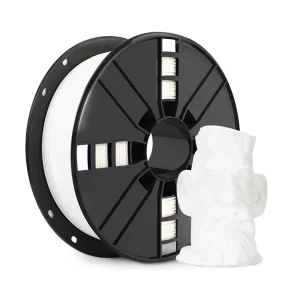
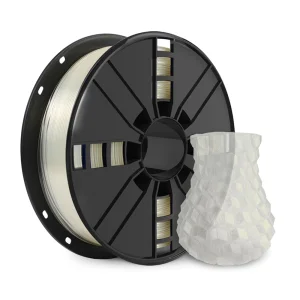
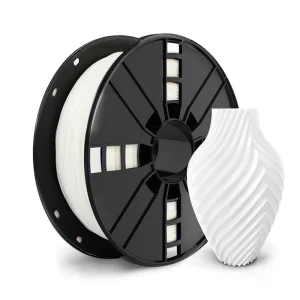
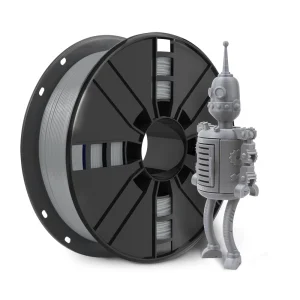
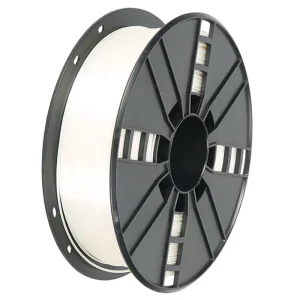
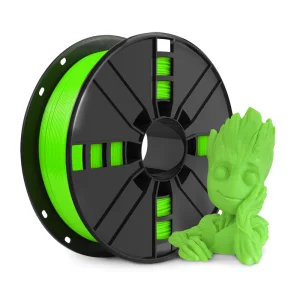
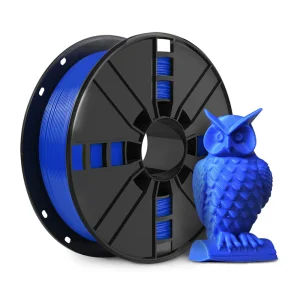
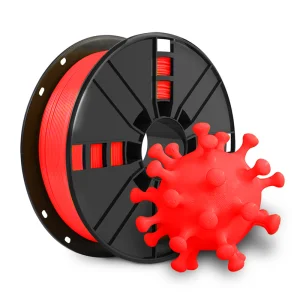
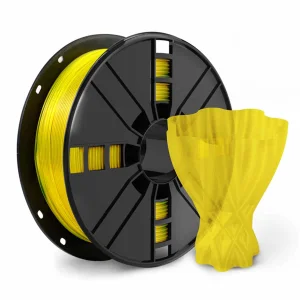
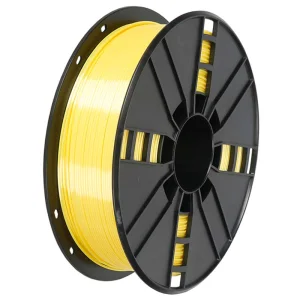
Explore our core extrusion range engineered to strict ISO9001 and ±0.02mm dimensional standards for international OEM partners.
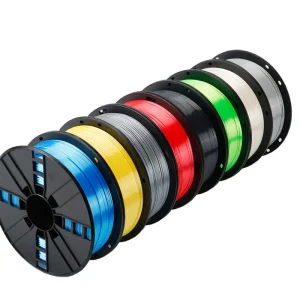
A deep chemical breakdown of Acrylonitrile Styrene Acrylate and its mechanical superiority over conventional thermoplastic polymers.
Unlike ABS which relies on polybutadiene rubber containing vulnerable double bonds (C=C), ASA integrates a fully saturated acrylic ester rubber phase grafted into a styrene-acrylonitrile (SAN) copolymer matrix. This eliminates photo-oxidative cleavage pathways caused by solar UV radiation.
With a Glass Transition Temperature ($T_g$) hovering between 100°C and 105°C and a Heat Deflection Temperature (HDT) of 98°C under 0.45 MPa load, ASA maintains structural integrity under extreme ambient heat exposure where PLA and PETG soften and deform.
ASA exhibits exceptional chemical resistance against aqueous solutions, dilute acids, alkalis, salts, and environmental pollutants. Its low water absorption coefficient ($<0.3\%$) guarantees long-term dimensional stability in humid maritime environments.
An inside look into China’s advanced polymer compounding clusters, precision closed-loop extrusion lines, and total cost of ownership (TCO) optimization.
Leading Chinese ASA manufacturers leverage direct access to premier petrochemical suppliers (such as Wanhua Chemical, Sinochem, and LG Chem partners), ensuring batch-to-batch polymer purity, consistent melt flow index (MFI), and custom formulation agility.
Modern extrusion facilities utilize real-time 4-axis laser gauge feedback loops running at 500 Hz. If diameter variance exceeds $\pm0.02\text{mm}$ or ovality drifts above $1\%$, the automated system adjusts puller speed in real time, preventing nozzle clogs during prolonged prints.
Using tension-controlled continuous automatic winding lines, Chinese factories eliminate cross-overs and overlapping wraps. Spools are neatly aligned to ensure zero drag inside AMS (Automatic Material Systems) and industrial multi-filament feed mechanisms.
Due to ASA's mild hygroscopic nature, Chinese exporters utilize inline thermal drying ovens down to $<0.02\%$ residual moisture followed by immediate vacuum sealing inside heavy-duty aluminum-foil moisture barrier bags with high-capacity desiccant pouches.
Comprehensive quantitative dataset comparing mechanical, thermal, and environmental properties across key technical 3D printing filaments.
| Polymer Type | Tensile Strength (MPa) | Flexural Modulus (GPa) | Izod Impact (kJ/m²) | HDT @ 0.45 MPa (°C) | UV Weathering Resistance | Printability Score |
|---|---|---|---|---|---|---|
| ASA (Acrylonitrile Styrene Acrylate) | 42 – 48 | 2.1 – 2.4 | 18 – 22 | 98°C | Outstanding (>10 Yrs) | 8.5 / 10 |
| ABS (Acrylonitrile Butadiene Styrene) | 40 – 45 | 2.0 – 2.3 | 15 – 20 | 95°C | Poor (Yellows/Cracks) | 7.5 / 10 |
| PETG (Polyethylene Terephthalate Glycol) | 45 – 50 | 1.9 – 2.1 | 8 – 12 | 70°C | Moderate | 9.5 / 10 |
| Polycarbonate (PC) | 60 – 75 | 2.3 – 2.6 | 35 – 50 | 135°C | Moderate | 5.5 / 10 |
| ASA-CF (Carbon Fiber Reinforced) | 55 – 65 | 4.5 – 5.8 | 12 – 16 | 110°C | Exceptional | 8.0 / 10 |
* Data generated via ISO 527 tensile testing and ASTM G154 accelerated weathering standards under controlled laboratory conditions.
From automotive components to 5G smart city infrastructure, ASA is the trusted engineering material for harsh operating environments.
Used extensively for side mirror housings, bumper grills, roof rack brackets, and EV charging station covers. ASA withstands thermal stress, road salts, automotive fluids, and relentless UV exposure without color fading or micro-cracking.
Outdoor 5G micro-cell radomes, IoT environmental monitoring sensors, and smart electrical meter covers require radio-frequency transparency combined with long-term weatherability. ASA delivers high dielectric strength and chemical immunity.
Ideal for solar panel junction box covers, solar tracker sensor mounts, and marine navigation light housings. ASA resists salt spray corrosion, extreme diurnal temperature cycles (-40°C to +85°C), and high humidity.
How global distributors and brand owners can leverage China's scalable manufacturing capacity for private-label production.
Factory R&D labs provide precise spectrophotometric color matching. Whether specifying RAL 7035 Light Grey for industrial control boxes or custom brand swatches, China factories synthesize colorants with high UV-fastness ratings.
From 250g sample rolls to standard 1kg retail spools and 5kg to 10kg industrial print-farm master drums. Options include high-rigidity plastic spools or eco-friendly recycled cardboard spools tailored for AMS compatibility.
Top-tier suppliers supply exhaustive documentation including RoHS 2.0, REACH SVHC, UL94-HB flame retardancy test reports, Technical Data Sheets (TDS), and Safety Data Sheets (SDS) ready for market clearance in EU and US jurisdictions.
Flexible minimum order quantities (MOQs) starting from 100 kg per color for private labels up to full container loads (20ft/40ft FCL) with automated lead time tracking, buffer inventory holding, and drop-ship logistics capability.
Mastering the extrusion variables to eliminate thermal stress warping and ensure structural inter-layer fusion.
Hotend Temperature: 240°C – 260°C (All-metal hotend recommended).
Heated Bed Temp: 90°C – 110°C.
Chamber Temperature: 50°C – 70°C active heating prevents ambient air drafts and inter-layer delamination.
Part Cooling Fan: 0% for structural walls to ensure maximum polymer chain entanglement. 10% – 20% max for steep overhangs and bridging.
Print Speed: 40 – 100 mm/s depending on motion system and chamber thermal stability.
Substrates: Textured PEI sheet, Nano-polymer adhesive, or ABS/ASA slurry.
Slicer Setup: Use a 5mm-8mm Brim or Raft for wide-footprint parts to counteract thermal shrinkage forces ($0.4\% - 0.7\%$).
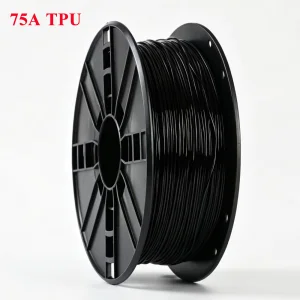
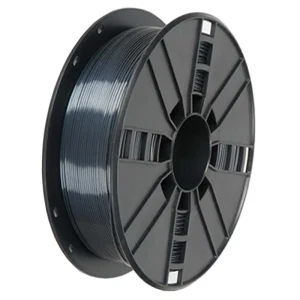
Explore our wholesale specialty materials, silk PLAs, PETG, and flexible TPU lines available for global OEM distribution.
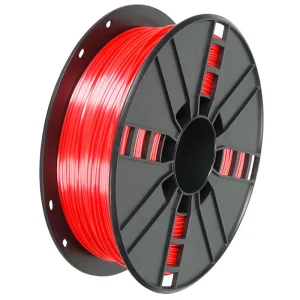
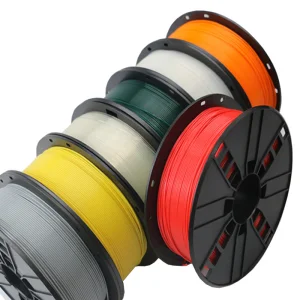
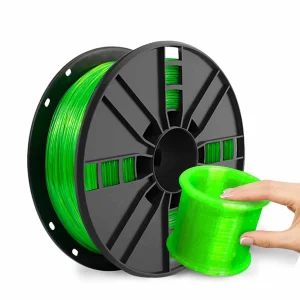
Expert insights covering ASA material science, custom factory manufacturing, minimum orders, and printing dynamics.