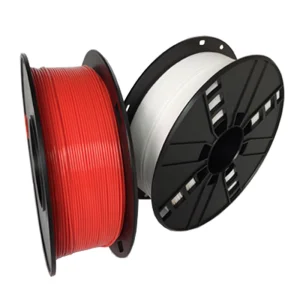
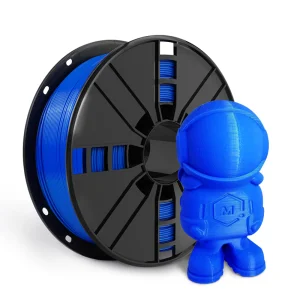
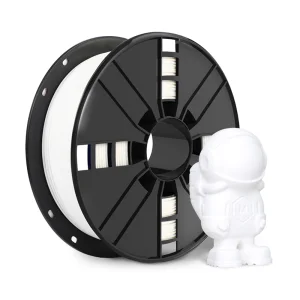
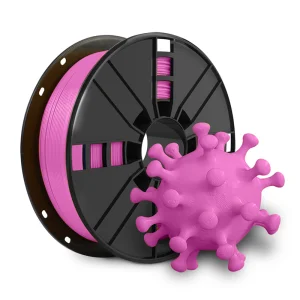
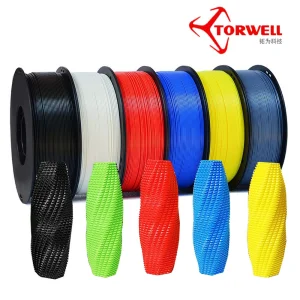
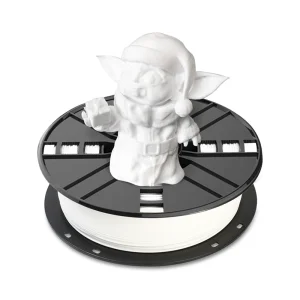
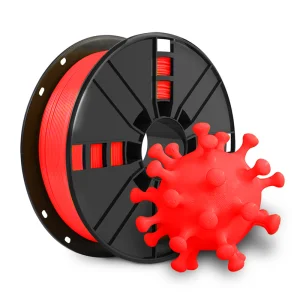
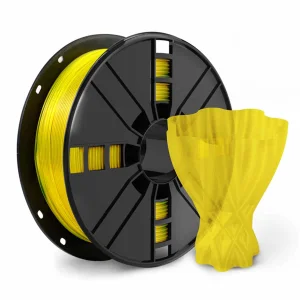
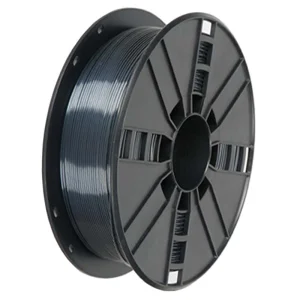
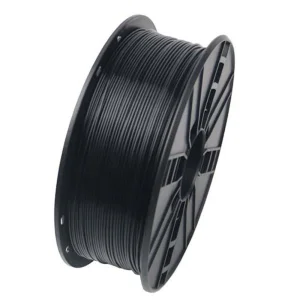
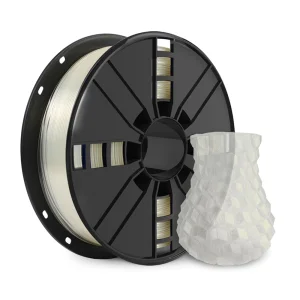
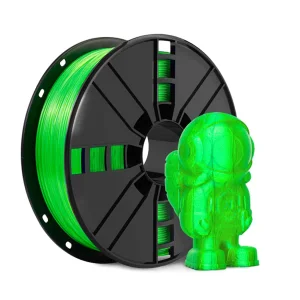
High-precision 1.75mm spools optimized for rapid prototyping, print farm operations, and industrial additive production.
In the rapidly evolving additive manufacturing ecosystem, Acrylonitrile Butadiene Styrene (ABS) filament in 1.75mm standard diameter represents one of the foundational thermoplastic materials driving industrial prototyping, end-use component fabrication, and rapid tooling worldwide. As industrial users shift from novelty desktop printing to high-throughput print farms and functional engineering components, the demand for high-purity, thermally stable ABS filament sourced from qualified Chinese suppliers has escalated dramatically.
Historically, 2.85mm diameter formats maintained a presence in early industrial FDM systems due to structural rigidity during feeding. However, modern extrusion mechanics, micro-geared dual-drive extruders, and enclosed high-speed Core-XY kinetic platforms have standardized global procurement around 1.75mm filament. This diameter minimizes required heating zone volume, allows precise volumetric flow control at volumetric extrusion rates exceeding $30\text{ mm}^3/\text{s}$, and reduces drive-gear slip torque requirements.
Global B2B enterprise procurement officers, regional distributors, and OEM brand holders evaluate suppliers based on raw material chemical consistency, melt-flow stability, and scale economics. China accounts for over 70% of the world's commercial thermoplastic filament manufacturing capacity. The concentration of advanced polymer compounding facilities in regions like Guangdong (Shenzhen, Dongguan) and Zhejiang provides unparalleled vertical integration—from virgin resin polymerization to precision spooling and vacuum barrier packaging.
Direct integration with top-tier polymer resin producers guarantees consistent Acrylonitrile-to-Butadiene ratios across multi-ton production batches.
Closed-loop dual-axis laser micrometers monitor continuous filament roundness and diameter 500 times per second during extrusion.
Fully automated vacuum sealing, desiccant dosage, custom box printing, and container-level logistics streamline brand expansion.
Understanding the ternary terpolymer dynamics of ABS 1.75mm filament and its performance against alternative 3D printing polymers.
Acrylonitrile Butadiene Styrene ($\text{C}_8\text{H}_8 \cdot \text{C}_4\text{H}_6 \cdot \text{C}_3\text{H}_3\text{N}$) is a amorphous terpolymer synthesized through the polymerization of acrylonitrile and styrene in the presence of polybutadiene. Each monomer contributes critical mechanical characteristics to the final 1.75mm filament strand:
Below is a quantitative technical comparison highlighting standard industrial ABS 1.75mm properties against competing FDM material formulations:
| Mechanical / Thermal Property | Industrial ABS (1.75mm) | Standard PLA | PETG | ASA | Carbon Fiber ABS (ABS-CF) |
|---|---|---|---|---|---|
| Tensile Strength at Yield (MPa) | 42 – 48 | 55 – 65 | 48 – 52 | 40 – 46 | 65 – 78 |
| Flexural Modulus (GPa) | 2.1 – 2.4 | 3.1 – 3.8 | 1.9 – 2.2 | 2.0 – 2.3 | 4.5 – 6.2 |
| Izod Impact Strength (kJ/m²) | 18 – 24 | 3.0 – 5.0 | 7.0 – 9.0 | 15 – 20 | 12 – 16 |
| Glass Transition Temp ($T_g$) | 105 °C | 58 °C | 80 °C | 102 °C | 108 °C |
| Heat Deflection Temp (HDT @ 0.45 MPa) | 92 – 98 °C | 52 – 55 °C | 68 – 72 °C | 90 – 95 °C | 102 – 105 °C |
| Optimal Extrusion Temp (°C) | 230 – 260 °C | 190 – 220 °C | 230 – 250 °C | 240 – 265 °C | 250 – 275 °C |
| Heated Bed Temp Required (°C) | 90 – 110 °C | 40 – 60 °C | 70 – 80 °C | 90 – 110 °C | 95 – 110 °C |
How Chinese ABS 1.75mm manufacturers combine automation, drying technology, and precise spool winding for zero-defect supply chains.
The manufacturing of commercial-grade 1.75mm ABS filament requires rigorous environmental and thermal control. Unlike basic polylactic acid (PLA), ABS resin is inherently hygroscopic, absorbing ambient atmospheric moisture ($H_2O$). Moisture contamination leads to hydrolytic degradation during extrusion, causing micro-voids, steam popping, stringing, and catastrophic loss of interlaminar shear strength in 3D printed parts.
Virgin ABS pellets are processed through closed-loop twin-tower desiccant dryers operating at $-40^\circ\text{C}$ dew point for 4+ hours, reducing resin moisture levels to $<0.02\%$ before entering the hopper.
Precision single and twin-screw extruders featuring L/D ratios of 30:1 utilize multi-zone ceramic heating bands to maintain temperature uniformity within $\pm 0.5^\circ\text{C}$, preventing thermal polymer cracking.
Spools are immediately vacuum-sealed inside high-barrier metalized foil or multi-layer PE/PA pouches accompanied by active silica desiccant packs to guarantee multi-year shelf life during ocean shipping.
To prevent feeder jams or volumetric flow under-extrusion in high-speed 3D printers, Chinese manufacturers utilize real-time multi-axis laser gauging systems. The continuous strand passes through dual-axis laser micrometers that monitor both mean diameter ($1.75\text{ mm}$) and ovality (roundness) at high frequencies.
If the diameter strays beyond set thresholds ($\pm 0.02\text{ mm}$ or $\pm 0.03\text{ mm}$ based on product tier), an automated feedback loop dynamically adjusts the extrusion puller speed (haul-off unit) or melt pump RPM, correcting the strand geometry in real time. Furthermore, servo-driven automatic traverse winding mechanisms ensure neat, layer-by-layer spool distribution, eliminating overlapping tangles that cause print farm downtime.
From automotive prototyping to vapor-polished consumer enclosures, see how global industries leverage Chinese ABS supplies.
Functional ductwork, dashboard housing prototypes, and custom clips utilize ABS due to its continuous heat resistance up to $95^\circ\text{C}$ in enclosed cabin environments.
ABS provides natural dielectric electrical insulation and mechanical impact protection for Raspberry Pi enclosures, router housings, and handheld field instruments.
Low-cost manufacturing aids printed in ABS deliver sufficient dimensional stability and surface durability for shop-floor assembly lines and drill guides.
One unique technical advantage of 1.75mm ABS filament over PETG or PLA is its complete solubility in ketone solvents, specifically acetone. When exposed to controlled acetone vapor in sealed polishing chambers, the outer surface polymer chains undergo controlled localized dissolution.
Surface tension draws the liquid phase flat, smoothing away FDM layer lines within minutes. The resulting surface exhibits an injection-molded high-gloss finish, sealed watertight layer boundaries, and reduced aerodynamic skin friction—ideal for air intake manifolds, liquid reservoirs, and aesthetic consumer product prototypes.
How Chinese R&D centers are modifying ABS chemistry to meet modern high-speed printing and eco-compliance standards.
Formulated with low-molecular-weight carrier resins and flow promoters, HS-ABS melts rapidly in high-flow hotends (such as Bambu Lab or Voron systems), enabling clean extrusion at speeds up to $600\text{ mm/s}$ without layer separation.
By blending styrene-acrylonitrile (SAN) matrix additives and core-shell rubber micro-particles, advanced ABS+ formulations reduce volumetric thermal shrinkage coefficient from $1.5\%$ down to $<0.4\%$, significantly suppressing corner lifting.
Incorporating 15% chopped carbon fibers (ABS-CF15) increases flexural modulus up to $6.2\text{ GPa}$, eliminates thermal warping entirely, and imparts a premium matte metallic surface finish suitable for drone frames and motorsport components.
Key quality verification protocols for procurement managers when selecting Chinese ABS filament factories.
When establishing an OEM relationship or purchasing bulk 1.75mm ABS filament containers from Chinese suppliers, procurement officers must implement a structured Quality Assurance (QA) verification framework:
Explore our full line of ABS, PETG, TPU, ASA, and Composite materials engineered for global distribution.
In-depth technical and commercial answers regarding ABS 1.75mm filament manufacturing and global sourcing.
ABS has a relatively high volumetric thermal expansion coefficient ($\approx 9 \times 10^{-5}/\text{K}$). As extruded molten ABS cools from its glass transition temperature ($T_g \approx 105^\circ\text{C}$) to ambient room temperature ($20^\circ\text{C}$), differential shrinkage induces high internal thermal stresses across printed layers. In open-frame printers, ambient air drafts accelerate cooling, causing severe corner warping and layer delamination. A passively or actively heated enclosure maintained at $50^\circ\text{C}\text{--}70^\circ\text{C}$ keeps thermal gradient fluctuations minimal during deposition, ensuring stress-free crystallization and excellent inter-layer adhesion.
1.75mm filament offers significantly superior heat transfer dynamics within compact hotend melt zones. Because heat conduction into polymer scales inversely with strand radius squared, 1.75mm filament melts more homogeneously at high extrusion velocities. Additionally, 1.75mm extruders require lower drive gear pinch torque, enabling lighter direct-drive toolheads that reduce moving mass on gantry systems for higher acceleration ($>10,000\text{ mm/s}^2$) and reduced ghosting artifacts.
Leading Chinese factories utilize automated dual-axis or triple-axis laser micrometers positioned immediately downstream of closed-loop water cooling baths. These sensors measure strand diameter and roundness 500 times per second. Real-time digital signal processors continuously feed position variance data into the haul-off puller tractor and melt-gear pump controllers, adjusting extruder motor speed dynamically to keep strand dimensions strictly within $\pm 0.02\text{ mm}$.
For high-reliability ABS printing, textured PEI (Polyetherimide) spring steel sheets heated to $100^\circ\text{C}\text{--}110^\circ\text{C}$ provide exceptional physical mechanical grip. Alternatively, applying a micro-thin layer of ABS slurry (small ABS scraps dissolved in acetone) or specialized synthetic PVP-based adhesive bed glues to clean glass or smooth PEI prevents first-layer lifting during long industrial print cycles.
Yes. Chinese manufacturing facilities feature dedicated color compounding laboratories equipped with spectrophotometers. Buyers can submit specific Pantone / RAL color codes or physical color plaques. Technicians compound custom color masterbatches blended into virgin ABS carrier resins, delivering exact brand color reproduction with minimal order lead times.
All finished spools undergo high-temperature desiccant drying prior to automated winding. Each spool is packed with a 10g active silica gel desiccant pack and sealed inside a thick, multi-layer vacuum barrier bag (PE/PA or aluminum foil). Sealed spools are packed in reinforced corrugated individual cartons and stacked on wrapped export pallets to prevent moisture ingress during multi-week ocean freight.
Acetone vapor polishing dissolves the outermost superficial micro-layers of ABS, causing polymer chains to flow and smooth out layer line crevices. This process increases hydrostatic liquid-tight seal capacity and enhances fatigue life under cyclic bending by removing surface stress-concentrators (notches). However, over-exposure can temporarily soften internal walls, requiring a 24-hour outgassing period for full mechanical hardness recovery.
Standard inventory colors (Black, White, Red, Blue, Grey) typically feature flexible low MOQs starting at 50 to 100 kg. Custom OEM private label projects (branded boxes, custom spool labels, special pantone shades) generally carry an MOQ of 500 kg to 1,000 kg per SKU. Standard factory production lead times range between 12 to 20 days depending on container scheduling.