Precision-extruded thermoplastic spools engineered for seamless performance across high-speed additive manufacturing platforms, desktop 3D printers, and industrial print farms.
An executive overview of how industrial procurement buyers, enterprise distributors, and OEM brand owners evaluate high-performance Acrylonitrile Butadiene Styrene filaments for commercial additive manufacturing.
Acrylonitrile Butadiene Styrene (ABS) remains an indispensable engineering thermoplastic within the global additive manufacturing landscape. As Fused Deposition Modeling (FDM) and Fused Filament Fabrication (FFF) technologies transition from rapid prototyping toward direct digital manufacturing (DDM) and mass end-use production, international buyers face tightening requirements for mechanical reliability, dimensional stability, and batch-to-batch consistency. Enterprise procurement teams, regional distributors, and large-scale 3D print farms actively seek China ABS 3D Filament Manufacturers & Suppliers capable of mitigating common processing challenges—such as thermal warping, layer delamination, and diameter variance—while offering scalable volume capacity and competitive landed costs.
With a glass transition temperature ($T_g$) reaching approximately 105°C, ABS maintains structural integrity under environmental heat exposure that causes PLA or lower-tier PETG materials to soften and deform.
ABS parts readily undergo chemical vapor smoothing using acetone, sand-polishing, ultrasonic welding, tapping, and primer coating, making it the premier choice for sleek consumer goods prototypes.
The polybutadiene rubber phase incorporated within the ABS terpolymer matrix imparts exceptional toughness, shock absorption, and fatigue resistance against mechanical stress.
Unpacking the molecular structure, rheological optimization, and precise extrusion controls that prevent deformation and deliver superior layer adhesion.
The performance of ABS filament is governed by the relative ratios of its three fundamental monomers. At Torwell Technologies, our R&D team fine-tunes raw resin formulations to achieve an optimal balance tailored specifically for 3D printing melt-flow dynamics:
Standard industrial ABS exhibits a high Coefficient of Thermal Expansion (CTE), which leads to significant volumetric shrinkage (~0.5%–0.8%) upon cooling. Torwell's proprietary low-warping modification integrates micro-scale nucleating agents and specialized plasticizers. This modification slows down localized stress accumulation during phase transition without sacrificing Inter-Layer Weld Strength (ILWS).
Diameter fluctuations are the leading cause of extruder gear slipping, nozzle clogging, and inconsistent line widths. To guarantee an industry-leading tolerance of ±0.02 mm on standard 1.75 mm and 2.85 mm spools, Torwell extrusion lines employ high-speed dual-axis optical laser micrometers running continuous closed-loop feedback algorithms. Any deviation in ovality or linear diameter automatically triggers real-time adjustments to haul-off tractor speeds and melt pump pressures.
How leading global enterprises leverage Torwell ABS 3D filaments to streamline product design cycles, reduce tooling costs, and deploy durable end-use components.
Rapid production of interior trim components, custom dash bezels, functional air ducting, and lightweight assembly jigs. ABS withstands under-hood heat cycles and mechanical vibrations better than lower-grade polymers.
Ideal for producing snap-fit prototypes, handheld device housings, and protective casing. The surface finish allows seamless paint adhesion, screen printing, and chemical vapor polishing for display models.
Custom end-of-arm tooling (EOAT), robotic gripper fingers, inspection gauges, and factory floor fixtures benefit from ABS's high strength-to-weight ratio and wear resistance.
Empirical mechanical properties and processing parameters for key FDM 3D printing filaments, compiled by Torwell Material Testing Laboratories.
| Material Grade | Tensile Strength (MPa) | Flexural Modulus (GPa) | Izod Impact (kJ/m²) | HDT @ 0.45 MPa (°C) | Nozzle Temp (°C) | Bed Temp (°C) | Enclosure Req. |
|---|---|---|---|---|---|---|---|
| Torwell ABS Premium | 43.5 | 2.25 | 18.5 | 98 | 230–260 | 90–110 | Recommended |
| Torwell ABS-Pro (Low Warp) | 46.0 | 2.40 | 20.1 | 102 | 235–255 | 85–100 | Optional |
| Torwell ASA Outdoor | 42.0 | 2.10 | 16.0 | 96 | 240–260 | 90–110 | Recommended |
| Torwell PETG Tough | 50.0 | 2.05 | 7.5 | 72 | 230–250 | 70–80 | No |
| Torwell PLA+ High Strength | 62.0 | 3.10 | 5.2 | 56 | 190–220 | 50–60 | No |
| Torwell Carbon Fiber ABS | 58.5 | 4.80 | 12.4 | 108 | 240–270 | 95–110 | Required |
Empowering international brands with turn-key private label filament production, custom color development, export documentation, and robust quality management systems.
Using spectrophotometer-guided masterbatch compounding, Torwell delivers precise color matching for brand-specific polymer lines with high batch-to-batch repeatability ($\Delta E < 0.8$).
Full branding flexibility across eco-friendly cardboard spools, clear polycarbonate spools, vacuum-sealed barrier pouches with desiccant, custom retail cartons, and master shipping boxes.
Operating under an ISO 9001:2015 quality management system, all raw resins and masterbatches comply strictly with EU RoHS 3.0 (Directive 2015/863) and REACH SVHC regulations.
Founded in 2011, Torwell Technologies Co., Ltd. operates a 2,500 m² standardized manufacturing facility equipped with 6 fully automated extrusion lines. With a monthly capacity exceeding 60,000 kg, we maintain rapid order fulfillment timelines for container-load shipments to over 75 countries. Our export team provides full logistics assistance, including Certificate of Origin (Form E, CO), MSDS/SDS sheets, and customs compliance documentation.
Explore our broader selection of engineering thermoplastics, flexible TPU formulations, vibrant PLA variants, and durable PETG filaments.
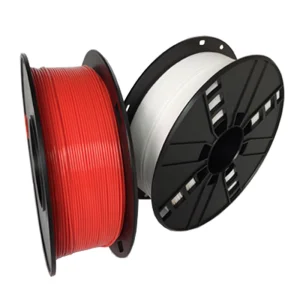
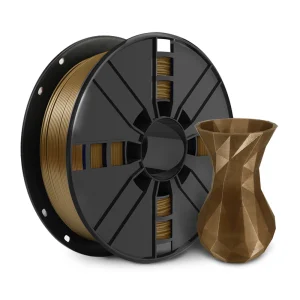
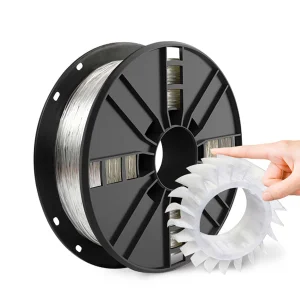
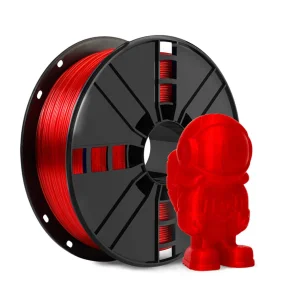
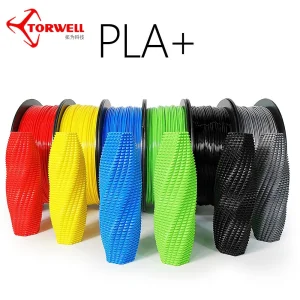
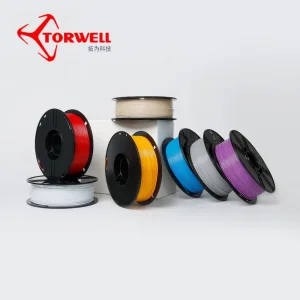
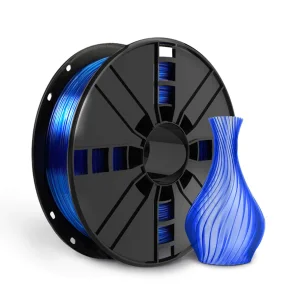
Maximizing print success rates and mechanical performance with Torwell ABS filaments across professional FDM platforms.
Achieving superior layer cohesion and micro-dimensional accuracy requires precise thermal management within the printing environment. We recommend the following baseline configuration:
| Defect Symptom | Root Cause Analysis | Corrective Engineering Action |
|---|---|---|
| Corner Warping / Lift | High thermal expansion differential between build plate and ambient air. | Increase bed temp to 100°C+, close printer enclosure, apply brim/raft, use PEI build surface. |
| Inter-Layer Delamination | Insufficient melt fusion temperature or excess layer cooling fan speed. | Raise nozzle temp by 5°C–10°C, turn off cooling fan, decrease print speed to increase heat soak time. |
| Surface Blobs / Oozing | Moisture absorption in raw filament or over-extrusion flow rate. | Dry filament at 70°C for 4–6 hours in a desiccant oven; calibrate flow multiplier to 0.95–0.98. |
| Bed Release Failure | Excessive bed adhesion or thermal contraction lock. | Allow print bed to cool completely to room temperature (<30°C) before part removal; use isopropyl alcohol buffer. |
Detailed answers addressing order minimums, OEM packaging, physical properties, logistics, and quality assurance for international buyers.