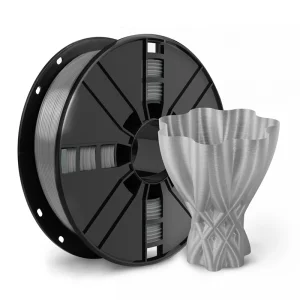
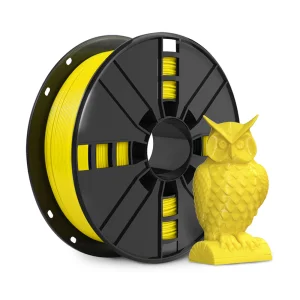
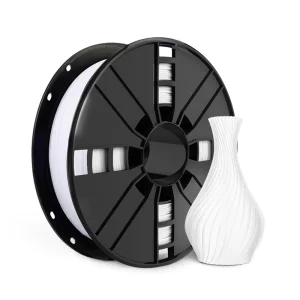
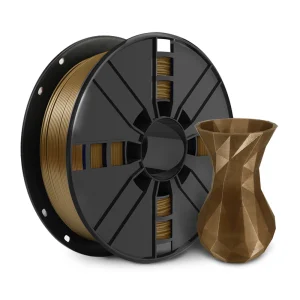
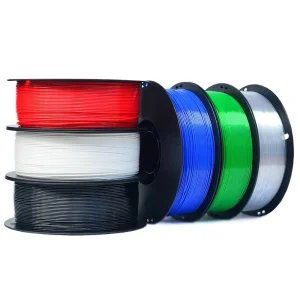
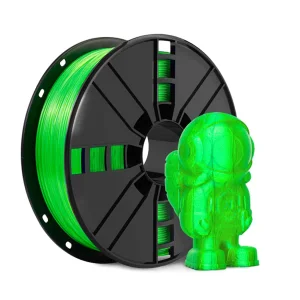
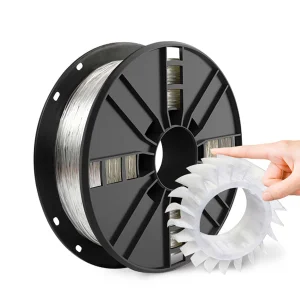
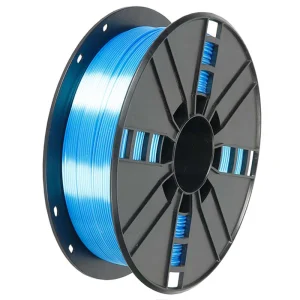
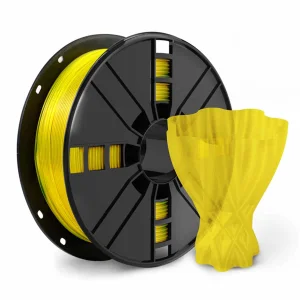
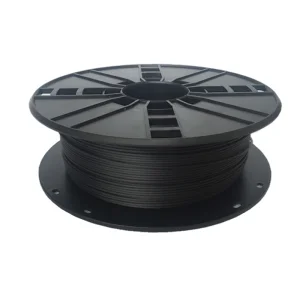
Our engineered 1.75mm polymer extrusions undergo inline laser-micrometer diameter monitoring ($\pm0.02\text{ mm}$) to ensure consistent volumetric flow rate, void-free layer bonding, and zero hot-end jamming across industrial and enterprise 3D printing platforms.
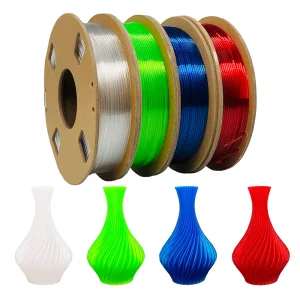
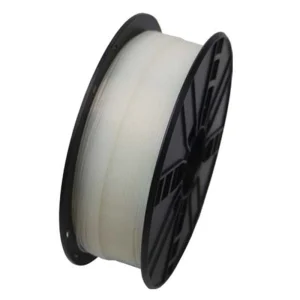
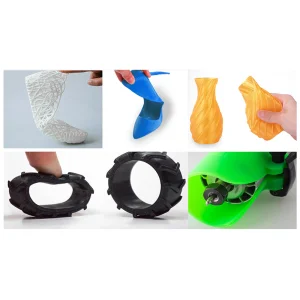
The additive manufacturing industry has transitioned rapidly from rapid prototyping to direct digital manufacturing (DDM). At the core of this transition is the global standardization around the 1.75 mm filament architecture. While early desktop FDM (Fused Deposition Modeling) systems experimented with 2.85 mm and 3.0 mm formats, modern high-speed kinematics—such as CoreXY platforms running Clipper and Marlin firmware operating at volumetric print speeds exceeding $30\text{ mm}^3/\text{s}$—overwhelmingly favor 1.75 mm diameter thermoplastics.
As a premier China 3D filament 1.75 manufacturer, our technical facility integrates state-of-the-art polymer chemistry, melt extrusion technology, and rigorous quality assurance. China’s centralized industrial ecosystem allows manufacturers to source prime-grade raw resin (such as virgin PLA polylactic acid, glycol-modified PETG, heat-resistant ABS, UV-stable ASA, elastomeric TPU, and high-modulus carbon-fiber-reinforced composites) while optimizing production efficiency.
In the global marketplace, commercial print farms, automotive design centers, and consumer electronics brands demand absolute reliability. A variation of just 0.05 mm in filament diameter alters the cross-sectional area by nearly 6%, directly resulting in severe over-extrusion or under-extrusion. Consequently, leading international distributors prioritize direct manufacturing partnerships with Chinese factories capable of enforcing continuous laser-guided extrusion control and automated neat-winding systems.
Understanding the thermodynamic behavior and rheological properties of thermoplastic filaments is critical for selecting the optimal material for specific industrial applications. As a specialized 1.75mm filament manufacturer, our laboratory formulates custom polymer blends designed for maximum inter-layer adhesion, low thermal shrinkage, and precise melt flow index (MFI) characteristics.
Derived from renewable starches (corn or sugarcane), PLA exhibits high tensile strength ($60-70\text{ MPa}$) and minimal thermal expansion coefficient ($68\times 10^{-6}/\text{K}$). Our modified PLA+ formulations incorporate elastomer impact modifiers to overcome brittleness, increasing Izod impact strength while maintaining low processing temperatures ($190^\circ\text{C}-220^\circ\text{C}$).
By incorporating cyclohexane dimethanol (CHDM) into the polyethylene terephthalate backbone, PETG prevents polymer crystallization. This results in high optical clarity, excellent chemical resistance against acids and alkalis, and robust mechanical toughness without the warping tendencies of styrene-based polymers.
ABS (Acrylonitrile Butadiene Styrene) provides superior heat deflection temperatures ($HDT \approx 95^\circ\text{C}$). For outdoor applications, our ASA (Acrylonitrile Styrene Acrylate) replaces butadiene rubber with an acrylic ester elastomer, delivering exceptional UV stability, weatherability, and resistance to environmental stress cracking.
Our flexible TPU filaments range from Shore 85A to 95A. Utilizing block copolymer chemistry consisting of alternating hard and soft segments, our 1.75mm TPU delivers high abrasion resistance, tear strength, and elastic memory while retaining pushability in both direct-drive and tuned Bowden extruders.
Reinforced with chopped micro-carbon fibers ($15-20\text{ wt}\%$ ratio), carbon-fiber composite filaments increase flexural modulus dramatically while preventing volumetric shrinking during cooling. The resulting printed parts feature a matte textured surface finish with virtually invisible layer lines.
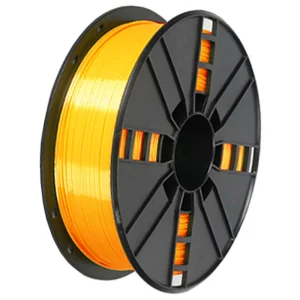
Compounded with polyester elastomers and pearlizing micro-pigments, Silk PLA offers a high-gloss, metallic visual effect. Co-extrusion technology allows multi-color split filaments (dual and tri-color) within a single 1.75mm strand, enabling dynamic aesthetic model outputs.
| Polymer Grade | Extrusion Temp range | Bed Temp Range | Density (g/cm³) | Tensile Strength | Key Industrial Property |
|---|---|---|---|---|---|
| Standard PLA / Silk PLA | 190°C – 220°C | 45°C – 60°C | 1.24 | 62 MPa | Dimensional accuracy, low odor, high stiffness |
| Engineered PLA+ | 200°C – 230°C | 50°C – 65°C | 1.25 | 65 MPa | Enhanced Izod impact toughness, rapid cooling capacity |
| Industrial PETG | 230°C – 250°C | 70°C – 85°C | 1.27 | 50 MPa | Chemical resistance, high clarity, low moisture absorption |
| High-Heat ABS | 240°C – 265°C | 90°C – 110°C | 1.04 | 43 MPa | High heat deflection ($95^\circ\text{C}$), ductile failure mode |
| UV-Stable ASA | 240°C – 260°C | 90°C – 105°C | 1.07 | 45 MPa | Weatherproofing, UV degradation resistance |
| Flexible TPU 95A | 210°C – 230°C | 30°C – 60°C | 1.21 | 35 MPa (Elongation >450%) | Abrasion resistance, vibration damping, flexibility |
| Carbon Fiber PLA | 210°C – 230°C | 50°C – 65°C | 1.29 | 78 MPa | Ultra-high flexural modulus, low warpage, matte aesthetic |
Achieving world-class 1.75mm filament consistency requires rigorous control over every stage of the extrusion process. As an established manufacturer, our factory utilizes automated twin-screw extruders operating in controlled clean-room environments.
Hygroscopic polymers like PETG, TPU, and ABS absorb ambient humidity rapidly. Prior to melt extrusion, raw pellets undergo vacuum desiccant drying for 4–6 hours at controlled dew points ($<-40^\circ\text{C}$), reducing resin moisture content below 0.02% to prevent micro-bubbling and hydrolysis.
Every extrusion line incorporates dual-axis continuous laser micrometers sampling at 1000 Hz. If the strand diameter deviates beyond the strict $\pm0.02\text{ mm}$ window or displays ovality, the automated closed-loop system adjusts the haul-off speed instantaneously or rejects the section.
Tangling during high-speed printing causes catastrophic job failure. Our CNC auto-winding machinery maintains precise step-pitch traversing and dynamic tension control, ensuring tight, parallel layer placement across cardboard or plastic spools suitable for AMS multi-material units.
The versatile mechanical properties of 1.75mm thermostatic filaments enable rapid deployment across diverse vertical industries globally:
Automotive assembly plants utilize ABS and ASA 1.75mm filaments to fabricate custom assembly jigs, check-gauges, and end-of-arm robotic tooling. High heat resistance prevents deformation under workshop conditions, while rapid printing accelerates line re-tooling.
Drone manufacturers leverage Carbon-Fiber-reinforced PLA and High-Impact ABS to produce lightweight structural arms, camera gimbals, and aerodynamic fairings. The high stiffness-to-weight ratio enhances payload capacities and battery endurance.
Biocompatible PLA and soft TPU 95A are deployed for customized orthotic insoles, prosthetic socket linings, and patient-specific anatomical planning models. Precise 1.75mm dimensions ensure exact volumetric fit following 3D CT scan slicing.
Hardware startups and OEM brands utilize PETG and ABS filaments for iterative enclosure testing, snap-fit verification, and thermal dissipation modeling prior to committing to expensive steel injection molds.
Architectural firms choose Silk PLA, Matte PLA, and Marble-effect filaments to create high-detail structural scale models. The smooth surface finish minimizes post-processing labor such as sanding and priming.
High-volume print farms operating hundreds of FDM machines rely on continuous spool-to-spool color consistency and reliable bed adhesion to maintain high yield rates during uninterrupted $24/7$ manufacturing contracts.
For international distributors, e-commerce brand owners, and 3D printer manufacturers seeking direct sourcing from a China 3D filament 1.75 manufacturer, we offer robust turnkey OEM/ODM customization services:
Utilizing spectrophotometric color analysis, our masterbatch lab formulates precise custom Pantone/RAL shades with a color variance tolerance of $\Delta E < 1.0$, guaranteeing uniform color reproduction across multiple batch orders.
To meet global environmental standards (such as EU packaging waste directives), we offer fully recyclable cardboard spools, biodegradable vacuum bags, and customized FSC-certified retail boxes with custom brand artwork.
All exported materials comply fully with RoHS 2.0, REACH SVHC, and FDA food-contact standards where applicable. Technical Data Sheets (TDS) and Safety Data Sheets (SDS) are provided for seamless customs clearance and commercial compliance.
As FDM 3D printing hardware evolves toward extreme print speeds ($1000\text{ mm/s}$) and automated multi-material loading systems, filament manufacturing must innovate accordingly. Our R&D team is driving development across three key technological pillars:
Engineering low-viscosity, high-shear polymer matrices that melt rapidly inside ultra-high-flow hotends, preventing thermal degradation while maintaining structural layer bond strength at extreme linear velocities.
Integrating embedded RFID tags into spool hubs to automatically transmit material profiles, temperature parameters, and remaining filament length to modern intelligent 3D printers.
Advancing 100% post-industrial recycled PETG and bio-based high-temperature polymers, providing enterprise clients with verified low-carbon raw materials for sustainable production.
Technical guidance provided by our senior polymer engineers to assist wholesale buyers, OEM partners, and industrial clients:
Explore our remaining primary product lines engineered for global OEM distribution, industrial print farms, and specialized commercial additive manufacturing applications.