
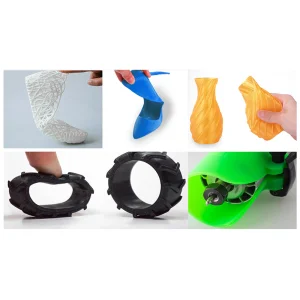
Engineered for extreme environmental endurance, chemical resistance, and high-precision extrusion down to ±0.02mm diameter tolerance.
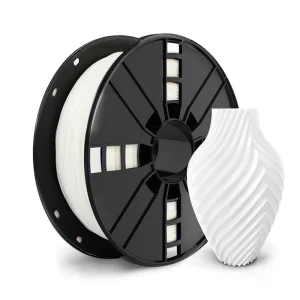
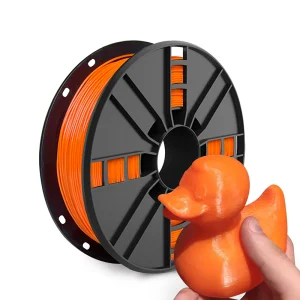
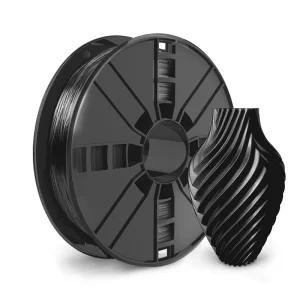
As the Republic of Iraq accelerates its infrastructure modernization across major urban and industrial nodes—including Baghdad, Basra, Erbil, Mosul, and Sulaymaniyah—the national manufacturing paradigm is undergoing a structural shift. The traditional reliance on long-distance logistics pipelines for molded rubber components, elastomeric seals, and customized flexible gaskets has repeatedly faced bottlenecks due to supply chain vulnerabilities, customs delays, and minimum order quantity (MOQ) constraints imposed by overseas injection molding vendors.
To overcome these systemic barriers, Iraqi industrial enterprises, oilfield service contractors, medical labs, and commercial print farms are turning to Additive Manufacturing (AM) powered by high-performance Thermoplastic Polyurethane (TPU) and Thermoplastic Elastomer (TPE) filaments. By establishing direct, on-demand digital fabrication capabilities inside local workshops, Iraqi companies can bypass traditional tooling overheads and produce functional, end-use elastomeric parts in hours rather than months.
For B2B procurement officers, technical directors, and OEM buyers serving the Iraqi industrial sector, choosing the correct elastomeric grade is crucial to operational reliability. While both TPU and TPE belong to the thermoplastic elastomer family, their molecular architectures dictate distinct performance profiles under extreme mechanical and environmental stress:
High resistance to crude oil derivatives, diesel fuel, hydraulic fluids, and industrial solvents commonly encountered across Basra oil fields and automotive repair centers.
Formulated with specialized anti-aging and carbon-black stabilizers to withstand extreme Iraqi summer ambient temperatures exceeding 50°C and intense UV radiation.
Precision-wound on automated lines with constant tension monitoring, guaranteeing smooth feed performance through Direct Drive and Capricorn Bowden setups.
To assist Iraqi engineering teams in selecting the optimal material grade for immediate deployment, our laboratory has compiled the technical benchmarks for Torwell’s wholesale TPU and TPE filament portfolio:
| Polymer Grade | Shore Hardness | Tensile Strength | Elongation at Break | Extrusion Temp. | Bed Temp. | Primary Iraqi Application Focus |
|---|---|---|---|---|---|---|
| TPU 95A Industrial | 95 Shore A | 48 MPa | 520% | 210°C – 230°C | 30°C – 60°C | Oilfield gaskets, pipe seals, automotive bushings |
| TPU 85A Soft Flex | 85 Shore A | 38 MPa | 600% | 215°C – 235°C | 40°C – 60°C | Vibration dampeners, drone boots, medical grips |
| TPU 75A Ultra-Soft | 75 Shore A | 28 MPa | 680% | 220°C – 240°C | 50°C – 70°C | Custom prosthetic liners, specialized suction cups |
| TPE Flexible SEBS | 88 Shore A | 32 MPa | 550% | 205°C – 225°C | 20°C – 50°C | Consumer protective cases, tactical gear grips |
Delivering tailored elastomeric 3D printing solutions to meet the demanding requirements of Iraq’s core economic infrastructure.
The southern energy corridor of Iraq requires high-frequency replacement of specialized seals, flange protectors, dirt caps, and anti-vibration mounts for drilling rigs and refinery transport pipelines. Torwell’s Ether-based TPU 95A filament provides complete resistance against crude oil degradation, sulfur exposure, and saline groundwater, allowing maintenance crews in Basra to print custom replacement gaskets on-site within hours, preventing costly drilling downtime.
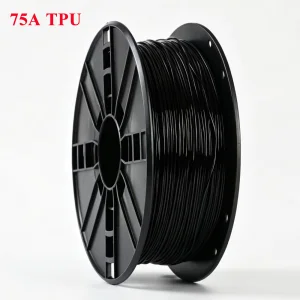
Iraq’s heavy trucking fleets moving freight between Turkey, Jordan, and central Iraqi provinces operate in extreme dusty and high-temperature environments. Universal rubber dust boots, steering rack bellows, and suspension bushings suffer rapid thermal cracking. By using Torwell Black TPU 1.75mm, local repair workshops in Erbil and Baghdad reverse-engineer and print durable, abrasion-resistant polyurethane replacement parts that outlast original rubber OEM specs under intense thermal cycles.
Rehabilitation hubs and orthopedic hospitals in northern and central Iraq are expanding their adoption of 3D scanning and additive manufacturing for patient-customized devices. Our Shore 85A and 75A flexible TPU filaments enable medical technicians to print skin-safe, flexible prosthetic liners, customized orthopedic foot insoles, and strain-relieving handle covers tailored to individual patient anatomical profiles.
Unmanned Aerial Vehicles (UAVs) used for agricultural mapping in Al-Anbar and infrastructure inspection nationwide require lightweight, impact-absorbing components. Torwell’s low-density TPU materials are widely used to print motor vibration dampeners, flexible antenna mounts, waterproof camera gimbals, and impact-resistant landing pads capable of absorbing severe desert landing impacts.
Combining over a decade of extrusion expertise with automated quality control to provide Iraqi distributors with direct-factory margins and flawless product stability.
Extruding soft TPU and flexible TPE filaments requires far more precise thermal and mechanical tension control than standard rigid polymers like PLA or ABS. Minor fluctuations in extrusion temperature lead to ovality, diameter variance, and catastrophic nozzle jamming. Torwell operates a state-of-the-art 2,500 m² standardized production facility equipped with 6 fully automated extrusion lines. Each line integrates dual-axis inline laser measuring gauges that monitor filament diameter in real-time, enforcing a strict target tolerance of ±0.02 mm. Any out-of-spec segment is automatically flagged and rejected before spooled.
TPU and TPE polymers are highly hygroscopic; exposure to ambient humidity leads to moisture absorption, resulting in hydrolytic degradation, popping sounds during printing, severe stringing, and weakened layer adhesion. To safeguard our products during long maritime transit across the Indian Ocean to Iraq’s port of Umm Qasr, or air cargo shipments to Baghdad (BGW) or Erbil (EBL) International Airports, Torwell implements a 4-layer moisture barrier protocol:
Torwell empowers Iraqi importers, IT distributors, and 3D printer hardware retailers to build their own local brand equity. We offer comprehensive OEM/ODM services including customized spool colors matched precisely to Pantone codes, custom cardboard or plastic spool designs, branded box printing, white-label barcoding, and tailored technical data sheets (TDS) and safety data sheets (SDS) ready for regional regulatory compliance.
Explore our full line of flexible, engineering-grade, and high-strength filaments optimized for B2B distribution across the Middle East.
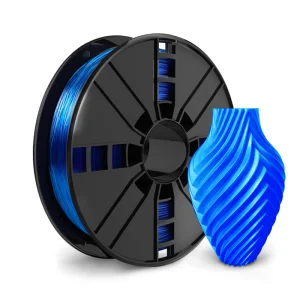
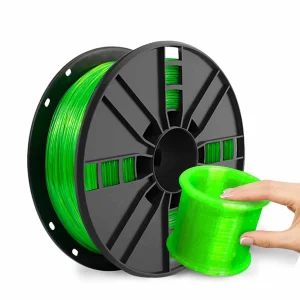
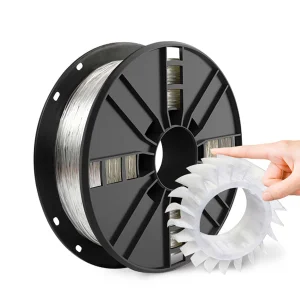
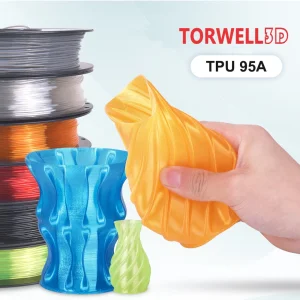
As 3D printing transitions from desktop rapid prototyping to full-scale digital manufacturing, global procurement directors and regional distributors must align their sourcing strategy with emerging material technology trends. Over the 2025–2030 horizon, the demand for specialized elastomeric formulations in Iraq and the broader GCC/MENA region is projected to experience compound growth driven by three key technological shifts:
Industrial applications in energy and defense are demanding flexible materials that go beyond standard elastic recovery. Next-generation Carbon-Fiber Reinforced TPU (CF-TPU) provides a unique combination of structural stiffness along the fiber axis with elastomeric flexural compliance, rendering it ideal for drone chassis frames, industrial robotic grippers, and wear-resistant conveyor guides. Simultaneously, UL94-V0 rated flame-retardant TPEs are becoming mandatory for indoor electrical enclosure grommets and public transport wiring harnesses across Iraqi infrastructure projects.
The rapid market adoption of high-speed FDM printers (such as Bambu Lab, Creality K1 series, Voron, and industrial high-flow extruders) requires TPU formulations with tailored melt rheology. Standard soft TPU tends to buckle at printing speeds above 40 mm/s. Torwell’s R&D division has developed high-flow TPU 95A variants engineered with high melt flow index (MFI) characteristics, allowing reliable extrusion at speeds exceeding 150 mm/s without risking filament wrapping inside the extruder gears.
Environmental sustainability regulations are gaining traction across international procurement tenders. By utilizing bio-based polyols derived from renewable plant oils, Torwell is reducing the carbon footprint of TPU manufacturing while maintaining identical mechanical performance to fossil-based polymers, giving our Middle Eastern wholesale partners a competitive edge when bidding on government and NGO contracts.
Get clear, expert answers on procurement logistics, printing parameters, shelf life, and direct-factory wholesale contracts.
TPU 95A strikes the optimal balance between rubber-like flexibility and mechanical printability. It possesses sufficient column strength to feed smoothly through both Direct Drive extruders and standard Bowden tubes with minimal friction. Softer grades (such as Shore 75A or 80A) require precise speed control, specialized dual-gear extruders, and zero gap in the filament guide path to prevent flexible filament wrapping around the drive gear. For general industrial seals, gaskets, and protective boots in Iraqi workshops, Shore 95A delivers maximum success rate and low operator training requirements.
TPU is an inherently hygroscopic polymer. Torwell enforces a complete moisture defense protocol: virgin raw materials are dried in dehumidifying hopper dryers prior to extrusion. After passing laser gauging and water bath cooling, the filament strand goes through high-pressure air dryers before winding. Spools are immediately vacuum-sealed inside high-barrier foil bags alongside active silica gel desiccant packs. Outer cartons are reinforced and tape-sealed to prevent humidity intrusion during sea transport to Umm Qasr Port or air shipment to Baghdad and Erbil.
For standard stock colors (Black, White, Clear, Red, Blue, Orange, Green in 1.75mm TPU 95A), our standard factory MOQ starts at just 100 kg, allowing regional distributors to mix SKUs across our catalog. For custom OEM colors matched to specific Pantone codes or custom branded packaging, MOQ is typically 500 kg per SKU. Factory production lead time is 7–12 business days following order confirmation, with express air cargo transit to Iraq taking approximately 5–8 days and sea freight container delivery taking 22–28 days.
Yes. Thermoplastic Polyurethane has a high Vicat softening temperature and continuous operating thermal range up to 80°C to 90°C depending on the specific shore hardness grade. Unlike standard PLA which softens and warps around 55°C, TPU parts maintained under direct sunlight in Iraqi summer weather retain their structural integrity, elasticity, and mechanical seal force without melting or embrittlement.
Absolutely. Over 60% of Torwell’s global production is dedicated to OEM and ODM private label partners in 75+ countries. We provide end-to-end white-label solutions including custom-printed spool sticker labels, branded retail color boxes, customized user instruction manuals, and outer shipping cartons printed with your registered Iraqi business logos, barcodes, and part numbers.
Expand your industrial supply capabilities across Iraq. Contact our engineering and export team for direct factory pricing, material data sheets, and free sample spools for lab evaluation.