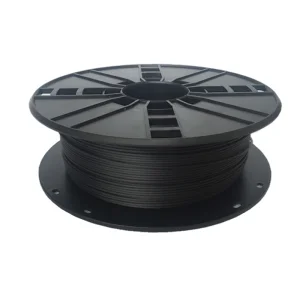
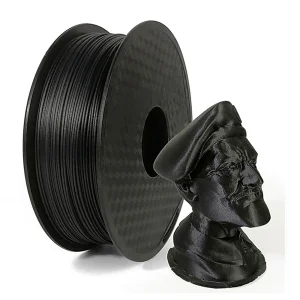
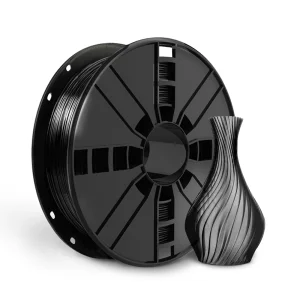
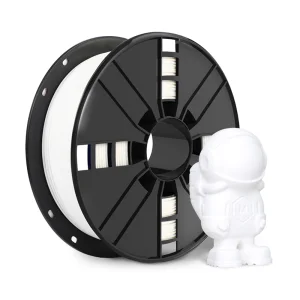
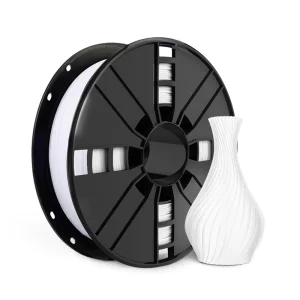
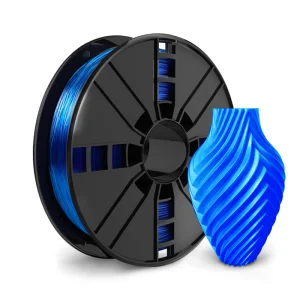
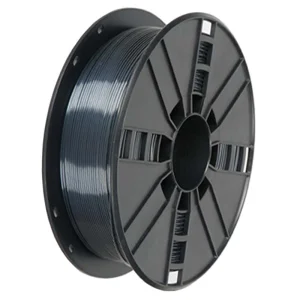
Engineered for high mechanical stiffness, low thermal expansion, and flawless surface aesthetics. Trusted by UAE prototyping labs, manufacturing hubs, and additive manufacturing providers.
The United Arab Emirates is rapidly solidifying its global status as an innovation epicenter for advanced manufacturing, robotics, and architectural additive construction. Under national frameworks such as the Dubai 3D Printing Strategy (aiming to have 25% of building components and products 3D printed by 2030) and Operation 300bn (driving industrial GDP growth), local entities are shifting from aesthetic rapid prototyping to high-performance end-use part production.
However, operating additive manufacturing hardware in the Arabian Peninsula presents severe environmental challenges. Summer ambient temperatures regularly exceed 45°C–50°C, relative humidity spikes in coastal zones like Dubai Marina and Abu Dhabi Corniche, and persistent ultra-fine silica dust accelerates wear on conventional polymer parts. Standard unreinforced thermoplastics (such as standard PLA or unfilled ABS) suffer thermal softening, creep deformation, and mechanical shear failure under direct Gulf sunlight or inside industrial machinery.
Dubai Industrial City and Dubai South are hub to UAV development, MRO maintenance facilities, and flight component prototyping. Carbon fiber filaments provide the structural stiffness-to-weight ratio required for drone airframes, sensor brackets, and lightweight avionics housings.
Abu Dhabi’s energy sector (including ADNOC contractors and offshore service firms) requires spark-resistant, chemical-proof, and dimensionally stable custom tooling, pump seals, and alignment jigs capable of resisting aggressive hydrocarbons and hot saline atmospheres.
From custom supercar modifications in Sharjah’s industrial sectors to tactical vehicle equipment prototyped in Tawazun Industrial Park, carbon fiber reinforced PETG and ABS filaments replace heavy aluminum components without sacrificing strength.
Carbon fiber filament is not merely standard plastic mixed with dark colorant. High-performance composite filaments incorporate micro-chopped carbon fibers (typically 15% to 20% by weight, with fiber lengths ranging from 50 to 150 microns) homogeneously dispersed within a high-viscosity polymer matrix.
During the thermal extrusion process through a hardened steel or ruby nozzle, these high-aspect-ratio carbon micro-fibers align along the shear force vector of the extrudate flow. This orientation forms an internal microscopic skeleton within each deposited bead, yielding significant mechanical gains:
Incorporating chopped carbon fiber increases flexural modulus by up to 200% compared to neat polymer resins. Printed components exhibit virtually zero flex under heavy structural loading, essential for robotics arms, UAV spars, and mounting brackets.
Unreinforced plastics contract during cooling, inducing severe warp, internal stress, and corner lifting on large-format FDM print beds. Carbon fibers drastically stabilize dimensional accuracy, guaranteeing tight tolerances (±0.02 mm) across multi-meter print runs.
The internal carbon matrix restricts molecular chain mobility at elevated temperatures. For instance, PETG-CF withstands temperatures up to 80°C–85°C without deformation, whereas PA-CF (Nylon Carbon Fiber) maintains structural stability beyond 150°C–180°C.
The microscopic fiber dispersion diffuses reflected light, completely hiding layer lines inherent to FDM 3D printing. The resulting finish is a sleek, satin-matte metallic grey/black texture ready for end-use commercial deployment without post-processing.
| Filament Grade | Tensile Strength (MPa) | Flexural Modulus (GPa) | Heat Deflection Temp (°C @ 0.45MPa) | Density (g/cm³) | Optimal UAE Application |
|---|---|---|---|---|---|
| Torwell Carbon Fiber PLA | 65 - 72 | 5.2 - 6.0 | 62°C | 1.28 | Stiff structural prototypes, drone frames, indoor fixtures |
| Torwell Carbon Fiber PETG | 58 - 64 | 4.5 - 5.1 | 82°C | 1.34 | Chemical jigs, outdoor enclosures, marine fittings |
| Torwell Carbon Fiber ABS | 52 - 58 | 4.1 - 4.8 | 98°C | 1.08 | Automotive aftermarket, impact housings, high-heat tooling |
| Torwell Carbon Fiber PA (Nylon) | 95 - 110 | 7.8 - 8.9 | 165°C - 180°C | 1.22 | Under-the-hood automotive, industrial production gears, oilfield valves |
| Standard Neat PLA (Baseline) | 45 - 50 | 2.8 - 3.1 | 55°C | 1.24 | Educational visual models, architectural conceptual mockups |
Sourcing high-performance carbon fiber 3D printing materials through European or North American middleman distributors inflates procurement costs by 150% to 300% due to regional markup layers. As a primary China-based manufacturer operating a 2,500 m² automated facility with 6 high-precision extrusion lines, Torwell Technologies Co., Ltd. delivers direct-from-factory pricing directly to Dubai, Abu Dhabi, and wider GCC procurement managers.
Seamless freight routes from Shenzhen/Ningbo directly to Jebel Ali Port (Dubai) within 14–18 days, or express air cargo to DXB/DWC within 3–5 business days. Full support for DDP, FOB, CIF, and EXW incoterms.
Carbon fiber filaments (especially PETG-CF and PA-CF) are highly hygroscopic. Torwell spools undergo 12-hour thermal desiccant drying before immediate high-vacuum sealing inside thick aluminum foil barrier bags with heavy-duty silica desiccant, ensuring zero moisture absorption during oceanic transport through humid tropical waters.
Build your local UAE brand identity with custom box design, customized spool stickers, specialized reel weights (0.5kg, 0.8kg, 1kg, 2.5kg, 5kg spool master rolls), and bespoke RAL/Pantone color matching for base matrices.
See how enterprise engineers and print farms across the Seven Emirates leverage Torwell’s carbon-reinforced materials to solve real operational bottlenecks.
Challenge: A Dubai-based commercial drone operator needed payload brackets capable of enduring high vibration and desert summer temperatures of 48°C without mechanical sagging or warp.
Solution: Switching to Torwell PETG Carbon Fiber 1.75mm reduced overall component weight by 35% compared to CNC aluminum while providing structural stiffness that prevented flight sensor jitter.
Challenge: Onshore rig servicing teams required quick-turnaround alignment tools resistant to drilling fluids, hydraulic oils, and high ambient UV radiation.
Solution: Industrial 3D printing using Torwell PA-CF and ABS Carbon Fiber enabled on-demand fabrication of custom pipe clamps directly in field service centers, eliminating a 6-week lead time for imported metal tooling.
Challenge: Performance automotive modification shops in Sharjah required heat-resistant intake funnels that could withstand engine bay temperatures exceeding 90°C.
Solution: Utilizing Torwell High-Heat ABS-CF & PETG-CF Filament provided clean aesthetic surfaces, precise mounting thread engagement, and complete thermal stability during continuous engine dyno testing.
Challenge: Engineering consultancies required ultra-rigid, zero-warp structural scale models of complex parametric shade louvers for outdoor durability evaluation.
Solution: Printing with Torwell Carbon Fiber PLA Black delivered razor-sharp dimensional accuracy on 800mm tall assembly prints with zero corner lifting on glass beds.
Importing industrial raw materials into the UAE requires strict adherence to international standards and regional customs regulations. Torwell provides complete documentation packages to streamline customs clearance at Dubai Customs, Abu Dhabi Port Customs, and Sharjah Port Authority.
All Torwell base resins, carbon fibers, and color additives are certified 100% compliant with RoHS (Restriction of Hazardous Substances) and REACH directives. Heavy metal, halogen, and toxic VOC emissions are fully tested for indoor workplace safety.
Proper customs classification under HS Code 3916.90.00 (Monofilament of other plastics) accompanied by official CCPIT Certificate of Origin (CO) enables smooth 5% standard GCC customs duty processing without delays.
Evaluate print quality firsthand. Torwell offers expedited sample spools delivered via DHL/FedEx to any address in Dubai, Abu Dhabi, Sharjah, Ajman, or Ras Al Khaimah within 3–4 business days.
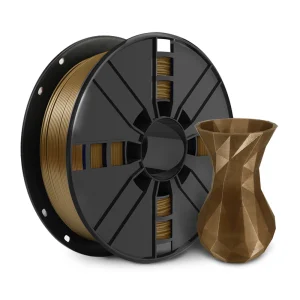
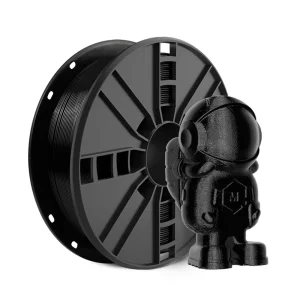
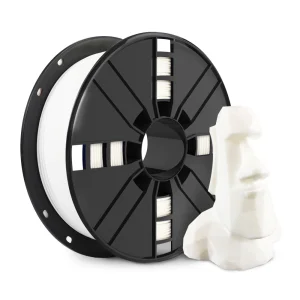
In addition to specialized Carbon Fiber composite formulations, Torwell manufactures a complete range of high-grade 3D printer filaments for enterprise print farms, distributors, and e-commerce sellers across the Middle East.
In-depth answers covering printer hardware requirements, shipping lead times, bulk pricing, and technical parameters for carbon fiber composite printing in the Middle East.
Micro-chopped carbon fibers embedded within PLA, PETG, ABS, or Nylon matrix act as abrasive micro-needles during extrusion. Standard brass nozzles experience rapid orifice erosion within 200–500 grams of printing, expanding a 0.4mm nozzle to over 0.6mm and destroying print precision. For Torwell Carbon Fiber filaments, we strongly recommend using hardened steel, tungsten carbide, or ruby-tipped nozzles (minimum 0.4mm diameter or larger) to prevent nozzle wear and ensure consistent extrusion flow.
For optimal layer adhesion and surface finish, set nozzle temperature between 240°C and 265°C, bed temperature between 75°C and 85°C, and print speeds around 40–80 mm/s. In hot or air-conditioned UAE workshops, ensure the printer is sheltered from direct HVAC drafts to prevent premature cooling. Retraction speed should be kept around 30–45 mm/s with a reduced distance (1–3 mm for direct drive, 4–6 mm for Bowden setups) to avoid nozzle clogging from aligned fibers.
For standard Torwell branded spools, our bulk wholesale MOQ starts as low as 100 kg mixed SKUs. For OEM private label projects (custom box printing, branded spool stickers, custom colors), the standard MOQ is 500 kg per order. We also accommodate sample order requests (1 to 10 kg) for testing and evaluation prior to contract placement.
Every spool extruded at our factory is thoroughly dried in industrial dehumidifying ovens. Immediately after precise auto-winding and inline laser diameter verification (±0.02 mm target), spools are sealed inside multi-layer aluminum-foil vacuum barrier bags with fresh desiccant packs. Outer cardboard boxes are reinforced with moisture-resistant coating, protecting shipments against sea spray and high ambient humidity during the 14-to-18 day transit to Dubai or Abu Dhabi ports.
Yes. We supply comprehensive Technical Data Sheets (detailing Tensile Strength, Izod Impact Resistance, HDT, Glass Transition Temp, Flexural Modulus) and Safety Data Sheets (SDS) in compliance with GHS standards. These documents allow local defense contractors, oilfield engineering firms, and architectural studios to meet UAE government compliance audits seamlessly.
We offer standard 1 kg spools designed to fit standard enclosed FDM 3D printers and multi-material units (such as Bambu Lab AMS or automated spool changers). For large-format industrial FDM machines (e.g. 500mm³ to 1000mm³ build volume), we manufacture 2.5 kg, 5 kg, and 10 kg master reels to minimize spool swapping during long continuous print cycles.
While Carbon Fiber PLA provides slightly higher stiffness and extremely easy printing, it softens around 60°C–62°C. In the UAE, outdoor solar absorption can easily heat black plastic parts above 70°C. For any outdoor fixtures, automotive parts, or industrial enclosures in the Gulf region, Carbon Fiber PETG or Carbon Fiber ABS is strongly recommended due to their higher HDT (82°C–98°C) and superior UV/chemical durability.
We support Telegraphic Transfer (T/T), Letter of Credit (L/C at sight for large container volumes), and PayPal/Western Union for small sample orders. Terms can be arranged as FOB (Shenzhen/Ningbo), CIF (Jebel Ali/Khalifa Port), or DDP (Delivered Duty Paid directly to your facility in Dubai/Abu Dhabi with customs duty and VAT handled).
Elevate your additive manufacturing capabilities in Dubai, Abu Dhabi, and across the GCC with factory-direct pricing, ±0.02 mm precision tolerance, and custom OEM packaging solutions.