Explore our primary selection of industrial TPU filaments engineered for zero-warping, exceptional interlayer bonding, and precise Shore hardness tuning across Benelux additive platforms.
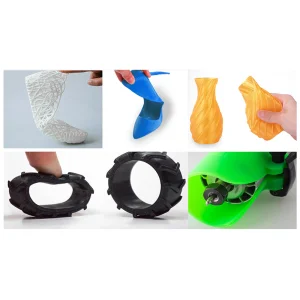
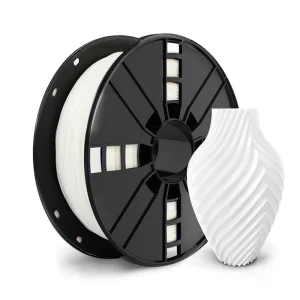
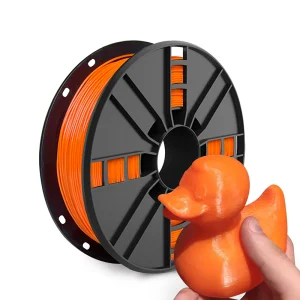
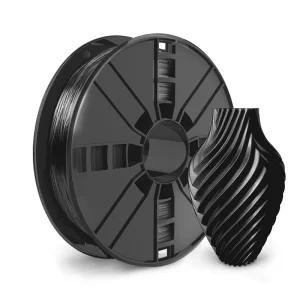
The Netherlands stands at the forefront of Europe’s advanced digital manufacturing landscape. From the semiconductor innovation hub of Brainport Eindhoven to the maritime and offshore powerhouse of Rotterdam, Dutch industrial enterprises are aggressively transitioning from rigid functional prototyping toward end-use elastomeric component manufacturing. In this demanding environment, finding a trustworthy TPU & TPE filament supplier and factory capable of matching strict European quality protocols (RoHS, REACH) and tight mechanical tolerances is critical to operational continuity.
Thermoplastic Polyurethane (TPU) and Thermoplastic Elastomers (TPE) represent a unique class of polymers that combine the elastic flexibility of vulcanized rubber with the high melt-processability of thermoplastics. In the Dutch manufacturing ecosystem, the reliance on high-speed, direct-drive FFF/FDM 3D printing farms requires filament materials that maintain exceptional diameter stability (±0.02mm), void-free internal structure, and tailored Shore hardness spectrums ranging from ultra-soft 75A to rigid-flex 98A.
As Dutch engineering firms push the boundaries of custom robotics, marine seal prototyping, localized agricultural machinery maintenance, and personalized orthotics, traditional supply chains frequently fail to deliver short lead times and consistent batch chemistry. Torwell Technologies bridges this crucial gap by pairing China’s massive Industry 4.0 extrusion capacity with localized supply chain resilience tailored specifically to Dutch procurement protocols.
To select the correct flexible filament for European B2B procurement, engineers must understand the distinct chemical architecture governing Thermoplastic Polyurethanes (TPU) and Thermoplastic Elastomers (TPE). While both offer rubber-like elasticity, their underlying molecular dynamics dictate their mechanical behavior under load, thermal endurance, and printability.
Polyester-based TPU delivers superior abrasion resistance and tensile strength, making it ideal for mechanical gears and automotive boots. Polyether-based TPU offers outstanding hydrolysis resistance and anti-microbial stability, essential for Dutch marine, offshore, and medical applications exposed to continuous humidity.
Flexible filaments display non-Newtonian shear-thinning characteristics. Controlled Melt Flow Index (MFI) ensures that under high shear rates inside modern high-speed nozzles (such as Bambu Lab or Voron systems), the filament flows predictably without buckling or forming air micro-voids.
Unlike brittle polymers (such as PLA), TPU molecules exhibit long-chain entanglement across printed layers. When extruded within the optical thermal window (210°C–235°C), Z-axis isotropic strength reaches up to 92% of X-Y axis tensile capacity, guaranteeing pressure-tight fluidic seals.
This matrix illustrates key physical indicators essential for engineering teams designing components for harsh North Sea marine environments or precision industrial automation lines in Noord-Brabant.
| Polymer Grade | Shore Hardness | Tensile Strength (MPa) | Elongation at Break (%) | Hydrolysis Resistance | Primary Dutch Industry Use |
|---|---|---|---|---|---|
| TPU 75A Super Soft | 75 Shore A | 28 MPa | 650% | Excellent (Polyether) | Medical liners, prosthetic cushions, soft robotics |
| TPU 95A Standard | 95 Shore A | 45 MPa | 480% | High | Industrial gaskets, drive belts, protective boots |
| TPU 98A High-Speed | 98 Shore A | 52 MPa | 420% | Moderate | Automotive trim, fast-print prototyping, structural dampeners |
| TPE (SEBS-based) | 80 Shore A | 22 MPa | 700% | Outstanding | Chemical seals, food-contact grips, soft-touch handles |
The versatility of Torwell’s TPU & TPE filaments enables specialized application integration across key industrial hubs throughout the Netherlands:
Semiconductor handling machinery and cleanroom robotic assemblies require non-outgassing, anti-vibration elastomeric components. Custom Shore 95A TPU wire sleeves, cable strain reliefs, and anti-static dampeners protect sensitive optical gear during sub-micron manufacturing processes.
Vessels and offshore platforms require immediate spare-part fabrication to avoid costly harbor downtime. Maritime engineers utilize Torwell’s polyether-based clear and black TPU filaments to print chemical-resistant O-rings, pipe couplings, and hatch seals directly aboard ships or in dockside print facilities.
The Dutch podiatry and prosthetic sector leads Europe in additive customization. Shore 75A and Shore 85A TPU filaments allow orthotists to 3D print dynamic, variable-density insoles and custom prosthetic liners calibrated precisely to patient gait analysis, eliminating manual foam sculpting.
While local European micro-factories cater to small batch emergency orders, high-volume procurement managers, distributors, and large-scale print farms in the Benelux region require the scalable cost-efficiencies of direct-from-factory manufacturing. Torwell Technologies operates a 2,500 m² modern manufacturing facility backed by 13+ years of polymer R&D excellence.
Extrusion lines integrate closed-loop laser gauge monitoring. Any dimensional variance exceeding ±0.02mm automatically triggers real-time haul-off speed adjustments, eliminating filament swelling and ovality issues that cause extruder jams in high-speed systems.
Elastomers are inherently hygroscopic. Raw TPU resins undergo 6 hours of continuous desiccant twin-tower drying down to micro-moisture levels (<0.02%) prior to extrusion. Spools are vacuum-sealed with active silica desiccant within 30 seconds of automated winding.
Torwell empowers European brands with turn-key OEM solutions. From custom Masterbatch Pantone/RAL color compounding to private-label spooling, eco-friendly cardboard spools, and custom barcode packaging, we streamline direct factory-to-warehouse logistics.
Achieving flawless print yields with TPU & TPE filaments across industrial print arrays requires systematic machine setup. Follow these engineering protocols verified by our technical laboratory:
Direct-drive extruders with constrained filament pathing (minimal gap between drive gears and heatbreak melt zone) are strongly recommended. For Bowden configurations, use Shore 95A or 98A variants to prevent filament flexing inside the PTFE tube.
Maintain nozzle temperatures between 215°C–235°C depending on volumetric speed. Heated bed temperature should be set to 40°C–60°C. PEI sheets, textured glass, or clean aluminum plates offer excellent natural release when cool.
TPU absorbs ambient humidity quickly in coastal Netherlands environments. If printing directly from an open spool causes crackling or surface stringing, dry the spool at 65°C for 4–5 hours in a dedicated dry box before long print jobs.
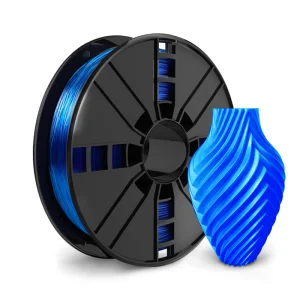
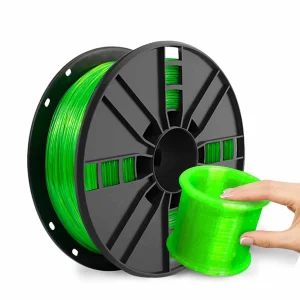
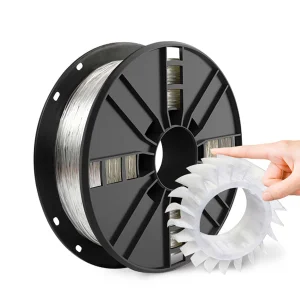
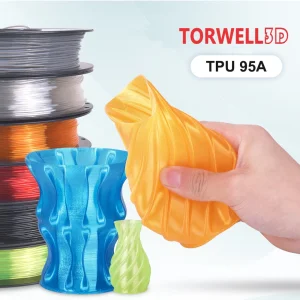
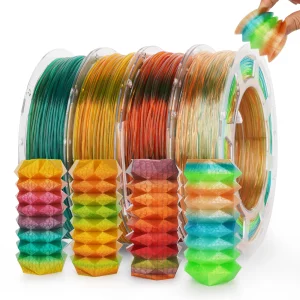
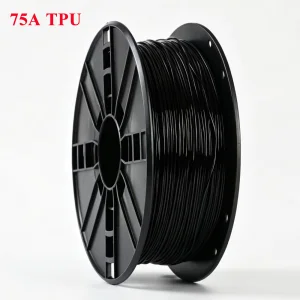
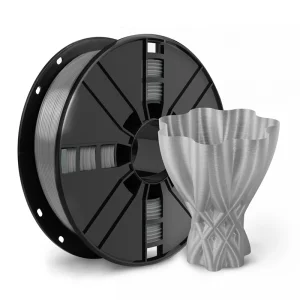
Select from our full spectrum of standard colorways, specialized high-clarity transparent formulations, soft 75A grades, and engineering PETG alloys ready for immediate global shipment.
Detailed answers to common questions regarding customs, shipping to Rotterdam port, OEM branding, and technical compliance for European additive operations.
For container-load orders (FCL/LCL), sea freight directly from Shenzhen/Ningbo to the Port of Rotterdam takes approximately 28 to 34 days. For urgent sample batches or smaller restocking orders, air express (DHL/FedEx/UPS) delivers to Amsterdam Airport Schiphol or Dutch commercial addresses within 4 to 7 business days under DDP (Delivered Duty Paid) terms.
Yes. All Torwell TPU and TPE filaments strictly comply with EU environmental standards. We supply comprehensive Safety Data Sheets (SDS), REACH SVHC declaration certificates, and RoHS compliance test reports verified by third-party testing agencies (SGS/TÜV) upon request.
Absolutely. While standard stock materials focus on Shore 75A, 95A, and 98A, our chemical engineering laboratory can compound specific Shore hardness levels and match exact RAL or Pantone color samples for volume OEM purchase orders (MOQ applies).
We guarantee a target diameter tolerance of ±0.02 mm across both 1.75 mm and 2.85 mm filament options. Each batch is continuously scanned by inline dual-axis laser gauge sensors during extrusion to ensure zero swelling or severe ovality.
Every spool is thoroughly dried before being vacuum-sealed inside high-barrier moisture bags containing fresh active desiccant packs. Individual spools are housed in reinforced corrugated boxes, which are then palletized and shrink-wrapped to endure humid maritime transit conditions.
Yes. We offer complete turnkey OEM services including customized spool stickers, branded retail boxes, customized outer shipping cartons, and customizable spool types (recycled plastic or eco-cardboard spools) tailored to your brand identity.
Partner with a trusted China manufacturer offering engineering-grade TPU & TPE filaments tailored for Dutch & European additive manufacturing excellence.
Send Inquiry Now