Direct factory supply of precision polycarbonate, technical PLA, and engineering filaments tested for rigorous thermal, mechanical, and structural performance.
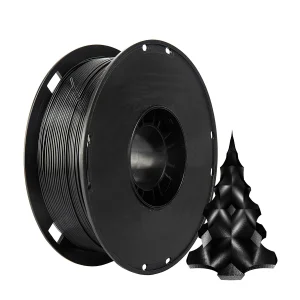
Engineered for extreme heat resistance (HDT 110°C+) and structural toughness in Australian mining and automotive end-use parts.
View PC Filament Details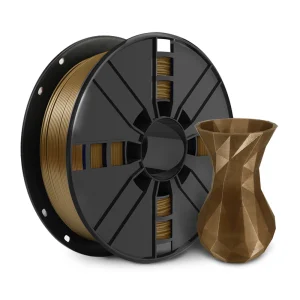
High-rigidity PLA formulation designed for flawless surface finishes, tight ±0.02mm diameter control, and rapid rapid prototyping.
Explore PLA Specifications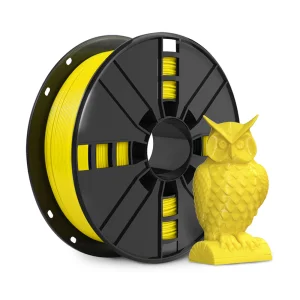
Vibrant high-visibility yellow PLA optimal for industrial safety components, educational print farms, and functional prototypes.
Request Wholesale Quote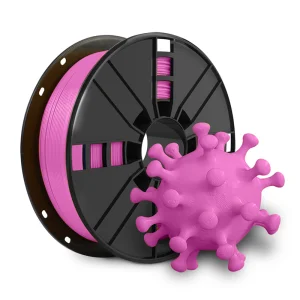
Tangle-free extrusion spools compatible with enterprise FDM systems, offering low warping and superb layer cohesion.
Check Batch PricingUnderstanding the shift toward sovereign manufacturing, local rapid tooling, and extreme-environment engineering in Australia.
Australia’s industrial sector is undergoing a profound structural evolution. Driven by the federal government’s National Reconstruction Fund (NRF) and a national imperative to build resilient onshore supply chains, Australian enterprises across Victoria, New South Wales, Queensland, and Western Australia are rapidly adopting advanced additive manufacturing technologies. Among the spectrum of thermoplastic polymers utilized in Fused Deposition Modeling (FDM) and Fused Filament Fabrication (FFF), Polycarbonate (PC) filament has emerged as the structural benchmark for mission-critical applications.
Polycarbonate offers an unmatched combination of high tensile strength, extreme impact resistance, optical clarity capabilities, and thermal deflection temperatures (HDT) exceeding 110°C to 140°C depending on polymer modification. In regions such as the Pilbara in Western Australia or the Bowen Basin in Queensland, equipment components are routinely subjected to ambient temperatures surpassing 45°C, high UV radiation, abrasive mineral dust, and severe mechanical vibration. Standard materials such as PLA or basic PETG frequently suffer thermal deformation and mechanical fatigue under these harsh Australian outback conditions.
Key Insight for Australian Procurement Managers: Industrial PC filament provides the mechanical integrity needed to bridge the gap between functional prototyping and final end-use spare parts production directly at the point of need, drastically reducing equipment downtime in remote Australian operations.
Furthermore, Australia's expanding defence technology cluster, automotive restomod/EV modification hubs in Melbourne, and agricultural automation developers in regional NSW require materials compliant with stringent safety, flame retardancy (UL94-V0 options), and dimensional accuracy standards. Direct procurement from specialized PC filament manufacturers equipped with advanced twin-screw extrusion technology ensures Australian businesses maintain a decisive competitive edge.
Comprehensive comparative analysis of mechanical, thermal, and electrical metrics for additive manufacturing engineers.
Polycarbonate is an amorphous thermoplastic macromolecule containing carbonate groups (-O-CO-O-) in its chemical backbone. Bisphenol A (BPA) based Polycarbonate synthesized for 3D printing filament extrusion requires precise viscosity control and molecular weight distribution. Unlike crystalline polymers, amorphous PC exhibits low isotropic shrinkage during cooling, rendering it exceptionally suitable for large-format functional prints—provided thermal enclosure temperatures are maintained correctly to minimize residual internal stresses.
| Polymer Grade | Tensile Strength (MPa) | Flexural Modulus (GPa) | Izod Impact (kJ/m²) | HDT @ 0.45 MPa (°C) | Dielectric Strength (kV/mm) | Primary Industrial Use Case |
|---|---|---|---|---|---|---|
| Torwell Pure PC | 68 - 75 | 2.3 - 2.5 | 55 - 65 | 115 - 125 | 30 | Structural housings, high-temp jigs & fixtures |
| PC-ABS Alloy | 55 - 62 | 2.1 - 2.3 | 40 - 50 | 98 - 105 | 26 | Automotive interior trim, electronic enclosures |
| PETG Industrial | 48 - 52 | 1.9 - 2.1 | 8 - 12 | 72 - 78 | 22 | Chemical containers, light-duty brackets |
| Carbon Fiber PC (PC-CF) | 82 - 95 | 4.5 - 6.2 | 25 - 35 | 130 - 145 | N/A (Conductive) | Aerospace UAV airframes, mining gearboxes |
| Standard PLA+ | 58 - 65 | 2.8 - 3.2 | 15 - 20 | 55 - 60 | 18 | Rapid visual models, educational projects |
Polycarbonate is intrinsically hygroscopic. At processing temperatures between 260°C and 300°C, the presence of microscopic moisture molecules triggers hydrolytic cleavage of the carbonate ester linkages. This chemical degradation dramatically reduces polymer molecular weight, causing print bubbling, severe stringing, and catastrophic loss of interlayer adhesion strength.
To eliminate these defects for Australian buyers, Torwell implements a 5-Stage Dehumidifying Vacuum Extrusion Protocol. Raw polycarbonate resin is dried in desiccant hopper dryers at a dew point of -40°C for a minimum of 6 hours prior to extrusion. The extruded filament is immediately passed through closed-loop online laser micrometer monitoring systems and dynamic water cooling channels before being wound under automatic tension control and vacuum sealed with cobalt-free desiccant inside heavy-duty moisture-barrier aluminum/poly bags.
Maximizing procurement ROI through direct factory collaboration, OEM customization, and streamlined trans-Pacific logistics.
By partnering directly with China's leading filament extrusion facility, Australian distributors and enterprise buyers bypass 40-60% middleman markups, unlocking significant cost advantages on high-volume PC spools.
Our dual-axis laser scanning micrometers continuously gauge filament diameter at 500 Hz, maintaining a guaranteed tolerance of ±0.02mm to eliminate nozzle clogging and under-extrusion on industrial Bambu, Raise3D, and Stratasys platforms.
We provide end-to-end OEM customization for Australian brand owners, including custom Pantone color formulation, branded spool designs, cardboard eco-spools, custom carton packaging, and tailored technical data sheets.
Thanks to the China-Australia Free Trade Agreement (ChAFTA), qualifying polymer 3D printing filaments enjoy zero or preferential tariff rates under HS Code 3916.90 / 3926.90. Our dedicated logistics export team manages complete customs documentation, Certificate of Origin (COO) issuance, and direct sea/air shipping to major Australian ports including Sydney (Port Botany), Melbourne (Port Phillip), Brisbane, and Fremantle.
How specialized PC filament drives innovation and operational efficiency from Sydney to Perth.
Replacement of heavy metal brackets, wear plates, dust-proof sensor housings, and hydraulic line guides. Polycarbonate's high impact absorption prevents catastrophic shattering under stone impact and heavy vibration.
Production of custom ruggedized telemetry enclosures, drone chassis mounting plates, and non-structural interior cabins compliant with flame-retardant requirements and low-degassing criteria.
High-temperature air intake manifolds, brake cooling ducts, EV battery pack module spacers, and custom dashboard component prototypes capable of withstanding under-bonnet heat up to 120°C.
Weather-resistant housings for smart irrigation controllers, autonomous tractor GPS mountings, and crop-monitoring drone camera gimbals operating in intense Australian sunshine and dust storms.
High dielectric strength terminal boxes, solar inverter protective shields, and custom relay housings requiring flame retardancy, impact strength, and electrical insulation.
Polycarbonate components capable of undergoing specific sterilization cycles (Gamma/EtO), utilized for custom surgical guide prototypes, diagnostic housing shells, and laboratory automation fixtures.
Recommended calibration settings for Australian print operators using professional FDM additive systems.
Printing industrial polycarbonate requires tight thermal control to prevent warping, delamination, and severe nozzle jamming. Below is our engineering team’s optimized processing matrix developed for standard commercial machines (e.g., Bambu Lab X1-Carbon, Raise3D Pro3, Intamsys Funmat HT, Stratasys Fortus systems with open material packages):
Everything you need to know regarding orders, OEM customization, compliance, and shipping to Australia.
From flexible TPUs to ultra-sleek Silk PLA and structural PETG filaments, manufactured to exact international standards.
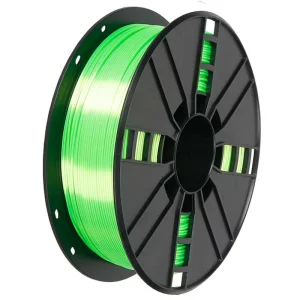
Metallic silky surface finish with superior layer hiding capabilities, optimized for decorative and architectural models.
Order Silk PLA Spools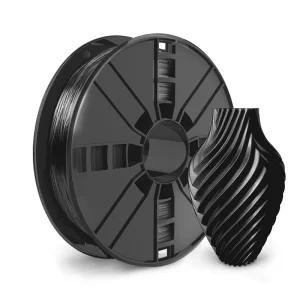
High-elasticity Shore 95A TPU designed for abrasion-resistant gaskets, dampers, and protective boots in industrial gear.
View TPU Technical Specs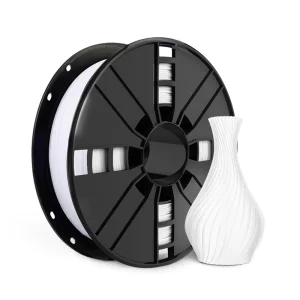
Combines the ease of PLA printing with the impact strength and glycol chemical resistance needed for outdoor enclosures.
Inquire PETG Wholesale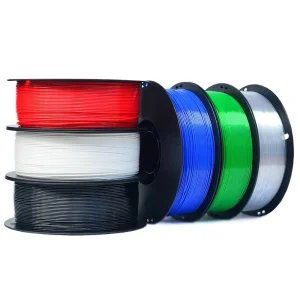
Ultra-low moisture sensitivity grade ideal for transparent fluid containers, light diffusers, and mechanical covers.
Request PETG Samples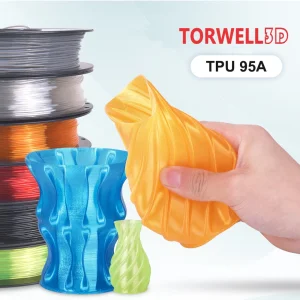
Exceptional tear strength and elongation at break, formulated for reliable direct-drive extrusion without buckling.
Check TPU Stock Pricing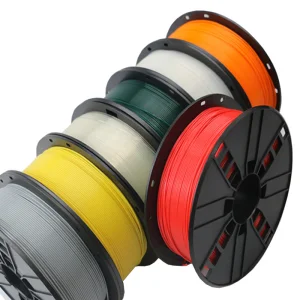
Enhanced impact modified PLA engineered for rapid print farm throughput, zero spool knots, and clean bridge spans.
Buy PLA+ Wholesale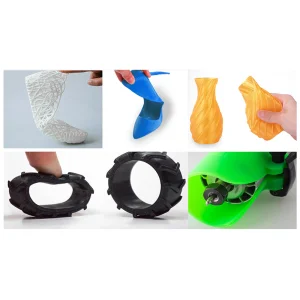
Available in custom Shore hardness options and OEM custom masterbatch colors for specialized industrial products.
Customize TPU Filament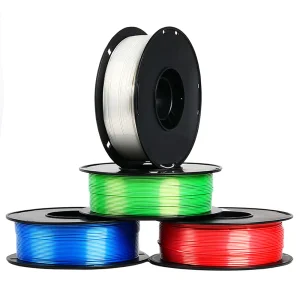
Premium coextruded dual-color optical shift filament yielding stunning visual effects on display models and art prints.
Order Pearlescent SilkReady to upgrade your Australian distribution inventory or supply your enterprise print farm with high-temperature industrial polycarbonate spools?
Send Inquiry Now