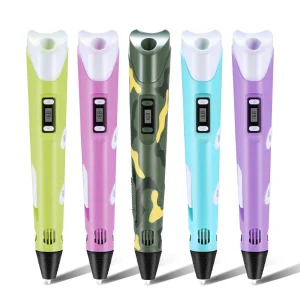
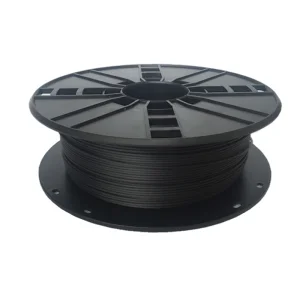
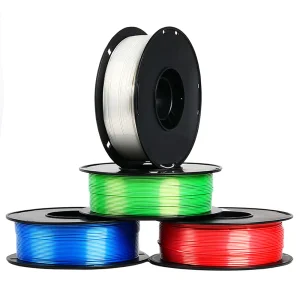
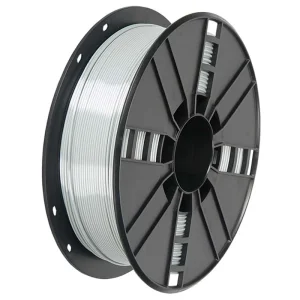
Engineered to withstand tropical atmospheric conditions while delivering strict ±0.02mm diameter precision for industrial and creative printing in Accra, Tema, Kumasi, and beyond.
Strategic B2B Report: Bridging Global Filament Supply Chains with West Africa's Rapid Prototyping Revolution.
Ghana is rapidly solidifying its standing as the economic engine and technology hub of West Africa. Driven by national industrialization frameworks such as the One District, One Factory (1D1F) initiative and the geopolitical advantage of hosting the Secretariat of the African Continental Free Trade Area (AfCFTA) in Accra, Ghanaian enterprises are aggressively pursuing digital transformation. Within this dynamic industrial surge, 3D printing (additive manufacturing) has evolved from an academic curiosity into an indispensable driver of rapid prototyping, localized spare parts fabrication, custom medical prosthetics, and educational STEM advancement.
However, securing high-performance, consistent, and climatically stable 3D printing consumables remains a key challenge for Ghanaian print farm operators, engineering firms, and educational suppliers. High ambient humidity levels characteristic of West Africa's tropical climate present severe degradation threats to standard thermoplastic filaments. To mitigate operational downtime, layer delamination, and nozzle clogging, Ghanaian businesses require direct access to established international 3D printer filament factories offering rigorous engineering standards, proprietary moisture-barrier packaging, and scalable B2B OEM capabilities.
Customized material selection tailored to regional industrial corridors, environmental realities, and economic growth nodes.
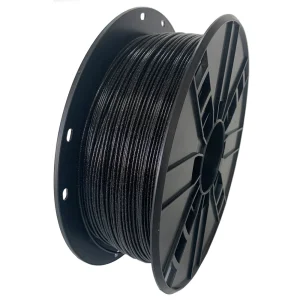
Heavy-duty extractive operations require high-impact, abrasion-resistant polymers. ABS, Carbon Fiber PLA, and TPU filaments enable mining engineers to rapidly produce custom dust covers, sensor brackets, and structural alignment jigs directly on-site, eliminating costly supply chain delays from overseas replacement parts.
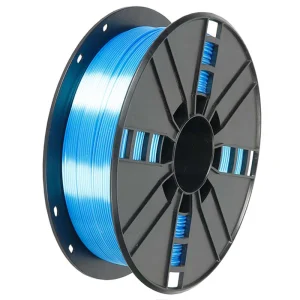
Institutions like Kwame Nkrumah University of Science and Technology (KNUST) and the University of Ghana are leading West Africa in digital fabrication labs. Non-toxic, low-odor PLA and Silk PLA filaments empower students to prototype mechanical assemblies, architectural models, and robotics projects safely and cost-effectively.
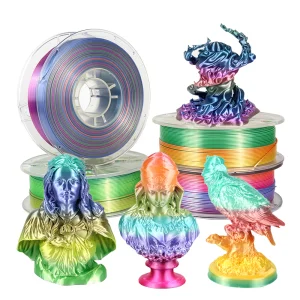
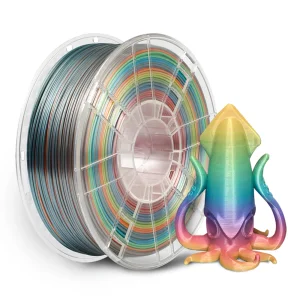
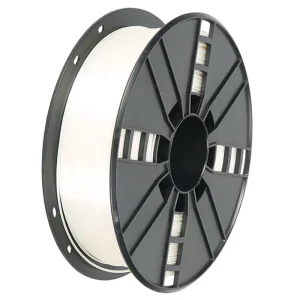
Ghana's vibrant creative market leverages Silk Rainbow, Pearl White, and Glitter PLA to produce intricate traditional artifacts, customized awards, and fashion accessories. The coextrusion multi-color stability offers local artisans exceptional visual appeal without post-processing paints.
Understanding the material science and advanced extrusion techniques defining modern additive manufacturing.
The performance of any 3D printer filament is determined at the molecular level. Standard utility-grade plastics often incorporate low-grade recycled filler materials, leading to thermal inconsistency and diameter variance. Leading export factories utilize 100% virgin NatureWorks PLA resin, compounding it with specialized heat-stabilizers and organic color pigments. Through twin-screw extrusion compounding, pigment particles are dispersed uniformly down to the sub-micron scale, preventing pigment clumping that causes nozzle clogging during multi-hour prints.
Ghana's coastal regions (Accra, Cape Coast, Takoradi) average relative humidity levels exceeding 80-85%. Atmospheric water vapor readily infiltrates hygroscopic polymers such as PETG, TPU, ABS, and PC. When moist filament enters a high-temperature hotend (200°C–260°C), trapped water instantly vaporizes into steam, resulting in popped bubbles, severe stringing, compromised interlayer bond strength, and micro-void structural failures.
| Polymer Class | Extrusion Temp (°C) | Bed Temp (°C) | Tensile Strength (MPa) | Ghana Climate Resilience Index | Primary B2B Application |
|---|---|---|---|---|---|
| Standard PLA / PLA+ | 190 - 220 | 50 - 60 | 62 - 65 | Moderate (Store in dry boxes) | Rapid prototyping, education, display models |
| Silk / Rainbow PLA | 200 - 225 | 50 - 60 | 58 - 60 | Moderate (Vacuum desiccant seal) | Artisan items, consumer products, gifts |
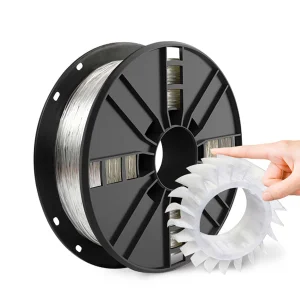
| TPU Flexible (95A) | 210 - 235 | 30 - 60 | 35 - 40 | High (Hygroscopic - Dry before use) | Gaskets, seals, flexible bumpers, wearables |
| Industrial ABS | 230 - 260 | 90 - 110 | 42 - 45 | High thermal tolerance | Enclosures, automotive components, tooling |
| Carbon Fiber PLA | 210 - 240 | 50 - 60 | 75 - 82 | Very High structural rigidity | Drone frames, replacement gears, jigs |
To ensure flawless feeding through both Bowden extruders and direct-drive systems (including high-speed multi-material systems like Bambu Lab AMS or Prusa MMU), automated dual-axis laser measurement gauges actively measure the filament diameter across 360 degrees. Any continuous deviation beyond ±0.02mm triggers an automatic cutter inline, isolating out-of-spec segments before spooling.
Partnering with Ghanaian Importers, Educational Suppliers, and Regional Brand Owners.
Establish your localized Ghanaian 3D filament brand. Complete support for customized spool stickers, branded outer cartons, QR-code technical sheets, and barcode localization for retail distribution.
Seamless export handling with full compliance documentation (Form M, HS Code classification, Certificate of Analysis, MSDS) for swift Ghanaian Customs Authority (GRA) clearance.
Have specific RAL/Pantone color needs or special functional demands (anti-UV, conductive, fire retardant UL94-V0)? Our R&D lab formulates custom material batches tailored to your market requirements.
Explore our complete range of specialized, flexible, high-strength, and educational 3D printing consumables available for direct container or LCL shipping to West Africa.
Essential guidance on importing 3D printer filaments to Ghana, technical compatibility, and custom OEM processes.
Every spool produced in our factory undergoes continuous thermal dehumidification prior to packaging. Immediately following tension-controlled spooling, each roll is vacuum-sealed inside a thick multi-layer barrier foil/poly pouch along with a heavy-duty silica gel desiccant packet. This creates an airtight micro-environment that prevents moisture absorption during the 30-45 day ocean voyage to Tema Port or Kotoka International Airport.
Yes. We specialize in full OEM/ODM manufacturing. Ghanaian distributors, educational vendors, and print farm operators can specify custom brand graphics for spool stickers, boxed retail packaging, custom spool weights (from 250g mini-spools up to 3kg/5kg industrial spools), and individualized Pantone color matching for regional commercial campaigns.
Our automated production lines utilize dual-axis high-speed optical laser micrometers to measure diameter continuously during extrusion. We guarantee a maximum tolerance variation of ±0.02mm across the entire length of 1.75mm and 2.85mm filaments. This strict control eliminates swelling and ovality, preventing hotend clogs and under-extrusion in high-speed printers like Bambu Lab, Creality, and Prusa systems.
For import documentation under the Ghana Revenue Authority (GRA) and ICUMS system, 3D printing filaments are typically classified under HS Code 3916.90 (Monofilament of other plastics) or HS Code 3926.90 (Other articles of plastics). Our export documentation team provides comprehensive packing lists, commercial invoices, Certificates of Origin, and technical safety data sheets (MSDS/TDS) to ensure smooth customs clearance.
Our standard MOQ for wholesale stock colors starts at 100 kg (mix-and-match across PLA, PETG, TPU, ABS, and Silk series). For customized OEM private label orders or bespoke pantone color matching, the standard MOQ is 500 kg per order. We provide sample spools via express air freight for initial quality verification before committing to full container load (FCL) or less-than-container load (LCL) shipments.
Expand your industrial printing capabilities, outfit your educational labs, or establish West Africa's next leading 3D filament brand with high-precision polymer solutions engineered for Ghana.
Send Inquiry Now