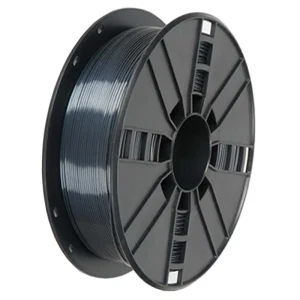
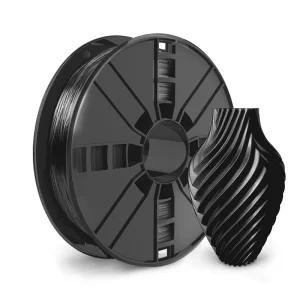
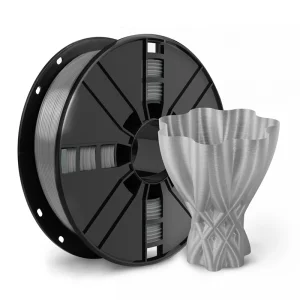
Bridging Industry 4.0 Extrusion Precision with West Africa’s Expanding Engineering, Oil & Gas, Automotive, and Additive Manufacturing Ecosystems.
Direct factory supply featuring tight ±0.02 mm diameter tolerance and heat-resistant polymers tailored for tropical operating environments.
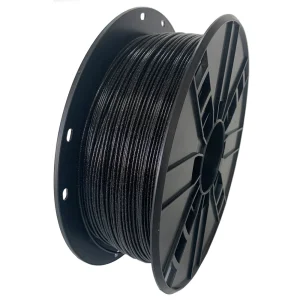
Understanding West Africa's rapid industrialization, local manufacturing demands, and the necessity of high-heat thermoplastics in tropical engineering.
As Africa’s largest economy, Nigeria is undergoing a massive transformation in localized manufacturing, spare parts localization, and rapid prototyping. Historically reliant on expensive overseas component imports, major industrial centers such as Lagos (Ikeja, Lekki Free Trade Zone), Port Harcourt (Rivers State Energy Hub), Kaduna, and Kano are increasingly adopting Additive Manufacturing (AM) to minimize operational downtime and cut supply chain latency.
While standard 3D printing filaments like PLA and PETG serve general modeling and aesthetic prototyping, advanced industrial applications require engineering-grade polymers capable of surviving severe operational stresses. This is where Polycarbonate (PC) 3D printer filament emerges as an indispensable material asset across West Africa.
Comprehensive mechanical benchmarks for engineering teams, purchasing managers, and industrial print farm operators in West Africa.
Polycarbonate is an amorphous thermoplastic resin containing carbonate groups in its chemical structure. Known for high optical clarity, superior toughness, high heat deflection, and dimensional stability, raw PC resin requires meticulous drying and precise melt-pump extrusion parameters to achieve structural reliability in FDM (Fused Deposition Modeling) 3D printing.
| Mechanical Property | Testing Standard | Torwell Industrial PC Grade | Standard ABS Comparison | Standard PETG Comparison |
|---|---|---|---|---|
| Density | ISO 1183 | 1.20 g/cm³ | 1.04 g/cm³ | 1.27 g/cm³ |
| Tensile Strength at Yield | ISO 527 (50 mm/min) | 68 - 72 MPa | 40 - 45 MPa | 48 - 50 MPa |
| Flexural Modulus | ISO 178 | 2,300 - 2,500 MPa | 2,100 MPa | 2,050 MPa |
| Charpy Impact Strength (Notched) | ISO 179 (at 23°C) | 35 - 45 kJ/m² | 12 - 18 kJ/m² | 8 - 10 kJ/m² |
| Heat Deflection Temp (HDT @ 0.45MPa) | ISO 75 | 115°C - 138°C | 85°C - 95°C | 68°C - 72°C |
| Flame Retardancy Rating | UL 94 | V-2 to V-0 Optional | HB | HB |
| Print Bed / Nozzle Temp Profile | Internal QA | 250-280°C / Bed 100-120°C | 230-250°C / Bed 90-100°C | 230-250°C / Bed 70-80°C |
Polycarbonate is highly hygroscopic; moisture absorption leads to hydrolytic degradation during extrusion, causing steam bubbling, poor layer adhesion, weak tensile bonds, and extreme brittleness in printed parts. In coastal Nigerian areas like Lagos and Port Harcourt, relative humidity (RH) frequently exceeds 80–90%.
Torwell’s Proprietary Solution: Our factory utilizes dual-stage dehumidifying crystallization drying prior to extrusion, maintaining moisture levels under 0.02% (200 ppm). Furthermore, every roll is wound under tension-controlled cleanroom conditions and sealed in vacuum-tight multi-layer aluminum-barrier pouches with high-absorption desiccant packs, guaranteeing zero moisture uptake during international sea transport to Apapa Port or air freight to Murtala Muhammed International Airport.
How Torwell’s 2,500 m² automated facility powers global OEM supply chains and delivers uncompromised quality to African distributors.
Dual-axis laser feedback loops measure filament diameter continuously at 1,000 Hz. Any deviation exceeding ±0.02 mm triggers automatic extrusion speed correction, eliminating nozzle clogs and extrusion starvation.
Tension-controlled automatic spooling prevents overlapping loops and crisscross tangling. Crucial for long multi-day industrial prints in high-volume Nigerian service bureaus using automated AMS/MMU systems.
Full support for OEM clients in Nigeria: custom Pantone color matching, private-label spool stickers, custom carton branding, and tailored spool dimensions (0.5kg, 1kg, 2.5kg, 5kg, up to 10kg industrial spools).
Demonstrating real-world ROI and technical problem-solving across West African commercial applications.
Challenge: Importing specialized fluid-flow test manifolds required a 6-week lead time, shutting down test rigs.
Solution: An engineering firm in Rivers State printed functional PC test bodies using Torwell PC Filament. The assemblies withstood 85°C fluid temps and high pressure during calibration tests, saving 80% in downtime costs.
Challenge: Solar charge controller brackets made of standard ABS degraded rapidly under extreme heat in Northern Nigeria.
Solution: Upgrading to Torwell High-Temp PC filament provided thermal deflection up to 130°C. The field-deployed units have maintained structural integrity across 24 consecutive months of sub-Saharan heat exposure.
Challenge: Local reseller required reliable, cost-effective 3D printer material stocks with zero batch-to-batch color or diameter variation.
Solution: Torwell established a OEM supply contract delivering mixed container loads of PLA, PETG, TPU, and PC, establishing the client as a premier 3D material hub in West Africa.
Navigating customs clearance, freight optimization, regulatory compliance, and container logistics from Shenzhen to Lagos.
Importing high-grade polymer filaments into Nigeria requires strict adherence to international trade documentation and national quality standards. As a direct China manufacturer with extensive export experience to over 75 countries, Torwell provides complete administrative and logistics support for Nigerian trade partners.
All plastic raw materials and 3D printing consumables imported into Nigeria are subject to the Standards Organisation of Nigeria Conformity Assessment Program (SONCAP). Torwell provides full documentation including:
We support standard international B2B payment channels, including Wire Transfer (T/T), Irrevocable Letters of Credit (L/C at sight), and flexible payment milestones for long-term OEM distribution contract holders in Nigeria.
Key technical and commercial inquiries regarding PC filament manufacturing, OEM services, and Nigeria shipping.
Polycarbonate (PC) offers significantly higher heat deflection (up to 140°C vs ABS’s ~95°C) and almost double the Charpy impact resistance. In hot African industrial environments, PC parts retain dimensional accuracy and resist cracking under mechanical stress far better than standard ABS.
Yes! We offer full OEM/ODM branding services including custom-printed spool stickers, branded retail cartons, custom filament colors matched to Pantone standards, and tailored spool sizes ranging from 250g up to 10kg industrial reels.
Our 6 automated extrusion lines are fitted with inline dual-axis laser measurement gauges. The continuous optical scanning system measures diameter and roundness in real time, automatically adjusting haul-off speeds to maintain strict ±0.02mm tolerances.
Every spool is oven-dried prior to winding, then immediately vacuum-sealed inside a heavy-duty moisture-barrier aluminum/poly bag accompanied by high-capacity silica desiccant pouches before being packed into individual rigid cartons.
For optimal layer adhesion and structural strength: Nozzle Temperature: 250°C - 280°C; Heated Bed Temperature: 100°C - 120°C; Enclosure: Recommended (or build chamber ~60°C); Print Surface: PEI sheet with adhesive helper or PVA glue stick.
For standard stock items, MOQ starts at 100 kg (mixed material types/colors accepted). For custom OEM private label packaging or specialized color formulations, MOQ is typically 500 kg per batch.
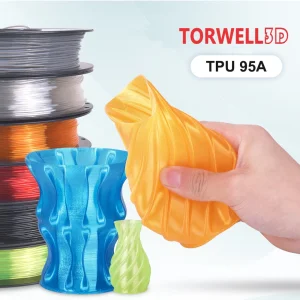
From aesthetic multi-color specialty filaments to high-durability flexible polymers for Nigerian engineering and retail markets.