Direct factory supply engineered with ±0.02mm micro-laser diameter tolerance for Japanese industrial 3D printing systems.
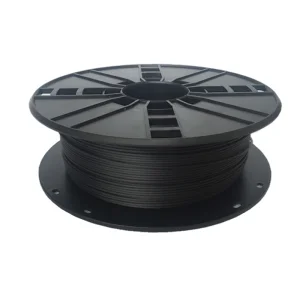
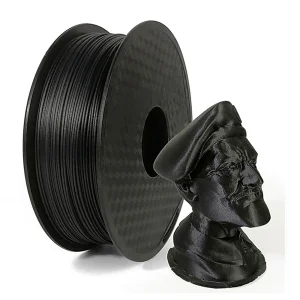
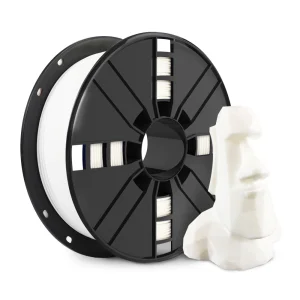
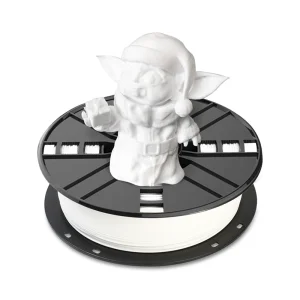
Bridging Chinese Advanced Material Extrusion Technology with Kansai’s High-Precision Industrial & Automotive Sector.
As the traditional industrial heartland of Western Japan, the Osaka metropolitan area—encompassing major manufacturing corridors such as Higashiosaka (東大阪市), Sakai (堺市), and Kadoma—is undergoing a rapid transformation. Known globally for its concentration of small-to-medium precision enterprises (SMEs) and world-class Monozukuri (物作り) craftsmanship, Osaka’s industrial cluster demands high-performance materials capable of replacing heavy metal components without sacrificing structural integrity or dimensional stability.
The introduction of Chopped Carbon Fiber Reinforced Polymer (CFRP) filaments manufactured by specialized Chinese producers has become a strategic game-changer for Osaka-based enterprise buyers. By dispersing micro-carbon fibers (typically 10–15 microns in length with a 15%–20% loading weight) inside thermoplastic matrices such as PLA, PETG, Nylon (PA), and ABS, engineers in Osaka can additive-manufacture complex jigs, robotic end-effectors, inspection fixtures, and lightweight automotive components at a fraction of the cost of CNC milled aluminum (A5052/A7075).
A rigorous examination of polymer rheology, fiber dispersion, and thermal stability engineered for demanding Osaka factory environments.
Utilizing high-aspect-ratio high-purity carbon fibers, our extrusion process ensures micro-fiber alignment along the longitudinal flow vector. This mitigates interlayer shearing and drastically improves isotropic stiffness (Young's Modulus up to 8.2 GPa), allowing Osaka engineers to print load-bearing parts with minimal Z-axis weakness.
Carbon fiber inclusion reduces the Coefficient of Thermal Expansion (CTE) of base resins like PETG and PLA to near zero. For large-format continuous 3D prints operating on industrial bed platforms in Osaka automation plants, this eliminates edge lifting, corner curling, and internal residual stress buildup.
The resulting 3D printed parts feature a premium industrial matte-black finish, completely hiding layer lines (0.1mm - 0.3mm layer heights). In addition, the graphite micro-structure provides self-lubricating properties, reducing wear in mechanical gears, sliding guides, and robotic couplings.
| Polymer Compound Grade | Tensile Strength (MPa) | Flexural Modulus (GPa) | Heat Deflection Temp (HDT @ 0.45MPa) | Recommended Nozzle Temp (°C) | Primary Osaka Industry Application |
|---|---|---|---|---|---|
| Torwell CF-PLA Pro | 65 - 75 | 5.4 | 68 °C | 200 - 230 °C | Jigs, Fixtures, Ergonomic Hand Tools |
| Torwell CF-PETG Structural | 78 - 88 | 6.8 | 85 °C | 240 - 260 °C | Chemical Fluid Housings, Outdoor Automation Jigs |
| Torwell CF-PA12 (Nylon) | 95 - 110 | 8.5 | 155 °C | 270 - 300 °C | Automotive Engine Bay Parts, End-of-Arm Robotics |
| Standard Virgin PLA | 45 - 50 | 3.1 | 55 °C | 190 - 210 °C | Visual Design Concepts, Architectural Models |
| Standard PETG | 50 - 55 | 2.1 | 72 °C | 230 - 240 °C | Protective Enclosures, General Prototypes |
Combining OEM cost-efficiencies, scalable automated production lines, and direct express logistics from China to Osaka Port / Kansai International Airport (KIX).
Located in southern China's tech manufacturing center, Torwell maintains direct shipping routes to Osaka Port (大阪港) and air cargo connections directly into Kansai International Airport (KIX). Orders clear customs swiftly with complete JIS / Customs documentation, guaranteeing delivery in 3 to 7 business days for express orders.
Every meter of spool produced across our 6 automated extrusion lines is dynamically audited by dual-axis inline laser micrometer gauges operating at 1000Hz sampling rates. Standard deviation is capped at ±0.02mm, preventing nozzle clogs or unexpected extrusion starvation during overnight printing runs in Japanese factories.
We provide comprehensive OEM/ODM customization services for Japanese 3D printing brands and local Osaka distributors. Custom spool dimensions, Eco-friendly cardboard spools, customized pantone color boxes, specialized vacuum desiccant packing, and private label branding are fully supported with low MOQs.
Real-world application scenarios where Chinese carbon fiber filaments drive ROI for Kansai manufacturers.
Precision machine shops in Higashiosaka utilize Torwell CF-PLA and CF-PETG to manufacture soft jaws and workholding fixtures. Because carbon fiber filled filaments resist high compressive forces without flexing, operators secure delicate brass and aluminum components during multi-axis CNC milling without surface marring, reducing fixture production time from 3 days to 6 hours.
In the industrial plants of Sakai, environmental sensors mounted on heavy hydraulic equipment require rugged, impact-resistant enclosures. Utilizing Torwell CF-PETG, engineers print waterproof, chemically resistant enclosures capable of withstanding exposure to industrial lubricants and ambient vibrations up to 85°C.
Robotic arm system integrators in the Kansai region replacement metal vacuum grippers with 3D-printed CF-PA12 end-of-arm tooling (EOAT). Trimming end-effector payload weight by up to 65% enables higher acceleration curves and reduces wear on joint servos, directly boosting factory assembly throughput.
Automotive OEM suppliers surrounding Osaka use high-speed multi-material additive manufacturing with Torwell Carbon Fiber filaments to test airflow intake duct designs and cable harness routing brackets before committing to expensive steel injection molds.
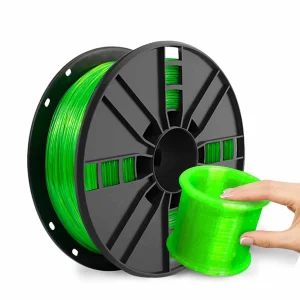
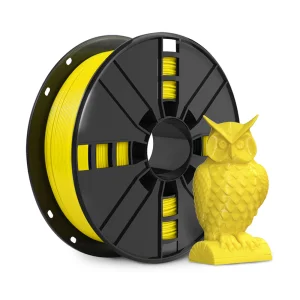
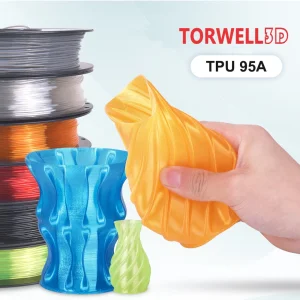
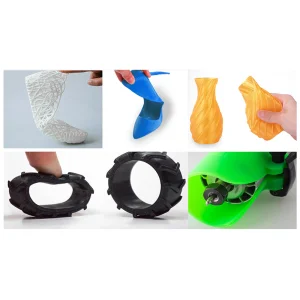
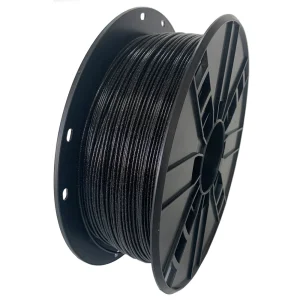
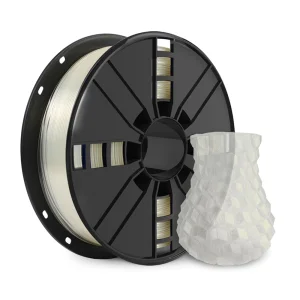
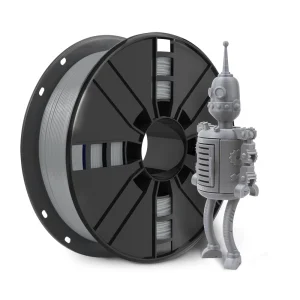
In addition to advanced Carbon Fiber composites, Torwell manufactures a complete series of functional, flexible, aesthetic, and engineering filaments for global export.
Detailed technical answers covering nozzle requirements, shipping logistics, OEM customization, and import compliance for Japanese buyers.