Direct factory-extruded thermoplastic formulations optimized for high impact, thermal resistance, and precise dimensional control in industrial FDM operations.
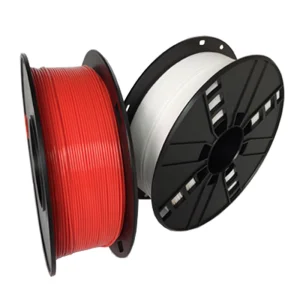
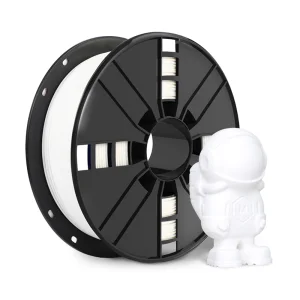
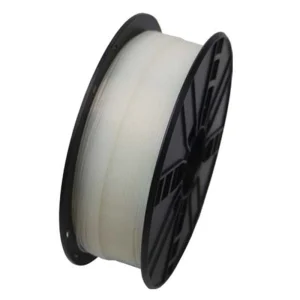
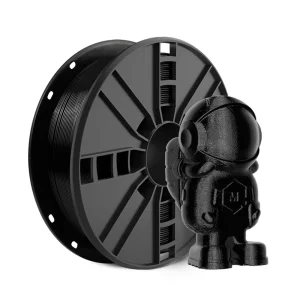
How Greater Houston’s Energy, Aerospace, and Logistics Sectors Drive Demand for Advanced Thermoplastic Extrusion.
The Greater Houston metropolitan area—anchored by the Energy Corridor and massive petro-chemical complexes along the Houston Ship Channel—demands rapid physical validation of downhole tools, fluid handling components, and valve assemblies. Acrylonitrile Butadiene Styrene (ABS) serves as the primary structural thermoplastic for functional prototyping due to its exceptional Izod impact strength (exceeding 200 J/m) and chemical resistance to hydrocarbons, drilling lubricants, and synthetic oils. Direct factory sourcing from China provides Houston engineering firms with high-volume, batch-consistent ABS formulations capable of surviving rugged field testing before metal casting or CNC machining.
With NASA’s Johnson Space Center and a dense cluster of commercial space exploration firms situated in Southeast Houston (Ellington Field area), high-rigidity and thermally stable thermoplastics are vital. ABS filament engineered with balanced butadiene rubber domains delivers superior mechanical performance under thermal cyclic loading ($T_g \approx 105^\circ\text{C}$). Chinese manufacturing facilities equipped with closed-loop twin-screw extrusion technology enable local aerospace vendors to deploy low-outgassing, dimensionally stable jigs, fixtures, and interior ductwork prototypes at a fraction of domestic production overhead.
As one of the busiest ports in the United States, the Port of Houston relies heavily on uninterrupted supply chains. Maritime equipment manufacturers and container terminal operators utilize heavy-duty FDM 3D printing to create custom cable grommets, weather-sealed enclosures, and sacrificial wear pads. Sourcing ABS filament directly from verified Chinese suppliers allows Houston logistics hubs to maintain just-in-time (JIT) additive manufacturing print farms, eliminating long lead times for legacy replacement parts.
The Texas Medical Center demands rigorous prototyping for diagnostic hardware, robotic surgical arm housings, and custom lab automation rigs. Polymer-grade ABS provides an ideal substrate for post-processing—including solvent welding, acetone vapor smoothing for sterilizable non-porous surfaces, and structural painting. Chinese OEM factories supplying customized color-matched ABS (Pantone-certified) enable Houston biotech firms to progress seamlessly from concept to human-factors evaluation.
Understanding Terpolymer Optimization, Thermal Dynamics, and Dimensional Stability in Industrial Additive Manufacturing.
Acrylonitrile Butadiene Styrene (ABS) is a amorphous terpolymer synthesized through the polymerization of acrylonitrile, butadiene, and styrene monomers. Each chemical component imparts distinct physical characteristics required for demanding engineering applications:
| Physical / Mechanical Property | Standard Test Method | Industrial ABS Value Range | Engineering Benefit for Houston Users |
|---|---|---|---|
| Tensile Strength at Yield | ASTM D638 / ISO 527 | 40 – 50 MPa | Withstands substantial structural tension in mechanical brackets and housings. |
| Flexural Modulus | ASTM D790 / ISO 178 | 2.1 – 2.6 GPa | Ensures dimensional stiffness without excessive deflection under load. |
| Izod Impact Strength (Notched) | ASTM D256 / ISO 180 | 180 – 250 J/m | Resists severe mechanical shock in industrial drilling and field assembly. |
| Glass Transition Temperature ($T_g$) | DSC (ISO 11357) | 105°C – 108°C | Maintains structural integrity in hot Gulf Coast environments and engine bays. |
| Melt Flow Index (MFI) | ASTM D1238 ($220^\circ\text{C}/10\text{kg}$) | 12 – 18 g/10 min | Optimized for high-speed extrusion without nozzle clogging or thermal degradation. |
| Diameter Tolerance Control | Inline Dual-Axis Laser Gauge | ±0.02 mm to ±0.03 mm | Prevents gear slipping, under-extrusion, and jam-free operation on print farms. |
Premier Chinese ABS manufacturers utilize high-precision single and twin-screw extruders operating with multi-stage melt temperature profiling ($210^\circ\text{C}$ to $245^\circ\text{C}$). Inline continuous dual-axis laser micro-gauges continuously feed dimensional data back to the puller speed controller, securing a strictly enforced diameter tolerance of $\pm0.02\text{ mm}$. This level of consistency is critical for Houston print farms operating automated Bambu Lab, Creality, or Stratasys industrial FDM arrays.
Thermal expansion differential is the primary failure point in large-format ABS 3D printing. By incorporating specialized core-shell rubber modifiers and low-shrinkage styrene copolymers, advanced Chinese suppliers suppress isotropic volumetric shrinkage during cooling. When paired with heated chambers ($80^\circ\text{C} - 100^\circ\text{C}$) and PEI beds, warp-free prints with perfect layer adhesion are consistently achieved.
Thermal degradation of ABS can release volatile organic compounds (VOCs) such as styrene monomers and ultra-fine particles (UFPs). State-of-the-art Chinese production lines utilize vacuum-assisted devolatilization extruders to extract residual monomers prior to pellet spooling. The resulting filament yields significantly lower odor and emissions, creating a safer environment for Houston educational and laboratory settings.
Streamlining Ocean Shipping, Customs Clearance, and Private Label Packaging for Texas Wholesalers.
Procuring bulk 3D printing consumables directly from Chinese manufacturing centers (such as Shenzhen, Dongguan, or Ningbo) offers unmatched cost-efficiency for Texas distributors. Ocean shipping lines operating via the Panama Canal route deliver 20ft and 40ft High Cube containers directly to the Port of Houston within 24–28 days. By eliminating intermediary domestic distributors, Houston buyers achieve landed costs 30% to 50% below North American wholesale market averages.
Chinese extrusion factories provide complete end-to-end custom branding solutions tailored for Houston enterprise customers:
Next-Generation ABS Formulations Transforming Enterprise Additive Manufacturing.
Integrating high-aspect-ratio chopped carbon fibers (15% to 20% by weight) into the ABS resin matrix elevates structural flexural modulus up to 6.5 GPa while suppressing thermal expansion to near-zero levels. Ideal for lightweight drone frames, robotic arms, and high-stiffness oilfield fixtures operating throughout Texas.
Formulated with percolation-network carbon nanotube (CNT) additives, ESD-ABS maintains a surface resistivity of $10^6$ to $10^9 \ \Omega/\text{sq}$. This prevents catastrophic electrostatic discharge damage during the assembly of sensitive electronic control boards in Houston medical and oil-well logging devices.
Engineered with tailored molecular weight distribution (MWD) polymer chains, next-generation ABS filaments allow rapid melt shear-thinning inside high-flow hotends. This enables clean extrusion at linear speeds exceeding 500 mm/s without sacrificing layer-to-layer bond strength or surface definition.
Addressing Common Queries Regarding Sourcing, Printing Dynamics, and Import Logistics.
While PLA is convenient for basic visual models, its low glass transition temperature (~55°C) leads to structural deformation under ambient Texas summer heat or within vehicle cabins. PETG offers good chemical resistance, but lacks the high impact strength, mechanical rigidity, and post-processing versatility of ABS. ABS withstands continuous operating temperatures up to 100°C, can be machined, tapped, painted, and chemically fused using acetone, making it the preferred choice for functional industrial tooling in Houston.
Leading Chinese manufacturers utilize standardized virgin resin pellets (such as Chi Mei PA-757 or Formosa TAIRILAC) mixed with high-purity color masterbatches in automated gravimetric dosers. Inline continuous dual-axis laser micro-gauges monitor diameter and ovality every millisecond. Optical sensors automatically flag and reject out-of-spec segments ($>\pm0.02\text{mm}$), guaranteeing uniform volumetric flow in FDM extruders.
For maximum inter-layer strength and dimensional accuracy, set nozzle temperature between 230°C and 260°C, heated bed temperature between 90°C and 110°C, and enclosed chamber ambient temperature between 60°C and 80°C. Cooling fans should be turned OFF or set to minimal (10-20%) to prevent rapid thermal contraction and corner warping.
Houston's Gulf Coast climate exhibits high relative ambient humidity (often exceeding 80%). ABS is hygroscopic and absorbs moisture from the surrounding air. Absorbed water molecules vaporize inside the nozzle at 240°C, resulting in popping noises, severe stringing, micro-voids, and diminished tensile layer adhesion. Filament must be dried at 65°C – 70°C for 4 to 6 hours before printing and kept in sealed dry-boxes with active desiccant during long print jobs.
Suppliers offer both Full Container Load (FCL) and Less than Container Load (LCL) ocean freight directly to the Port of Houston (Barbours Cut or Bayport terminals). LCL is cost-effective for orders between 500 kg and 2,000 kg, while FCL (20ft GP or 40ft HQ containers) provides the lowest freight cost per spool for enterprise distributors and large print farms.
Yes. Complete OEM/ODM services are available, including custom spool colors (Pantone matched), custom labeled spool stickers, branded moisture-proof foil packaging, customized retail cartons, and custom outer shipping boxes complete with UPCA/EAN barcodes.
Acetone acts as a solvent for ABS polymer chains. Exposing printed ABS parts to controlled acetone vapor briefly dissolves the outer surface layer, allowing surface tension to smooth out microscopic FDM layer lines. The result is a glossy, hermetically sealed, non-porous finish similar to injection molding, highly desired for fluid-handling devices and medical prototypes produced in Houston labs.
Standard manufacturing lead time for OEM orders (1,000 to 5,000 spools) is approximately 10 to 15 business days. Transit time via direct ocean shipping to the Port of Houston ranges between 22 and 28 days. Express air freight (for urgent sample runs) takes 4 to 7 days via Houston Intercontinental Airport (IAH).
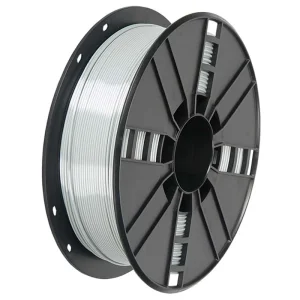
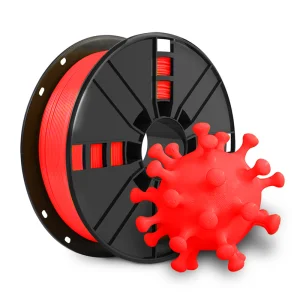
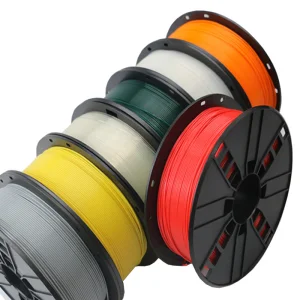
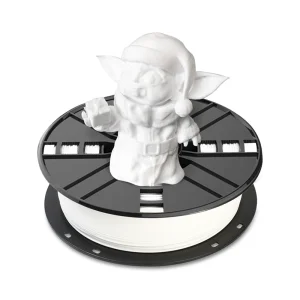
Explore our broader array of high-grade FDM filaments, engineered to support diverse industrial and commercial printing requirements.
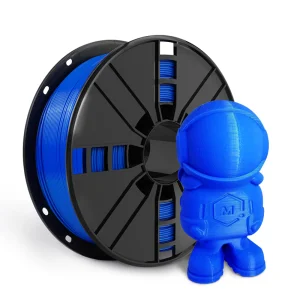
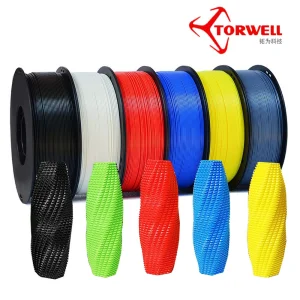
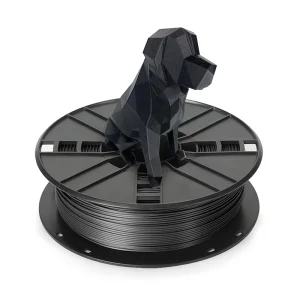
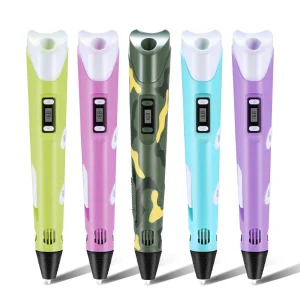
Partner with an established manufacturer supplying high-performance polymer filaments to over 75 countries. Connect with our engineering and export team today to receive physical samples, OEM catalog pricing, and custom container freight quotes tailored for the Houston market.
Send Inquiry Now