

Direct factory extrusion standards engineered for high dimensional accuracy, ambient weatherability, and structural durability.
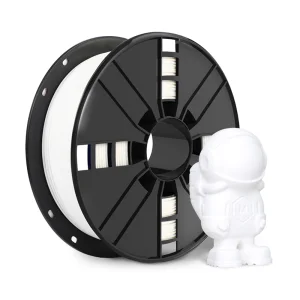
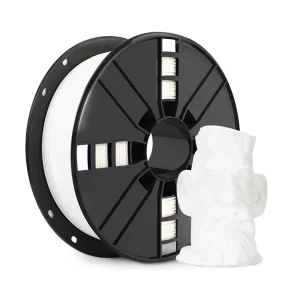
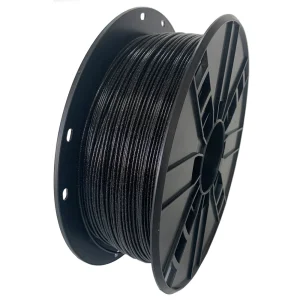
Bridging hardware innovation, rapid prototyping, and extreme environmental durability across the Bay Area.
San Francisco serves as the global epicenter for autonomous driving tests (Waymo, Zoox, Cruise). Outdoor roof-mounted LiDAR housings, sensor brackets, and bumper shrouds require materials that endure intense solar UV, rain, and temperature cycling without micro-cracking or fading.
Hardware startups operating along the San Francisco Bay, Embarcadero, and Pacific coastline require corrosion-proof sensor enclosures. ASA (Acrylonitrile Styrene Acrylate) withstands continuous exposure to salt spray, ocean humidity, and UV radiation far superior to standard ABS or PETG.
From South San Francisco biotechnology facilities to East Bay clean energy ventures, engineers demand low-mass, structural components with high Heat Deflection Temperatures ($HDT > 98^\circ\text{C}$) to replace heavy aluminum in zero-emission prototype assemblies.
Understanding the molecular advantage of Acrylic Ester Grafted Rubbers over Butadiene Rubbers under intense solar spectra.
Acrylonitrile Styrene Acrylate (ASA) is chemically engineered to solve the fundamental vulnerability of Standard ABS (Acrylonitrile Butadiene Styrene). In ABS, the butadiene rubber phase contains double bonds ($\text{-C=C-}$) that undergo rapid photo-oxidation when exposed to ultraviolet light (UV-A and UV-B), resulting in polymer chain scission, micro-cracking, yellowing, and catastrophic impact strength loss within weeks of outdoor exposure in California microclimates.
Torwell's ASA replaces butadiene with an acrylate ester elastomer. Free of double-bond vulnerabilities, our ASA polymer matrix absorbs UV energy without cross-linking or degradation. This makes ASA the gold-standard thermo-polymer for end-use industrial applications in San Francisco, Silicon Valley, and coastal test environments.
| Material Property | Torwell Industrial ASA | Standard ABS Grade | PETG High-Impact | Polycarbonate (PC) |
|---|---|---|---|---|
| UV Accelerated Weathering (ASTM G154 1000h) | ΔE < 1.2 (No Degradation) | ΔE > 14.5 (Severe Yellowing) | ΔE ≈ 3.8 (Moderate Haze) | ΔE ≈ 4.2 (Surface Chalking) |
| Glass Transition Temp ($T_g$) | 103 °C | 95 °C | 78 °C | 147 °C |
| Heat Deflection Temp (HDT @ 0.45 MPa) | 98 °C | 92 °C | 74 °C | 135 °C |
| Notched Izod Impact Strength (23°C) | 18 kJ/m² | 15 kJ/m² | 8.5 kJ/m² | 45 kJ/m² |
| Tensile Strength at Yield (ISO 527) | 46 MPa | 42 MPa | 50 MPa | 64 MPa |
| Warping Resistance & Adhesion | Medium (Bed 90-100°C) | High (Warp Prone) | Very High (Minimal Warp) | Very Low (Chamber Required) |
Engineered for high-throughput additive manufacturing systems including Bambu Lab X1-C, Voron 2.4, and industrial CoreXY platforms operating at speeds up to 400 mm/s.
Torwell ASA features a tailored melt viscosity profile ($MFI = 12-15\text{ g}/10\text{ min}$ at $220^\circ\text{C}/10\text{kg}$). This allows smooth fluid dynamic flow inside modern high-flow hotends without thermal stringing, ensuring flawless layer fusion even during aggressive 300+ mm/s print moves in enterprise print farms.
Every spool of Torwell ASA undergoes automatic multi-axis spool tensioning. This prevents cross-layer overlapping or binding, safeguarding overnight unattended multi-spool printing on AMS (Automatic Material Systems) and automated continuous printing setups.
Pioneering material formulations tailored for Silicon Valley's next decade of hardware breakthroughs.
Integrating 15% high-modulus chopped carbon fibers into the ASA matrix increases tensile modulus to $4,500\text{ MPa}$ while maintaining UV resistance. Perfect for ultralight aerospace jigs, drone arms, and high-rigidity vehicle testing setups.
Engineered to comply with vertical burning tests (UL94-V0 at 1.5mm thickness). Designed specifically for San Francisco electric vehicle battery management system (BMS) enclosures, power electronics boxes, and server rack accessories.
Formulated with conductive carbon nanotube networks, offering controlled surface resistivity ($10^6 - 10^9\ \Omega/\text{sq}$) to protect delicate electronics during assembly inside Silicon Valley semiconductor cleanroom facilities.
Seamless international trade protocols, custom packaging, and environmental standard compliance for US buyers.
All Torwell ASA materials undergo rigorous third-party chemical laboratory testing to guarantee compliance with California Proposition 65, EU REACH, and RoHS 3.0 directives. Technical Data Sheets (TDS) and Safety Data Sheets (SDS) are provided for easy corporate environmental audit compliance.
Torwell provides direct ocean container shipments to the Port of Oakland as well as priority air cargo to San Francisco International Airport (SFO). We offer custom spool sizing (0.5kg, 1kg, 3kg, 5kg), private labeling, Pantone color matching, and custom outer master carton branding.
Explore our full range of enterprise polymer filaments, from high-temperature engineering ABS to specialty composites.
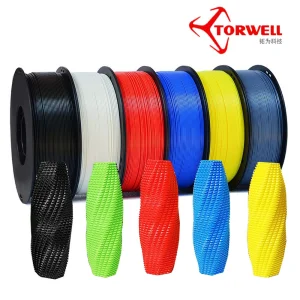
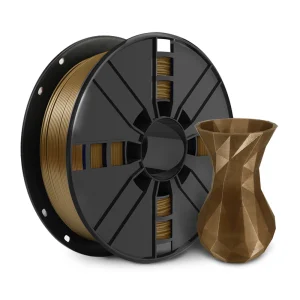
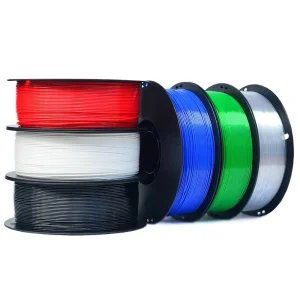
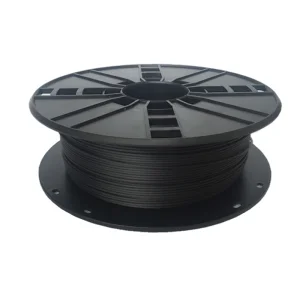
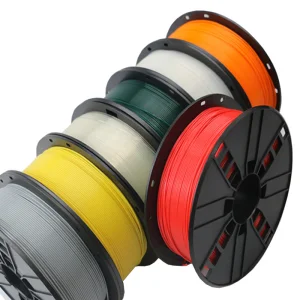
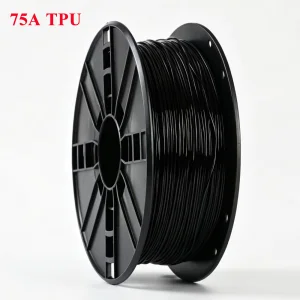
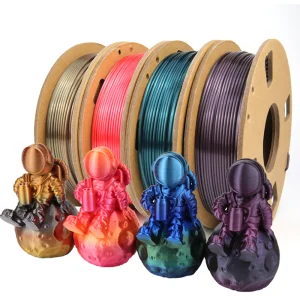
Comprehensive technical guidance on printing parameters, bed adhesion, safety compliance, and procurement logistics for industrial ASA filament.
For optimal mechanical performance and layer bonding, we recommend the following parameters:
While PETG offers good chemical resistance and low warping, ASA offers significantly higher temperature deflection ($98^\circ\text{C}$ vs $74^\circ\text{C}$) and vastly superior UV stability. PETG can experience slow UV degradation under direct, long-term California sunlight, whereas ASA’s acrylate ester matrix remains chemically unchanged. Additionally, ASA can be post-processed using acetone vapor smoothing for a completely watertight, glossy finish—critical for maritime IoT sensors in San Francisco Bay.
For small component prototypes (under $50\text{ mm}^3$), an open-frame printer can succeed with brim modifiers. However, due to ASA's thermal shrinkage coefficient ($0.4 - 0.7\%$), medium-to-large functional parts printed without an enclosure will experience corner lift or layer splitting due to thermal stress caused by ambient room drafts. An enclosed printing chamber maintained at $45-55^\circ\text{C}$ is highly recommended for production-grade parts.
Prior to spooling, raw ASA pellets are dehumidified at $80^\circ\text{C}$ for 4 to 6 hours until moisture content drops below $0.02\%$. Immediately after extrusion and laser diameter inspection, spools are vacuum-sealed in heavy-duty aluminum/poly foil barrier bags with active silica gel desiccant packs. This guarantees zero moisture bubbling or hydrolysis during sea and air transit to Bay Area warehouses.
We provide full-service OEM/ODM capabilities for brand owners, distributors, and enterprise print farms in San Francisco. Services include:
Like ABS, ASA extrudes styrene monomer vapors during melting. Print labs in San Francisco operating multiple additive machines should ensure printers are connected to active carbon HEPA air filtration units or vented externally to comply with OSHA and local indoor air quality standards. Torwell provides complete SDS documentation outlining safety thresholds and ventilation practices.
For standard stock colors (Black, White, Natural, Dark Gray), our wholesale MOQ is 100 kg. Custom color or OEM orders carry an MOQ of 500 kg per SKU. Air freight deliveries via SFO arrive in 5-7 business days, while bulk sea container shipments to the Port of Oakland take approximately 18-22 calendar days from order confirmation.
Contact our senior material engineers today for wholesale pricing, sample spools, technical data sheets, and custom OEM formulations.
Send Inquiry Now